

Table of Contents
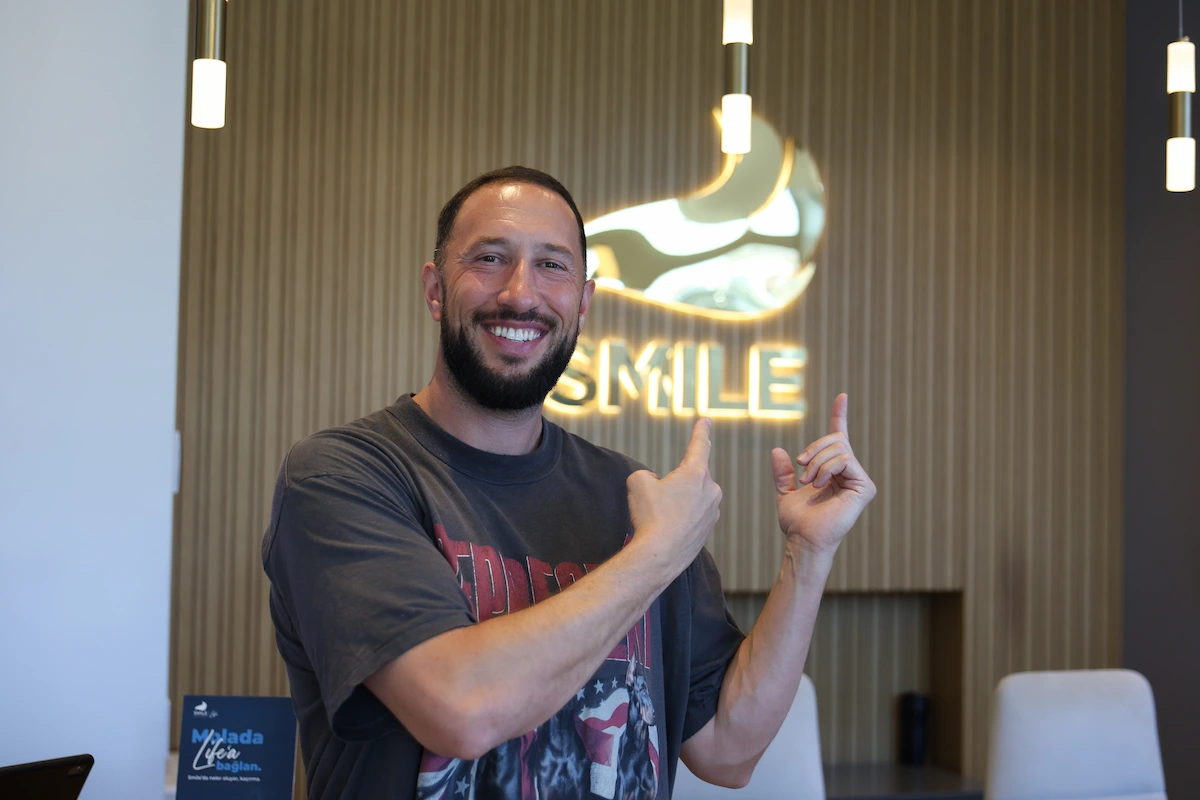
Mike Majlak, the YouTuber and podcaster known to millions as HeyBigMike, first came to Smile Hair Clinic for his hair transplant, a procedure Dr. Mehmet Erdoğan performed with 4,500 grafts using the FUE technique. He documented the entire journey for his followers, and the results that followed became one of the clinic’s most talked-about celebrity hair transplant cases.
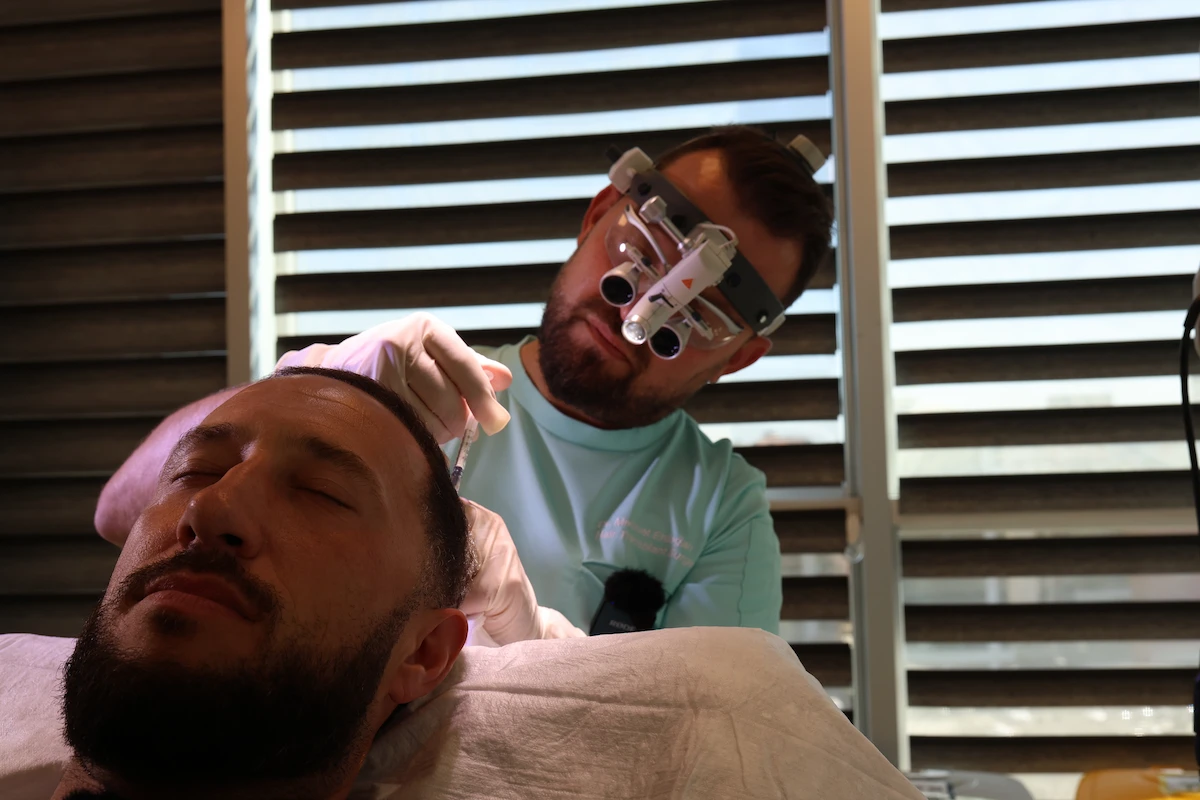
Now Mike has returned to Istanbul, this time not for a transplant but for PRP and Exosome Therapy. It is a natural next step for anyone who wants to protect and build on what a transplant already gave them, and it says something about how far post-transplant care has come that a patient would fly back specifically for it.
What PRP and Exosome Therapy Actually Are?
Before getting into why they work well together, it helps to be clear on what each one is.
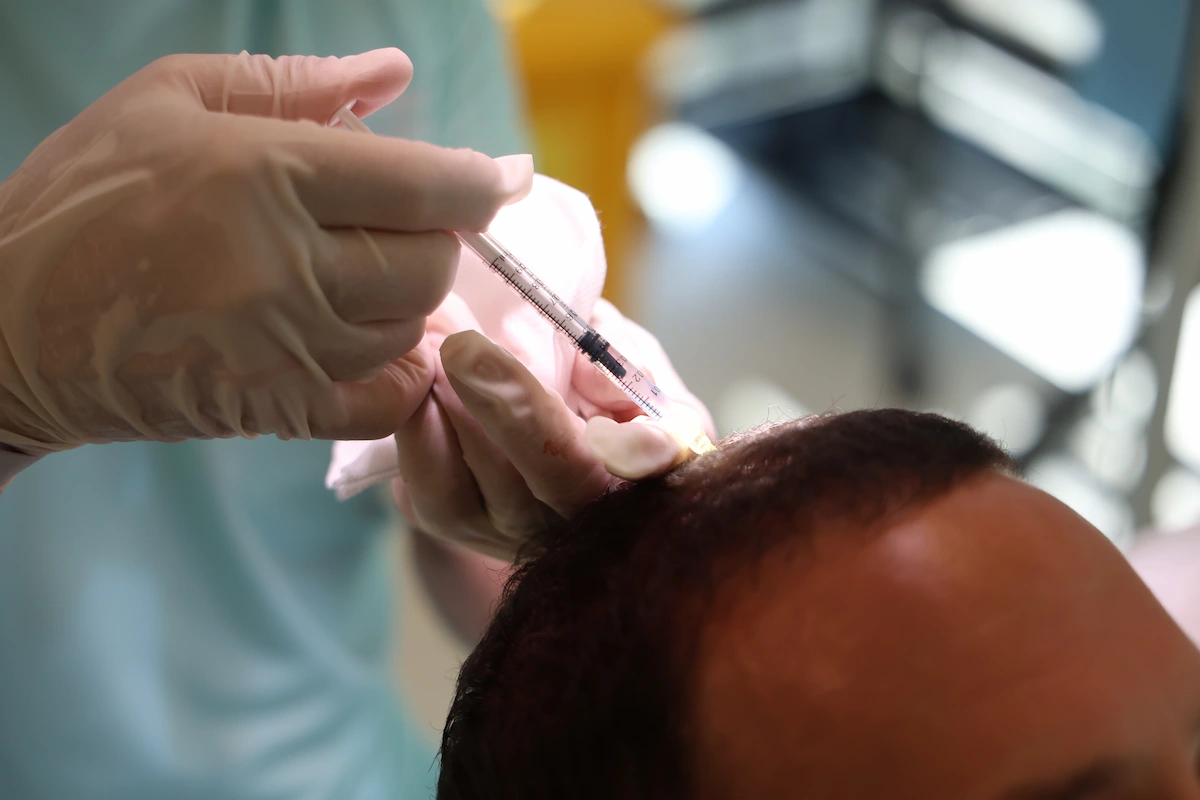
PRP stands for Platelet-Rich Plasma, and the treatment starts with a small sample of the patient’s own blood, spun in a centrifuge to separate and concentrate the platelets, which are then injected back into the scalp. Platelets carry growth factors, and once concentrated and delivered directly to the follicles, they act as a biological signal telling the scalp to support hair growth, a process explained more fully on the clinic’s PRP hair treatment page.
Exosome therapy works with exosomes, extremely small vesicles far tinier than a cell, that carry proteins and microRNAs capable of communicating with surrounding cells. They are typically derived from stem cell sources and injected into the scalp in a similar way to PRP, where they deliver the same kind of regenerative signal from outside the cell rather than relying on the patient’s own blood platelets to do it, a mechanism covered in more depth on the exosome hair therapy page.
In short, PRP works with what’s already in the patient’s bloodstream, while exosome therapy introduces a concentrated regenerative signal from an external source. That distinction is also why the two are increasingly used side by side rather than as substitutes for one another.
Why PRP and Exosome Therapy Are Often Used Together After a Hair Transplant?
A hair transplant repositions healthy follicles into thinning or balding areas, but it does not change the biological environment those follicles have to survive in. That is where PRP and exosome therapy come in, and it is also why clinics increasingly offer them as a pair rather than separately.
Once injected, PRP’s growth factors, including PDGF, VEGF, TGF-β, and IGF-1, support blood vessel formation around the follicles, encourage dermal papilla cells to proliferate, and help push resting follicles into the active growth phase. Exosomes work on a related but distinct level, triggering many of the same regenerative signals from the outside in, without needing a live platelet or cell to deliver them.
Research from the ISHRS Hair Transplant Forum International describes the PRP and exosome combination as one that may improve the efficacy of hair growth stimulation, raise hair density, shorten recovery time, protect follicles from oxidative stress, and reduce side effects, with treatment usually delivered over three to six sessions spaced four to six weeks apart.
Used together, PRP supplies the growth factor signal and exosomes extend and reinforce that signal at the cellular level, which is why the pairing is increasingly seen as more than the sum of its parts for patients who already have grafts in place and simply want them to thrive.
What the Research Actually Shows?
It is worth being honest about where the evidence stands, because not every claim made about these treatments carries the same weight.
PRP is the better-established of the two. A 2026 review in Frontiers in Medicine found that randomized trials in androgenetic alopecia have reported hair density increases of roughly 10 to 30 hairs per square centimeter with PRP, and a 2025 systematic review published in Cureus concluded that adding PRP to hair transplantation was consistently associated with improved outcomes, including increased hair density, better follicle survival, and earlier recovery across the trials it examined.
Exosome therapy is newer and the clinical picture is still forming. The same Frontiers review noted that exosome-based approaches show effects on dermal papilla cell proliferation and angiogenesis in preclinical work, but still lack the kind of large, standardized clinical trials that PRP already has. That does not make exosome therapy ineffective. It means the treatment is biologically promising and increasingly used in practice, but patients deserve to know that the clinical trial base is still catching up to the lab data.
Taken together, the honest summary is that PRP has the stronger track record on its own, exosome therapy adds a complementary mechanism that is well supported at the cellular level, and the combination is where most current clinical interest is heading, even if the two-treatment protocol itself has not yet been isolated in large controlled trials.
Questions Patients Considering This Combination Usually Ask
If someone were sitting where Mike sat, thinking about PRP and exosome therapy after their own transplant, these are the questions worth asking first.
How soon after a transplant can PRP and exosome therapy start?
Most clinics wait until the initial healing phase is complete, generally a few weeks post-op, so the scalp isn’t irritated by injections before the grafts have settled.
Does this replace the need for a second transplant procedure later?
No. PRP and exosome therapy support the density and health of existing follicles, both transplanted and native. They don’t create new follicles, so if someone needs additional graft coverage down the line, that’s still a separate conversation with their surgeon, and pricing for that scenario follows the clinic’s standard packages.
How many sessions are actually needed, and does it ever stop.?
As the ISHRS review notes, most protocols run three to six sessions spaced four to six weeks apart, though maintenance sessions afterward are common since the underlying miniaturization process that caused hair loss in the first place doesn’t disappear just because a transplant happened.
What does downtime and recovery actually look like?
Both are minimally invasive, done in the office, with adverse effects typically limited to mild scalp discomfort at the injection sites that resolves within a day or two.
Is this only useful after a transplant, or does it work on its own too?
Both PRP and exosome therapy are also used as standalone treatments for early-stage hair thinning, independent of any surgery. Post-transplant use is simply one of the more common contexts where clinics recommend them
From First Fix to Ongoing Maintenance
Mike Majlak wearing a hat to hide a receding hairline was the story that first brought him to Smile Hair Clinic. Coming back years later for PRP and exosome therapy, on a head of hair that already has a transplant behind it, marks a different kind of visit, one about protecting a result rather than creating one. It reflects where hair restoration is heading generally, less about a single procedure being the whole story, and more about the maintenance built around it.
You can watch Mike’s video below.

