

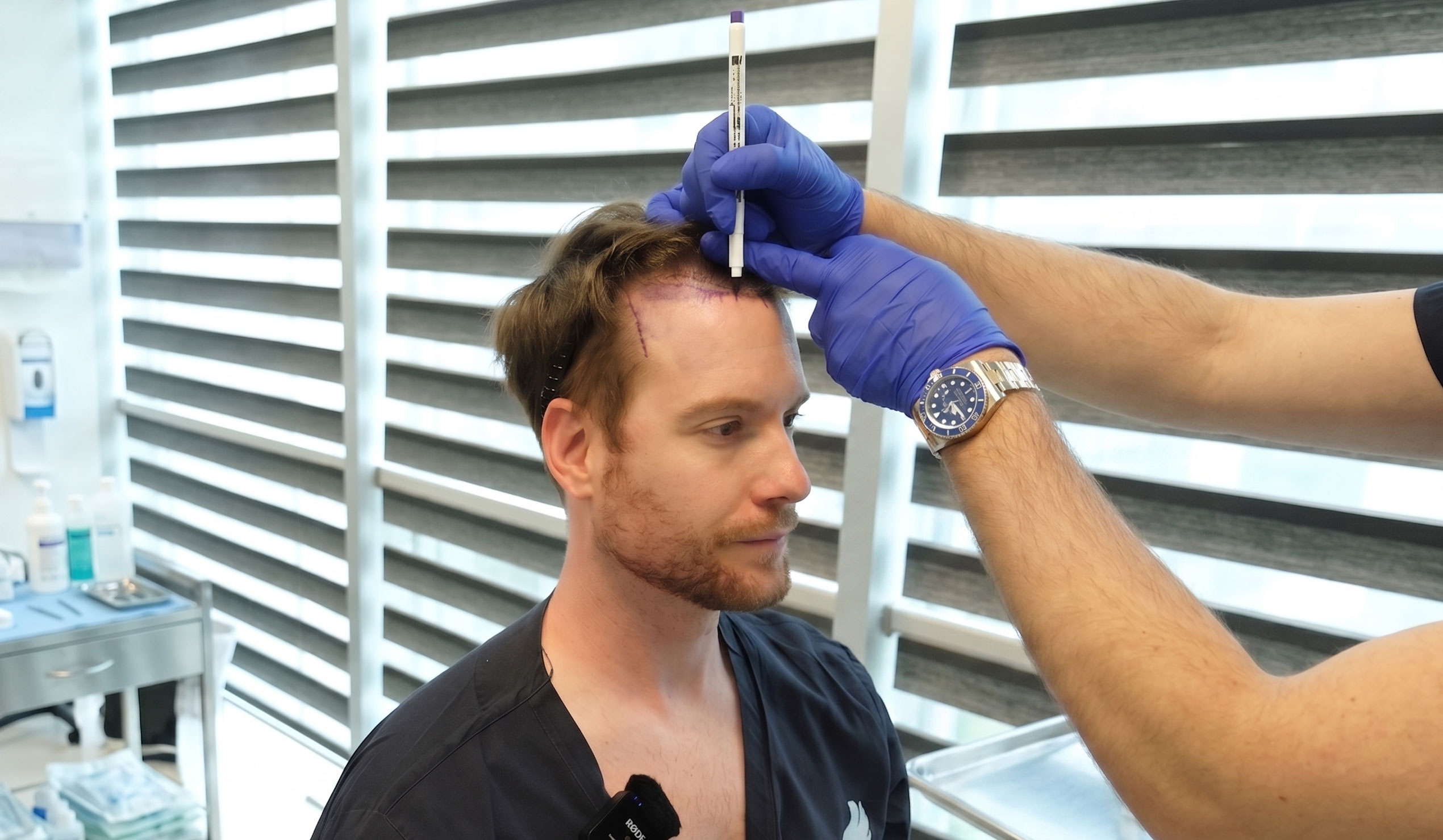
Long FUE hair transplant in Turkey is an advanced technique that allows hair transplantation without fully shaving the donor area, preserving longer hair strands for a more discreet procedure. It offers better visual planning, natural hairline design, and less noticeable downtime. Ideal for patients who want to maintain their existing hairstyle during treatment, Long FUE combines precision with immediate aesthetic advantage. At Smile Hair Clinic, each case is carefully evaluated to ensure optimal results based on individual hair characteristics and long-term goals.
What Is Long FUE?
Long FUE (Long Follicular Unit Excision) is a modern hair transplant technique where follicles are extracted with the hair left longer than usual. Instead of shaving the donor area down to very short stubble, the surgeon removes grafts while keeping the hair shafts long. This makes it easier to preview the direction, curl, and overall look of the result earlier.
Who Is It For?
Long FUE can be a good option if you:
- Want a less “shaved” look during the healing phase
- Prefer to keep your hairstyle while undergoing treatment
- Need precise placement to match existing hair direction (especially at the hairline)
- Have enough donor density to support FUE extraction
It may not be ideal if you have very tight curls, severe donor thinning, or if your surgeon recommends a different approach based on scalp condition.
Main Benefits of Long FUE
- Less noticeable downtime: No fully shaved scalp, so many patients feel more comfortable returning to daily life sooner.
- Better visual planning: Longer hair helps the team judge angle, direction, and blend with surrounding hair.
- Early cosmetic improvement: Even though transplanted hairs often shed later, the immediate look can be more natural right after surgery.
- Natural hairline control: The surgeon can place grafts to better match your existing growth pattern.
Key Steps in the Long FUE Procedure
Consultation and Design
Your surgeon evaluates donor supply, hair caliber, curl pattern, and scalp laxity. Then they design the hairline and map the areas to be filled.
Donor Area Preparation
Instead of fully shaving, the donor hair is typically trimmed in sections or selectively reduced to allow accurate extraction while keeping surrounding hair long enough to cover the area.
Local Anesthesia
Numbing medication is applied to both donor and recipient sites. Most patients feel pressure and movement, not pain.
Graft Extraction (FUE)
Using a small punch tool, follicular units are carefully removed one by one. With Long FUE, extra care is taken to avoid damaging long shafts during removal.
Graft Handling and Sorting
Grafts are kept hydrated, sorted by hair count (1-hair, 2-hair, 3-hair units), and prepared for implantation.
Recipient Site Creation
Tiny incisions are made in the thinning area. Angle, direction, and density are planned to create a natural pattern.
Implantation
Grafts are inserted into the prepared sites. Single-hair grafts are usually used at the hairline for a softer, more natural edge.
Recovery: What to Expect
First 1–3 Days
- Mild swelling, tightness, and redness are common
- Small scabs begin to form around grafts
- Keep the scalp clean and follow washing instructions exactly
Days 4–14
- Scabs gradually fall off (do not pick them)
- Redness fades for many patients, though it can last longer in some skin types
- You’ll likely be advised to avoid heavy sweating and direct sun exposure
Weeks 2–8 (Shedding Phase)
- Transplanted hairs often shed—this is normal and expected
- The follicles remain in place and begin a new growth cycle
Months 3–6
- New hairs start growing, initially fine and lighter
- Density begins to improve steadily
Months 9–12 (and up to 18)
- Results become fuller and more mature
- Texture and thickness continue to improve
Aftercare Tips
- Wash only as instructed by your clinic
- Avoid scratching or rubbing the recipient area
- Sleep with your head elevated for the first few nights if advised
- Skip smoking and alcohol during early healing if possible
- Attend follow-up visits to track progress and address concerns
Potential Risks and Side Effects
As with any transplant method, possible issues include:
- Temporary swelling, redness, and itching
- Shock loss (temporary shedding of nearby native hair)
- Patchy growth during early months
- Infection (rare with proper care)
- Over-harvesting if donor planning is poor
Choosing an experienced Long FUE surgeon is one of the most important factors for a safe procedure and natural-looking results.
Final Notes
Long FUE combines the precision of FUE with the cosmetic advantage of keeping the hair longer throughout the procedure. For patients who want minimal visible downtime and a more controlled approach to hairline planning, Long FUE may be a suitable option depending on hair type, donor capacity, and overall goals. At Smile Hair Clinic, every case is evaluated individually to determine the most appropriate technique for natural and long-term results. Contact us to learn whether Long FUE is the right choice for you.