


Table of Contents
Rosemary oil has moved from traditional hair care into the center of modern hair-growth discussions. It appears in scalp serums, shampoos, conditioners, and countless social media routines, often with claims that it can reduce shedding, stimulate new growth, and even replace conventional hair-loss treatments.
There is some science behind the interest, but the evidence is often presented as stronger than it actually is. Rosemary oil has shown promising results in limited human research, particularly for androgenetic alopecia, but it has not been studied as extensively as established treatments such as minoxidil. Its anti-inflammatory, antioxidant, and antimicrobial properties may also support scalp health, although these effects do not automatically mean new hair growth.
What is rosemary oil?
Rosemary essential oil is obtained from the rosemary plant, traditionally known as Rosmarinus officinalis and now classified botanically as Salvia rosmarinus. The concentrated oil contains aromatic plant compounds such as 1,8-cineole, camphor, and alpha-pinene.
Rosemary essential oil should not be confused with rosemary-infused oil. An infused oil is usually made by soaking rosemary leaves in another oil, while essential oil is a far more concentrated product produced through methods such as steam distillation.
Most research related to hair growth has focused on concentrated rosemary preparations rather than simply cooking oil infused with rosemary leaves.
How rosemary oil may benefit hair?
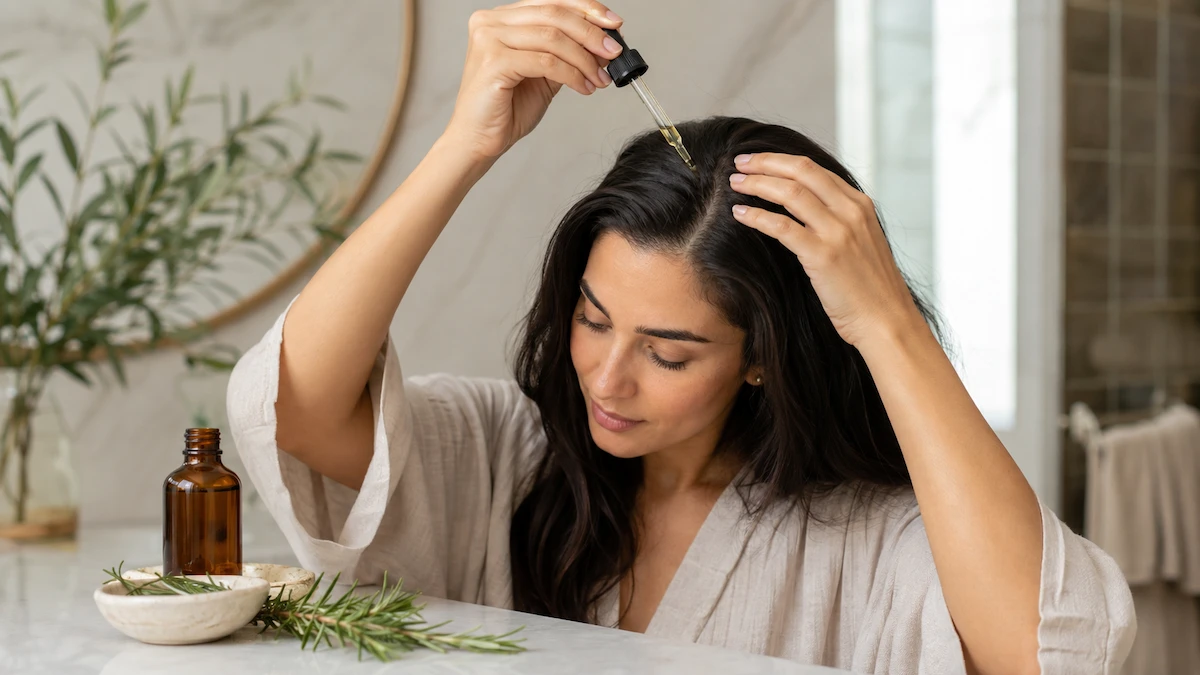
Rosemary oil is interesting because several of its biological properties could potentially affect the scalp environment. However, many proposed mechanisms come from laboratory or preclinical research rather than large clinical trials involving people with hair loss.
Improving scalp circulation
One theory is that rosemary oil may support microcirculation around hair follicles. Healthy follicles depend on blood vessels for oxygen and nutrients, which is why scalp circulation is often discussed in relation to hair growth.
Rosemary has been studied for effects on microcapillary blood flow, but this does not prove that applying rosemary oil directly increases hair density by improving circulation. The mechanism remains plausible rather than firmly established as the main reason for any hair-growth effect.
Scalp massage may also contribute when rosemary oil is applied manually. Massage itself creates temporary mechanical stimulation, making it difficult to separate the effects of the oil from the application method in everyday use.
Anti-inflammatory and antimicrobial effects
Rosemary contains compounds with anti-inflammatory and antimicrobial activity. These properties may be relevant when mild scalp irritation, excess oil, or microbial imbalance contributes to discomfort.
A calmer scalp can provide a better environment for normal hair care, especially when itching leads to scratching and breakage. However, rosemary oil should not be considered a replacement for antifungal or anti-inflammatory medication when a diagnosed scalp condition requires treatment.
Conditions such as seborrheic dermatitis, psoriasis, fungal infection, and bacterial folliculitis have different causes and may require specific therapy.
Antioxidant protection against follicle damage
Oxidative stress has been investigated as one of several processes involved in skin aging and some forms of hair loss. Rosemary contains antioxidant compounds that can help limit oxidative reactions in experimental settings.
This has led to claims that rosemary oil may protect hair follicles from oxidative damage. The idea is biologically interesting, but direct evidence showing that topical rosemary oil prevents human hair follicles from aging or permanently protects against genetic hair loss remains limited.
Antioxidant activity alone should therefore not be interpreted as proof of hair regrowth.
Soothing an itchy or irritated scalp
Diluted rosemary oil may feel soothing for some people, particularly when dryness or mild irritation is present. Its antimicrobial and anti-inflammatory properties may contribute to this effect.
The opposite can also happen. Essential oils can cause irritant or allergic contact dermatitis, especially when used undiluted or in high concentrations, and rosemary itself has been documented as a trigger in published case reports (Miroddi et al., Allergologia et Immunopathologia, 2014). Burning, persistent itching, redness, and flaking after application are reasons to stop using the product rather than applying more.
Does rosemary oil really work for hair growth?
Rosemary oil has some human clinical evidence for hair growth, but the evidence base remains small. The strongest frequently cited research involves androgenetic alopecia, also known as male or female pattern hair loss.
The findings are promising enough to justify further research, but they do not establish rosemary oil as an equivalent replacement for treatments supported by decades of clinical study.
The rosemary oil vs. minoxidil study
The most famous rosemary oil hair study was published in 2015. Researchers divided 100 participants with androgenetic alopecia into two groups, one using rosemary oil and the other using 2% minoxidil (Panahi et al., Skinmed, 2015).
After three months, neither group had experienced a significant increase in hair count. At six months, both groups showed a significant increase compared with baseline. The difference in hair-count improvement between the groups was not statistically significant.
Participants using minoxidil reported scalp itching more frequently.
This study is often summarized online as proof that “rosemary oil works as well as minoxidil.” That conclusion needs context. The trial was relatively small, compared rosemary oil with 2% minoxidil rather than stronger commonly used formulations, and has not been followed by many large independent trials reproducing the same result.
It does show that rosemary oil deserves scientific interest. It does not prove that rosemary oil and minoxidil have identical effectiveness across different patients and forms of hair loss.
What more recent research shows
More recent reviews continue to describe rosemary oil as a promising natural option for androgenetic alopecia, while also emphasizing the limited amount of high-quality clinical research available (Bin Rubaian et al., Clinical, Cosmetic and Investigational Dermatology, 2024).
A 2025 clinical study also reported improvement in hair-growth measures with combinations containing rosemary oil and either lavender or castor oil (Patel et al., Cureus, 2025). The difficulty is that combination products do not reveal how much of the result came specifically from rosemary.
Overall, current evidence supports cautious optimism rather than dramatic claims. Rosemary oil may help some people, but larger, well-controlled trials are still needed.
Who might benefit most from rosemary oil?
People with early or mild androgenetic alopecia who want to discuss an additional topical option as part of a broader hair-care plan. People looking for a scalp oil that may provide conditioning benefits while supporting a comfortable scalp environment. Those who experience hair breakage and want an oil-based routine that improves lubrication and reduces friction. People who tolerate essential oils well and are willing to use rosemary consistently for several months rather than expecting immediate results. Those who understand that rosemary oil is an optional supportive treatment rather than a cure for every type of hair loss. People who have already identified the reason for their thinning and are not delaying medical treatment for progressive hair loss.
Rosemary oil is much less likely to solve hair loss caused by scarring alopecia, untreated thyroid disease, severe nutritional deficiency, autoimmune alopecia, medication effects, or another underlying medical condition.
How to use rosemary oil for hair?
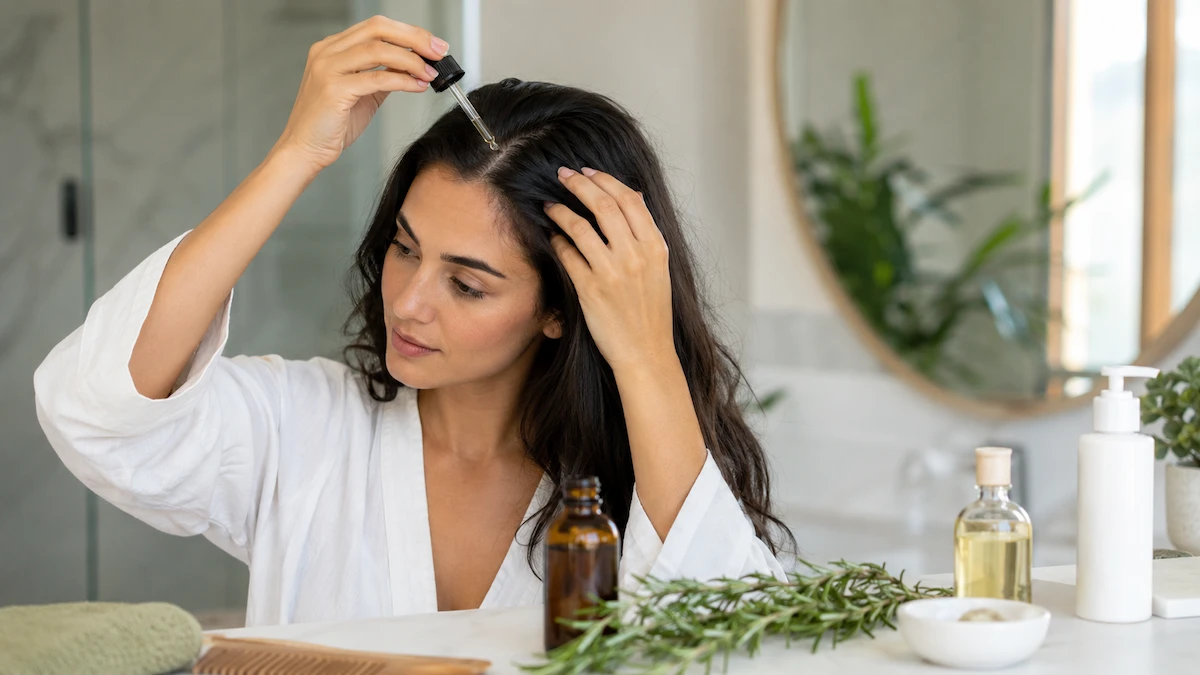
Rosemary essential oil is concentrated, so using more does not necessarily produce better results. Gentle and consistent application is preferable to repeatedly irritating the scalp with highly concentrated mixtures.
Diluting with a carrier oil
Pure rosemary essential oil should generally be diluted before being applied widely to the scalp. Carrier oils such as jojoba, coconut, argan, or another skin-compatible cosmetic oil can be used to lower the concentration.
A small amount should be tested first, particularly for people with sensitive skin. Essential oils can trigger irritant or allergic contact dermatitis, and sensitivity may develop even after previous applications were tolerated.
Apply the mixture mainly to the scalp if hair growth is the goal. Using large amounts throughout the hair lengths may simply leave fine hair greasy.
Adding it to shampoo or conditioner
Rosemary oil can be incorporated into a shampoo or conditioner routine, although a rinse-off product has shorter contact with the scalp than a leave-on preparation.
Rather than adding a large amount directly to an entire bottle, using a commercially formulated rosemary product provides more predictable ingredient concentrations.
Shampoo containing rosemary should still be chosen according to scalp needs. Someone with significant dandruff, for example, may benefit more from a proven anti-dandruff active ingredient than from relying on rosemary alone.
Scalp massage technique
Apply the diluted product with the fingertips and massage gently across the treatment area. There is no need to use fingernails or press hard enough to make the scalp sore.
Work across the scalp in small circular movements for a few minutes. The massage helps spread the oil evenly and may offer additional mechanical stimulation.
Aggressive massage is not better. Repeated friction can irritate the scalp and may contribute to breakage, particularly when hair is already fragile.
How often should you use rosemary oil?
There is no clinically established perfect schedule for rosemary oil. Commercial products also contain different concentrations, so one frequency cannot be applied to every formula.
For a diluted oil, several applications per week may be reasonable if the scalp tolerates it well. Some people prefer using it before shampooing so excess oil can be washed away afterward. Others use a lighter leave-on product.
Consistency matters more than applying it every day. Hair follicles change slowly, and the main clinical study did not show a meaningful hair-count change at three months. Improvement was detected at six months.
If the scalp becomes increasingly dry, red, itchy, or sensitive, frequency should be reduced or the product discontinued.
Side effects and who should avoid it
Do not apply undiluted rosemary essential oil aggressively across the scalp. Stop using it if persistent redness, burning, swelling, itching, or worsening flaking develops. Avoid applying essential oil to broken, infected, bleeding, or severely inflamed skin. Keep rosemary essential oil away from the eyes because concentrated rosemary preparations can irritate them. People with known fragrance or essential-oil allergies should be particularly cautious. Active eczema, psoriasis, contact dermatitis, or another irritated scalp condition should be assessed before experimenting with essential oils. Pregnancy or breastfeeding is a reason to discuss concentrated essential-oil use with a healthcare professional because safety data for many topical essential oils are limited. Anyone with sudden, patchy, painful, rapidly worsening, or scarring hair loss should seek a diagnosis rather than relying on rosemary oil.
Essential oils are natural products, but natural does not mean irritation-free. Allergic contact dermatitis from essential oils, including rosemary, has been documented in the medical literature.
Rosemary oil vs. other hair oils
Rosemary differs from many popular hair oils because it has at least some direct clinical research related to androgenetic alopecia.
Castor oil is widely promoted as a hair-growth treatment, but there is little strong human evidence showing that it directly stimulates new growth. Its main practical benefit is as a rich conditioning oil.
Coconut oil is useful primarily for protecting the hair shaft. It can reduce protein loss and improve lubrication, which may help fragile hair retain length. That is different from treating follicle miniaturization.
Argan and jojoba oils are also more commonly used for conditioning than for clinically proven hair regrowth.
Rosemary oil therefore occupies an unusual middle ground. It has more hair-growth research behind it than many cosmetic oils, but considerably less evidence than established medical treatments.
When rosemary oil isn’t enough?
Rosemary oil should not delay diagnosis when hair loss is clearly progressing. A receding hairline, widening central part, thinning crown, smooth bald patches, or a steady reduction in overall density may indicate a condition that needs more targeted treatment.
Androgenetic alopecia may respond to established therapies such as minoxidil and, for suitable patients, prescription anti-androgen treatment. Alopecia areata requires an entirely different approach because it is an autoimmune condition.
Persistent diffuse shedding may be related to telogen effluvium, thyroid disorders, iron deficiency, illness, rapid weight loss, medications, or hormonal changes. Scalp pain, burning, redness, crusting, or visible scarring can indicate inflammatory disease that deserves faster medical assessment.
Rosemary oil is best viewed as a promising supportive option rather than a miracle treatment. The available research suggests it may have a role in hair care and possibly in the management of androgenetic alopecia, but the evidence remains limited compared with established therapies. Reviews published in recent years continue to reach essentially the same conclusion, the results are encouraging, but stronger clinical trials are needed.
For people who enjoy using rosemary oil and tolerate it well, a properly diluted product can fit into a consistent scalp-care routine. When noticeable hair loss is continuing, however, determining the cause remains far more important than relying on any single oil.
Sources
- Panahi Y, Taghizadeh M, Marzony ET, Sahebkar A. “Rosemary oil vs minoxidil 2% for the treatment of androgenetic alopecia, a randomized comparative trial.” Skinmed, 2015. PubMed
- Bin Rubaian NF, Alzamami HFA, Amir BA. “An Overview of Commonly Used Natural Alternatives for the Treatment of Androgenetic Alopecia, with Special Emphasis on Rosemary Oil.” Clinical, Cosmetic and Investigational Dermatology, 2024. ncbi.nlm.nih.gov
- Patel M, et al. “Rosmagain™ as a Natural Therapeutic for Hair Regrowth and Scalp Health, a Double-Blind, Randomized, Three-Armed, Placebo-Controlled Clinical Trial.” Cureus, 2025. ncbi.nlm.nih.gov
- Miroddi M, Calapai G, Isola S, Minciullo PL, Gangemi S. “Rosmarinus officinalis L. as cause of contact dermatitis.” Allergologia et Immunopathologia, 2014. PubMed
