


Table of Contents
This Guide writing by Dr. Gökay Bilgin M.D. and Dr. Mehmet Erdoğan M.D. , Hair Transplant Doctors at Smile Hair Clinic
What Is Minoxidil?
Minoxidil is a medication used to slow hair loss and stimulate hair regrowth in people experiencing pattern baldness. It is one of only two treatments approved by the U.S. Food and Drug Administration (FDA) for hair loss — the other being finasteride — and remains the most widely used topical option worldwide.
It is available without a prescription in most countries, which makes it one of the first treatments people reach for when they notice thinning. But widespread availability does not mean it works the same way for everyone, or that it is the right solution in every case.
Understanding what minoxidil actually is — and what it is not — helps set realistic expectations before starting treatment.
A Brief History From Blood Pressure Drug to Hair Loss Treatment
Minoxidil was not originally developed for hair loss. In the late 1950s, the Upjohn Company first developed it as an ulcer drug before it was recognized as a powerful vasodilator for high blood pressure. During clinical trials in the 1970s, researchers consistently observed an unexpected side effect: excessive hair growth.
This observation led to a new line of research. By the 1980s, a topical formulation had been developed and tested specifically for androgenetic alopecia. In 1988, the FDA approved topical minoxidil 2% for men under the brand name Rogaine as the first drug proven to promote hair regrowth for male pattern baldness. A 5% concentration followed in 1997, women’s formulations were approved in 1991, and over the counter sale was approved by the FDA in February 1996.
The transition from antihypertensive drug to hair loss treatment is not just a historical footnote. It explains why minoxidil’s mechanism differs fundamentally from other hair loss therapies — and why it carries certain cardiovascular considerations that are still relevant today, particularly in oral form.
How It’s Classified and Why It’s Widely Used?
Minoxidil is classified as a vasodilator — a compound that widens blood vessels. When applied topically to the scalp, this property translates into improved blood circulation around hair follicles, which supports their activity during the growth phase.
Its widespread use comes down to three factors: it is clinically proven, it is accessible without a prescription in topical form, and it is effective across a broad range of hair loss patterns when used correctly and consistently.
How Does Minoxidil Work?
This is where most explanations fall short. Minoxidil is often described simply as something that “stimulates hair growth,” but that description misses the underlying biology and understanding the mechanism matters when setting realistic expectations.
A Closer Look at the Mechanism
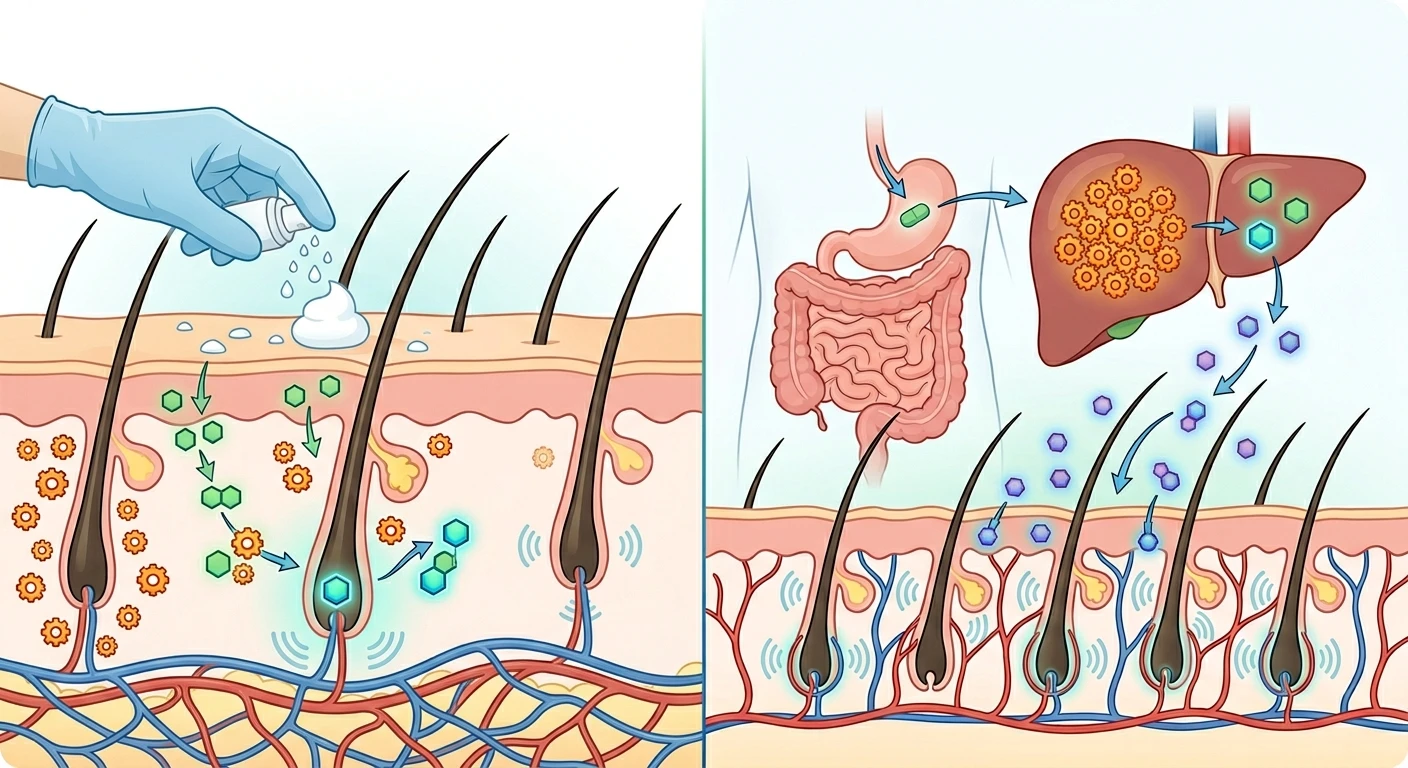
The growth phase and blood flow are only part of the story. Two further details explain why minoxidil behaves the way it does — and why the same prescription produces stronger results in some people than others.
The first is growth factors. Once minoxidil is converted to its active form, minoxidil sulfate, it does more than open potassium channels and widen vessels; it also appears to stimulate the release of growth factors around the follicle, which helps drive cell proliferation and the thickening effect users eventually notice. So the benefit is not blood flow alone — it is blood flow working alongside this signalling effect.
The second is where that conversion happens, and this is the key to a question many people ask: why does oral minoxidil often outperform the topical version? The enzyme that produces minoxidil sulfate is present both in the scalp and in the liver. In the scalp, enzyme levels vary widely from person to person — and even from one area of the same scalp to another — which is exactly why topical results are so inconsistent.
Taken orally, the conversion shifts to the liver, where it happens more uniformly. The result is a steadier supply of active minoxidil sulfate, and with it, a more reliable response — at the cost of the systemic side effects that come with a drug circulating through the whole body rather than acting on one patch of skin.
The formulation plays into this too. Beyond simply being less greasy, foam melts on contact with body heat and sinks into the scalp, while a meaningful share of the liquid solution stays on the hair and never reaches the skin. More of the foam reaches the follicle — which is part of why it is often the more efficient choice, not just the more comfortable one.
How to Use Minoxidil Correctly?
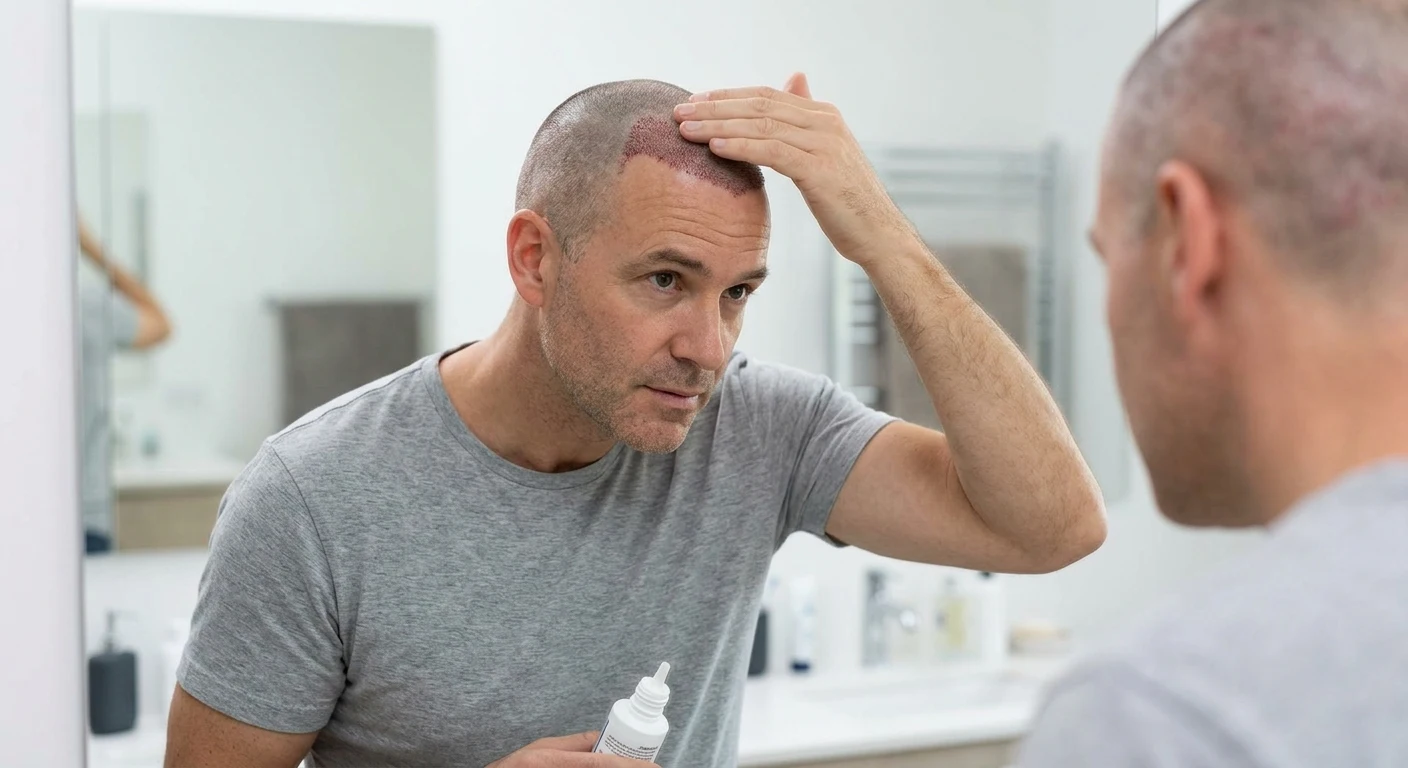
Most of the frustration people feel with minoxidil traces back not to the molecule but to the routine around it. The drug has to land on the scalp, stay there long enough to be absorbed, and be repeated day after day without long gaps. Miss any of those and the follicle simply never receives enough active compound to respond, which is why two people using the identical product can walk away with very different conclusions about whether it works.
What follows applies to standard over-the-counter topical use. Oral minoxidil follows a separate dosing and monitoring logic and belongs strictly under specialist care.
Applying the Liquid Solution

Start with a dry scalp. Damp hair thins out the solution and carries it away from the skin, so towel-drying or waiting after a shower is worth the few extra minutes. Using the dropper supplied with the product, release the liquid straight onto the areas where the hair is thinning rather than over the strands, working outward from the middle of the patch. Wash your hands the moment you finish — minoxidil does not distinguish between the scalp and a temple or eyebrow it gets wiped across. Then give the scalp a couple of hours to dry completely before lying down. A still-wet scalp can mark a pillowcase, and whatever ends up on the pillow can migrate to skin you never intended to treat.
Applying the Foam
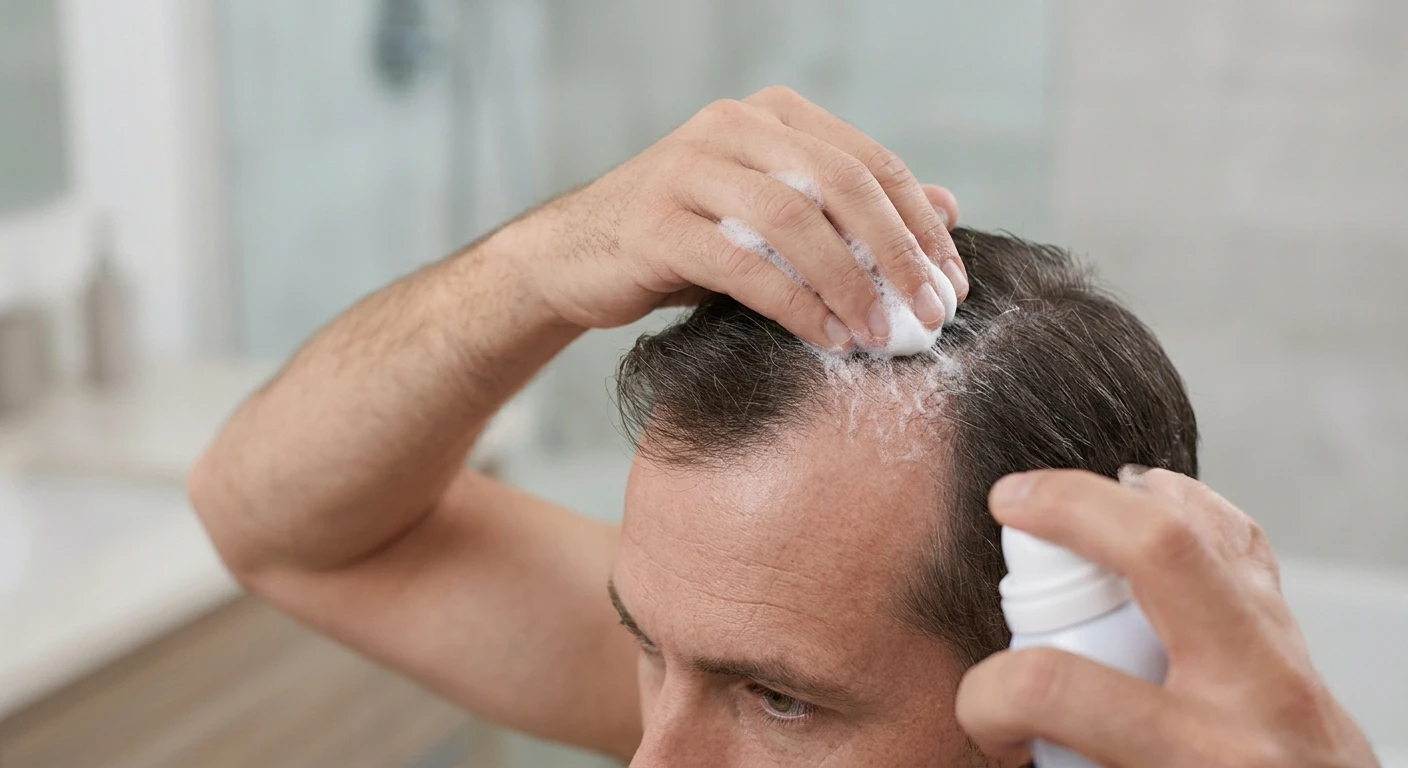
Separate the hair so the scalp is visible, dispense about half a capful of foam onto your fingertips, and work it into the exposed skin until it covers the thinning zone. The foam softens against the warmth of the scalp and sinks in rather than clinging to the hair shaft, which is part of why many users find it both cleaner to apply and more efficient than the liquid. The same after-care holds: hands washed, scalp dry before sleep. Because the foam is dispensed from a pressurised can, keep it well away from heat and open flame.
How Much, and How Often?
The usual measure is one millilitre of solution or roughly half a capful of foam. For men, that goes on twice a day; for women, once daily is generally enough, and the 5% strength tends to be favoured precisely because a single application keeps unwanted facial hair to a minimum while preserving the effect on the scalp. Doubling up does nothing useful.
Beyond the recommended amount, the extra simply finds its way into the bloodstream, where minoxidil’s original identity as a blood-pressure drug becomes relevant again. Steady, correctly measured use beats heavy-handed use every time.
What to Steer Clear Of?
Hold off on shampooing for at least four hours after each application, and resist drying the area with a hairdryer — heat works against the treatment rather than speeding it along. Keep other scalp products off the same skin while minoxidil is in play, whether those are styling agents or other topical medicines. If colouring, perming, or relaxing is on the agenda, wash the scalp clean first and leave a roughly twenty-four-hour window on either side before returning to minoxidil. And treat the eyes, nose, and mouth as off-limits; if any reaches them by accident, rinse with cool water until it is gone.
When a Dose Slips?
Forgetting an application now and then changes very little. Apply it once you remember, unless the next dose is already close — in which case let the missed one go and pick up the normal rhythm rather than applying two doses back to back. The arithmetic that matters here is measured in months of regular use, not in any single evening.
What Happens Inside the Hair Follicle
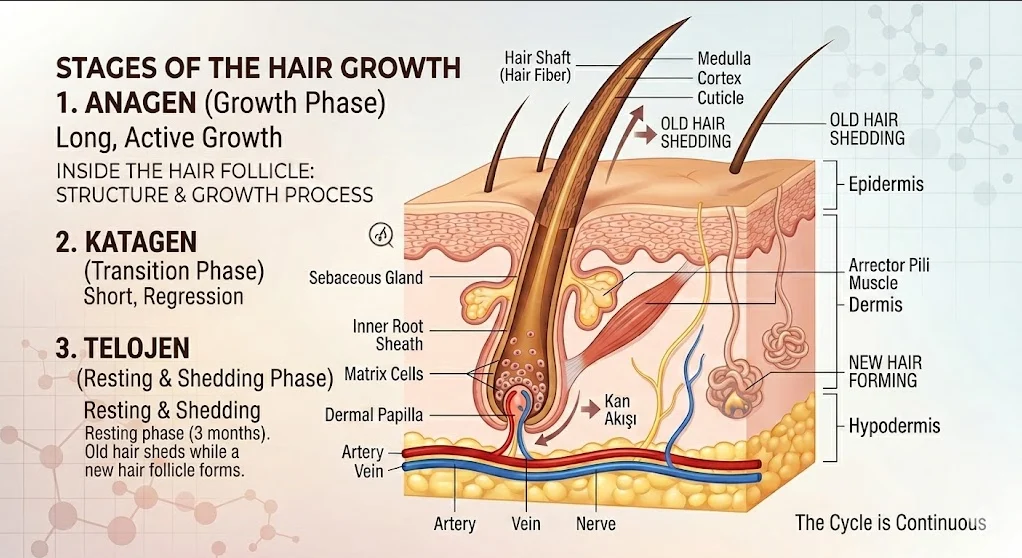
Hair grows in cycles. Each follicle moves through three distinct phases: anagen (active growth), catagen (transition), and telogen (resting).
In androgenetic alopecia, the anagen phase becomes progressively shorter with each cycle. Hairs grow back thinner and weaker over time — a process called miniaturization.
Minoxidil interrupts this process by prolonging the anagen phase, which helps decrease hair loss and promote hair growth. It does not reverse miniaturization that has already occurred, but it slows the progression, increases hair counts, and allows weakened follicles to produce thicker, longer strands by thickening individual follicles over time.
At a cellular level, minoxidil is converted in the scalp to its active form, minoxidil sulfate, by an enzyme called sulfotransferase. This metabolite is significantly more potent than minoxidil itself, and this conversion is partly why response rates vary between individuals — people with lower sulfotransferase activity in their scalp tend to respond less strongly to topical treatment.
The Role of Blood Flow and the Anagen Phase
Minoxidil’s vasodilating effect increases blood flow to the scalp, delivering more oxygen and nutrients to follicles. This supports cellular activity and contributes to the prolongation of the growth phase.
The exact mechanism is not fully understood, but it appears to open potassium channels in follicle cells and improve blood flow and nutrient delivery in ways that help stimulate hair growth. The exact contribution of each mechanism is still being studied, but the combined effect is well established in clinical practice.
At Smile Hair Clinic, patients who begin minoxidil in the early stages of thinning — when follicles are weakened but still active — tend to see the most consistent improvement in hair thickness and density over time.
Why It Doesn’t Target the Root Cause of Hair Loss
This is perhaps the most important point to understand about minoxidil.
In androgenetic alopecia, hair loss is driven by dihydrotestosterone (DHT), a hormone that binds to androgen receptors in genetically susceptible follicles and causes them to miniaturize. Minoxidil does not block DHT. It does not alter hormone levels. It stimulates growth without addressing the underlying cause.
This is why results plateau over time when minoxidil is used alone, and why combination with a DHT blocker such as finasteride is often recommended for more comprehensive long-term results.
Types of Minoxidil — Topical vs Oral
Minoxidil is available in two primary forms—topical liquid or foam, and a prescription-only low-dose oral tablet—and the distinction between them matters both for effectiveness and safety. As with any hair-loss medicine, proper use and dosing guidance matter. Topical products are commonly sold as 2% and 5% solutions or foams.
Topical Minoxidil (Foam and Liquid)
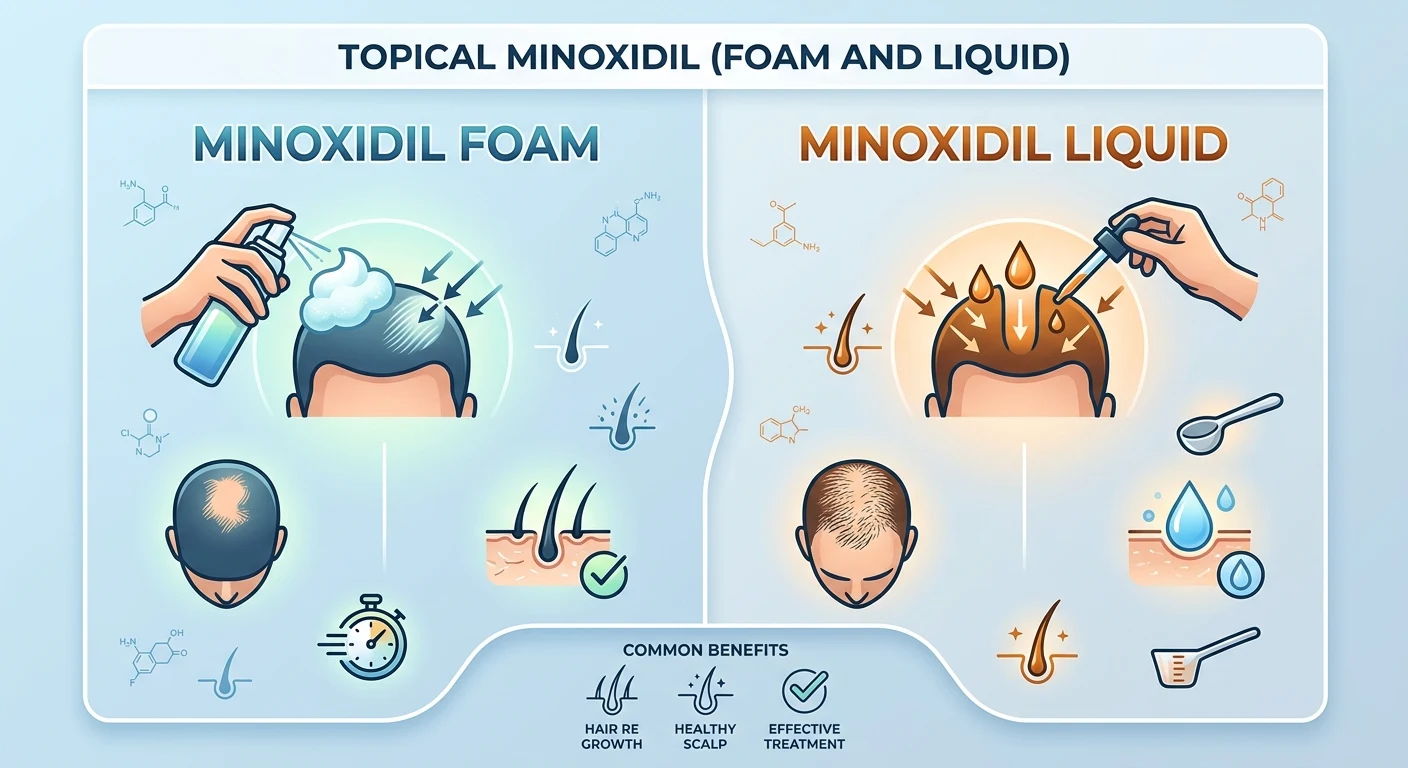
Topical minoxidil is the standard first-line option. It comes as a minoxidil topical solution or minoxidil topical foam, typically in 2% or 5% concentrations. Applying minoxidil directly to dry scalp areas with hair thinning is usually done twice daily so it acts locally with minimal absorption into the bloodstream. Do not use more than the recommended amount, because absorption through the skin can increase.
Foam is generally preferred for the frontal hairline and temples because it dries faster and is less greasy; some liquid products sold as a topical solution can cause redness, dryness, and skin irritation related to propylene glycol. For patients with sensitive scalps, the foam formulation often improves long-term adherence — which matters more than the concentration itself. Stray application may cause unwanted hair growth outside the treated scalp area, and these products are for external use only.
Low-Dose Oral Minoxidil
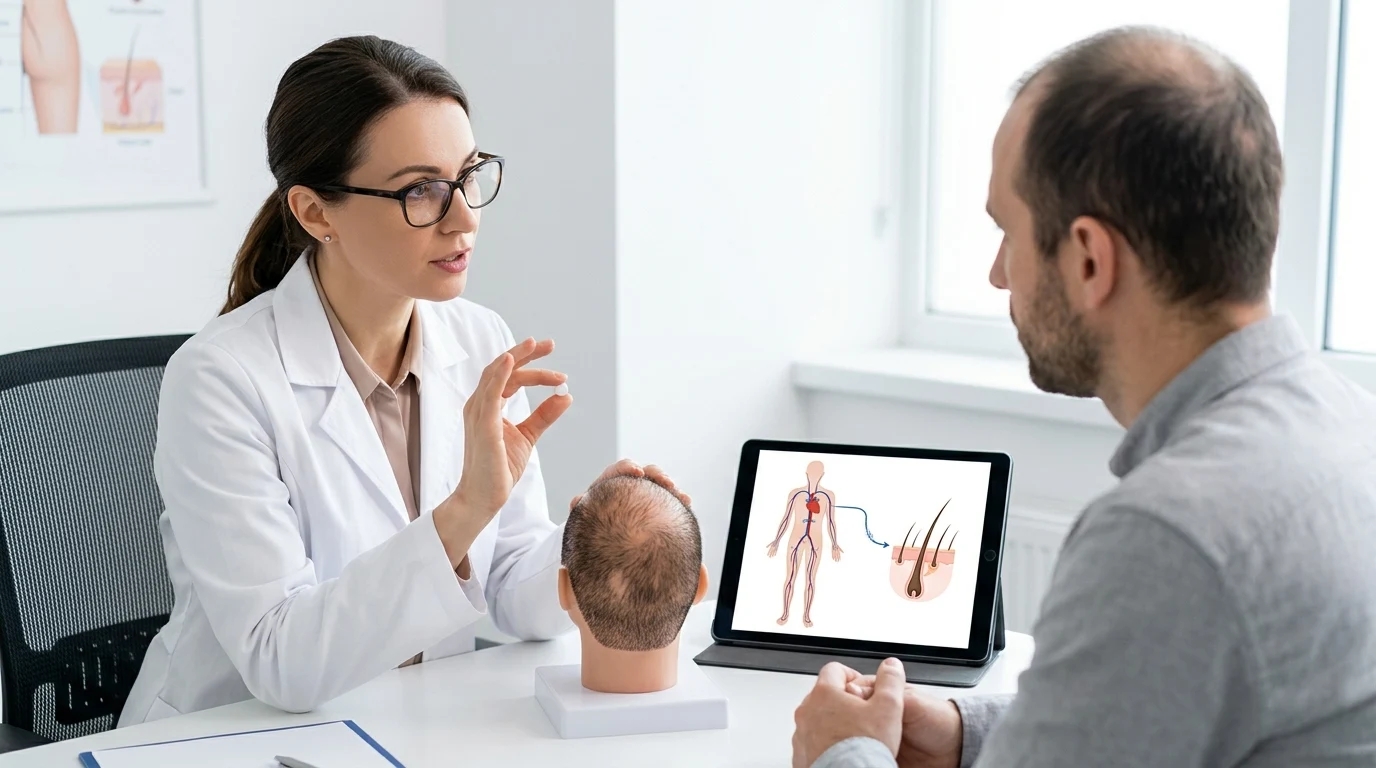
Oral minoxidil has gained significant clinical attention in recent years as an alternative for patients who do not respond sufficiently to topical treatment or who find consistent topical application difficult to maintain, and low-dose use has emerged as an off-label option to promote hair regrowth when appropriate.
Used at doses far lower than those prescribed for hypertension — typically 0.625 mg to 2.5 mg daily — it works systemically, stimulating hair growth across the scalp rather than in a targeted area. This broader effect can be an advantage in cases of diffuse thinning and may support new hair over time.
However, because it enters the bloodstream, the side effect profile is different. Fluid retention, unwanted body hair growth, palpitations, dizziness, low blood pressure, chest pain, headaches, and swelling of the legs are possible, along with other cardiovascular effects, and require medical monitoring during minoxidil therapy. Oral minoxidil should never be self-prescribed.
Which Form Is Right for Which Patient?
For most people starting treatment, topical minoxidil is the appropriate first step. Oral minoxidil is typically considered when topical use has been consistent for at least six months without sufficient response, or when topical irritation prevents regular use.
The decision should always be made in consultation with a specialist, particularly given the cardiovascular history of the compound.
What Does Minoxidil Treat?
Androgenetic Alopecia (Male and Female Pattern Hair Loss)
Minoxidil is FDA-approved for androgenetic alopecia in both men and women. This is the most common form of hair loss globally, characterized by a predictable pattern of recession and thinning driven by genetic predisposition and hormonal sensitivity.
In men, it typically presents as a receding hairline and crown thinning. In women, diffuse thinning along the central part line is more common, with the hairline usually preserved.
Minoxidil has demonstrated consistent efficacy in slowing progression and improving density in early to moderate stages of androgenetic alopecia in both groups.
Off-Label Uses — Hairline, Beard, Eyebrow
Beyond its approved indication, minoxidil is widely used off-label to treat hair loss in areas including the frontal hairline, temples, beard, and eyebrows, though people treated for non-scalp sites often see more variable results than with androgenetic alopecia. For hairline applications specifically, results depend heavily on whether follicles in the area are still active — a key distinction that is often overlooked.
Off-label use is not inherently unsafe, but it requires a more individualized assessment because response rates and risks vary by location, and response outside approved scalp indications is generally less predictable in both women and men.
What It Cannot Treat
Minoxidil cannot regenerate follicles that have been permanently lost. If a scalp area has been smooth and hairless for an extended period, the follicles are likely no longer viable, and minoxidil will produce little to no response in that area.
It is also not effective for hair loss caused by conditions such as alopecia areata, frontal fibrosing alopecia, or scarring alopecias — where the mechanism of loss is entirely different. Using minoxidil in these cases without proper diagnosis delays appropriate treatment.
Who Is a Good Candidate for Minoxidil?
Early-Stage Hair Loss
The strongest candidates for minoxidil are those in the early stages of androgenetic alopecia — people who still have active but weakened follicles producing thin, miniaturized hairs. At this stage, minoxidil can meaningfully slow progression and improve visible density.
The earlier treatment begins, the more there is to preserve. This is a consistent finding in both clinical research and day-to-day practice. If you want to find out what stage of hair loss you are in, you can get preliminary information by reading our Norwood Scale content.
Diffuse Thinning vs Advanced Recession
Minoxidil tends to perform better in diffuse thinning patterns than in cases of deep, advanced recession. When thinning is spread across a broader area and follicles are still present, the potential for improvement is higher.
In contrast, a sharply receded hairline with no visible hair in the recessed zones is unlikely to respond meaningfully. At this stage, the question shifts from whether minoxidil can help to whether a more definitive approach — such as hair transplantation — is more appropriate.
Who Should Avoid It or Use It with Caution
Minoxidil suits most people with early pattern hair loss, but it is not a universal treatment, and a few groups need either closer supervision or a different approach entirely.
People with uncontrolled cardiovascular conditions, including unmanaged high blood pressure or known heart disease, should treat minoxidil with caution, particularly if there is any chance of applying more than the recommended amount over a large area, which raises systemic absorption. An irritated, broken, or sunburned scalp has the same effect: damaged skin absorbs more of the drug, so treatment is best postponed until the scalp has healed.
Age matters at both ends. Safety and effectiveness have not been established in children, and the drug has not been formally studied in people over 65. Clinical experience also points in a consistent direction: minoxidil tends to perform best in younger patients with a relatively short history of hair loss, when follicles are weakened but still active.
For pregnancy and breastfeeding the picture is more reassuring than many assume. Topical minoxidil during breastfeeding is generally considered to carry minimal risk to the infant, but as with any medication in this period, the decision belongs with a doctor rather than a label.
Finally, diagnosis comes before treatment. Certain conditions — frontal fibrosing alopecia in particular — can imitate ordinary pattern thinning while requiring a completely different plan. Starting minoxidil without confirming the cause can delay the treatment that would actually help.
How Long Does Minoxidil Take to Work?
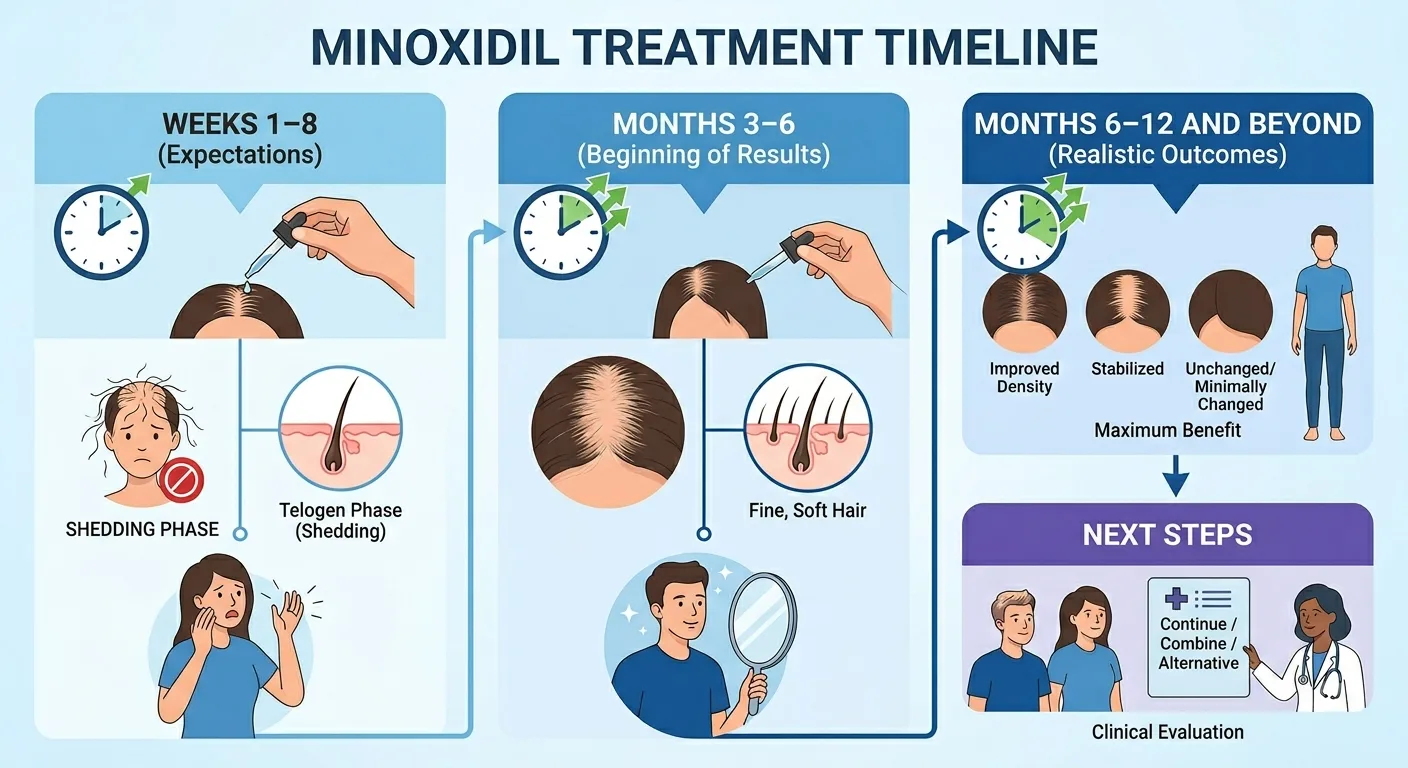
One of the most common reasons people stop minoxidil prematurely is unrealistic expectations about timing. Hair growth is a slow biological process, and minoxidil works within that cycle — it does not accelerate it dramatically.
The First 1–8 Weeks — What to Expect
In the first weeks, most users notice no visible improvement. Some experience an increase in shedding, which can be alarming. This shedding occurs because minoxidil pushes resting hairs out of the telogen phase to make way for new growth. It is a normal part of the process, not a sign that the treatment is failing.
Months 3–6 — When Results Begin
Visible changes typically begin to appear between months three and six. Fine, soft hairs may emerge along thinning areas, and existing strands may appear thicker and more pigmented. These changes are often subtle at first and more noticeable under good lighting or in photographs taken over time.
Month 6–12 and Beyond — Realistic Outcomes
By the end of the first year, the full extent of minoxidil’s benefit is usually apparent. Density has either improved, stabilized, or — in cases where follicles were already too compromised — remained unchanged despite consistent use.
At this point, a clinical evaluation can determine whether to continue, combine with other treatments, or consider alternative options.
Does Minoxidil Work Forever? What Happens If You Stop?
Why Minoxidil Requires Continuous Use
Minoxidil is a maintenance treatment, not a cure. It supports follicle activity while in use, but it does not alter the underlying genetic or hormonal factors driving hair loss. Once treatment stops, those factors continue unimpeded.
This means that hair maintained or improved with minoxidil will gradually revert to its pre-treatment state if the medication is discontinued. This is not a withdrawal effect — it is simply the removal of ongoing support.
The Shedding Phase After Stopping
Many patients who stop minoxidil notice a noticeable shedding episode within two to three months. This occurs as hairs that were in an extended anagen phase — sustained by the treatment — transition into the resting phase simultaneously.
This can feel like accelerated hair loss, but it reflects the reversal of the treatment’s effect rather than any permanent damage. The scalp is not worse off than it would have been without treatment; it is simply returning to its natural trajectory.
Minoxidil vs Other Hair Loss Treatments
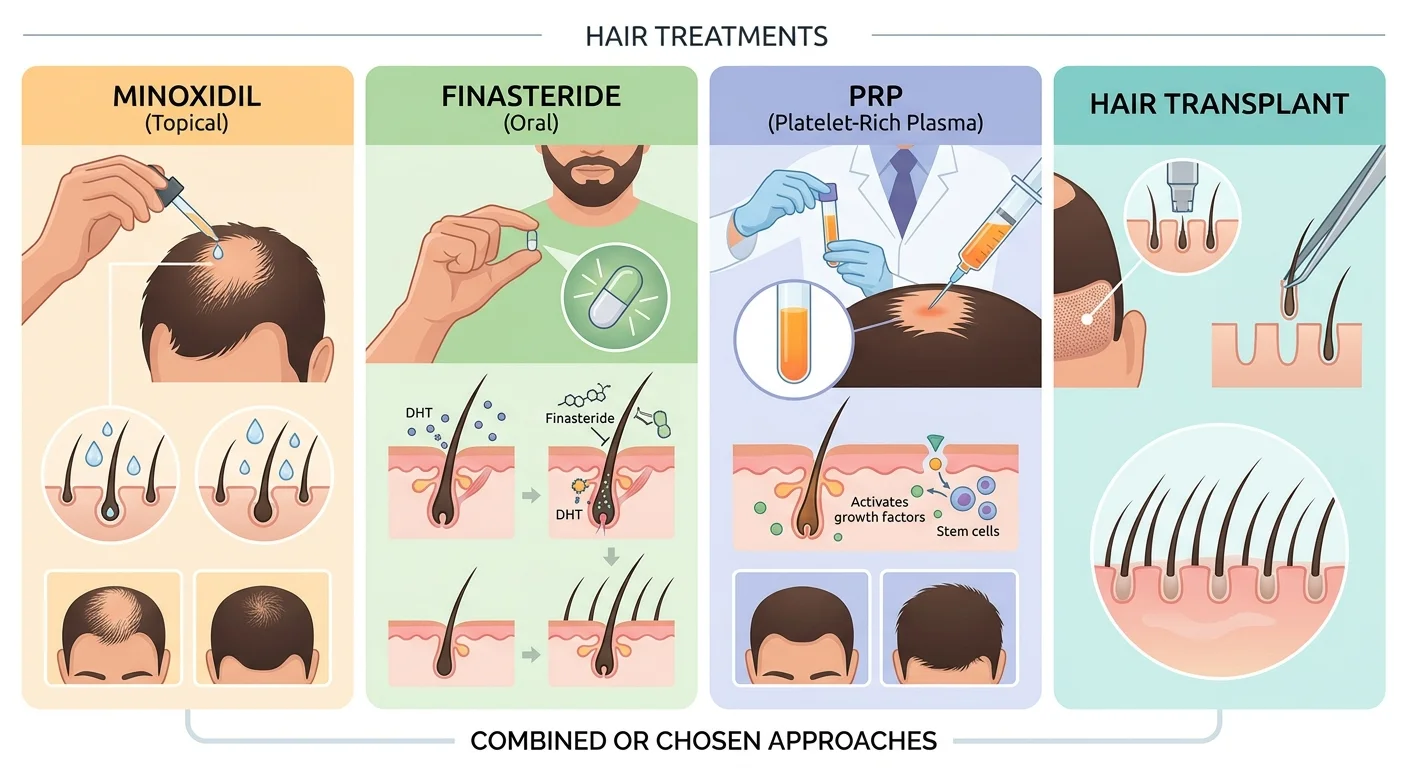
Minoxidil vs Finasteride
Minoxidil and finasteride target hair loss through entirely different mechanisms. Minoxidil stimulates growth; finasteride reduces DHT and addresses the hormonal cause of follicle miniaturization. They are complementary rather than competing options.
Used together after a hair transplant, or as a standalone combination therapy, the two medications provide broader coverage than either does alone. Finasteride slows the progression that minoxidil cannot stop; minoxidil supports the growth that finasteride alone does not stimulate.
Minoxidil vs PRP
Platelet-rich plasma (PRP) therapy involves injecting concentrated growth factors from the patient’s own blood into the scalp to support follicle health. Unlike minoxidil, it does not require daily application, but it does require repeated clinical sessions and carries a higher cost.
PRP and minoxidil are often used in combination rather than as alternatives, particularly in early to moderate hair loss where a multi-modal approach produces stronger results.
Minoxidil vs Hair Transplant — When Is Surgery the Better Option?
Minoxidil and hair transplantation serve fundamentally different purposes. Minoxidil preserves and supports existing hair. By contrast, hair transplant surgery is a specialized and highly effective option for restoring hair in areas where follicles are no longer viable.
When the hairline has receded significantly, when thinning is advanced, or when minoxidil has been used consistently for a year without meaningful improvement, transplantation becomes the more appropriate conversation. Importantly, minoxidil can still play a role after surgery — supporting native hair and improving overall density around transplanted areas.
Common Questions About Minoxidil
Is minoxidil safe for long-term use?
Yes, topical minoxidil has a well-established long-term safety record built on decades of clinical use, and most people tolerate it well over years of continuous application. The most common issues are mild, formulation-related scalp reactions rather than anything systemic; the full breakdown of what to expect, and when a side effect actually warrants medical attention, is covered above under Minoxidil Side Effects: What to Expect. Keep it away from household pets, as even small amounts are toxic and can require immediate veterinary attention.
Can women use minoxidil?
Yes. Minoxidil is approved for female pattern hair loss and is one of the most commonly recommended treatments for women experiencing diffuse thinning. Concentration and formulation may differ from men’s use, and a diagnosis before starting is strongly advised.
Does minoxidil cause initial shedding?
Yes, in many cases. This is a temporary phase that typically occurs in the first four to eight weeks and indicates that the hair cycle is shifting. It resolves on its own with continued use.
Can I comb or style my hair after applying minoxidil?
Yes. Minoxidil works at the level of the scalp, not the hair shaft, so once the product has been applied to the skin and given time to dry, combing or styling does not pull the treatment away from where it needs to be.
The only real condition is timing. Let the scalp dry fully first — running a comb through a still-wet application mostly just moves the liquid onto the hair, where it does nothing.
Can I leave minoxidil on overnight?
Not only can you, you should. The product needs several uninterrupted hours on the scalp to be absorbed, and overnight is simply the longest stretch most people have.
The single precaution is letting it dry completely before your head touches the pillow. A dry scalp keeps the medication where it belongs and off your bedding.
What happens if minoxidil touches my face?
Stray product can encourage hair to grow wherever it lands, which is why washing your hands straight after application matters and why the solution should go onto the scalp rather than be rubbed around the hairline carelessly.
For women in particular, this is worth attention. That said, the more common reason for hair appearing in unexpected places is not accidental spillage but systemic absorption — minoxidil entering the bloodstream and acting elsewhere — which is far more relevant with the oral form than with careful topical use.
Is minoxidil a steroid?
No. Minoxidil is a vasodilator, a compound that widens blood vessels, and it has no relationship to anabolic or corticosteroid drugs.
The confusion is understandable given how often it sits alongside performance or grooming products, but the mechanism is entirely different — it does not act on hormones at all.
Does minoxidil cause acne or pimples?
It can, though not in the way people assume. Minoxidil does not trigger acne directly; what it can do is irritate the skin or, by stimulating hair growth, occasionally produce ingrown hairs that look and feel like small blemishes.
If genuine irritation or persistent breakouts appear, it is usually worth reviewing the formulation — the propylene glycol in some liquid solutions is a frequent culprit, and switching to a foam often resolves it.
Can minoxidil be used after a hair transplant?

Yes, and it is often recommended. Minoxidil after a hair transplant supports native hair retention and can improve overall density in the months following surgery. Timing and application method matter — your surgeon will advise on when to begin. If you miss a scheduled application, use it as soon as you remember unless it is close to your next dose; do not double up.
This guide was prepared and reviewed by Dr. Mehmet Erdoğan M.D. and Dr. Gökay Bilgin M.D., hair transplant specialists with a combined clinical experience of over 20 years. All information is based on current clinical evidence and direct patient experience at Smile Hair Clinic, Istanbul.
Sources:
- Olsen EA, Dunlap FE, Funicella T, et al. A randomized clinical trial of 5% topical minoxidil versus 2% topical minoxidil and placebo in the treatment of androgenetic alopecia in men. Journal of the American Academy of Dermatology. 2002;47(3):377–385. PubMed: https://pubmed.ncbi.nlm.nih.gov/12196747/
- Randolph M, Tosti A. Oral minoxidil treatment for hair loss: A review of efficacy and safety. Journal of the American Academy of Dermatology. 2021;84(3):737–746. PubMed: https://pubmed.ncbi.nlm.nih.gov/29319278/
- Gupta AK, Talukder M, Venkataraman M, Bamimore MA. Oral Minoxidil vs Topical Minoxidil for Male Androgenetic Alopecia: A Randomized Clinical Trial. JAMA Dermatology. 2024. PubMed: https://pubmed.ncbi.nlm.nih.gov/38598226/
- Minoxidil: a comprehensive review. A K Gupta, M Talukder, M Venkataraman, M A Bamimore. Pubmed: https://pubmed.ncbi.nlm.nih.gov/34159872/
REACTIVES Topical Solution %5 Minoxidil Topical Solutions: https://www.accessdata.fda.gov/drugsatfda_docs/label/2015/020834Orig1s014lbl.pdf
