

Table of Contents
Eyebrows can become thinner gradually or develop noticeable gaps within a short period. While occasional shedding is normal, persistent eyebrow hair loss can be linked to skin conditions, autoimmune disease, thyroid disorders, repeated hair removal, nutritional problems, medications, or damage to the follicles.
The medical term often used for partial or complete loss of eyebrow or eyelash hair is madarosis. It is a sign rather than a single disease, which means successful treatment depends on identifying why the hairs are disappearing. Some forms grow back once the cause is treated, while eyebrow loss caused by permanent scarring may require cosmetic or surgical restoration.
What is eyebrow hair loss (madarosis)?
Madarosis describes partial or complete loss of hair from the eyebrows or eyelashes. It can affect one eyebrow, both eyebrows, one section of the brow, or the entire brow area. The pattern often provides useful clues about the underlying cause.
Some people notice gradual thinning over several years. Others develop smooth patches, broken hairs, redness, scale, or irritation around the brows. Eyebrow loss can occur alone or alongside scalp hair loss, eyelash loss, skin symptoms, or changes elsewhere in the body.
Because many different conditions can cause madarosis, simply applying a hair-growth serum without determining the cause may delay effective treatment.
What causes eyebrow hair loss?
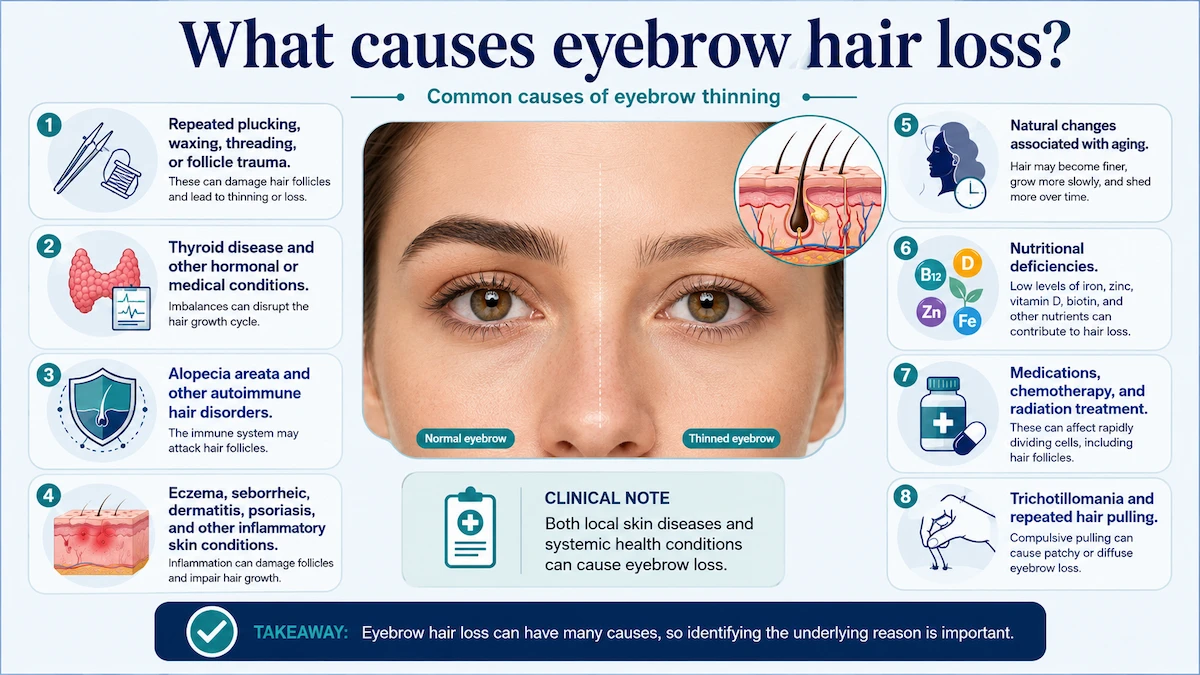
Common causes of eyebrow thinning include:
- Repeated plucking, waxing, threading, or other trauma to the follicles
- Thyroid disease and other hormonal or medical conditions
- Alopecia areata and other autoimmune hair disorders
- Eczema, seborrheic dermatitis, psoriasis, and other inflammatory skin conditions
- Natural changes associated with aging
- Nutritional deficiencies
- Medications, chemotherapy, and radiation treatment
- Trichotillomania and other forms of repeated hair pulling
Clinical reviews of madarosis emphasize that both local skin diseases and systemic health conditions can produce eyebrow loss.
Over-plucking and waxing
Repeated eyebrow shaping can damage hairs through mechanical trauma. In the early stages, hairs may simply take longer to return because they have been repeatedly removed from the root.
Years of aggressive plucking, waxing, or threading can eventually injure some follicles. When follicle damage becomes permanent, the affected areas may remain sparse even after hair removal stops.
Allowing the brows to grow without repeated removal for several months can help determine whether follicles are still capable of producing healthy hairs.
Thyroid disorders
Thyroid disease can affect hair growth throughout the body. A classic sign associated with thyroid problems is thinning or loss of the outer portion of the eyebrows. The hair may also become dry, brittle, fine, or more prone to shedding.
Eyebrow loss alone does not diagnose a thyroid disorder. Symptoms such as fatigue, unexplained weight changes, sensitivity to heat or cold, dry skin, changes in heart rate, or menstrual changes may provide additional reasons to investigate thyroid function.
When thyroid disease is suspected, blood testing can help determine whether thyroid hormone levels are abnormal.
Alopecia areata
Alopecia areata is an autoimmune condition in which the immune system attacks hair follicles. Although it is widely associated with round bald patches on the scalp, it can also affect eyebrows and eyelashes.
Eyebrow involvement may appear as isolated patches or more extensive loss. Some people experience eyebrow loss even when scalp symptoms are limited.
Hair can regrow because alopecia areata is usually a non-scarring condition, but the course is unpredictable. Hair may return without treatment, respond to therapy, or fall out again later.
Skin conditions (dermatitis, psoriasis, eczema)
The skin beneath and around the eyebrows can develop inflammatory conditions just like the scalp. Seborrheic dermatitis commonly affects the brows and can produce redness, greasy scale, and itching. Atopic dermatitis and psoriasis can also involve this area. These disorders are recognized causes of madarosis.
Inflammation itself may disrupt normal growth, while repeated rubbing and scratching can break or loosen eyebrow hairs.
Treating the skin condition is more important than simply applying a growth product. Persistent scaling, redness, crusting, or itching around thinning eyebrows should therefore be evaluated.
Aging
Eyebrows often become less dense with age. Hair growth cycles can change, individual strands may become finer, and some follicles may spend longer in resting phases.
Age-related thinning usually develops gradually rather than creating a sudden smooth patch. It may occur alongside thinning scalp hair and changes in hair color or texture.
Sudden eyebrow loss should not automatically be dismissed as aging, particularly when it is asymmetric or accompanied by skin changes.
Nutritional deficiencies
Nutritional problems can contribute to hair loss when the body does not receive enough nutrients needed for normal follicle activity. Iron and zinc deficiencies are among the nutritional issues considered when investigating hair loss. Broader reviews of eyebrow and eyelash alopecia also include nutritional disorders among possible causes of madarosis.
Very restrictive diets, rapid weight loss, gastrointestinal disease, heavy menstrual bleeding, or previous bariatric surgery may increase the chance of a deficiency.
Random supplements are not the best way to diagnose the problem. Blood testing and medical history can identify whether a specific nutrient actually needs to be replaced.
Medications and chemotherapy
Some medicines can disrupt normal hair growth, and cancer treatment is a well-known example. Chemotherapy may affect actively growing hairs on the scalp, eyebrows, eyelashes, and other areas of the body. Treatment-related hair disorders vary according to the drug and treatment schedule.
Hair often begins to return after treatment ends, although the timing, thickness, texture, and color may initially be different.
Prescription medication should not be stopped because of eyebrow thinning without discussing the issue with the prescribing doctor.
Trichotillomania
Trichotillomania is a hair-pulling disorder that may involve the scalp, eyebrows, eyelashes, or other hair-bearing areas. Repeated pulling can create irregular gaps and hairs of different lengths. Trichotillomania is included among recognized causes of eyebrow madarosis.
Someone may pull intentionally in response to an urge or do it almost automatically while concentrating, reading, or watching television.
Treatment focuses on managing the hair-pulling behavior rather than relying only on products intended to stimulate growth.
Scarring vs. non-scarring eyebrow loss
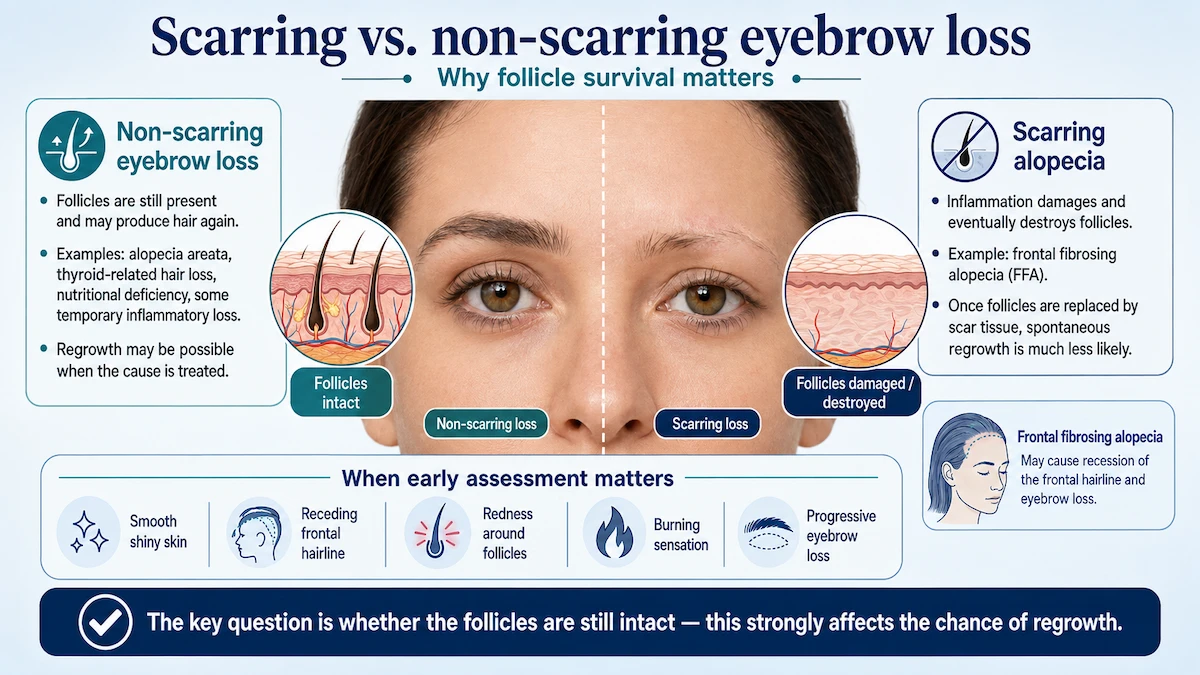
One of the most important distinctions in eyebrow hair loss is whether the follicles remain intact.
Non-scarring eyebrow loss occurs when follicles are still present and potentially capable of producing hair. Alopecia areata, thyroid-related hair loss, nutritional problems, and some forms of temporary inflammatory loss can fall into this category.
Scarring alopecia damages and eventually destroys follicles. Frontal fibrosing alopecia is an important example. It commonly causes recession of the frontal hairline and can also produce eyebrow loss. Once a follicle has been replaced by scar tissue, spontaneous regrowth becomes much less likely.
This is why eyebrow loss accompanied by smooth shiny skin, a receding frontal hairline, redness around follicles, burning, or progressive loss deserves early assessment.
How is eyebrow hair loss diagnosed?
Diagnosis begins with the pattern and timing of the loss. A dermatologist may ask when thinning started, whether hairs are shedding or breaking, how the brows are groomed, what medications are being taken, and whether scalp or body hair has also changed.
The skin is examined for redness, scale, scarring, broken hairs, follicle openings, and the shape of the affected areas. Dermoscopy or trichoscopy provides a magnified view and can help distinguish scarring from non-scarring disorders. Research supports trichoscopy as a useful tool for assessing eyebrow involvement in conditions such as frontal fibrosing alopecia.
Blood tests may be considered when thyroid disease, iron deficiency, or another systemic problem is suspected. Alopecia areata can often be recognized clinically, although biopsy or laboratory tests are occasionally needed when the diagnosis is unclear.
Treatment options for eyebrow hair loss
The right treatment depends on whether follicles are temporarily inactive, inflamed, repeatedly traumatized, or permanently damaged. There is no single eyebrow growth treatment that works for every cause.
Treating the underlying cause
When eyebrow loss is secondary to another problem, that condition should be addressed first. Thyroid-related thinning requires appropriate management of the thyroid disorder. Nutritional deficiency requires correction of the specific deficiency, while dermatitis or psoriasis needs treatment aimed at controlling skin inflammation.
Repeated plucking or waxing should be stopped long enough to allow the follicles to recover. Trichotillomania requires behavioral and mental health treatment to reduce continued pulling.
This approach matters because stimulating hair growth while the original trigger remains active may produce little improvement.
Topical treatments (bimatoprost, minoxidil)
Bimatoprost has been studied as a treatment for eyebrow hypotrichosis. Randomized studies have reported improvements in eyebrow fullness, darkness, and hair growth with topical bimatoprost formulations.
Bimatoprost is FDA-approved for eyelash hypotrichosis, not specifically for eyebrow growth, so eyebrow use is off-label. A dermatologist can determine whether it is suitable and how it should be applied near the eye.
Topical minoxidil is another option used off-label for certain forms of eyebrow thinning. Research comparing topical minoxidil with bimatoprost has shown improvement with both approaches in eyebrow enhancement.
Neither medication can restore a follicle that has been permanently destroyed by scarring.
Corticosteroid injections
Corticosteroid injections are commonly used when eyebrow loss is caused by localized alopecia areata. The medication is injected directly into affected areas to reduce the immune attack around the follicles.
The AAD specifically lists intralesional corticosteroids as a treatment option for eyebrow loss caused by alopecia areata. If regrowth occurs, minoxidil may sometimes be used afterward to help maintain it.
Treatment is performed medically because eyebrow skin is thin and injections must be placed carefully.
Eyebrow transplant
An eyebrow transplant moves individual hair follicles, usually taken from the scalp, into areas where eyebrow density is permanently reduced. Follicles must be placed at careful angles and directions because natural eyebrow hairs lie close to the skin rather than growing straight outward.
A case series involving 352 patients reported good growth and satisfactory direction and appearance in most treated patients, demonstrating the potential of single-follicular-unit transplantation for eyebrow restoration.
Transplanted scalp hairs retain some characteristics of donor hair and may require regular trimming. Surgery is generally considered after the cause of eyebrow loss has been identified and any active inflammatory or scarring disease has been stabilized.
Ways to make eyebrows look fuller in the meantime
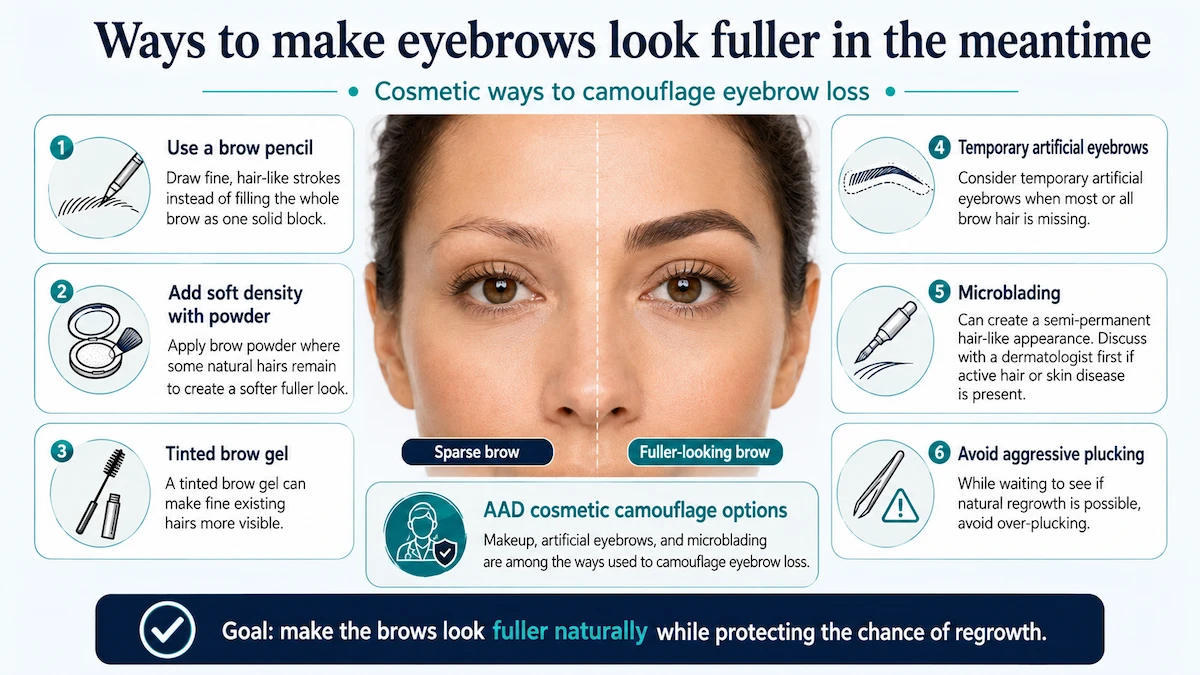
- Use an eyebrow pencil with fine, hair-like strokes rather than filling the entire brow with one solid block of color.
- Apply eyebrow powder to add soft density in areas where some natural hair remains.
- Use tinted brow gel to make fine existing hairs more visible.
- Consider temporary artificial eyebrows when most or all brow hair is missing.
- Microblading can create a semi-permanent hair-like appearance, but it should be discussed with a dermatologist first when active hair or skin disease is present.
- Avoid aggressive plucking while trying to determine whether natural regrowth is possible.
The AAD lists makeup, artificial eyebrows, and microblading among cosmetic ways to camouflage eyebrow loss.
Will eyebrow hair grow back?
Eyebrow hair can grow back when follicles are still alive and the underlying cause is reversible. Hair lost because of temporary thyroid changes, nutritional problems, some inflammatory skin conditions, over-plucking without permanent damage, or alopecia areata may return after the trigger is controlled. Alopecia areata can also regrow spontaneously in some people, although recurrence is possible.
Regrowth takes time. Eyebrow follicles have their own growth cycle, so visible improvement usually happens gradually rather than within a few days or weeks.
Permanent regrowth is less likely when scar tissue has replaced the follicles. Conditions such as frontal fibrosing alopecia therefore need early diagnosis, with treatment focused first on stopping further progression.
Persistent eyebrow thinning should not simply be covered and forgotten. The brows can provide useful clues about autoimmune disease, thyroid problems, skin inflammation, repeated trauma, or other health changes. Identifying the cause early gives healthy follicles the best opportunity to recover and helps determine whether medical treatment, cosmetic camouflage, or eyebrow transplantation is the most appropriate long-term option.
If you are experiencing eyebrow hair loss, you can contact us for an eyebrow transplant.
Sources
- Roshan Vasu, A. et al. (2022). Eyebrow and Eyelash Alopecia, A Clinical Review. American Journal of Clinical Dermatology.
- Yip, L. et al. (2022). Acquired causes of eyebrow and eyelash loss, A review and approach to diagnosis and treatment. Australasian Journal of Dermatology.
- DermNet NZ. Madarosis.
- Khong, J. J., Casson, R. J., Huilgol, S. C., Selva, D. (2006). Madarosis. Survey of Ophthalmology, 51(6), 550-560.
- Jiang, W., Wang, M., Wang, B. (2020). Clinical outcomes and technical tips for eyebrow restoration using single-follicular-unit hair transplantation, A case series review. Journal of Cosmetic Dermatology, 19(8), 2057-2060.
- American Academy of Dermatology Association. Hair Loss Resource Center.
