


Table of Contents
Hair loss is often blamed on vitamin deficiency, and sometimes nutrition really is part of the problem. Hair follicles are among the most active structures in the body, so they depend on a steady supply of energy, protein, vitamins, and minerals. When an important nutrient becomes too low, the normal hair cycle can be disrupted and increased shedding may follow.
However, there is no single “hair loss vitamin.” Iron deficiency, low vitamin D, zinc deficiency, and rare cases of biotin deficiency are among the nutritional problems associated with hair loss. Vitamin B12 may also be relevant in some patients, although the evidence is less consistent. It is also worth noting that iron and zinc are minerals rather than vitamins.
Finding the actual deficiency matters because taking supplements without testing is not always helpful. In some cases, taking too much of certain nutrients can actually contribute to hair loss.
Can vitamin deficiency really cause hair loss?
Yes. Nutritional deficiencies can cause or contribute to hair shedding, particularly when the body does not receive enough iron, zinc, protein, biotin, or other nutrients required for normal growth. The American Academy of Dermatology notes that inadequate levels of nutrients such as iron, biotin, protein, and zinc can lead to noticeable hair loss. Hair may regrow after the missing nutrient is restored.
That does not mean every case of thinning hair is caused by diet. Genetic pattern hair loss, thyroid disease, hormonal changes, autoimmune conditions, medications, scalp disease, stress, and physical damage can produce similar symptoms.
Nutrient-related hair loss often causes diffuse shedding rather than one clearly defined bald area. Hair may seem thinner across the scalp, more strands may appear during washing, and the ponytail may gradually feel smaller.
How to tell if your hair loss is nutrition-related?
There is no reliable way to confirm a vitamin or mineral deficiency by looking at the hair alone. Still, certain clues may make a nutritional cause more likely:
- Hair shedding increased after rapid weight loss, prolonged dieting, fasting, or a major change in food intake.
- The diet contains very little protein or excludes several major food groups.
- Shedding is diffuse across the scalp rather than limited to one typical pattern.
- Hair loss occurs with fatigue, weakness, pale skin, changes in nails, or other physical symptoms.
- There is a history of heavy menstrual bleeding, gastrointestinal disease, bariatric surgery, or another condition that can affect nutrient levels.
- A vegetarian or vegan diet is not planned to provide adequate iron, vitamin B12, zinc, and other key nutrients.
- Blood testing has already identified low iron stores, vitamin D, B12, zinc, or another relevant abnormality.
These clues are useful for deciding what to investigate, but they do not replace a medical examination or laboratory testing.
Vitamins and minerals linked to hair loss
Several nutrients have been studied in relation to hair loss, but the strength of the evidence varies considerably. Deficiency should be confirmed rather than assuming that more of every nutrient will improve hair growth.
Iron deficiency
Iron is one of the first nutrients considered in people with diffuse hair shedding, particularly in women. The body stores iron in a protein called ferritin, which can be measured with a blood test. Low ferritin can help identify iron deficiency and may be relevant when investigating diffuse hair loss.
Iron deficiency may occur because of inadequate intake, heavy menstrual bleeding, pregnancy, blood loss, or problems absorbing nutrients from the digestive system. People following vegetarian diets can also have higher iron requirements because iron from plant foods is absorbed less efficiently than iron from animal sources.
Iron supplements should not be taken indefinitely without a reason. Too much iron can be harmful, so testing is preferable to self-treating hair loss with high-dose iron.
Vitamin D deficiency
Vitamin D has attracted considerable attention in hair research because vitamin D receptors are involved in hair follicle biology. Studies have found lower vitamin D levels or a greater frequency of deficiency in several forms of non-scarring hair loss, including telogen effluvium, alopecia areata, androgenetic alopecia, and female pattern hair loss.
An association does not prove that low vitamin D is the sole cause of hair loss. Evidence that vitamin D supplements directly restore hair in people without a confirmed deficiency remains limited. Vitamin D testing may still be appropriate when deficiency is suspected based on medical history, diet, limited sun exposure, or other risk factors.
Vitamin B12 deficiency
Vitamin B12 is necessary for normal blood and nerve function and plays an important role in cell metabolism. Some studies have found lower B12 levels in people with telogen effluvium, while other research has not shown a consistent relationship. The evidence is therefore less clear than it is for established iron deficiency.
People at greater risk of B12 deficiency include older adults, people with pernicious anemia, gastrointestinal disorders or previous gastrointestinal surgery, and those following vegetarian or vegan diets without adequate fortified foods or supplements.
Correcting a genuine B12 deficiency is important for overall health, but taking additional B12 when blood levels are already adequate has not been shown to reliably make hair grow faster.
Zinc deficiency
Zinc is involved in cell growth, immune function, protein production, and tissue repair. True zinc deficiency can cause alopecia, and hair loss is recognized as one possible sign of inadequate zinc status.
This does not mean zinc supplements are a universal hair-growth treatment. If zinc levels are normal, taking more has not been proven to produce thicker or longer hair. Excessive zinc intake can also interfere with copper absorption and eventually cause copper deficiency.
Biotin deficiency
Biotin, also called vitamin B7, is probably the nutrient most strongly associated with hair supplements in advertising. Genuine biotin deficiency can cause thinning hair, loss of body hair, skin rashes, and brittle nails. However, biotin deficiency is considered rare.
Evidence supporting high-dose biotin supplements for healthy people with normal biotin levels is weak. Reviews have found little evidence that routine biotin supplementation improves hair loss when there is no underlying deficiency.
Biotin supplements can also interfere with certain laboratory tests. For that reason, anyone taking high-dose biotin should tell their doctor before having blood work.
Vitamin A, deficiency and excess
Vitamin A supports normal cell growth and skin function, but this is a good example of why “more vitamins” does not always mean healthier hair.
Vitamin A deficiency can affect normal tissues, including skin and hair, but true deficiency is uncommon in people eating a varied diet in many developed countries. At the other extreme, excessive vitamin A intake has been associated with hair loss. Reviews of nutrition and hair loss specifically warn that excess vitamin A from supplements can contribute to shedding.
High-dose vitamin A should therefore not be taken for hair growth unless medically indicated.
How vitamin deficiency triggers hair shedding?
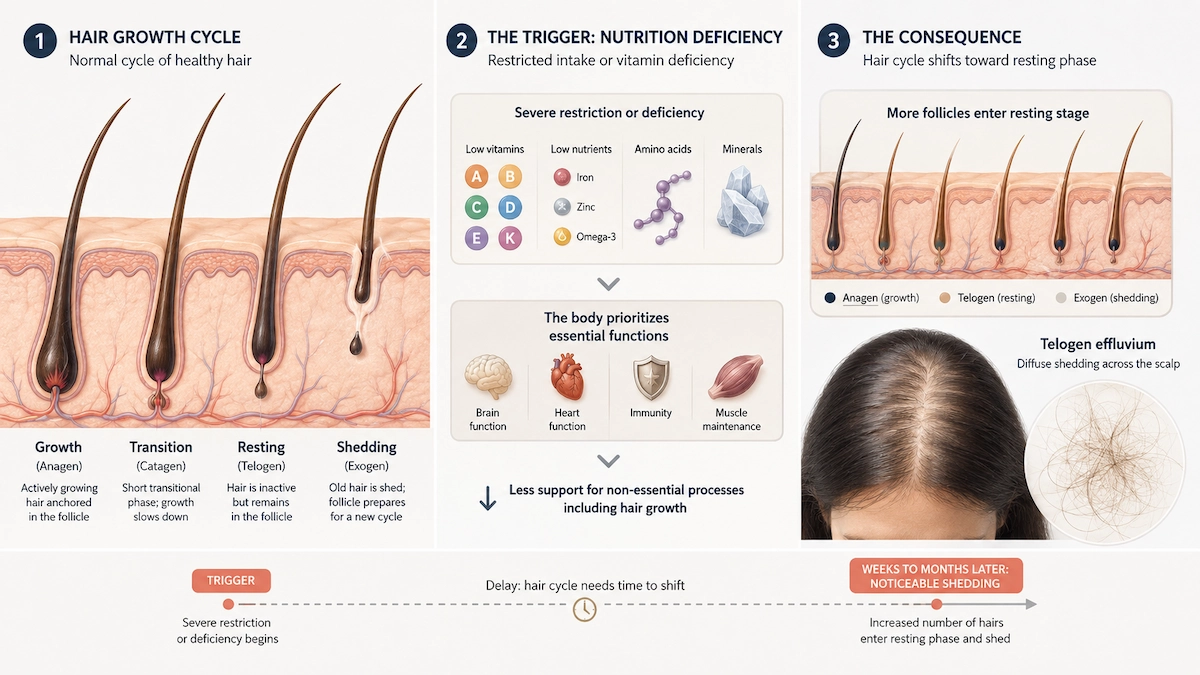
Hair follicles repeatedly cycle through growth, transition, resting, and shedding phases. Growing hair requires active cell division and a reliable supply of energy, amino acids, vitamins, and minerals.
When nutritional intake becomes severely restricted or a significant deficiency develops, the body may shift resources toward more essential functions. More follicles can then enter the resting stage. This may lead to telogen effluvium, a form of diffuse shedding that often becomes noticeable weeks or months after the original trigger.
This delay explains why people sometimes connect shedding with their current diet even though the actual trigger happened several months earlier.
Who is most at risk of nutrient-related hair loss?
People following very restrictive diets have a higher chance of inadequate nutrient intake, especially when calories and protein are also low. Rapid weight loss can itself trigger telogen effluvium.
Risk may also rise during pregnancy, with heavy menstrual bleeding, after bariatric or gastrointestinal surgery, and in people with conditions that interfere with nutrient absorption. Vegetarians and vegans can maintain excellent nutrition, but vitamin B12 and iron require particular attention because B12 occurs naturally mainly in animal foods and plant-based iron is less readily absorbed.
Persistent digestive symptoms, unexplained anemia, or repeated deficiencies may indicate that the issue is absorption rather than diet alone.
How is a vitamin deficiency diagnosed?
Diagnosis usually begins with medical history and an examination of the scalp. A dermatologist may ask about recent weight loss, diet, menstrual bleeding, illness, medications, digestive problems, pregnancy, stress, and the timing of the shedding.
Blood tests can then be selected according to the suspected cause. Depending on the history, testing may include a complete blood count, ferritin and other iron markers, vitamin D, vitamin B12, zinc, thyroid tests, or other laboratory studies.
Testing every possible vitamin is not always necessary. A targeted approach helps avoid treating laboratory numbers that have no meaningful connection with the hair problem. The AAD recommends identifying a deficiency before using supplements to treat hair loss.
Should you take supplements for hair loss?
Supplements can be useful when they correct a confirmed deficiency. If iron stores are genuinely low, for example, restoring adequate iron can address one potential cause of shedding. The same principle applies to zinc, vitamin B12, vitamin D, or biotin when a real deficiency is present.
Taking a broad range of high-dose “hair vitamins” without testing is different. There is little reason to expect large amounts of a nutrient to increase hair growth once the body’s needs are already being met.
Risks of taking too much
Excess supplementation can create new problems. Too much vitamin A has been linked with hair loss, excessive zinc can interfere with copper absorption, and chronically high selenium intake can cause hair loss and brittle nails.
High-dose supplements may also interact with medications or affect laboratory test results. A supplement labeled “natural” is not automatically harmless.
Foods that support healthy hair growth
A balanced diet is generally a better foundation for hair health than relying on one supplement. Useful foods include:
- Eggs, fish, poultry, lean meat, yogurt, beans, lentils, and tofu for protein.
- Lean meat, beans, lentils, spinach, and fortified grains for iron.
- Oily fish, fortified foods, eggs, and appropriate sun exposure for vitamin D support.
- Meat, fish, eggs, dairy, and fortified plant foods for vitamin B12.
- Meat, shellfish, dairy, beans, nuts, seeds, and whole grains for zinc.
- Eggs, nuts, seeds, fish, meat, and vegetables as sources of biotin and other B vitamins.
- Colorful fruits and vegetables for vitamin C, carotenoids, and a broad range of micronutrients.
A varied diet also provides protein and essential fats that are often missing from highly restrictive eating plans.
Is deficiency-related hair loss reversible?
In many cases, yes. When hair loss is caused mainly by a correctable nutritional deficiency and the follicles have not been permanently damaged, normal growth can resume after the deficiency is treated. The AAD notes that hair can regrow when missing nutrients such as iron, biotin, protein, or zinc are restored.
Recovery is not immediate. Hair follicles work slowly, and shedding may take time to settle even after blood levels improve. New hairs then need several months to gain enough length to affect visible density.
If thinning continues after the deficiency is corrected, another condition may also be present. Genetic pattern hair loss, thyroid problems, hormonal changes, or another form of alopecia can exist alongside a nutritional deficiency.
When to see a doctor?
Medical assessment is recommended when hair loss continues for several months, becomes noticeably worse, or causes visible reduction in density. Sudden bald patches, a widening part, a receding hairline, eyebrow or eyelash loss, scalp pain, redness, severe itching, scaling, or scarring also deserve evaluation.
A doctor should also be consulted when hair loss occurs with fatigue, weakness, unexplained weight change, menstrual problems, digestive symptoms, or other signs that may point to an underlying medical or nutritional issue.
Vitamin and mineral deficiencies are one possible explanation for hair loss, but they are only part of the picture. Testing helps separate a correctable deficiency from other common causes of thinning. When a genuine deficiency is found, correcting it is far more useful than taking random high-dose hair supplements and hoping for faster growth.
Sources
- American Academy of Dermatology Association. Hair loss, Who gets and causes.
- American Academy of Dermatology Association. Hair loss, Diagnosis and treatment.
- American Academy of Dermatology Association. Hair loss, Tips for managing.
- American Academy of Dermatology Association (2024). Supplement secrets unveiled, debunking common myths about beauty boosters.
- Almohanna, H. M., Ahmed, A. A., Tsatalis, J. P., Tosti, A. (2019). The Role of Vitamins and Minerals in Hair Loss, A Review. Dermatology and Therapy, 9(1), 51-70.
