Table of Contents
A successful transplant depends on more than surgical skill. Everyday habits like smoking after hair transplant, alcohol after hair transplant, and caffeine after hair transplant play a major role in recovery. These lifestyle choices influence blood flow, healing speed, and graft integration, shaping the final result.
Understanding how smoking, alcohol, and caffeine hair transplant outcomes interact with recovery allows patients to make informed decisions. Poor lifestyle management can lead to graft loss smoking alcohol caffeine, delayed healing, or weaker density. On the other hand, adjusting habits before and after surgery creates the right conditions for follicles to anchor securely and grow naturally.
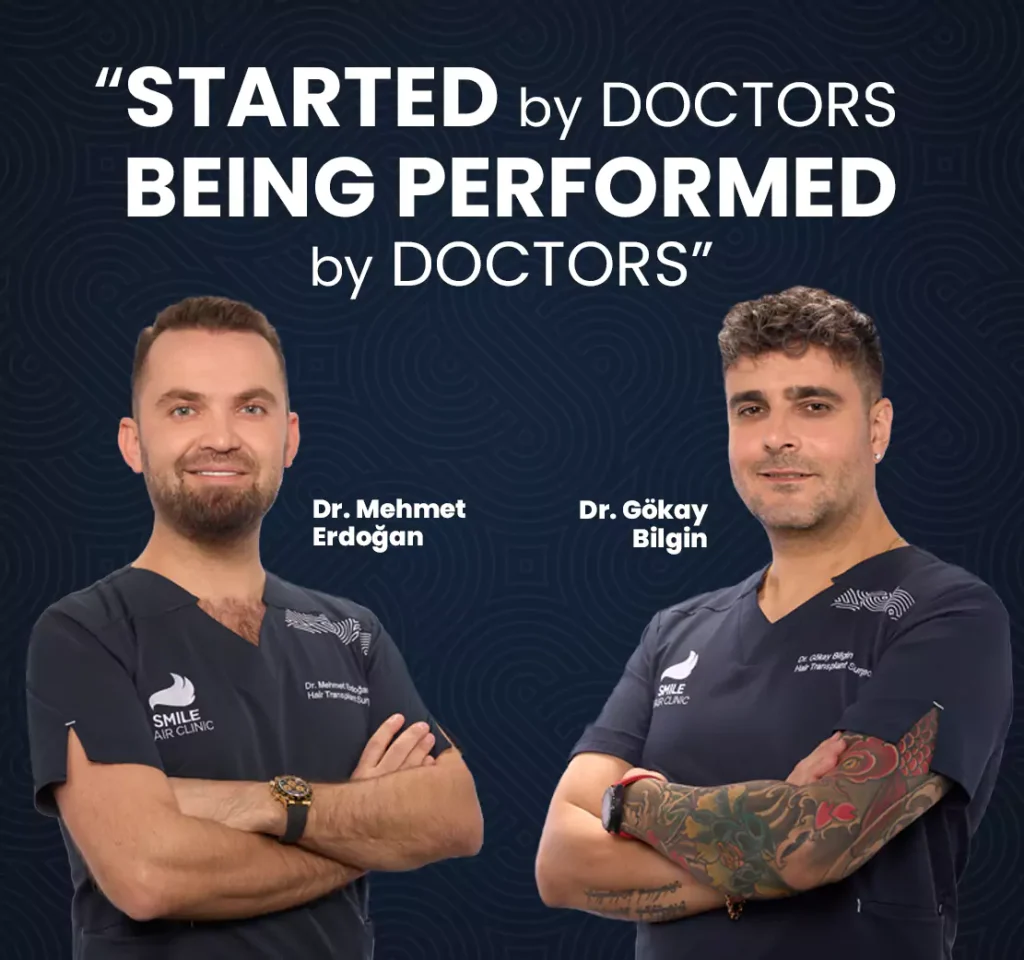
Dr. Gökay Bilgin notes,
“When patients ask why their lifestyle matters, I remind them that new grafts rely on strong circulation and minimal stress. Small choices like avoiding nicotine or alcohol can decide whether grafts thrive or fail.”
This guide explores how each factor affects hair transplant graft survival, what to avoid before and after hair transplant lifestyle, and when it may be safe to reintroduce certain habits. With the right approach, patients can protect their investment and enjoy lasting, natural results.
Please Select Your Gender
Smoking and Nicotine: The Biggest Threat to Graft Survival
Among all lifestyle factors, smoking after hair transplant has the most damaging effect on outcomes. Nicotine and the toxins in cigarette smoke constrict blood vessels, reducing circulation to the scalp.
This directly impacts oxygen delivery and nutrient flow, both of which are essential for nicotine hair transplant graft survival. Poor circulation increases the chance of graft failure, delayed healing, and visible thinning in the final result.
Patients who smoke regularly often experience weaker density and higher rates of shock loss. The risk is not limited to one technique. Both smoking after FUE hair transplant and smoking after DHI hair transplant can reduce success rates, since follicles need healthy vascular support no matter how they are implanted. Continued smoking also worsens scarring and increases the chance of infection, raising long-term risks.
The safest approach is to stop smoking before hair transplant at least two to four weeks ahead of surgery. Quitting allows blood flow to recover, improves oxygen levels, and strengthens the scalp’s ability to heal. After surgery, most surgeons recommend avoiding smoking entirely for several weeks, since even a single cigarette can compromise fragile grafts.
Dr. Firdavs Ahmedov explains,
“Nicotine is one of the most harmful substances for new grafts. Patients who commit to smoking cessation hair transplant strategies before surgery see better survival, faster healing, and more natural density.”