


Table of Contents
Searches for Donald Trump hair transplant and Trump hair transplant have stayed popular for years. People notice the same things again and again. The high front hairline. The unusual density pattern. The distinctive Trump comb over hair style that holds everything together.
Many ask a simple question. Did Donald Trump get a hair transplant, or something else?
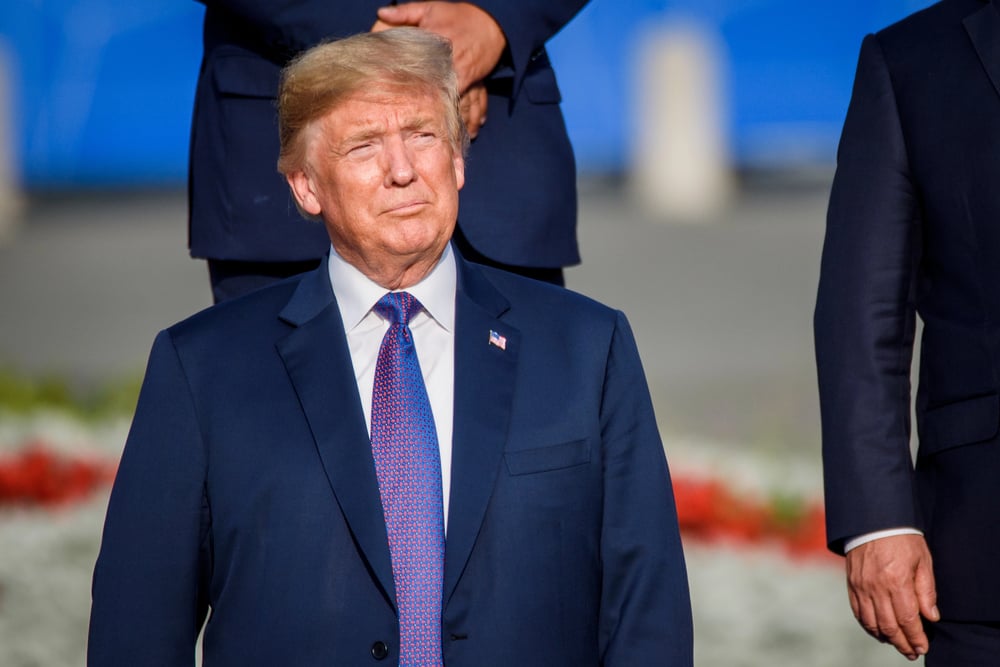
Photos from different decades show a changing Donald Trump hairline. In earlier years, there are signs of thinning at the crown and frontal area. In later years, the front appears fuller, yet still set back at a relatively high position. The sides and back remain dense.
This pattern has led to ongoing discussion around Trump scalp reduction surgery, Trump hair plugs, and other Donald Trump hair surgery possibilities.
At the same time, Trump’s styling plays a major role. His comb-over approach moves hair from the sides and back across the top. This creates visual coverage and helps maintain the appearance of density in the frontal region.
In this guide, we explain:
- what people notice about Trump hair before after comparisons
- whether Donald Trump hair transplant or scalp reduction is more likely
- how older techniques like hair plugs differ from modern methods
- what a modern FUE, Sapphire FUE, or DHI approach would look like in a similar case
- cost, timeline, and realistic expectations for men with similar hair loss
Dr. Gökay Bilgin often notes that celebrity hairlines teach us what to do and what to avoid. Trump’s case is a useful example for understanding design, density, and long-term planning.
Please Select Your Gender
What people notice about Donald Trump’s hair
Searches for Donald Trump hair transplant, Trump hair transplant, and Trump hair before after often begin with simple visual observations. People look at photos across decades and try to understand how his hair has stayed consistent.
The Donald Trump hairline shape
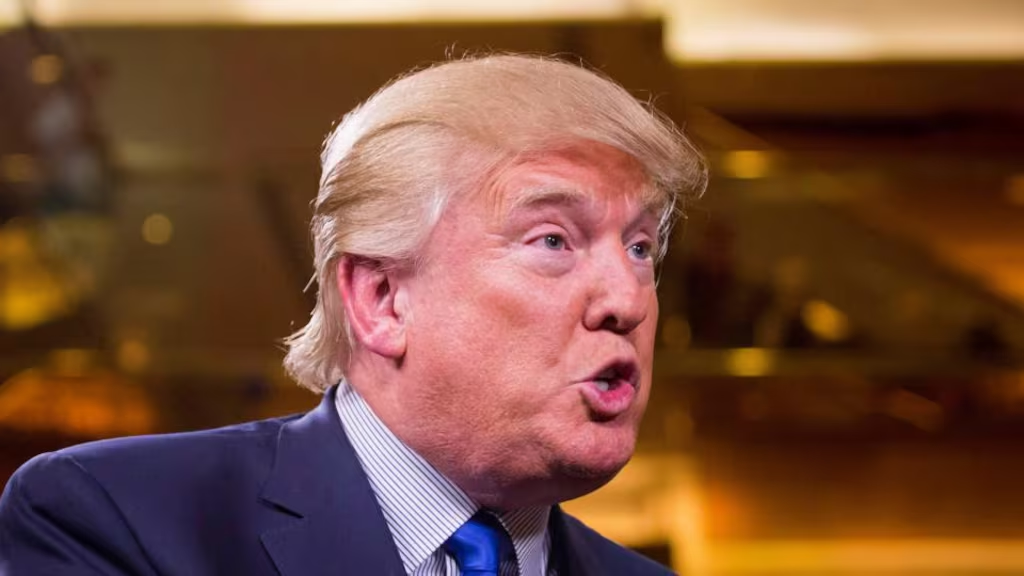
The Donald Trump hairline sits relatively high on the forehead. It does not follow the low, straight pattern seen in many modern transplants. Instead, it has:
- a higher frontal position
- soft recession at the temples
- a rounded, non-geometric front
This type of hairline can be intentional. A higher, mature hairline can look more natural over time and age better.
Dr. Mehmet Erdoğan notes that an age-appropriate hairline often creates a more believable long-term result than a low, dense front.
Density patterns and distribution
Looking at Trump hair before after photos, the density appears uneven across the scalp:
- stronger density at the sides and back
- lighter density through the top
- a preserved but thin frontal band
This pattern is common in male pattern hair loss where donor zones remain strong.
It also explains why the front appears fuller from certain angles but thinner in direct overhead lighting.
The comb-over styling approach
The most recognizable feature is the Trump comb over hair style.
This involves:
- growing the sides longer
- sweeping hair across the top
- directing strands forward and sideways
This styling technique increases the visual appearance of density without adding new grafts.
Dr. Gökay Bilgin explains that styling can create an optical illusion of fullness, especially when hair is carefully directed to cover thinner zones.
What stands out overall
When people search Donald Trump hair transplant or Donald Trump hair surgery, they usually notice three things:
- a stable high hairline
- uneven but persistent density
- strategic styling that enhances coverage
These visual clues are what lead to speculation about past procedures.
Did Donald Trump have a hair transplant or scalp reduction
When people search Donald Trump hair transplant, they usually want a clear answer. The reality is more nuanced. There are reports about older surgical methods, ongoing styling, and no public confirmation of modern FUE or DHI.
What is publicly known
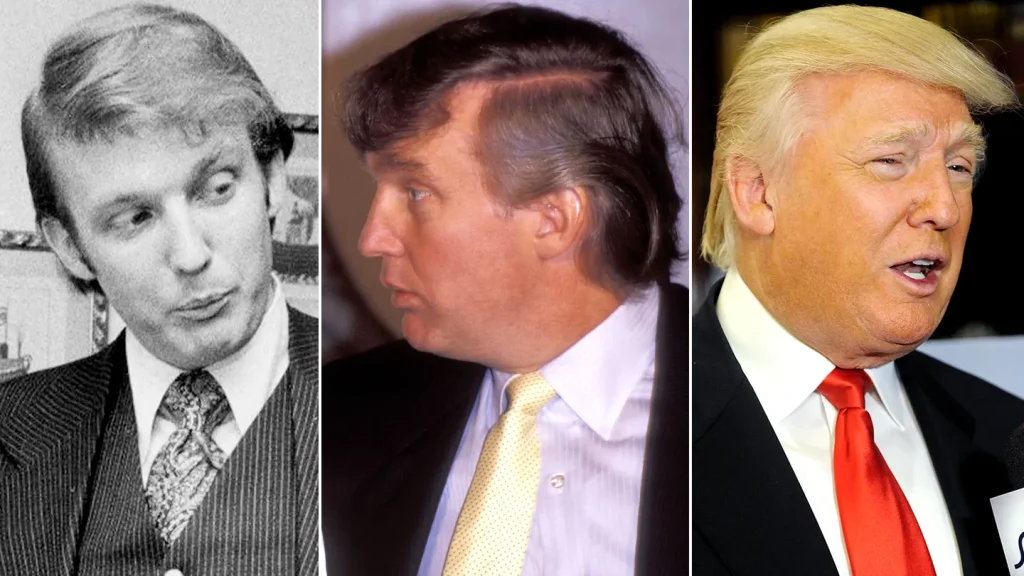
Over the years, media reports and court documents have mentioned that Donald Trump hair surgery may have included a scalp reduction procedure. This was a common technique decades ago.
There has been no verified statement confirming a modern Trump hair transplant using FUE or DHI methods. Most discussions are based on visible patterns and historical reports.
What is scalp reduction surgery
Trump scalp reduction surgery refers to a procedure where sections of bald scalp are surgically removed and the hair-bearing scalp is stretched to cover the area.
The method works by:
- removing a portion of thinning or bald scalp
- stretching the surrounding hair-bearing skin
- suturing the edges together
This reduces the visible bald area without adding new hair follicles.
Dr. Ali Osman Soluk explains that scalp reduction was used more frequently before modern graft-based techniques became standard.
Hair plugs and older transplant methods
Another topic often mentioned in Trump hair plugs discussions is the use of early hair transplant methods. Older “plug” techniques used larger grafts that could look less natural than modern micrografts.
If used, these methods can lead to:
- uneven density
- visible clustering of hairs
- a less natural hairline transition
What the visual evidence suggests
Looking at Trump hair before after images, the following patterns are visible:
- a consistently high hairline
- thinning across the top rather than a fully rebuilt front
- no dense, modern micro-hairline typical of FUE or DHI
These signs align more closely with older surgical methods and styling rather than a recent modern transplant.
The key takeaway
The available information suggests that Donald Trump likely had older surgical interventions such as scalp reduction, rather than a modern Donald Trump hair transplant.
How scalp reduction differs from hair transplant
Understanding the difference between Trump scalp reduction surgery and a modern Donald Trump hair transplant helps explain why results can look so different.
Both aim to reduce visible thinning. They do it in completely different ways.
Surgical method: removal vs redistribution
Scalp reduction removes skin. Hair transplantation redistributes follicles.
With scalp reduction:
- a section of bald or thinning scalp is removed
- surrounding hair-bearing scalp is stretched
- the two sides are stitched together
With a modern transplant such as FUE, Sapphire FUE, or DHI:
- follicles are taken from the donor area
- grafts are placed into thinning zones
- density is rebuilt where it is needed
Dr. Firdavs Ahmedov explains that transplantation adds new follicles to the front, while scalp reduction only shifts existing hair.
Hairline design and natural appearance
Scalp reduction does not create a new, soft hairline. It mainly reduces the size of a bald area.
Modern transplants allow:
- a softer, irregular front edge
- gradual density behind the line
- control over angle and direction
This is why modern frontal hairline transplant work can look natural even in close-up photos.
Dr. Gökay Bilgin notes that hairline artistry is one of the biggest advances in modern techniques.
Density and long-term results
Scalp reduction may reduce bald area size, but it does not increase follicle density.
A transplant can:
- add thousands of grafts
- reinforce weak frontal zones
- create long-term density in targeted areas
This is why hair transplant results timeline discussions often show stronger, more even density compared to older methods.
Scarring and limitations
Scalp reduction usually leaves a linear scar. It also depends on scalp elasticity and may not be suitable for all patients.
Modern FUE-based techniques leave tiny dot scars that are difficult to notice, especially with normal hair length.
Dr. Mehmet Erdoğan explains that donor management and minimal scarring are major priorities in current practice.
The key takeaway
Scalp reduction removes bald scalp. A Donald Trump hair transplant would add new hair in thinning zones.
Modern transplant techniques offer more natural hairlines, better density control, and more flexible long-term results.
What a modern hair transplant would look like for a similar case
If someone today presented with a pattern similar to Donald Trump hairline, the plan would be very different from older methods. Modern approaches focus on restoring density, shaping a natural hairline, and protecting the donor area.
Searches like hair transplant techniques fue dhi and frontal hairline transplant usually reflect this modern approach.
FUE for controlled graft placement
FUE (Follicular Unit Extraction) is the most common method used today for male hairline restoration.
In a case like Trump hair transplant style hair loss, FUE would be used to:
- reinforce the frontal band
- fill mid-scalp thinning
- preserve donor density at the back
FUE allows surgeons to place grafts between existing hairs without damaging them.
Dr. Ali Osman Soluk notes that this flexibility is important when thinning is diffuse rather than fully bald.
Sapphire FUE for refined hairline design
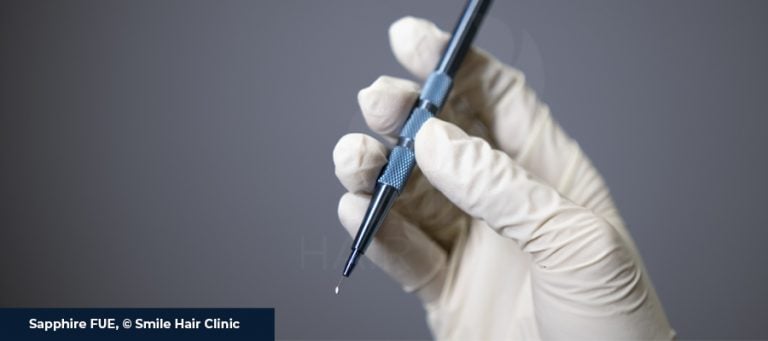
Sapphire FUE uses smaller, sharper blades to create precise channels for graft placement.
This helps achieve:
- closer graft spacing in the frontal zone
- softer, natural hairline edges
- improved control of direction and angle
For a high, mature hairline like Donald Trump hairline, Sapphire FUE can refine the front without lowering it too aggressively.
Dr. Mehmet Erdoğan explains that keeping the hairline slightly higher often creates a more natural, age-appropriate look.
DHI for density reinforcement
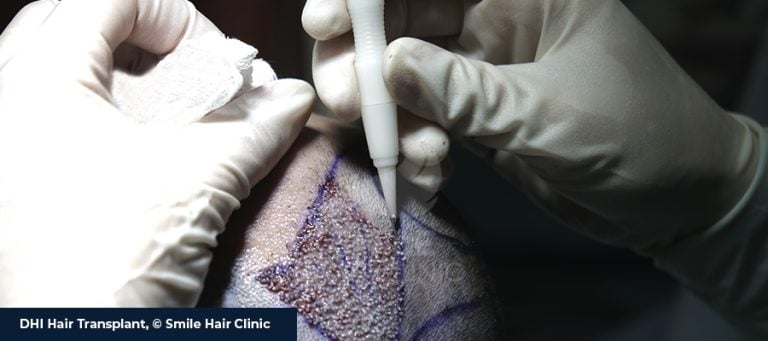
DHI (Direct Hair Implantation) allows direct placement of grafts with a pen-like implanter.
In similar cases, DHI is often used to:
- increase density behind the hairline
- strengthen weak frontal zones
- improve blending with existing hair
This is useful when there is still hair present but it has become thin.
Dr. Firdavs Ahmedov says DHI is especially effective for increasing density without shaving large areas.
What the final result would look like
With modern techniques, a result similar to a refined Donald Trump hair transplant case would aim for:
- a natural, slightly higher hairline
- improved frontal density
- better balance across the top
The goal is not a dramatic change, but a stronger, more consistent appearance.
How many grafts would be needed for a similar hairline
For a case similar to the Donald Trump hairline, graft planning focuses on strengthening the front and improving mid-scalp coverage, not creating a low, straight line. Searches like frontal hairline transplant and hair transplant techniques fue dhi usually point to this kind of mature, age-appropriate design.
Frontal band reinforcement
Most men with a high, stable front need density across the first 2–3 cm of the hairline.
Typical range:
- 1,200–2,000 grafts
This level rebuilds the frontal frame without lowering it too much. The first rows stay soft, with gradual density behind them.
Dr. Mehmet Erdoğan notes that a slightly higher hairline with good density often looks more natural long term.
Mid-scalp support and blending
In patterns like Trump hair before after, the mid-scalp often appears thinner than the sides.
Typical range:
- 800–1,500 grafts
These grafts strengthen the area behind the hairline and improve continuity from front to crown. Placement is spread out to blend with existing hair.
Dr. Ali Osman Soluk explains that spacing between native hairs is key to avoid shock loss and create even coverage.
Crown (if needed)
Some patients choose to reinforce the crown. In a Trump-style case, this is optional and depends on personal priorities.
Typical range:
- 800–1,500 grafts (if treated)
Many clinics stage crown work later to protect donor reserves.
What affects your final graft number
Your plan depends on:
- donor density and hair thickness
- degree of thinning in the mid-scalp
- desired density and styling habits
- long-term hair loss progression
Dr. Gökay Bilgin emphasizes planning for the future, not just the next few years.
The key takeaway
A modern Donald Trump hair transplant style plan often totals 2,000–3,500 grafts for the front and mid-scalp, with optional crown work. The goal is balanced density and a natural, mature hairline.
Please Select Your Gender
Cost of a Donald Trump–style hair transplant
Cost is one of the first questions after design and graft count. Searches like how much does hair transplant cost, hair transplant cost celebrity, and Donald Trump hair transplant often reflect the same concern. What will it actually cost to achieve a similar result?
The final price depends on graft numbers, technique, and the clinic’s experience level.
Average price ranges by region
For a case similar to the Donald Trump hairline (around 2,000–3,500 grafts), typical ranges are:
- Turkey: about $2,500 – $6,000
- Europe: about €6,000 – €12,000+
- USA / Canada: about $8,000 – $18,000+
These ranges usually include the procedure itself. In Turkey, many clinics include hotel, transfers, and aftercare kits in package pricing.
What affects the final price
Your exact cost will depend on several factors:
- total graft count needed
- technique used (FUE, Sapphire FUE, or DHI)
- doctor involvement and clinic reputation
- complexity of hairline design
- additional therapies like PRP support
Dr. Firdavs Ahmedov explains that frontal hairline work requires high precision, which can increase procedure time and detail.
Why many patients choose Turkey
Turkey is a leading destination for hair transplant cost celebrity level results at more accessible prices.
Patients are often attracted by:
- experienced doctor-led teams
- high surgical volume and refined techniques
- competitive pricing with full service packages
- structured long-term follow-up
Why price alone should not guide your choice
Choosing only based on cost can lead to:
- unnatural hairline design
- poor density or survival rate
- visible scarring or donor damage
Dr. Mehmet Erdoğan advises focusing on design expertise and long-term planning, not just price.
The key takeaway
A Donald Trump hair transplant style procedure varies widely in cost by location and complexity. The right clinic and design approach matter more than finding the lowest price.
Results timeline and long-term maintenance
A modern Donald Trump hair transplant does not change overnight. Growth follows a biological cycle. Each phase has its own look and expectations. Searches like hair transplant results timeline and celebrity hair transplant before after usually come from this question. When will I see the final result?
Month 1 — healing and early outline
The first month focuses on recovery and placement stability.
You may notice:
- small scabs shedding within 10–12 days
- light redness along the frontal area
- short stubble showing the new hairline outline
The shape of the Donald Trump hairline becomes visible early. Density still looks light at this stage.
Dr. Ali Osman Soluk explains that month one shows design accuracy, not final thickness.
Months 2 to 4 — shedding phase
This phase can feel uncertain.
Common changes include:
- transplanted hairs shedding
- the hairline looking thinner again
- early new hairs starting to emerge
The follicles remain alive beneath the skin and reset their growth cycle.
Months 5 to 8 — visible density growth
This is when the transformation becomes clear.
You start to see:
- stronger frontal density
- better mid-scalp blending
- a more defined, balanced hairline
Many celebrity hair transplant before after photos reflect this stage.
Dr. Mehmet Erdoğan notes that most patients recognize their new look around month six.
Months 9 to 12 — final maturation
The final phase brings refinement.
Hair becomes:
- thicker and more consistent
- aligned with natural direction
- fully blended with existing hair
This stage defines the final visual result.
Long-term maintenance and aging
Transplanted hair is permanent, yet native hair can continue to thin over time.
Long-term care may include:
- medical treatments to protect native hair
- periodic follow-up evaluations
- future density reinforcement if needed
Dr. Gökay Bilgin emphasizes that long-term planning protects the natural look for years.
The key takeaway
A Donald Trump hair transplant style result develops gradually over 9–12 months and can last many years with proper planning and maintenance.
Who is a good candidate for a Trump-style hairline restoration
A successful Donald Trump hair transplant style result depends on the right profile. Not every man with thinning hair is a strong candidate. Proper assessment protects both the result and the donor area.
Searches like can you get hair like Donald Trump, frontal hairline transplant, and hair transplant for men hairline usually reflect this concern.
Donor area strength and hair characteristics
The donor zone at the back and sides must be stable and dense.
Good candidates typically have:
- strong, permanent donor hair
- medium to thick hair caliber for better coverage
- minimal thinning in the donor region
These factors determine how many grafts can be safely used and how dense the final result can look.
Dr. Firdavs Ahmedov explains that donor quality sets the ceiling for any restoration plan.
Hair loss pattern and stability
A Donald Trump hairline is relatively high and mature. It suits men with:
- frontal thinning with preserved sides and back
- mid-scalp thinning rather than complete baldness
- a stable pattern that is not rapidly progressing
Men with very aggressive, fast hair loss may need medical stabilization before surgery.
Dr. Mehmet Erdoğan often looks for at least 6–12 months of stability before planning a Trump hair transplant style case.
Expectations and hairline goals
The best results come from realistic goals.
A good plan usually aims for:
- a natural, slightly higher hairline
- soft temple recession appropriate for age
- balanced density rather than an overly low, dense front
Trying to create a low, straight line on a mature hair pattern often looks unnatural over time.
Dr. Gökay Bilgin notes that age-appropriate design is one of the most important factors in long-term satisfaction.
Health and lifestyle factors
Candidates should be in good general health and able to follow aftercare.
Important considerations include:
- no uncontrolled medical conditions affecting healing
- realistic understanding of the growth timeline
- willingness to maintain hair health long term
The key takeaway
A good candidate for a Donald Trump hair transplant style restoration has a strong donor area, a stable pattern of hair loss, and realistic design goals.
Main design lessons from Donald Trump’s hairline
Looking at the Donald Trump hairline over time offers useful design lessons. The goal here is not to copy a celebrity. It is to understand what creates a natural, lasting result in real life.
Searches like Donald Trump hair transplant, Trump hair before after, and frontal hairline transplant often focus on shape, height, and density choices.
Hairline height and long-term balance
One clear feature is the relatively high frontal position. It sits higher than many modern, low hairlines.
This has two advantages:
- it matches age and facial proportions
- it ages naturally as hair loss progresses
A very low hairline on a mature pattern can look unnatural after a few years.
Dr. Mehmet Erdoğan notes that keeping a slightly higher, mature hairline often creates better long-term harmony.
Controlled temple recession
The temples in the Donald Trump hairline are not fully filled. There is mild, natural recession.
This creates:
- a softer, masculine frame
- a realistic transition from front to sides
- a look that matches natural male patterns
Completely closing the temples can sometimes look artificial on adult male patients.
Density strategy and distribution
Density appears stronger in the frontal band and lighter toward the mid-scalp.
This distribution is useful because:
- the front frames the face and carries visual impact
- mid-scalp density can be lighter without being noticeable
- donor resources are preserved for future needs
Dr. Ali Osman Soluk explains that density planning should prioritize the zones people see first.
The role of styling and direction
The well-known Trump comb over hair style shows how direction and length can enhance coverage.
Even after a transplant, styling helps:
- guide hair to cover weaker zones
- create visual fullness
- improve overall balance
Dr. Gökay Bilgin emphasizes that hair direction planning during surgery should support future styling options.
What to take from this
The Donald Trump hair transplant discussion shows that a successful result is not about maximum density or the lowest hairline.
It is about:
- correct height
- natural recession
- balanced density
- long-term planning
These principles help create a hairline that looks natural today and years from now.
Please Select Your Gender
Trump hair transplant FAQs
Did Donald Trump have a hair transplant?
There is no confirmed public statement of a modern Donald Trump hair transplant. Reports have mentioned older procedures like scalp reduction. His current look combines previous treatments and distinctive styling.
What is Trump scalp reduction surgery?
Trump scalp reduction surgery refers to removing a section of thinning scalp and stretching hair-bearing skin to cover it. It reduces bald area size but does not add new follicles.
Does Trump have hair plugs?
Older Trump hair plugs techniques used larger grafts than today’s methods. Some observers suggest earlier procedures, though there is no official confirmation.
Why does Donald Trump use a comb-over?
The Trump comb over hair style moves longer side hair across the top. It increases visual coverage and helps mask thinner areas without adding density.
Could a modern transplant improve a similar case?
Yes. A modern frontal hairline transplant using FUE, Sapphire FUE, or DHI can add grafts to the front and mid-scalp, creating softer edges and more even density.
How many grafts would a Trump-style case need?
Most similar cases require about 2,000–3,500 grafts for the frontal band and mid-scalp, with optional crown work depending on goals.
How long does it take to see results?
New growth starts around month 3–4. Visible density improves by month 6–8. Final results are typically seen between months 9–12.
How much does a celebrity-level hair transplant cost?
Typical ranges are $2,500–$6,000 in Turkey, €6,000–€12,000+ in Europe, and $8,000–$18,000+ in the USA/Canada, depending on graft count and clinic experience.
Will transplanted hair be permanent?
Transplanted follicles are generally permanent. Native hair can still thin over time, so long-term planning and medical support may be advised.
Can I get the same hair as Donald Trump?
You can achieve a similar Donald Trump hairline style if your donor area is strong and your pattern is suitable. The design should be personalized to your face and age for a natural result.
Plan your natural, age-appropriate hairline with Smile Hair Clinic
A result similar to a Donald Trump hair transplant style outcome is not about copying a look. It is about creating a balanced, mature hairline that fits your face, your age, and your future hair pattern.
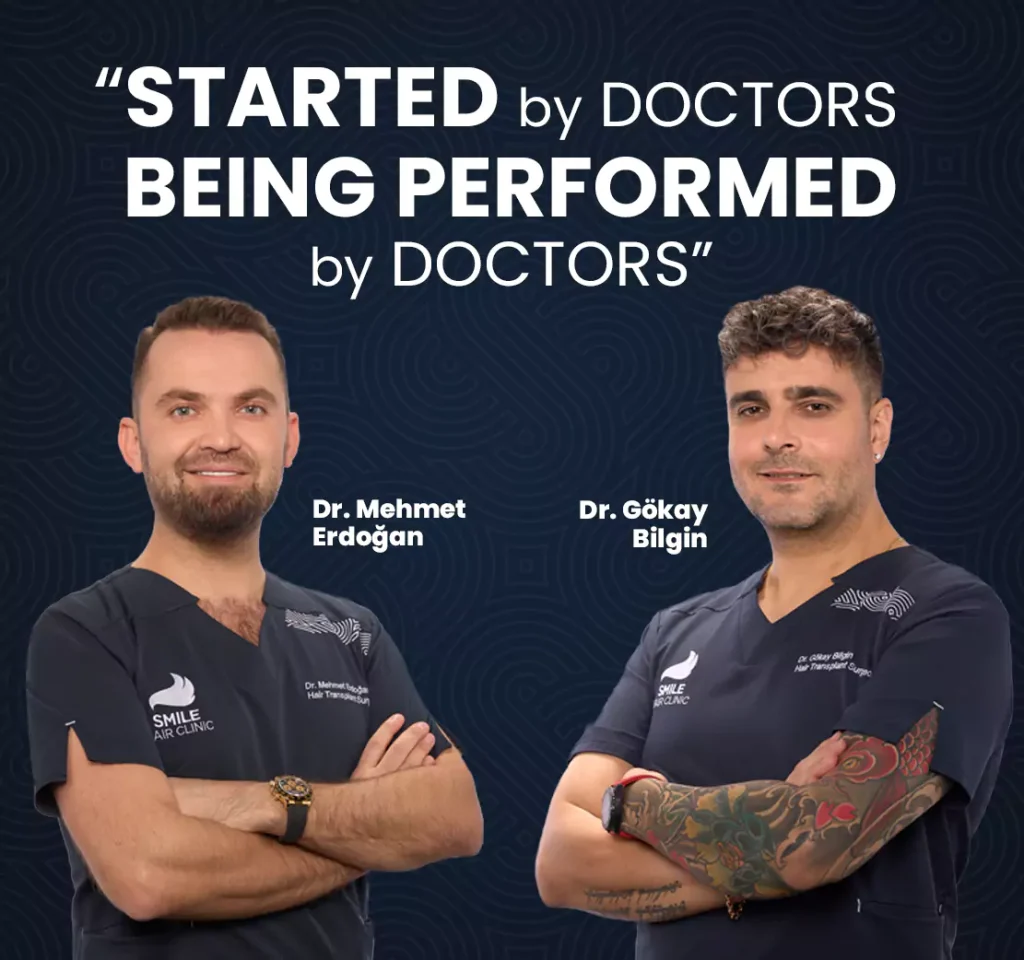
At Smile Hair Clinic, every case follows the True™ Philosophy. Your treatment is planned by a doctor-led team and built around long-term natural results.
What makes your result look natural
Your final look depends on precise design choices:
- a hairline height that matches your facial proportions
- soft, natural temple recession
- density focused in the frontal band, not overfilled
- correct angle and direction so hair falls naturally
Dr. Gökay Bilgin and Dr. Mehmet Erdoğan guide the design so your frontal hairline transplant looks strong but believable. Dr. Firdavs Ahmedov, Dr. Ali Osman Soluk, and Dr. M. Reşat Arpacı support graft placement and follow-up so your result develops smoothly.
A clear, supportive process
You are guided through each step:
- detailed consultation and hairline simulation
- graft planning that protects your donor area
- precise FUE, Sapphire FUE, or DHI implantation
- long-term follow-up as your hair grows and matures
The aim is a hairline that feels like it has always been yours.
Your next step
If you are considering a Donald Trump hair transplant style restoration:
- Share your photos for an initial assessment
- Receive a personalized design and graft plan
- Understand your timeline and expected density
- Move forward with confidence and clarity
A well-designed hairline can change how you see yourself every day.
If you want your treatment planned and performed by an experienced doctor-led team, you can request your consultation with Smile Hair Clinic today.
