


Table of Contents
Searches for Tom Cruise hair transplant have grown steadily in recent years. Fans watching films, interviews, and red carpet appearances often notice something unusual. Tom Cruise’s hairline appears remarkably consistent across decades in Hollywood. That observation leads many people to ask a direct question: did Tom Cruise get a hair transplant?
Hair loss affects a large percentage of men over time. Dermatology research shows that male pattern hair loss commonly begins in the late twenties or thirties. The temples may recede, and crown thinning can develop gradually. Because of this pattern, when a public figure maintains dense hair into their fifties or sixties, curiosity naturally grows.
Tom Cruise has remained one of the most recognizable actors in the world since the 1980s. From early films like Top Gun to recent Mission: Impossible appearances, his hairline appears relatively stable. This stability often leads to speculation about celebrity hair transplant treatments.
Still, celebrity hairlines can be misleading.
Hair thickness, lighting conditions, and professional styling often affect how hair appears on camera. Film production teams carefully manage appearance through grooming and hair design. These factors can create the impression of fuller hair even when the underlying hairline remains unchanged.
Modern hair transplant procedures also contribute to the speculation. Techniques such as FUE hair transplant, Sapphire FUE, and DHI hair transplant allow surgeons to restore hairlines with extremely natural results. These procedures relocate healthy follicles from a donor area to thinning regions of the scalp.
When performed correctly, transplanted hair grows naturally and blends with existing hair.
This guide examines the Tom Cruise hair transplant discussion from a medical perspective. We will analyze how his hairline has changed over the years, explore whether signs of hair restoration appear in available images, and explain how modern techniques like FUE, Sapphire FUE, and DHI hair transplant can recreate natural hairlines similar to those seen in long-term Hollywood careers.
Quick answer — Did Tom Cruise have a hair transplant?
Searches for Tom Cruise hair transplant usually begin with one question. Did the actor actually undergo a hair transplant procedure, or is his hairline simply the result of strong genetics?
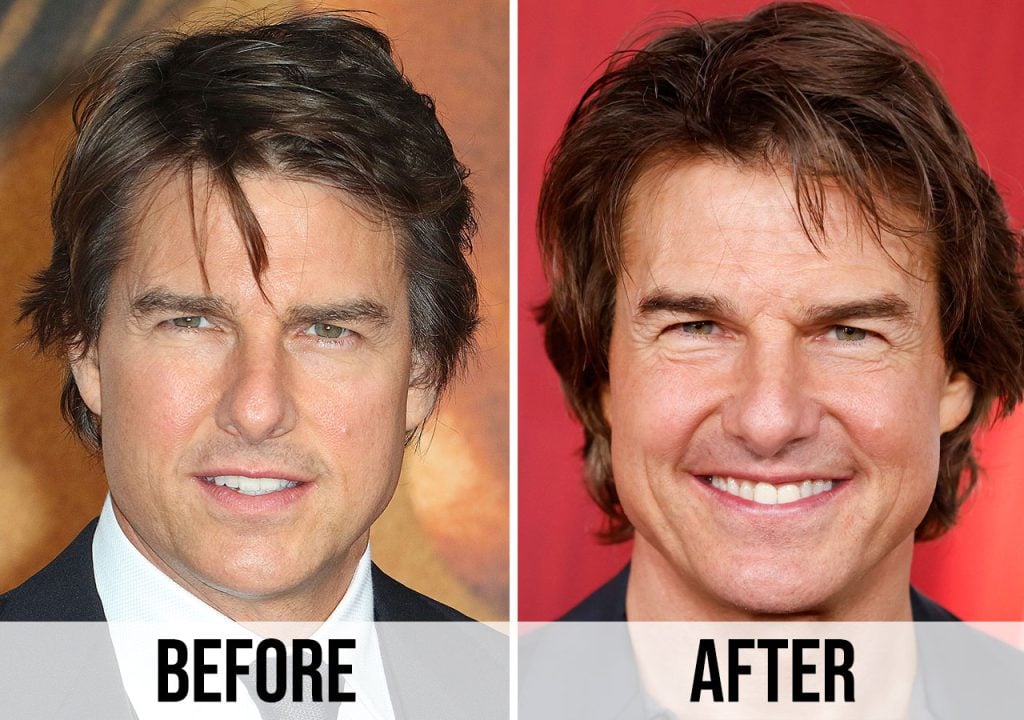
There is no confirmed evidence that Tom Cruise has had a hair transplant. The actor has never publicly stated that he underwent hair restoration surgery, and no clinic has claimed involvement in such a procedure.
This means the discussion around Tom Cruise hair transplant remains speculative.
Still, people often analyze celebrity hairlines using photographs from different periods. When a hairline appears consistent over many years, speculation about celebrity hair transplant treatments naturally increases.
Hairline observations in public appearances
Tom Cruise entered Hollywood during the early 1980s. Since then, he has appeared in dozens of films and interviews, creating a long visual timeline of his hairline.
Across these appearances, several features remain relatively consistent:
- balanced frontal hairline shape
- mild temple recession typical for aging
- stable density across the frontal region
These traits can sometimes resemble the results achieved through hair transplant techniques.
However, they can also occur naturally.
Why stable hairlines create speculation
Many men experience gradual male pattern hair loss as they age. Temple recession and crown thinning often become more visible after the age of forty.
When a public figure maintains relatively dense hair for decades, people often search for explanations. Modern procedures like FUE hair transplant, Sapphire FUE hair transplant, and DHI hair transplant can restore density and create natural hairlines.
These procedures have become common in the entertainment industry.
Yet a stable hairline alone does not confirm surgery.
Genetics, hair thickness, and styling can all influence how hair appears on camera.
Dr. Mehmet Erdoğan explains:
“A strong hairline over decades often reflects genetics. Without confirmation, celebrity hair transplant discussions remain speculation.”
Tom Cruise hairline over the years
When people search Tom Cruise hair transplant, they often begin by comparing photos from different stages of his career. Tom Cruise has been visible in films and public appearances for more than four decades. That long timeline allows fans to observe how his hairline has evolved over time.
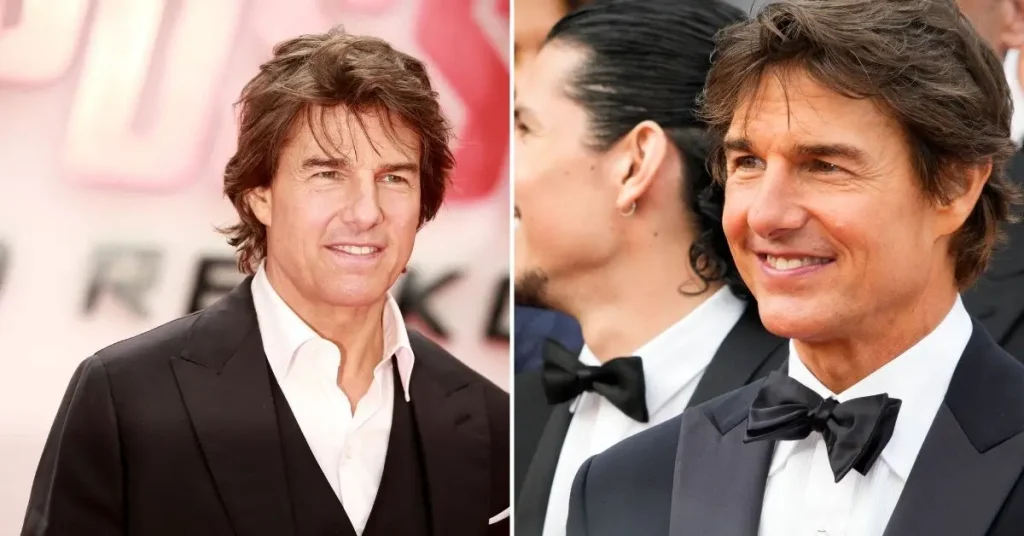
Looking at these periods helps explain why speculation about Tom Cruise hair loss or possible hair restoration appears online.
Early career hairline
During the 1980s and early 1990s, Tom Cruise became one of Hollywood’s most recognizable actors. In films like Top Gun, Rain Man, and Days of Thunder, his hairline appeared youthful and dense.
The frontal region looked strong with minimal recession.
Key characteristics during this stage included:
- low frontal hairline
- strong hair density
- thick hair shafts creating volume
These features are common in men in their twenties.
Hairlines at that age often sit lower on the forehead and appear fuller due to high follicle density.
Mid-career hairline changes
As Tom Cruise entered his late thirties and forties, subtle changes became visible. Many observers noticed mild temple recession, which is a typical part of aging.
This stage often creates what specialists call a mature hairline.
Despite this shift, Tom Cruise maintained strong frontal density across many films, including Minority Report, Collateral, and War of the Worlds.
This stability is one reason people search Tom Cruise hair transplant before and after comparisons.
However, the available images do not show sudden increases in density or a dramatically lowered hairline, which are common indicators of a hair transplant procedure.
Recent appearances
In recent Mission: Impossible films and interviews, Tom Cruise’s hairline still appears relatively consistent with his mid-career look.
The temples remain slightly recessed, creating a natural mature hairline shape.
This pattern often occurs in individuals with favorable genetics.
Modern techniques such as FUE hair transplant, Sapphire FUE, and DHI hair transplant can recreate similar natural hairlines. However, a stable hairline alone does not confirm that hair transplant surgery occurred.
Dr. Gökay Bilgin explains:
“Hairlines that remain stable for decades often reflect genetics and hair thickness rather than surgical restoration.”
Signs people associate with celebrity hair transplants
When people search Tom Cruise hair transplant, they usually try to identify visible signs of a hair transplant procedure in photographs or film appearances. Celebrity hairlines attract attention since audiences see them over many years on screen.
Hair restoration specialists sometimes examine similar patterns when evaluating hairlines. However, visual comparisons alone cannot confirm whether hair transplant surgery occurred.
Still, certain changes often lead to speculation about celebrity hair transplant treatments.
Hairline density changes
One of the most discussed indicators is a noticeable increase in hair density. When a public figure appears to have fuller hair in later years, observers sometimes assume hair restoration treatments were involved.
Modern FUE hair transplant procedures allow surgeons to restore density in thinning areas while preserving natural hair direction.
However, in Tom Cruise’s case, available photos generally show gradual aging rather than sudden density increases.
Temple recession patterns
Temple recession is a common feature of male pattern hair loss. The corners of the hairline slowly move backward with age.
When temples appear fuller later in life, speculation about hair transplant procedures often grows.
Advanced methods such as Sapphire FUE hair transplant can restore temple areas with highly precise graft placement. Yet Tom Cruise’s temples appear to follow a natural mature hairline pattern rather than showing dramatic restoration.
Long-term hairline stability
The most common reason people search Tom Cruise hair transplant is simple. His hairline appears relatively stable across many decades of public appearances.
Hairlines that change slowly or remain consistent often attract curiosity. Many people expect visible thinning as men enter their fifties or sixties.
However, several factors influence how hair appears on camera:
- natural hair thickness
- professional styling techniques
- lighting used during filming
- hair products that increase volume
All of these can create the appearance of fuller hair.
Dr. Firdavs Ahmedov explains:
“A stable hairline does not automatically indicate surgery. Genetics and hair characteristics often explain what viewers see.”
What type of hair transplant could recreate a Tom Cruise–style hairline?
People researching Tom Cruise hair transplant often want to understand how a similar hairline could be achieved. Even though there is no confirmation that the actor underwent hair transplant surgery, modern hair transplant procedures can recreate natural hairlines when the donor area is strong.
The key objective is not copying a celebrity hairline exactly. Surgeons design a hairline that fits the patient’s facial proportions, age, and hair characteristics.
Today, most clinics rely on three advanced hair restoration techniques.
FUE hair transplant
The FUE hair transplant method is the most widely used technique worldwide. FUE stands for Follicular Unit Extraction.
During the procedure, surgeons remove individual follicular units from the donor area, usually located at the back of the scalp. Each graft contains one to four hairs.
These grafts are then implanted into thinning regions.
FUE allows surgeons to rebuild hairlines gradually while preserving natural growth patterns.
This technique is commonly used for:
- frontal hairline restoration
- temple recession correction
- moderate crown thinning
Because individual grafts are placed carefully, FUE hair transplant procedures can produce very natural results.
Sapphire FUE hair transplant
Sapphire FUE hair transplant is a refined version of the traditional FUE method. Instead of steel blades, surgeons use sapphire blades to create the implantation channels.
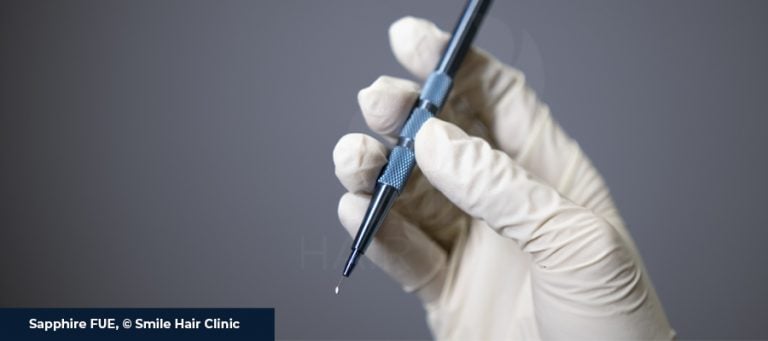
These blades allow highly precise incisions in the scalp.
Benefits of sapphire blades include:
- smaller incision size
- accurate graft placement
- improved density control
This precision helps surgeons create hairlines that appear soft and natural rather than artificially straight.
DHI hair transplant
The DHI hair transplant technique, or Direct Hair Implantation, uses a specialized implantation pen. This tool allows surgeons to implant follicles directly into the scalp without creating separate channels beforehand.
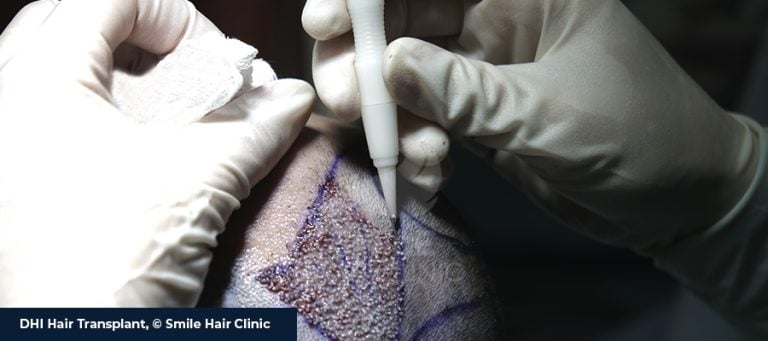
The implantation pen allows control over:
- depth of placement
- angle of hair growth
- direction of the hair shaft
DHI is often used when surgeons want to increase density between existing hairs.
Dr. Ali Osman Soluk explains:
“Natural hair transplant results depend on precise hairline design and graft placement rather than simply increasing graft numbers.”
Estimated graft numbers for a Tom Cruise–style hairline
People researching Tom Cruise hair transplant often want to understand the practical side of hair restoration. If someone wanted a hairline similar to his, how many hair transplant grafts would typically be required?
The number varies between patients. Surgeons analyze donor density, hair thickness, scalp elasticity, and the extent of hair loss before recommending graft numbers. These factors determine how much coverage can be safely achieved.
Still, general ranges help explain the process.
Typical graft numbers for frontal restoration
Most hair transplant procedures focused on the frontal hairline require between 1,500 and 3,000 grafts. Smaller corrections require fewer grafts, while more advanced recession requires additional coverage.
Common planning ranges include:
- mild temple recession: 1,200–1,800 grafts
- moderate frontal thinning: 1,800–2,500 grafts
- larger hairline reconstruction: 2,500–3,000 grafts
Each graft usually contains one to four hair follicles. This means a procedure using 2,000 grafts may implant roughly 4,000 to 6,000 individual hairs.
The goal is not simply increasing density.
The goal is recreating natural growth patterns.
Hairline design strategy
Natural male hairlines rarely appear perfectly straight. Surgeons design hairlines with subtle irregularities to replicate natural growth.
Modern FUE hair transplant, Sapphire FUE, and DHI hair transplant techniques allow surgeons to control graft angle, spacing, and direction.
Hairline construction typically follows three layers:
- single-hair grafts along the front edge
- two-hair grafts behind the hairline
- multi-hair grafts deeper in the scalp
This layering creates a soft transition from forehead to scalp.
Donor area considerations
The hair transplant donor area determines how many grafts are safely available. Strong donor density allows surgeons to restore hair while preserving the natural appearance of the donor region.
Patients with thicker hair shafts often achieve fuller visual density using fewer grafts.
Dr. M. Reşat Arpacı explains:
“A natural hair transplant result depends on balanced graft distribution rather than maximizing graft numbers.”
Hair transplant results timeline
People exploring Tom Cruise hair transplant discussions often wonder how long results would take if someone underwent a hair transplant procedure. Hair restoration does not produce immediate density. Transplanted follicles follow a biological growth cycle that unfolds gradually over several months.

Understanding this process helps patients maintain realistic expectations.
First weeks after surgery
Immediately after procedures such as FUE hair transplant, Sapphire FUE, or DHI hair transplant, small grafts remain visible in the recipient area. Tiny scabs form around the follicles as the scalp begins healing.
These scabs usually fall away within 10 to 14 days.
Many patients then experience a stage called shock loss. This stage usually occurs between the second and sixth week after surgery.
During shock loss, the transplanted hairs temporarily shed.
This stage is normal.
The follicles remain alive beneath the skin and will later produce new hair.
Three to four months: early growth stage
Around the third or fourth month, new hairs begin growing from the transplanted follicles. These early hairs are often thin and soft.
That stage marks the beginning of visible hair transplant results.
As the growth cycle continues, the hair gradually becomes thicker and stronger.
Density slowly improves.
Six to twelve months: full results
Between months six and nine, the hairline becomes more defined as additional follicles enter the active growth phase.
Hair shafts become thicker, allowing the transplanted region to blend naturally with surrounding hair.
Most patients see their final hair transplant results timeline between nine and twelve months after surgery.
Hair transplanted from the donor area usually retains its genetic resistance to hair loss. This allows transplanted follicles to continue growing for many years.
Dr. Mehmet Erdoğan explains:
“Hair transplant results develop gradually. Patients should expect steady improvement during the first year.”
Because growth occurs slowly, the final hairline appears natural rather than suddenly dense.
Why celebrity hair transplant rumors appear so often
Searches like Tom Cruise hair transplant often appear when fans notice a public figure maintaining a strong hairline for many years. When an actor remains in the spotlight for decades, audiences naturally begin comparing photos from different periods.
Small differences in hair appearance can quickly lead to speculation about celebrity hair transplant procedures.
In reality, several factors influence how hair looks on screen.
Genetics can maintain strong hairlines
Some individuals naturally inherit strong hair genetics. Their follicles remain resistant to male pattern hair loss, allowing them to maintain density even as they age.
Hair shaft thickness also affects how dense hair appears.
Thicker strands create the visual impression of fuller hair even when follicle density is average.
These genetic traits can explain why certain actors maintain relatively stable hairlines.
Film styling and lighting affect hair appearance
Hair in movies rarely looks the same as hair in everyday life.
Professional stylists work with actors to create hairstyles that enhance facial features. Lighting setups used in film production can also influence how dense hair appears.
These elements may include:
- volumizing haircuts
- styling techniques that increase lift
- thickening hair products
All of these can create the appearance of fuller hair.
Modern hair transplant results are difficult to detect
If a hair transplant surgery does occur, modern methods make detection extremely difficult. Techniques such as FUE hair transplant, Sapphire FUE, and DHI hair transplant allow surgeons to implant grafts with precise control over angle and direction.
The transplanted hair grows gradually over several months.
Because the change develops slowly, many people never notice the transition.
Frequently asked questions about Tom Cruise hair transplant
Did Tom Cruise get a hair transplant?
There is no confirmed evidence that Tom Cruise hair transplant surgery ever took place. The actor has never publicly stated that he underwent a hair transplant procedure, and no clinic has confirmed performing one. Most discussions online come from visual comparisons of his hairline across different films and public appearances.
Why do people think Tom Cruise had a hair transplant?
Many fans search Tom Cruise hair transplant before and after because his hairline appears relatively stable over decades. When celebrities maintain dense hair into their fifties or sixties, people often assume hair restoration treatments may have been involved.
What type of hair transplant could recreate a hairline like Tom Cruise’s?
A similar hairline could typically be recreated using modern techniques such as FUE hair transplant, Sapphire FUE, or DHI hair transplant. These procedures allow surgeons to implant hair follicles with precise angle and direction, helping create natural-looking hairlines.
How many grafts are usually needed for hairline restoration?
Most hair transplant procedures focusing on the frontal hairline require approximately 1,500 to 3,000 grafts. The number depends on donor density, hair thickness, and the extent of hair loss.
How long does it take to see hair transplant results?
Early growth usually begins around three to four months after surgery. Noticeable density appears between six and nine months, and most patients see final hair transplant results within nine to twelve months.
Do hair transplants look natural today?
Yes. Modern techniques such as FUE hair transplant, Sapphire FUE, and DHI hair transplant allow surgeons to recreate natural hairlines with irregular patterns and gradual density transitions. When performed correctly, results blend with existing hair.
Why are celebrity hair transplant procedures rarely confirmed?
Most celebrities keep cosmetic treatments private. Medical confidentiality prevents clinics from revealing patient information, and many public figures choose not to discuss aesthetic procedures publicly.
Considering hair restoration? Speak with experienced specialists
If questions about Tom Cruise hair transplant led you to explore hair restoration, the next step is understanding your own hair loss pattern.
Modern procedures such as FUE hair transplant, Sapphire FUE, and DHI hair transplant allow surgeons to restore natural hairlines with high precision. Successful outcomes depend on careful planning based on donor area strength, hair density, and long-term hair loss progression.
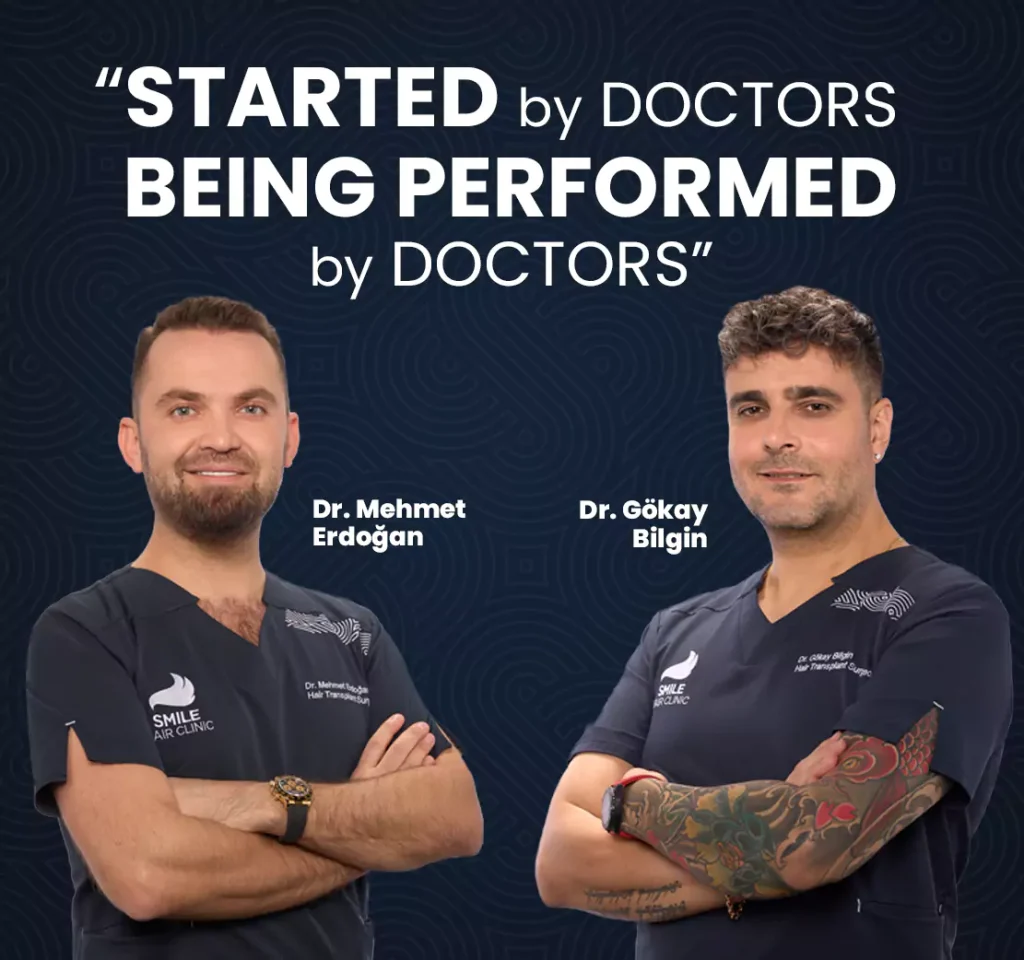
At Smile Hair Clinic, specialists evaluate each patient individually. Doctors analyze donor capacity, design personalized hairlines, and determine the most appropriate technique for natural results.
During consultation, specialists typically assess:
- donor area strength and graft availability
- hairline design suited to facial structure
- estimated graft numbers and density
- whether FUE, Sapphire FUE, or DHI is most suitable
This planning helps preserve the donor area while achieving natural-looking density.
Dr. Gökay Bilgin explains:
“A successful hair transplant begins with careful planning and realistic expectations.”
If you are considering hair restoration, a professional consultation is the best first step.
Contact Smile Hair Clinic to learn whether a hair transplant could help restore your hairline and confidence.
