


Table of Contents
The topic mo salah hair transplant has become one of the most searched celebrity hair questions online. Fans notice changes. Hairlines look fuller. Density appears stronger. Naturally, people ask if there was a procedure behind it.
So, did mohamed salah hair transplant really happen?
There is no public confirmation from Mohamed Salah. Like many high-profile athletes, he has never stated that he underwent a transplant. This is common. Most celebrities keep hair restoration private.
Yet, visual comparisons over the years raise curiosity.
People searching did mo salah get a hair transplant often point to:
- A stronger, more defined hairline in recent seasons
- Improved density at the temples
- A more consistent frontal pattern compared to earlier years
These changes can have multiple explanations. They can come from natural maturation, grooming choices, medical treatments, or a well-executed transplant.
What matters for you as a reader is not speculation alone. It is understanding what these changes could realistically represent and what you can expect for yourself.
This guide looks at the topic from a medical and visual perspective. We examine:
- mo salah hairline before and after observations
- signs that suggest a possible transplant
- techniques that could create this type of result
- what you can realistically achieve
Dr. Gökay Bilgin notes that celebrity transformations often look subtle because they are planned conservatively and placed with natural angles and density.
Did Mo Salah have a hair transplant?
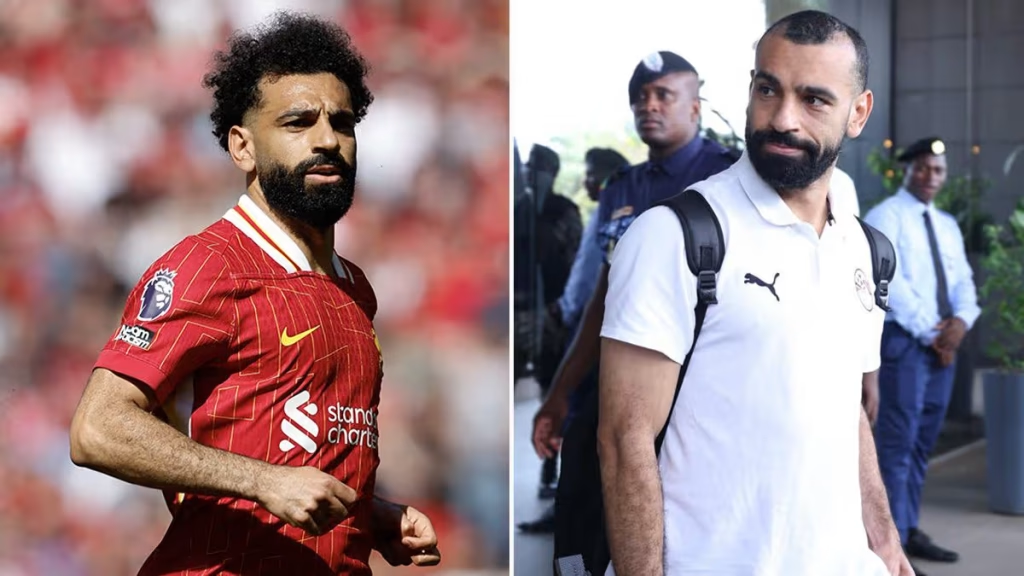
There is no official statement confirming a mo salah hair transplant. Mohamed Salah has never publicly discussed hair restoration. That is common among high-profile athletes.
What is publicly known
From public appearances and match footage, observers have noted:
- A stronger, more defined frontal hairline in recent seasons
- Improved temple density compared to earlier years
- A more even distribution of hair across the front
These observations drive searches like did mohamed salah get a hair transplant and has mo salah had a hair transplant.
At the same time, public images can be influenced by:
- Hair length and styling
- Lighting conditions on the pitch
- Camera angles and broadcast quality
These factors can make hair look thicker or thinner at different times.
Why celebrities rarely confirm
Most athletes keep medical or cosmetic procedures private. Reasons include:
- Personal privacy and public image
- Contract and sponsorship considerations
- Avoiding unnecessary media attention
This is why many footballers hair transplant discussions remain speculative.
Dr. Mehmet Erdoğan explains that natural, conservative results are often designed to be unnoticeable in daily life, which makes public confirmation less relevant to the outcome itself.
The balanced view
Without direct confirmation, it is not possible to state definitively that Mohamed Salah had a transplant. What can be analyzed are visual changes and what medical approaches could produce them.
For readers, the useful takeaway is understanding what is realistically achievable with modern techniques and whether a similar improvement could work for your own hair pattern.
Mo Salah hairline before and after analysis
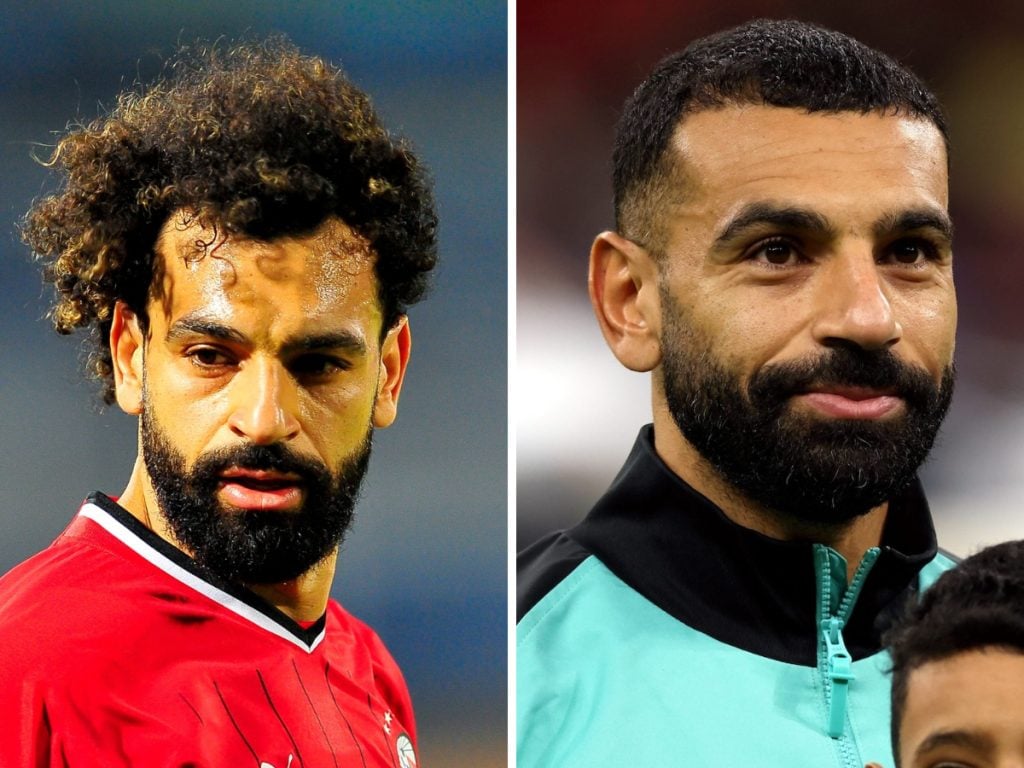
When people search mo salah hairline before and after, they want to see clear changes over time. Looking at public photos and match footage across seasons gives a useful visual comparison.
Early career hairline
In earlier years of Mohamed Salah’s career, his hairline appeared:
- Slightly higher at the temples
- Less defined along the frontal edge
- Thinner in the front under strong lighting
This type of pattern is common in men in their twenties and early thirties. It can be an early stage of male pattern thinning, or simply a naturally higher hairline.
Recent years density and shape
In more recent seasons, observers have noted:
- A stronger and more consistent frontal hairline
- Improved density across the temples
- A fuller overall frame around the face
These changes drive interest in mo salah hair transplant before after comparisons. The shift is subtle. It does not look artificial. The hairline remains age-appropriate and natural.
Expert interpretation of the change
There are a few possible explanations for the visual difference:
- Natural variation in hair length and styling
- Medical treatment such as finasteride or minoxidil
- A conservative, well-planned transplant procedure
A natural-looking improvement usually avoids sharp, straight lines. Instead, it keeps a soft, slightly irregular edge.
Dr. Gökay Bilgin explains that realistic hairline design uses a broken, feathered pattern rather than a rigid line. This is what helps results look undetectable.
The important takeaway is not whether a celebrity confirmed a procedure. It is how subtle, well-designed improvements can enhance appearance without looking obvious.
Could Mo Salah’s result come from a transplant
When people search mo salah hair transplant, they want to know if the change could realistically come from surgery. The answer is yes, a modern transplant can create a subtle, natural improvement like the one observed.
Visual signs that suggest a transplant
Certain patterns often indicate surgical restoration.
Common signs include:
- A fuller frontal band with a soft, irregular edge
- Even density through the temples without harsh lines
- Consistent coverage that holds under bright stadium lighting
These changes align with searches like mo salah hairline change and did mo salah fix his hairline.
A well-executed transplant avoids a straight, “drawn-on” look. It uses varied angles and single-hair grafts at the front to keep a natural transition.
Dr. Mehmet Erdoğan explains that front-line design uses micro-irregularity and density gradients, which helps the result remain undetectable.
Natural change vs surgical change
Not every improvement means surgery. Some changes can come from:
- Hair length and curl pattern
- Medical therapy such as finasteride or minoxidil
- Professional grooming and styling
Natural variation can improve the appearance of density without adding new follicles.
Why modern results look subtle
Current techniques focus on refinement, not obvious density.
Typical approach:
- Conservative hairline height that suits age
- Soft, feathered front line
- Gradual density increase from front to back
This is why many footballers hair transplant cases go unnoticed.
Whether Mohamed Salah had a transplant or not, the observed look is achievable with modern FUE hair transplant or DHI hair transplant planning when donor quality allows.
What technique would match his result (FUE vs DHI)
When people search mo salah hair transplant, they often ask which method could create that kind of natural hairline. The most likely techniques for a result like this are FUE hair transplant, Sapphire FUE, and DHI hair transplant.
Why FUE is common for athletes
FUE hair transplant is widely used for public figures and athletes.
Reasons include:
- No linear scar on the back of the scalp
- Shorter healing time compared to strip methods
- Ability to wear hair short without visible marks
This suits players who train, sweat, and stay in the public eye.
Dr. Ali Osman Soluk explains that FUE allows careful extraction of individual grafts while protecting donor appearance long term.
How Sapphire FUE improves precision
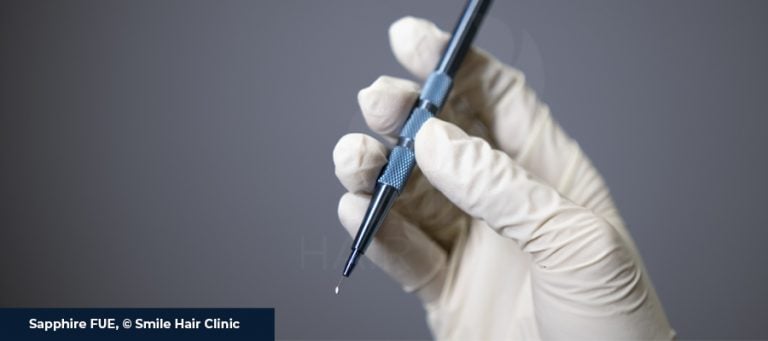
A variation of FUE uses sapphire blades to open channels.
Benefits:
- More precise angle and direction of graft placement
- Better control of density distribution
- Reduced tissue trauma during channel creation
This supports a refined, natural-looking frontal hairline.
How DHI achieves density and control
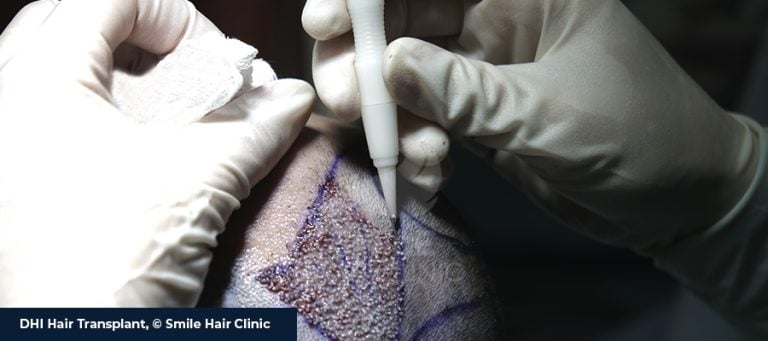
DHI hair transplant uses an implanter pen to place grafts directly.
Advantages include:
- Controlled depth and direction for each graft
- Strong density in targeted areas such as temples
- Minimal handling of follicles during placement
This can be useful for fine hairline detailing.
Dr. M. Reşat Arpacı notes that DHI is often chosen for detailed front-line work where direction and angle are critical.
Which technique matters most
Technique is a tool. The result depends on:
- Hairline design
- Donor management
- Doctor involvement during placement
A natural result like the one associated with mo salah hairline before and after requires careful planning more than any single method.
How celebrity hair transplants stay natural
People searching mo salah hair transplant often focus on one thing: why does it look so natural. The answer is careful design, controlled density, and precise placement. Nothing is left to chance.
Hairline design principles
A natural hairline is not a straight line. It has soft variation.
Key design elements:
- Slight irregularity along the front edge
- Micro-peaks and dips that mimic natural growth
- A hairline height that suits age and face shape
This avoids the “drawn” look that people fear.
Dr. Gökay Bilgin explains that a conservative, age-appropriate design is the reason many celebrity hair transplant results remain undetectable.
Density that builds gradually
Natural density is not uniform across the scalp.
A refined plan uses:
- Lower density at the very front using single grafts
- Gradual increase in density moving backward
- Blending zones that connect transplanted and native hair
This is why many footballers hair transplant results look realistic even under stadium lighting.
Angle and direction of each graft
Each follicle is placed at a specific angle.
Important factors:
- Front hairs placed flatter to the scalp
- Temple points angled backward naturally
- Crown swirls designed to follow natural rotation
Dr. Mehmet Erdoğan notes that angle and direction control how hair falls and reflects light, which affects how natural it looks on camera.
Why subtle results matter
High-profile athletes need results that look like their own hair. Not a dramatic change. Just a refined version.
A well-designed transplant keeps:
- Facial balance
- Natural hairline movement
- Consistency as hair grows longer
You do not need to copy a celebrity. You can use the same design principles to achieve a natural result that suits your own face.
How long results like this last
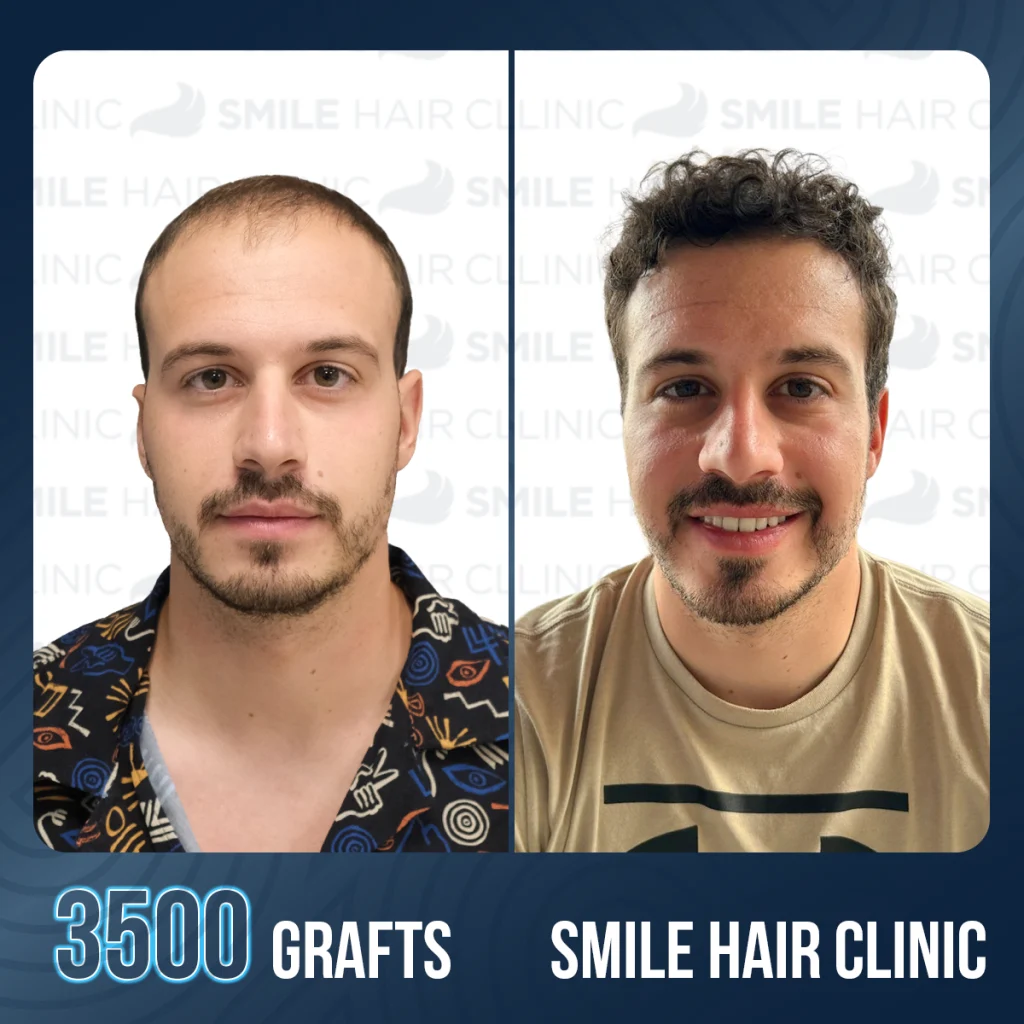
When people search mo salah hair transplant, they often wonder about durability. A natural-looking result is valuable only if it holds up over time.
Longevity of transplanted follicles
Modern transplants use donor hair that is more resistant to hair loss.
What this means:
- Transplanted follicles can grow for many years
- Hair behaves like normal hair and can be cut or styled
- The frontal hairline remains stable when planned correctly
This is why many readers also search do hair transplants last forever and how long do hair transplants last.
Dr. Firdavs Ahmedov explains that healthy donor follicles maintain their characteristics after transplantation.
What can still change over time
Even with a successful procedure, some changes can occur:
- Native hair behind the transplant may thin gradually
- Hair texture and color can change with age
- Crown density may evolve if not treated initially
These changes do not mean the transplant failed. They reflect natural aging and genetic hair loss patterns.
The role of maintenance
Long-term appearance often benefits from simple maintenance:
- Finasteride to slow ongoing loss
- Minoxidil to support thickness
- Periodic check-ups to monitor changes
This helps maintain a balanced look between transplanted and native hair.
Long-term planning
Natural-looking results require planning beyond the first year.
Good long-term design considers:
- Future hair loss progression
- Donor reserve for possible second sessions
- A hairline that ages naturally with the face
Dr. Mehmet Erdoğan notes that conservative design keeps results consistent as patients age.
A result similar to what people associate with mo salah hairline before and after can last for years when planned carefully and supported with maintenance.
Mo Salah hair transplant FAQs
Did Mo Salah get a hair transplant?
There is no confirmed public statement that Mohamed Salah had a transplant. Visual changes in his hairline and density have led to speculation, but it remains unconfirmed.
What changed in Mo Salah’s hairline?
Observers have noted:
- A more defined frontal hairline
- Improved density at the temples
- A fuller overall frame around the face
These differences drive searches for mo salah hairline before and after.
Could his look be achieved with a hair transplant?
Yes. A natural, subtle improvement like the one associated with mo salah hair transplant before after can be created using modern techniques such as FUE hair transplant, Sapphire FUE, or DHI hair transplant when donor quality allows.
How many grafts would be needed for a similar result?
A refined frontal restoration typically uses around 1,500–2,500 grafts, depending on hair thickness, donor density, and desired coverage.
How long would results like this last?
Transplanted follicles are generally long-lasting. They can continue to grow for many years. Native hair may still thin over time, which is why long-term planning is important.
How long does recovery take?
Typical recovery timeline:
- Scalp healing within 7–10 days
- Shedding phase during the first 1–3 months
- New growth from month 4
- Final results around 10–12 months
Do celebrities hide hair transplants?
Many public figures do not confirm cosmetic procedures. Natural, conservative design makes modern transplants difficult to detect, especially for athletes and actors.
Can I get the same hairline as Mo Salah?
You can achieve a similar level of naturalness and density. The exact hairline shape must be designed for your own face, donor capacity, and long-term hair pattern.
Please Select Your Gender
Book your personalized hairline design at Smile Hair Clinic
You’ve explored the discussion around mo salah hair transplant and what makes a natural, refined result. The next step is to see what is possible for you. Your hair. Your donor. Your future.
At Smile Hair Clinic, every case follows the True™ Philosophy. Doctor-led planning. Natural aesthetics. A calm, supportive experience from first message to final follow-up.
What your consultation includes
- A doctor-reviewed assessment of your hairline, temples, crown, and donor
- A clear path: medical therapy, transplant, or a combined approach
- A personalized hairline design that suits your face and age
- A realistic graft range and density plan based on your donor
- Technique guidance (FUE, Sapphire FUE, or DHI) with honest pros and cons
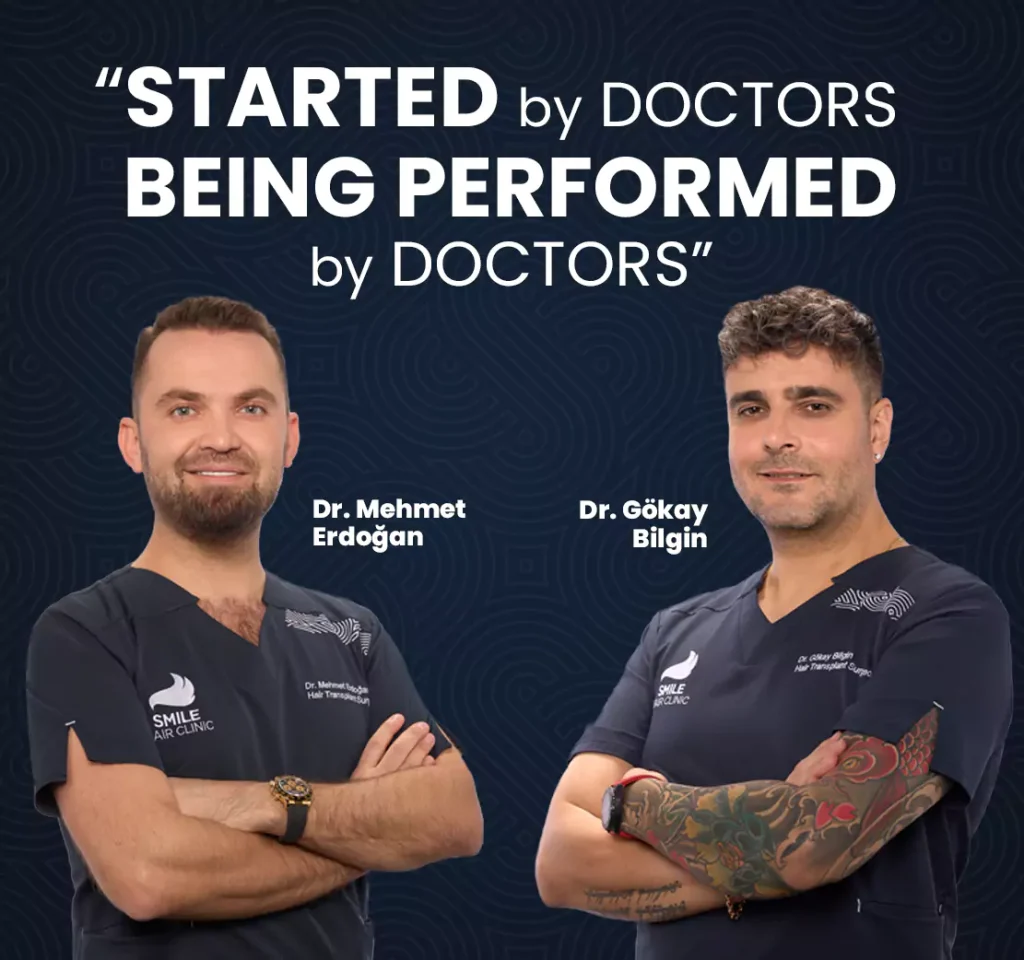
Dr. Gökay Bilgin and Dr. Mehmet Erdoğan focus on soft, natural fronts and balanced density. Dr. Firdavs Ahmedov, Dr. Ali Osman Soluk, and Dr. M. Reşat Arpacı plan each case for long-term stability and donor protection.
A calm, supported journey
Comfortable transfers. An organized clinic day. Clear aftercare. Ongoing check-ins once you’re home. You always know what’s next.
Clarity replaces guesswork.
Start your assessment
- Share clear photos of your front, temples, crown, and donor area
- Receive a doctor-led evaluation with honest recommendations
- Review your design, graft plan, and timeline
- Move forward only if it fits your goals
If you want a natural hairline that looks like your own and ages well, request your consultation with Smile Hair Clinic today.
