


Table of Contents
Interest in Deion Sanders hair transplant keeps rising for a clear reason. His transformation is real, visible, and openly discussed. Unlike many celebrity cases, Deion Sanders confirmed his hair transplant and shared parts of his journey publicly.
That makes his case different. It is not speculation. It is a real example of modern hair restoration for advanced hair loss.
If you look at Deion Sanders before and after hair, the change is striking. He spent years shaving his head due to progressive hair loss. Then, after treatment, he returned with a defined, fuller Deion Sanders hairline that still looks natural and age-appropriate.
This is exactly what many patients with advanced thinning or baldness want. A natural hairline that frames the face again, without looking artificial.
His case is especially important for two groups:
- Men with advanced baldness such as Norwood 5 or 6
- Men with afro or curly hair types looking for transplant options
These cases are often more complex and require careful planning.
At Smile Hair Clinic, many patients come with the same question. If someone with significant hair loss like Deion Sanders can achieve this result, what is possible for me?
The answer depends on donor capacity, hair characteristics, and a well-designed long-term plan.
Dr. Gökay Bilgin explains: “Advanced cases are not about recreating teenage hair. They are about restoring a natural frame that suits the patient’s age and face.”
In the next section, we’ll answer the key question directly. Did Deion Sanders have a hair transplant, and what do we know about his procedure and method?
Quick answer — Did Deion Sanders have a hair transplant?
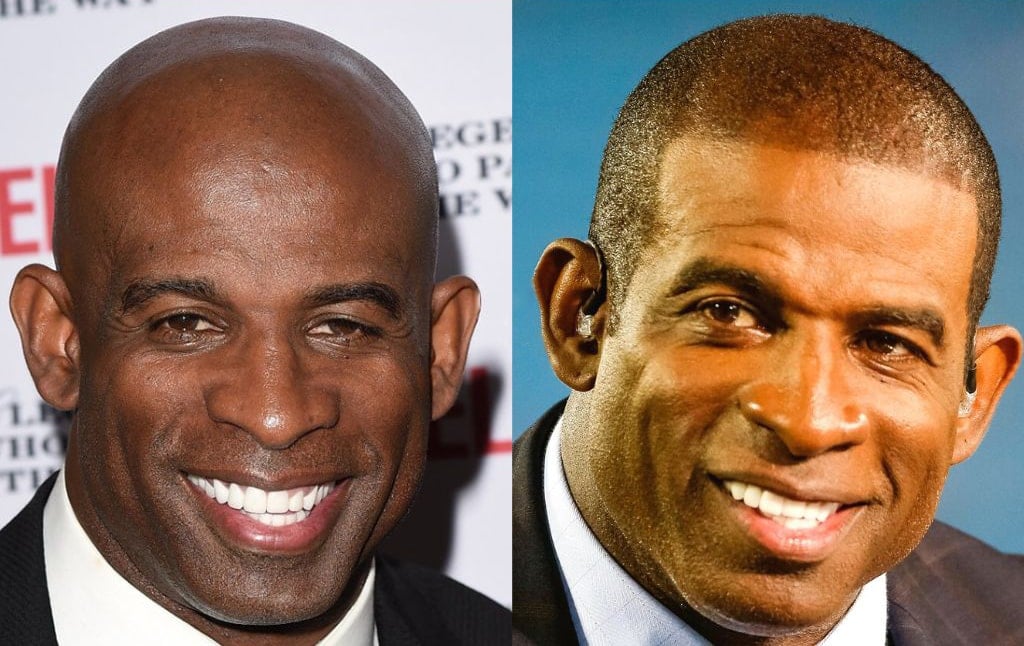
Yes. Deion Sanders had a hair transplant, and he spoke openly about it. His case is one of the clearest celebrity hair transplant examples available, with a visible before and after transformation and public confirmation.
What did Deion Sanders confirm about his procedure?
Deion Sanders shared that he underwent a modern FUE hair transplant to restore his hairline and frontal density.
- He experienced hair loss that began years earlier
- He chose a surgical solution after long-term thinning
- He publicly showed the process and early results
This level of openness is rare among celebrities, which makes the Deion Sanders hair transplant case valuable for patients researching their own options.
What changed after the transplant?
When you compare Deion Sanders before and after hair, the improvements are clear.
- A defined, natural-looking frontal hairline
- Restored density in the front and top areas
- A balanced look that fits his age and facial structure
Importantly, the result does not look overly low or dense. It looks realistic and age-appropriate.
What method was used?
The procedure used FUE hair transplant.
- Individual grafts were extracted from the donor area
- Grafts were placed to rebuild the frontal hairline
- Density was added where it would create the most visual impact
This is the most common approach for hair transplant for bald men and advanced cases today.
Dr. Mehmet Erdoğan explains: “FUE allows us to rebuild the hairline with control and flexibility, especially in patients with significant hair loss.”
In the next section, we’ll break down Deion Sanders before and after hair transformation, so you can see how his hairline evolved and what areas were restored.
Deion Sanders hair before and after (transformation analysis)
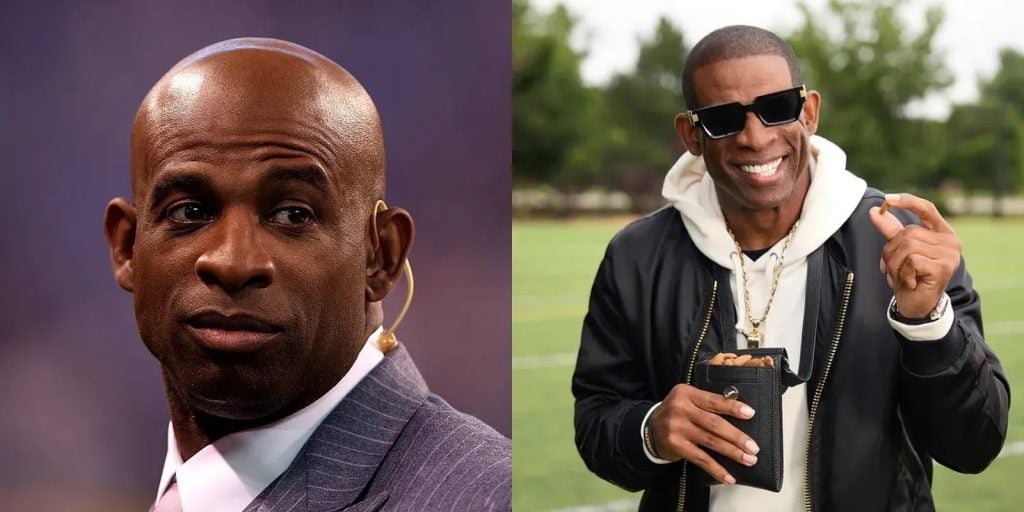
To understand the Deion Sanders hair transplant impact, you need to look at his hair over time. His transformation is one of the clearest examples of hair transplant for bald men with advanced loss.
Early career: full hair and natural density
In his early NFL and MLB years, Deion Sanders had a full, natural hairline.
- Strong frontal density
- Defined temple points
- Balanced coverage across the top
At this stage, there were no visible signs of thinning.
Bald phase: years of shaving due to hair loss
Over time, his hairline receded significantly.
- Temple recession progressed deeply
- Frontal density reduced
- Crown and mid-scalp showed advanced thinning
Eventually, he chose to shave his head completely. This is common for men reaching Norwood 5–6 hair loss, where coverage becomes very limited.
Post-transplant: restored hairline and density
After his Deion Sanders hair transplant, the difference became clear.
- A new, defined frontal hairline
- Improved density in the frontal and mid-scalp zones
- A natural transition into remaining native hair
The result does not attempt to recreate a teenage hairline. It restores a mature, realistic frame that fits his face and age.
What changed visually
Three design elements stand out in his transformation.
- Hairline shape is structured but age-appropriate
- Density is concentrated in the frontal third
- The overall frame of the face looks stronger and more defined
These are exactly the priorities in advanced celebrity hair transplant before and after cases.
Dr. Firdavs Ahmedov explains: “In advanced baldness, we focus on the frontal zone first. That area creates the biggest visual impact.”
In the next section, we’ll explain what type of hair transplant Deion Sanders had, and why FUE was the most suitable technique for his case.
What type of hair transplant did Deion Sanders have?
The Deion Sanders hair transplant used a modern FUE hair transplant approach. This technique is widely used for public figures and advanced hair loss cases where natural results and minimal scarring matter.
FUE hair transplant explained
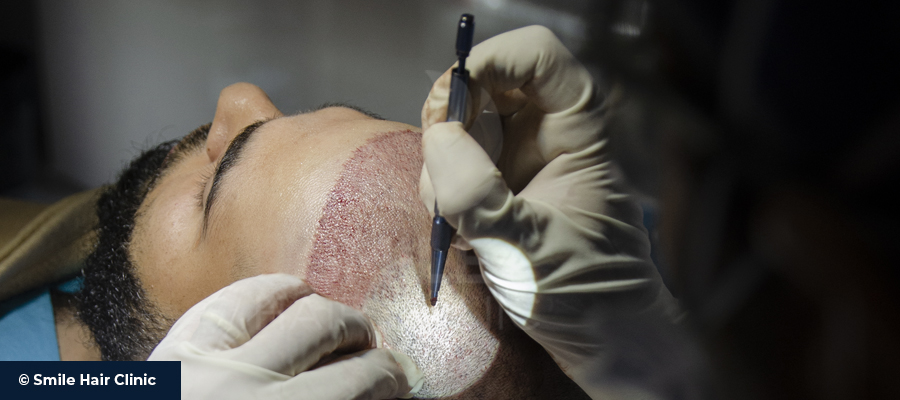
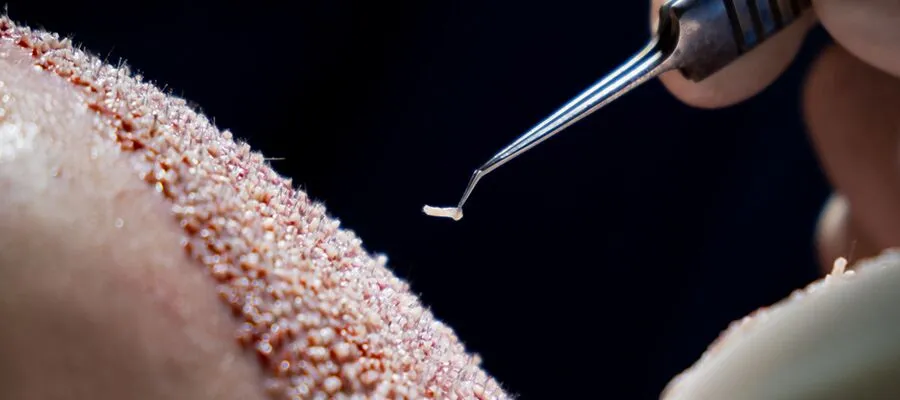
In FUE hair transplant, each graft is extracted individually from the donor area.
- Tiny micro-punch tools remove follicular units one by one
- Grafts are sorted and prepared carefully
- The surgeon places each graft in the recipient area with controlled angles
This method avoids a linear scar and allows flexible placement across the hairline and frontal zones.
No-shave FUE and on-camera recovery
For high-visibility patients, variations like no-shave or partial-shave FUE can be used.
- The donor area may be trimmed selectively
- Surrounding hair helps mask early healing
- Patients can return to public appearances more comfortably
These adaptations are common in celebrity hair transplant cases.
Why FUE suits advanced baldness cases
For hair transplant for bald men and Norwood 5–6 hair loss, FUE offers several advantages.
- Grafts can be distributed precisely across limited donor supply
- Density can be focused in the frontal third for visual impact
- Additional sessions can be planned later if needed
This staged planning is key for advanced cases.
Placement strategy in Deion Sanders’ case
His result suggests a focused approach.
- Frontal hairline and mid-scalp were prioritized
- Crown coverage was likely secondary or lighter
- Density was balanced to match his age and facial features
Dr. Ali Osman Soluk explains: “In advanced cases, we use donor grafts where they create the most visible improvement. The front always comes first.”
In the next section, we’ll estimate how many grafts Deion Sanders likely needed, and how graft planning works for Norwood 5–6 hair transplant cases.
How many grafts did Deion Sanders need?
When people study the Deion Sanders hair transplant, one of the most common questions is about graft numbers. How many grafts does it take to go from advanced baldness to a natural, defined hairline?
Estimating his Norwood level before surgery
From earlier appearances, Deion Sanders showed patterns consistent with Norwood 5–6 hair loss.
- Significant temple recession
- Limited frontal density
- Thinning across the mid-scalp
This level of loss requires careful planning. The donor area is limited, so grafts must be used where they create the most visual impact.
Likely graft range for his result
Based on visible coverage in Deion Sanders before and after hair, a realistic estimate would be:
- 2500–3500 grafts focused on the frontal third
- Additional grafts possibly used for mid-scalp blending
- Crown area likely treated conservatively or in a second stage
This approach matches standard planning for hair transplant Norwood 6 patients.
Why graft distribution matters more than total number
In advanced cases, it is not just about how many grafts you use. It is about where you place them.
- The frontal hairline creates the strongest visual change
- Density gradually decreases moving backward
- A natural gradient avoids an artificial look
This is exactly how many celebrity hair transplant before and after results are designed.
Single session vs multiple sessions
Patients with advanced baldness may need more than one session.
- First session builds the hairline and frontal frame
- Second session can increase density or treat the crown
- The plan is adjusted based on donor capacity
Smile Hair Clinic planning approach
At Smile Hair Clinic, graft planning always starts with donor analysis and long-term strategy. The goal is to create a natural result today and preserve options for the future.
Dr. Mehmet Erdoğan explains: “In advanced cases, we design in stages. The first goal is a natural frame. Additional density can be added later if needed.”
Hair transplant for advanced baldness (Norwood 5–6)
The Deion Sanders hair transplant case is a strong example of what can be achieved with hair transplant for bald men at advanced stages. Patients with Norwood 5–6 hair loss often believe their situation cannot be improved. In reality, improvement is possible with the right plan and realistic expectations.
Donor limitations and strategic planning
In advanced baldness, the donor area becomes the most important factor.
- The number of available grafts is limited
- The donor must be protected for future needs
- Every graft must be placed where it creates the most visual value
This is why careful planning matters more than speed or maximum graft numbers.
Frontal priority approach
Most modern clinics follow a frontal-first strategy.
- The hairline and frontal third are restored first
- Mid-scalp is blended gradually
- Crown is treated later or kept lighter
This creates a strong visual frame, even with limited graft supply.
Density expectations in advanced cases
Patients should expect natural coverage, not full teenage density.
- Frontal density is moderate and realistic
- Density gradually decreases toward the crown
- The goal is visual fullness, not maximum packing
This approach is what makes results like Deion Sanders hairline look natural on camera and in real life.
Single vs multi-session planning
Some advanced cases are completed in stages.
- First session creates the hairline
- Second session increases density or covers crown
- Additional sessions depend on donor availability
Smile Hair Clinic approach for advanced cases
At Smile Hair Clinic, each advanced case is designed with long-term balance in mind. The team evaluates donor strength, scalp characteristics, and future hair loss before planning the procedure.
Dr. Gökay Bilgin explains: “In advanced baldness, success is not about maximum coverage. It is about creating a natural frame that fits the patient’s face and age.”
Hair transplant for African American and afro hair
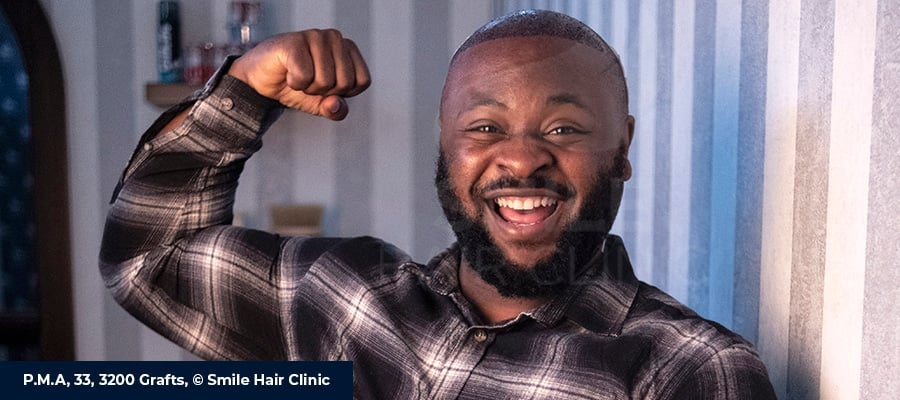
The Deion Sanders hair transplant is a strong example for patients with curly or afro-textured hair. These cases are highly successful when handled by experienced teams, but they do require specific technique and planning.
Why afro hair requires a different approach
Curly hair grows in a curved path under the skin.
- Follicles bend and curve beneath the scalp
- The exit angle above the skin looks straight, but the root is curved
- Extraction requires careful angling to avoid damaging grafts
This makes FUE hair transplant for afro hair more technical than straight hair cases.
Extraction technique for curly follicles
Experienced surgeons adjust their tools and approach.
- Smaller punches with careful depth control
- Adjusted angles following the natural curl of the follicle
- Slower, more controlled extraction to protect graft quality
This preserves graft survival and donor area appearance.
Advantages of curly hair in transplantation
Afro hair actually offers some visual advantages.
- Curl creates the appearance of higher density
- Fewer grafts can create strong visual coverage
- Natural texture helps hide lower density areas
This is why many African American hair transplant FUE cases achieve strong results with moderate graft numbers.
Hairline design for afro hair
Hairline design must match natural characteristics.
- Softer, slightly irregular hairline edges
- Natural temple angles that suit facial structure
- Balanced density that fits the patient’s age
This avoids an artificial or overly straight hairline.
Smile Hair Clinic experience with curly hair types
At Smile Hair Clinic, curly and afro hair transplants are performed using modified FUE techniques and customized planning. Each case is designed to respect the natural curl pattern and long-term hair loss pattern.
Dr. Firdavs Ahmedov explains: “Curly hair is more technical to extract, but it gives excellent visual density when placed correctly.”
Why Deion Sanders’ hairline looks natural
When people look at Deion Sanders hair transplant, they often notice the same thing. The result looks natural. It frames his face, fits his age, and does not look forced. That outcome comes from a few key design principles used in modern hair transplant for bald men.
Age-appropriate hairline height
The position of the hairline is one of the most important choices.
- The hairline is not placed too low
- The temples are softened but not sharply closed
- The overall shape matches his facial proportions
This avoids the artificial “too perfect” look.
Density gradient instead of uniform thickness
Natural hairlines are not equally dense across the front.
- Slightly lighter density at the very front edge
- Gradual increase moving backward
- Balanced coverage that avoids heavy, unnatural packing
This gradient is a standard approach in celebrity hair transplant before and after results.
Direction and flow of transplanted hair
Hair must grow in the correct direction to look natural.
- Frontal hairs angle forward
- Temple hairs follow a softer, lateral flow
- The pattern blends with existing hair growth
This is where surgical precision makes the biggest visual difference.
Matching afro hair characteristics
For patients with curly or afro hair, the design must respect natural texture.
- Hairline edges are slightly irregular
- Density works with the curl pattern
- The result blends with native hair texture
This is one of the reasons the Deion Sanders hairline looks believable.
Long-term planning for aging
A natural result must still look right years later.
- Donor grafts are preserved for future needs
- The hairline is designed to age with the patient
- Density is balanced for long-term realism
At Smile Hair Clinic, these principles guide every case.
Dr. Ali Osman Soluk explains: “Natural results come from proportion, direction, and restraint. When those are correct, the hair simply looks like it belongs.”
FAQs about Deion Sanders hair transplant
Did Deion Sanders confirm having a hair transplant?
Yes. Deion Sanders openly confirmed that he had a hair transplant and shared parts of his journey publicly. His case is one of the few celebrity hair transplant examples that is clearly documented.
What type of hair transplant did Deion Sanders have?
He underwent a modern FUE hair transplant, where individual grafts are extracted and placed to rebuild the hairline and frontal density. This method is widely used for hair transplant for bald men and advanced cases.
How many grafts did Deion Sanders need?
Based on visible Deion Sanders before and after hair changes, most experts estimate he needed around 2500–3500 grafts focused on the frontal and mid-scalp areas, with conservative planning for the crown.
Can severe baldness like Norwood 5–6 be treated?
Yes. Hair transplant Norwood 6 cases can be treated with careful planning. The focus is usually on restoring the frontal hairline first, then adding density or crown coverage in later stages if donor capacity allows.
Is FUE safe for afro or curly hair types?
Yes, when performed by experienced surgeons. African American hair transplant FUE requires modified techniques due to curved follicles, but it can produce excellent density and natural-looking results.
How long does it take to see results after a hair transplant?
- Shedding phase: weeks 2–6
- Early growth: months 3–4
- Visible density: months 6–9
- Final result: 12–18 months
Patience is part of the process, especially in advanced cases.
How long do hair transplant results last?
Transplanted hairs are typically permanent because they come from donor areas resistant to hair loss. However, native hair may continue to thin, which is why long-term planning is important.
Can I achieve a similar result to Deion Sanders?
In many cases, yes. A consultation is needed to assess your donor capacity, hair type, and level of hair loss. A personalized plan can show what is realistically achievable for you.
Start your Deion Sanders–style hair restoration journey
If the Deion Sanders hair transplant result speaks to you, the next step is a plan built around your hair, your donor capacity, and your long-term goals. At Smile Hair Clinic, your journey starts with a detailed medical assessment and a design focused on natural, age-appropriate results.
What you’ll receive in your consultation
- A personalized graft estimate based on your donor area
- A natural, balanced hairline design suited to your face
- A clear recommendation using FUE hair transplant (including planning for curly or afro hair if relevant)
- A step-by-step procedure and recovery timeline
- Transparent pricing and treatment options
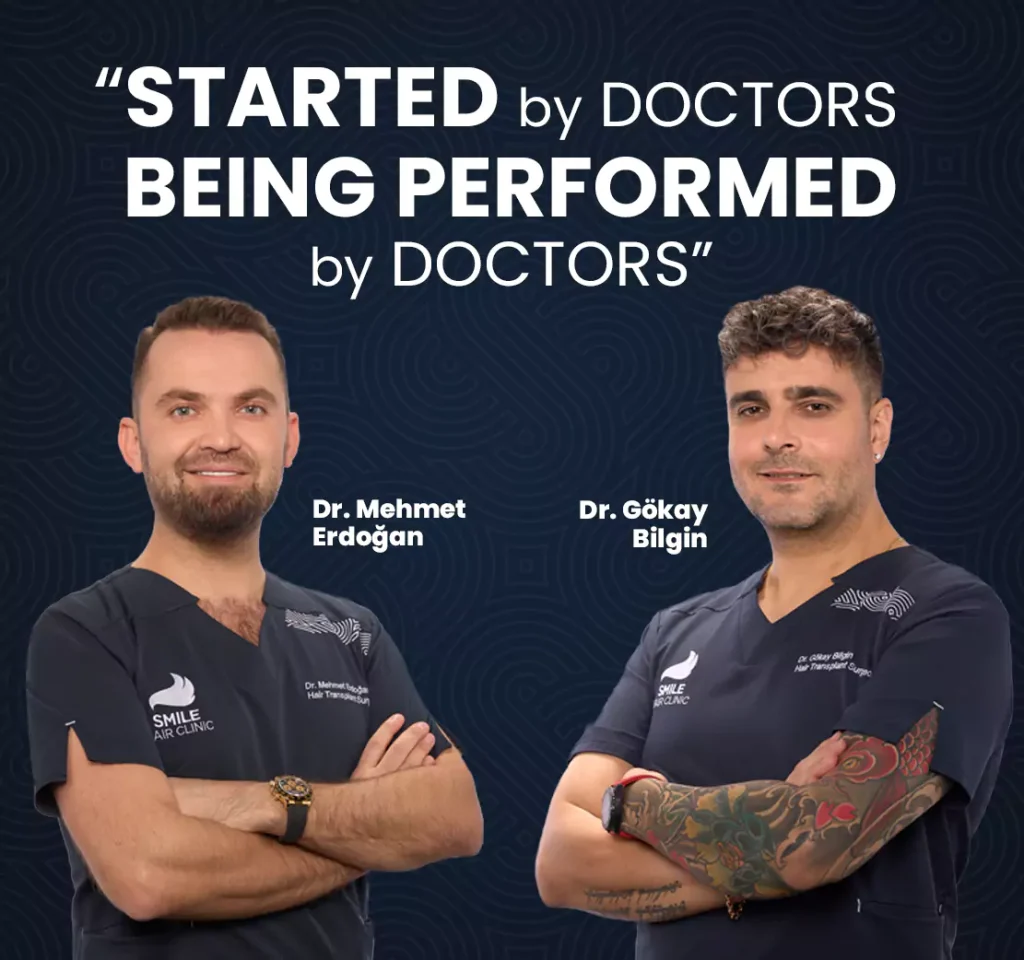
The Smile team, led by Dr. Gökay Bilgin and Dr. Mehmet Erdoğan, plans every advanced case with long-term harmony in mind, so your result still looks right years later.
“Advanced cases need thoughtful design, not aggressive density. We focus on a natural frame that fits the patient,” says Dr. Bilgin.
Start with a free medical assessment
Send your photos for a professional review and receive your personalized plan within 24–48 hours.
You’ll know what is possible, how many grafts you need, and how your treatment will be staged for the best long-term outcome.
Contact Smile Hair Clinic today and take the first step toward a confident, natural-looking hairline tailored to you.
