


Table of Contents
Search interest around Tyga hair transplant increased dramatically after fans noticed a major change in the rapper’s hairline. Unlike many celebrity hair discussions that rely on speculation, Tyga’s situation attracted attention because the transformation appeared clear and visible in public appearances.
For years, fans noticed signs of Tyga hair loss, especially recession around the temples. The corners of his hairline gradually moved backward, creating the classic shape associated with male pattern hair loss. This type of recession often affects men in their twenties and thirties.
Then something changed.
New photos began circulating online showing a noticeably fuller hairline. The temples looked restored, and the frontal hairline appeared lower and denser than before. That sudden improvement triggered widespread discussion about a possible Tyga hair transplant.
Celebrity hair transformations often lead to speculation. Yet Tyga’s hairline change appeared much more dramatic than typical grooming improvements or styling adjustments.
This type of transformation is often associated with modern hair transplant procedures.
Today, techniques such as FUE hair transplant, Sapphire FUE hair transplant, and DHI hair transplant allow surgeons to restore receding hairlines with very natural results. These procedures relocate healthy follicles from the donor area, usually the back of the scalp, to areas affected by hair loss.
When performed correctly, the transplanted hair grows naturally and permanently.
That is why many observers believe Tyga likely underwent hair restoration surgery.
This guide examines the Tyga hair transplant discussion in detail. We will explore how his hairline changed over time, when the transformation likely occurred, and what type of hair transplant technique may have been used. We will also explain how modern procedures like FUE, Sapphire FUE, and DHI hair transplant can recreate similar results for patients experiencing temple recession or frontal hair loss.
Please Select Your Gender
Quick answer — Did Tyga have a hair transplant?
Searches for Tyga hair transplant usually begin with a direct question. Did the rapper actually undergo a hair transplant procedure, or was the change simply the result of styling or grooming?
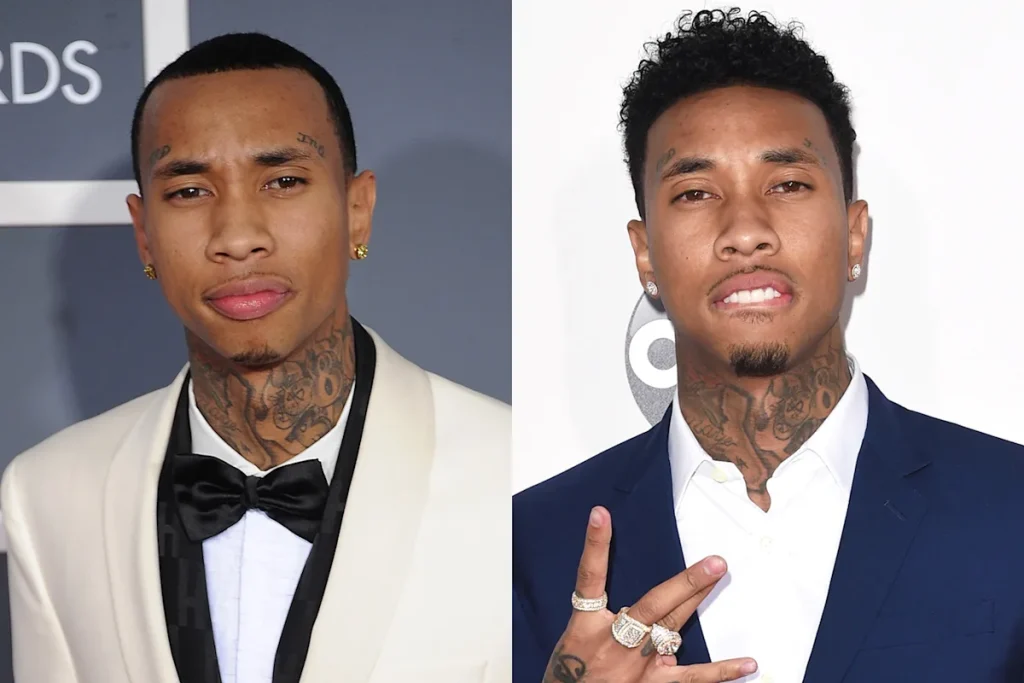
Unlike many celebrity cases, Tyga’s hairline transformation is widely believed to involve hair restoration surgery. The reason is simple. His hairline appeared noticeably fuller within a relatively short period of time, particularly around the temple areas where recession had previously been visible.
Photos circulating online show a clear contrast between earlier images and later appearances.
Visible changes in Tyga’s hairline
Earlier photos showed a typical pattern of temple recession, which is one of the earliest signs of male pattern hair loss. The corners of the hairline had moved backward, creating a deeper M-shaped hairline.
Later appearances showed a dramatically improved hairline structure.
Several features suggest a possible hair transplant:
- fuller temple regions
- lower frontal hairline
- increased density across the front
These types of changes often occur after modern hair transplant procedures.
Techniques such as FUE hair transplant, Sapphire FUE hair transplant, and DHI hair transplant allow surgeons to restore hairlines by implanting individual follicular grafts in receding areas.
Why Tyga’s transformation attracted attention
Celebrity hairline changes often develop gradually. Tyga’s transformation appeared more noticeable, which is why the topic gained traction online.
Hairline restoration around the temples can dramatically change facial framing. Even a relatively small number of grafts can create a more youthful hairline.
Because of this, many observers believe Tyga likely underwent hair restoration treatment to address temple recession.
Dr. Mehmet Erdoğan explains:
“Temple restoration can create significant visual change. Even moderate graft numbers can dramatically reshape the hairline.”
Tyga hairline before and after
Search interest in Tyga hair transplant before and after grew once fans began comparing older photos with his more recent appearances. The transformation is often discussed in music media, social platforms, and cosmetic surgery forums. Looking at the timeline of Tyga’s hairline helps explain why the topic became so widely searched.
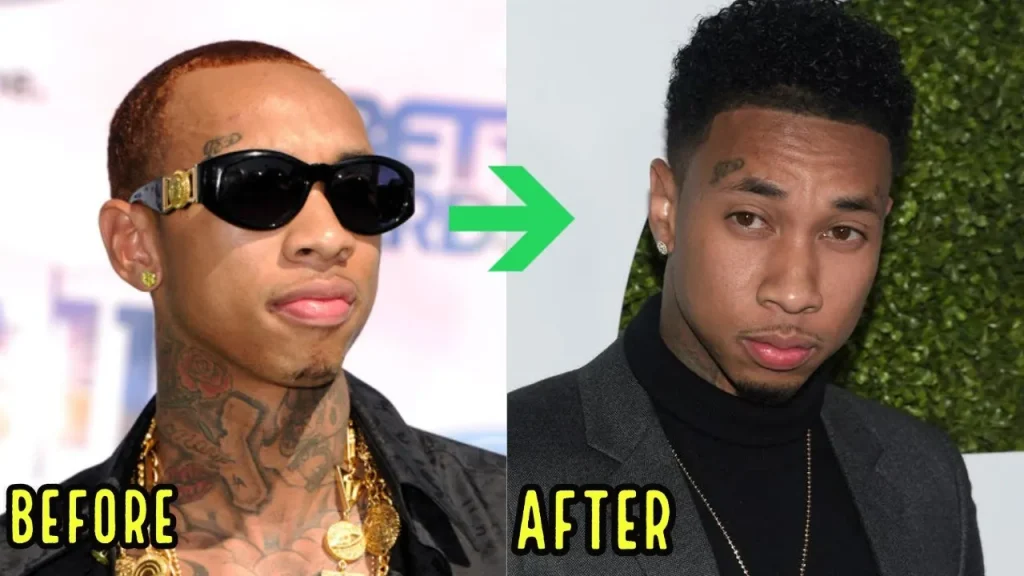
Hairline comparisons typically focus on three phases of his career.
Early career hairline
During Tyga’s early music career in the late 2000s, his hairline appeared relatively natural but already showed signs of temple recession. The corners of the hairline sat higher than the center, forming a shape commonly associated with early male pattern hair loss.
This pattern is extremely common in men during their twenties.
At this stage, his hairline displayed several typical features:
- mild recession at the temples
- normal frontal density
- thicker hair along the mid-scalp
The change was gradual and did not attract significant attention at the time.
Visible recession period
In the early 2010s, the recession appeared more noticeable. Photos from interviews and public events showed deeper temple angles, creating a clearer M-shaped hairline.
This stage often leads many men to research hair restoration treatments.
Temple recession can make the forehead appear larger even when the crown area remains dense.
This stage likely contributed to online discussions about Tyga hair loss.
Post-transplant appearance
Later appearances revealed a noticeably different hairline. The temples appeared fuller, and the frontal hairline looked lower and more defined.
These changes are consistent with results produced by modern hair transplant procedures.
Techniques such as FUE hair transplant, Sapphire FUE, and DHI hair transplant allow surgeons to restore temple regions with individual graft placement.
When grafts are distributed correctly, the hairline regains a natural curve and density.
Dr. Firdavs Ahmedov explains:
“Temple restoration can dramatically reshape a hairline because those areas frame the face.”
When did Tyga get a hair transplant?
People searching Tyga hair transplant often want to know when the transformation likely happened. Unlike many celebrity cases that rely purely on speculation, Tyga’s hairline change appeared within a fairly noticeable time window. Fans comparing photos across public appearances noticed the shift relatively quickly.

The timeline of his hairline change aligns closely with how hair transplant results typically develop.
Timeline of Tyga’s hairline transformation
During the early 2010s, photos showed visible temple recession, which is common in men experiencing male pattern hair loss. The corners of the hairline appeared deeper, creating a more pronounced M-shaped pattern.
At some point later, new images revealed a noticeably fuller hairline.
The temples appeared restored and the frontal hairline looked lower. This type of change usually occurs after hair transplant procedures that focus on the frontal region.
Hair transplant recovery normally follows a predictable pattern:
- initial implantation period
- temporary shedding stage
- gradual hair regrowth over months
Because transplanted hair grows slowly, the final result usually appears about nine to twelve months after surgery.
The timing of Tyga’s hairline improvement appears consistent with that process.
Social media discussions and public reactions
Tyga’s hairline quickly became a talking point online. Fans shared before-and-after images across social media platforms and discussed whether the rapper had undergone hair restoration surgery.
The change around the temple region was particularly noticeable.
Temple restoration often produces dramatic facial changes because those areas frame the forehead.
Modern techniques such as FUE hair transplant, Sapphire FUE, and DHI hair transplant allow surgeons to implant individual grafts into receding temple zones with precise angle control.
When grafts grow in naturally, the hairline regains density while maintaining a natural shape.
Dr. Ali Osman Soluk explains:
“Temple reconstruction can significantly improve facial balance even with moderate graft numbers.”
What type of hair transplant did Tyga likely have?
People researching Tyga hair transplant often ask another practical question. If the rapper did undergo hair restoration surgery, what technique was likely used?
Modern hair transplant procedures rely on advanced methods that allow surgeons to restore hairlines with natural density and direction. The most widely used approaches today include FUE hair transplant, Sapphire FUE hair transplant, and DHI hair transplant.
Each method focuses on transplanting individual follicular units rather than large graft plugs used in older techniques.
FUE hair transplant
The FUE hair transplant method is currently the most common technique used worldwide. FUE stands for Follicular Unit Extraction.
During the procedure, surgeons extract individual follicular units from the hair transplant donor area, usually located at the back of the scalp. These follicles are genetically resistant to hair loss.
Each graft contains one to four hair follicles.
The grafts are then implanted into areas affected by recession, such as the temples or frontal hairline.
FUE is frequently used for:
- restoring receding temples
- rebuilding frontal hairlines
- increasing density in thinning areas
This technique leaves tiny extraction points rather than a visible surgical scar.
Sapphire FUE hair transplant
Sapphire FUE hair transplant is a refined version of traditional FUE. Instead of standard steel blades, surgeons use sapphire blades to create micro-incisions for graft placement.

Sapphire blades allow:
- precise incision angles
- tighter graft placement
- improved hairline density control
This technique is often used for hairline reconstruction, where accuracy plays an important role in achieving natural results.
DHI hair transplant
The DHI hair transplant technique, also known as Direct Hair Implantation, uses a specialized implantation pen to place follicles directly into the scalp.
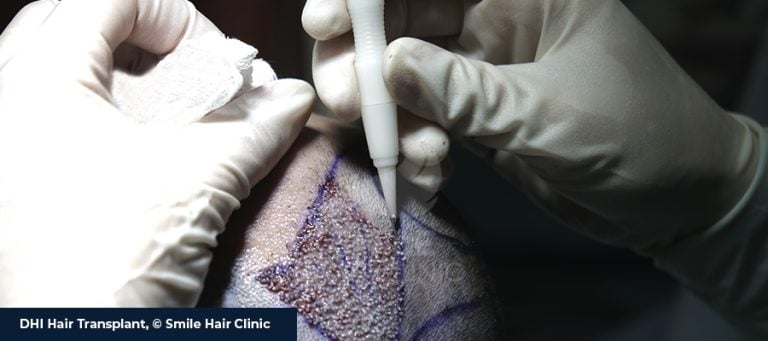
This method allows surgeons to control:
- implantation depth
- hair growth angle
- direction of hair placement
DHI is commonly used for detailed hairline work and increasing density between existing hairs.
Dr. Gökay Bilgin explains:
“Modern hair transplant techniques allow surgeons to recreate natural hairlines with remarkable precision.”
Please Select Your Gender
Estimated graft numbers for Tyga’s hairline restoration
When people look at Tyga hair transplant before and after images, the next question is usually about numbers. How many hair transplant grafts would be needed to achieve that level of change?
The answer depends on several individual factors. Surgeons evaluate donor density, hair thickness, scalp flexibility, and the extent of recession before determining graft numbers. Still, Tyga’s transformation gives a useful reference point for typical hairline restoration planning.
Graft estimate for temple reconstruction
Tyga’s most noticeable change occurred in the temple areas. Temple restoration often requires fewer grafts than full crown coverage but demands careful placement.
For cases similar to his, typical estimates fall within:
- temple restoration only: 1,200–1,800 grafts
- temple + frontal refinement: 1,500–2,500 grafts
- full frontal reconstruction: 2,000–3,000 grafts
Each graft contains one to four hairs. That means a procedure using 2,000 grafts may implant approximately 4,000 to 6,000 individual hairs.
Temple areas often use single-hair grafts to create a soft and natural edge.
Why Tyga’s result looks dramatic
Even moderate graft numbers can produce a strong visual impact.
Temple regions frame the face. When these areas are restored, the entire hairline appears younger and more balanced.
This explains why Tyga’s transformation attracted so much attention online.
Modern FUE hair transplant, Sapphire FUE, and DHI hair transplant techniques allow surgeons to place grafts with high precision. The angle, direction, and spacing of each graft are carefully controlled.
Hairline design typically follows a layered approach:
- single-hair grafts at the front edge
- multi-hair grafts behind for density
This creates a gradual transition that looks natural.
Donor area considerations
The hair transplant donor area determines how many grafts can be safely extracted. Strong donor density allows surgeons to restore hairlines without overharvesting.
Patients with thicker hair often achieve better visual density using fewer grafts.
Dr. M. Reşat Arpacı explains:
“A well-designed hairline depends on balanced graft distribution, not just high graft numbers.”
Hair transplant results timeline: how Tyga’s hair likely developed
After seeing Tyga hair transplant before and after images, many people wonder how long it takes to reach that kind of result. Hair restoration does not create instant density. The process follows a biological cycle that unfolds over several months.
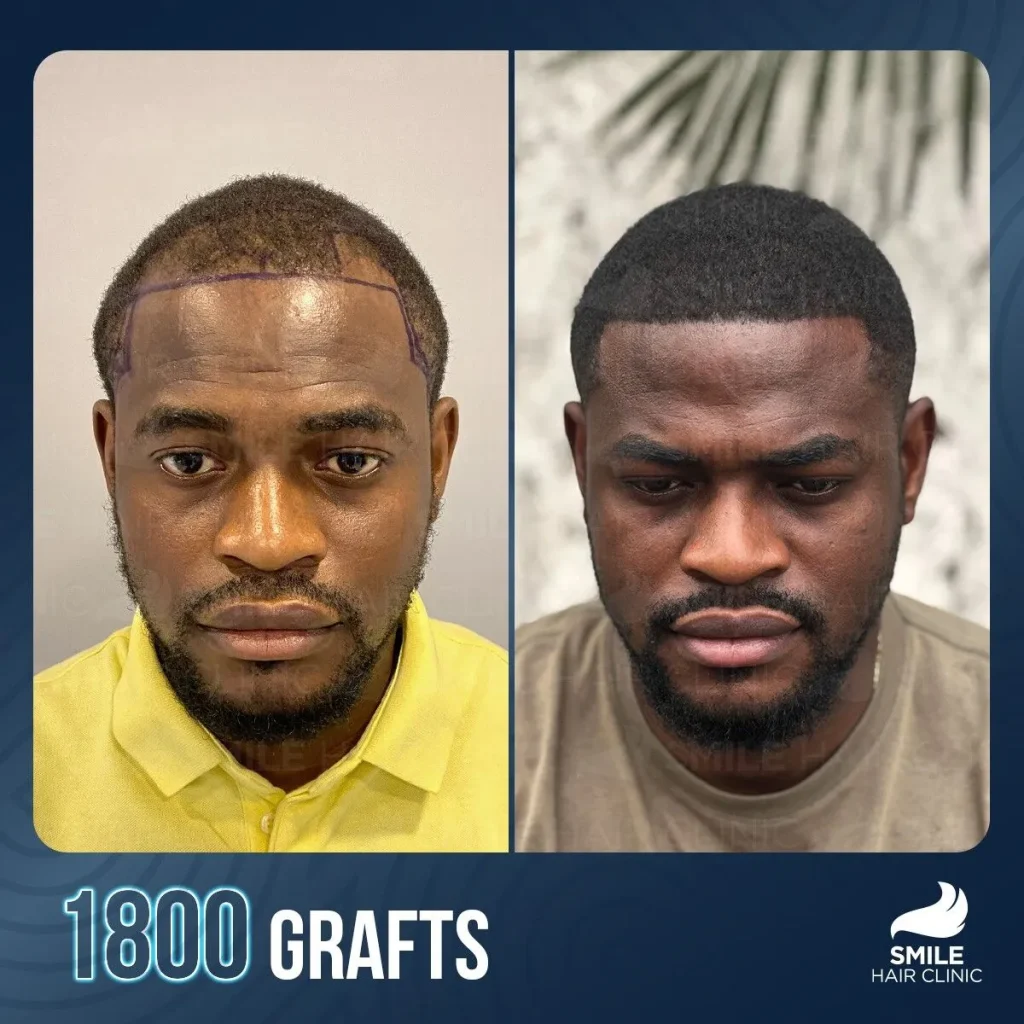
Understanding this timeline explains why Tyga’s transformation appeared gradually rather than overnight.
First weeks after the procedure
Right after a hair transplant procedure, whether FUE hair transplant, Sapphire FUE, or DHI hair transplant, the implanted grafts remain visible on the scalp.
Small scabs form around each graft as the skin heals.
Within 10 to 14 days, these scabs fall away naturally. The scalp begins to look more normal, although redness may still be present in some patients.
During this stage, the transplanted hairs remain in place.
Shock loss phase
Between the second and sixth week, many patients experience shock loss. The transplanted hairs begin to shed.
This stage can feel unexpected.
However, the follicles remain healthy beneath the skin. Shedding is a normal part of the hair growth cycle.
This phase often makes it seem like the transplant did not work.
It did.
Three to four months: early regrowth
Around month three or four, new hairs begin growing from the transplanted follicles. These hairs initially appear thin and soft.
This is the beginning of visible hair transplant results.
As time passes, these hairs become thicker.
Density slowly increases.
Six to twelve months: full result
Between months six and nine, the hairline becomes more defined. The transplanted area blends naturally with existing hair.
Most patients see final results between nine and twelve months after surgery.
Hair taken from the donor area keeps its genetic resistance to hair loss, which allows long-term growth.
Dr. Mehmet Erdoğan explains:
“Hair transplant results develop gradually. Patients should expect steady improvement throughout the first year.”
FUE vs Sapphire FUE vs DHI: which technique was likely used?
When people search for Tyga hair transplant, they often ask which technique could create such a clean, sharp hairline. The answer usually comes down to three modern methods: FUE hair transplant, Sapphire FUE, and DHI hair transplant.
Each approach can achieve natural results. The difference lies in how grafts are extracted and placed.
FUE hair transplant: the foundation technique
FUE hair transplant is the most widely used method today. Individual grafts are extracted from the donor area using micro punches and then implanted into the recipient area.
This method allows:
- minimal scarring
- faster healing compared to older techniques
- flexible graft placement
FUE works well for both hairline restoration and larger coverage areas. It forms the base for most modern procedures.
Sapphire FUE: refined channel creation
Sapphire FUE builds on standard FUE by using sapphire blades to open channels before implantation.
These blades allow:
- smaller, more precise incisions
- better control over angle and direction
- tighter packing for improved density
This is especially useful for sharp hairline designs like Tyga’s. A well-defined frontal line often requires high precision in channel creation.
DHI hair transplant: direct implantation control
DHI hair transplant uses a specialized implanter pen. Grafts are implanted directly without opening channels in advance.
This gives surgeons:
- direct control over depth and angle
- the ability to increase density in targeted zones
- less handling of grafts outside the body
DHI is often used for hairline refinement and dense packing in smaller areas.
Which one fits Tyga’s result?
Based on visible results, Tyga’s hairline shows:
- sharp temple definition
- natural transition at the front
- balanced density without harsh edges
These outcomes are commonly achieved using a combination approach.
Many clinics combine Sapphire FUE for channel precision with DHI hair transplant for density control in the frontal zone.
Dr. Gökay Bilgin notes:
“A natural hairline is not about a single technique. It’s about choosing the right method for each part of the hairline.”
Cost of a hair transplant like Tyga’s
After seeing Tyga hair transplant before and after, most people ask a direct question. How much would a similar transformation cost?
The price depends on graft count, clinic quality, and technique used. Location plays a major role too.
Average cost by country
Hair transplant prices vary widely across regions:
- USA: $8,000 – $20,000
- UK: £6,000 – £15,000
- Europe: €5,000 – €12,000
- Turkey: $2,000 – $5,000
Turkey has become a leading destination for hair transplant cost value. Clinics there offer full packages including hotel, transfers, and aftercare.
Despite lower prices, many clinics follow strict medical standards and use advanced techniques like FUE hair transplant, Sapphire FUE, and DHI hair transplant.
Cost based on graft numbers
For a case like Tyga’s, focused on temple and frontal restoration, estimated graft needs often range between 1,500 and 2,500 grafts.
Typical pricing structures:
- per graft model: $1 – $5 per graft
- package model: fixed price regardless of graft count
This means a similar procedure could cost:
- USA: $7,000 – $15,000
- Turkey: $2,000 – $4,500
Package deals often include:
- consultation and planning
- surgery
- medications and aftercare products
- first wash and follow-up
Why price alone can be misleading
Lower cost does not always mean lower quality.
What matters more:
- surgeon involvement
- clinic experience
- graft handling and survival rates
- natural hairline design
A poorly planned procedure can lead to unnatural results, even with high graft numbers.
Dr. Firdavs Ahmedov explains:
“Patients should focus on long-term results, not just price. A natural hairline requires experience and planning.”
Tyga’s result looks natural because the focus was on design and placement, not just density.
Can you achieve results like Tyga?
Seeing Tyga hair transplant before and after creates a clear expectation. A sharper hairline. Fuller temples. A younger look.
But can everyone reach the same outcome?
The short answer is no. Results depend on your biology, hair characteristics, and surgical planning.
Hair type and donor strength matter most
The hair transplant donor area plays the biggest role. Strong donor density allows surgeons to extract grafts without thinning the back of the scalp.
Key factors include:
- hair thickness
- hair color contrast with skin
- natural density in the donor zone
Thicker hair creates better visual coverage. Curly or wavy hair can enhance density even further.
Patients with weak donor areas may still get improvement. Just not the same level of fullness.
Hairline design is everything
Tyga’s result stands out due to its balanced design. The hairline is not too low. Not too straight.
Natural hairlines follow irregular patterns. Slight asymmetry makes them look real.
Modern FUE hair transplant, Sapphire FUE, and DHI hair transplant techniques allow precise placement. Each graft is angled to match natural growth.
A well-designed hairline often matters more than high graft numbers.
Dr. Ali Osman Soluk explains:
“A natural result depends on respecting facial proportions. Lower is not always better.”
Age and hair loss progression
Hair loss does not stop after a transplant.
Younger patients may continue losing native hair behind the transplanted zone. This can create uneven density over time.
Surgeons plan for this by:
- avoiding overly aggressive hairlines
- preserving donor reserves for future sessions
Realistic expectations
Tyga’s transformation is achievable in many cases. But it is not a one-size result.
Most patients can expect:
- a more defined hairline
- improved facial framing
- gradual density increase over 9–12 months
The goal is natural improvement. Not perfection.
Please Select Your Gender
FAQ: Tyga hair transplant and hairline restoration
Did Tyga really get a hair transplant?
There is no official public confirmation from Tyga about a procedure. Still, many people searching Tyga hair transplant point to visible changes in his hairline over time. The sharper temples and more defined frontal line are consistent with results seen after FUE hair transplant or DHI hair transplant procedures. These changes appeared gradually, which aligns with typical hair transplant timelines.
What type of hair transplant would create a result like Tyga’s?
A result like Tyga’s is usually achieved with modern techniques such as FUE hair transplant, Sapphire FUE, or DHI hair transplant. Many clinics combine methods. Sapphire blades can help create precise channels, while DHI allows controlled placement for density in the hairline. This combination supports natural angles and a soft transition at the front.
How many grafts would someone need for a similar hairline?
For temple and frontal restoration like Tyga’s, most patients need between 1,500 and 2,500 grafts. The exact number depends on donor density, hair thickness, and the degree of recession. Some cases may require more grafts if the frontal area is wider or density goals are higher.
How long does it take to see full results?
Hair transplant results take time. Shedding usually occurs within the first few weeks. New growth starts around months three to four. Most patients see clear improvement by six months, with full results developing between nine and twelve months.
Are results permanent?
Yes, transplanted hair is typically permanent. Hair taken from the donor area carries genetic resistance to hair loss. These follicles continue growing in the new location for many years. Still, existing non-transplanted hair may continue thinning over time.
Does a hair transplant look natural?
When performed correctly, results look natural. Techniques like Sapphire FUE and DHI hair transplant allow surgeons to control angle, direction, and density. A natural hairline uses single grafts at the front and gradually increases density behind.
Get a natural hairline with Smile Hair Clinic
Thinking about achieving a result similar to Tyga hair transplant? The process starts with the right plan. Not just graft numbers. Not just technique. Real planning.

At Smile Hair Clinic, every case is evaluated in detail before surgery. Your donor capacity, hair type, and long-term hair loss pattern are all considered.
No copy-paste hairlines.
Each design fits your face.
What makes the approach different?
At Smile Hair Clinic, procedures are performed using advanced methods such as FUE hair transplant, Sapphire FUE, and DHI hair transplant.
The team focuses on:
- natural hairline design based on facial proportions
- high graft survival through careful extraction and placement
- controlled density for realistic results
- long-term planning to protect donor reserves
Every step is doctor-led.
Dr. Mehmet Erdoğan explains:
“A successful hair transplant is not about how many grafts you implant. It’s about where and how you place them.”
What you can expect
Your journey typically includes:
- personalized consultation and hair analysis
- detailed hairline planning
- procedure with modern techniques
- aftercare guidance and follow-up
The goal is simple.
Natural results that age well.
Start with a free consultation
If you’re considering a hair transplant and want a realistic, natural hairline, the first step is a professional evaluation.
You can share your photos and get a personalized assessment from the medical team.
No pressure. Just clear guidance.
Get your free hair analysis and find out what’s possible for you.
