


Table of Contents
Folliculitis can look surprisingly similar to acne. Small red bumps, white-tipped spots, itching, and tenderness may appear around individual hairs, making it easy to assume that a breakout is the problem. In reality, folliculitis develops when hair follicles become inflamed, often because of infection, shaving, friction, sweat, or prolonged exposure to moisture.
Most mild cases improve without causing lasting damage. Recurrent or severe folliculitis is different. It may spread, develop into deeper infections, leave dark marks, or cause scarring and hair loss. Knowing what is causing the inflammation is therefore an important part of choosing the right folliculitis treatment.
What is folliculitis?
Folliculitis is inflammation involving one or more hair follicles. It can develop almost anywhere hair grows, including the scalp, beard area, chest, back, arms, thighs, buttocks, and groin. The palms and soles are not affected because they do not contain hair follicles.
The condition is often caused by infection, but not every case has the same origin. Bacteria, yeasts, shaving, friction, blocked follicles, and contaminated water can all produce folliculitis-like eruptions. This is why a treatment that works well for one form may do very little for another.
Symptoms of folliculitis
Folliculitis symptoms depend on the cause and how deeply the follicle is affected. Common signs include:
- Small red, skin-colored, or pus-filled bumps surrounding hairs
- White-headed pustules that may resemble acne
- Itching, burning, or irritated skin
- Tenderness or pain around affected follicles
- Clusters of bumps in areas exposed to sweat or friction
- Crusting after pustules break
- Dark marks after inflammation settles
- Deeper, painful lumps when infection extends farther into the follicle
Mild superficial folliculitis may remain uncomfortable rather than painful. Deeper infection can become significantly more tender and may develop into boils or abscesses.
What does folliculitis look like?
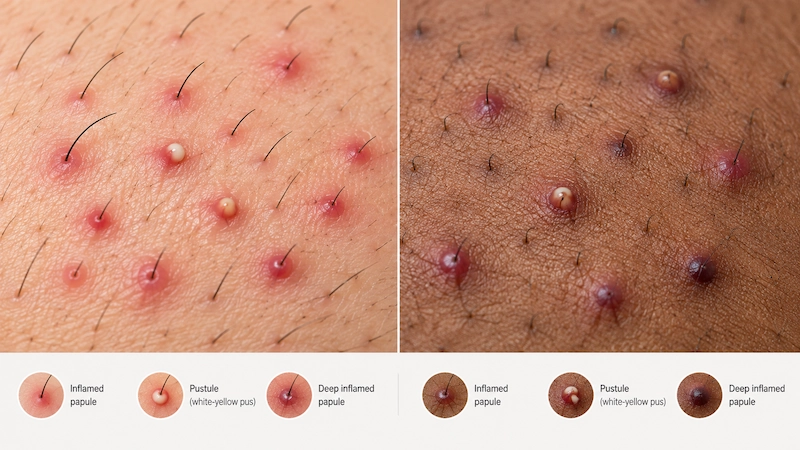
Folliculitis often appears as groups of small bumps centered around individual hair follicles. Some lesions are red and inflamed, while others contain a small amount of pus. On darker skin tones, redness may be less obvious and areas can appear purple, brown, or darker than the surrounding skin.
Its appearance can overlap with acne, keratosis pilaris, ingrown hairs, and several other skin conditions. One useful clue is that folliculitis lesions frequently form directly around hairs. Persistent or unusual eruptions may still require a dermatologist to confirm the diagnosis.
What causes folliculitis?
There is no single cause of folliculitis. Infection with Staphylococcus aureus is common, but yeast, Pseudomonas bacteria, shaving, friction, and occlusion can also inflame follicles.
Bacterial folliculitis
Bacterial folliculitis is commonly associated with Staphylococcus aureus. It can produce small pustules and tender red bumps around follicles. When infection extends deeper, a painful boil may develop.
Sweating, skin damage, friction, shaving, and occlusive clothing can make bacterial folliculitis more likely. Recurrent or extensive cases may require testing so treatment can be selected according to the organism involved.
Fungal folliculitis
The term fungal folliculitis is often used for Malassezia folliculitis, although Malassezia is technically a yeast. These organisms normally live on human skin but can cause follicular inflammation under certain conditions.
Malassezia folliculitis commonly produces small, similar-looking itchy bumps, often affecting the upper chest, back, shoulders, forehead, or hairline. Because it can resemble acne, people sometimes use acne treatments or antibiotics without improvement. Antifungal treatment is needed when yeast is responsible.
Pseudofolliculitis (razor bumps)
Pseudofolliculitis is not primarily an infection. It develops when a cut or shaved hair curves back into the skin and triggers inflammation. The beard and neck are common sites, although any shaved area may be affected.
People with tightly curled or coarse hair may experience it more often because the hair is more likely to re-enter the skin. Changing shaving habits, reducing close shaving, or considering another hair-removal method can reduce repeated episodes.
Hot tub folliculitis
Hot tub folliculitis is caused by Pseudomonas aeruginosa. Exposure can occur when skin remains in contact with contaminated water from a poorly maintained hot tub, pool, or similar environment.
The rash often develops in areas covered by a swimsuit because contaminated water stays against the skin longer. Many cases settle without specific treatment, although severe or persistent symptoms should be assessed medically.
Risk factors for folliculitis
Anything that damages, blocks, or repeatedly irritates follicles can raise the chance of developing folliculitis. Tight clothing, sweating, skin friction, shaving, waxing, and prolonged moisture can all contribute. Hot and humid conditions can make the combination of sweating and friction particularly troublesome.
Risk may also be higher in people with certain skin disorders, weakened immune defenses, or recurrent bacterial colonization. Frequent use of hot tubs or shared water facilities that are not properly maintained creates a separate risk for Pseudomonas folliculitis.
Where on the body does folliculitis occur?
Folliculitis can develop on virtually any hair-bearing area. The beard and neck are common after shaving, while the thighs, buttocks, and groin can be affected by tight clothing, sweat, or friction. The scalp may also develop follicular bumps and pustules.
The chest, shoulders, and upper back are common sites for Malassezia folliculitis. Hot tub folliculitis may be especially noticeable beneath swimwear. The location alone does not confirm the cause, but it can provide useful clues during diagnosis.
How is folliculitis diagnosed?
Many cases can be diagnosed through a physical examination and discussion of recent shaving, swimming, medications, symptoms, and previous episodes. A dermatologist may look closely at whether each bump is centered on a follicle and whether the pattern suggests bacteria, yeast, or ingrown hairs.
When folliculitis is severe, widespread, or keeps returning, a sample from a pustule may be cultured. This can identify bacteria and help guide antibiotic selection. Other testing may be needed when fungal infection or another skin disease is suspected.
How is folliculitis treated?
Folliculitis treatment depends on the cause and severity. Mild irritation may improve with simple changes, while bacterial or fungal disease can require medication.
Home remedies and self-care
Warm compresses can soothe discomfort and help mild lesions drain naturally. Keeping the area clean, reducing friction, pausing shaving, and changing out of sweaty clothing can also help the skin recover.
Avoid squeezing pustules or repeatedly scratching the area. Picking can increase inflammation and raise the chance of infection, discoloration, and scarring. Towels, razors, and personal grooming tools should not be shared.
Topical antibiotics and antifungals
Localized bacterial folliculitis may be treated with topical antimicrobial therapy when needed. Clinical references list treatments such as mupirocin or clindamycin for bacterial cases. Widespread or repeated antibiotic use should be avoided unless appropriate because unnecessary exposure contributes to resistance.
Malassezia folliculitis requires antifungal treatment rather than an antibacterial approach. This is one reason persistent acne-like bumps should not automatically be treated as bacterial folliculitis.
Oral medications
Oral antibiotics may be considered when bacterial folliculitis covers a large area, repeatedly returns, or develops into deeper infection. Culture testing may guide treatment when previous therapy has failed.
Oral antifungal medication may be needed for some forms of fungal folliculitis. The choice and duration depend on the organism, severity, other health conditions, and medications already being taken.
Laser therapy for recurrent folliculitis
Laser hair removal can be helpful when recurrent inflammation is driven by shaving or ingrown hairs, particularly in pseudofolliculitis barbae. By reducing hair growth in the treated area, laser therapy can reduce the cycle in which newly cut hairs curve back into the skin.
Laser settings need to match skin tone and hair characteristics. Treatment performed with unsuitable settings can cause burns or pigment changes, so experience with the patient’s skin tone is important.
How to prevent folliculitis
Some causes cannot always be prevented, but everyday habits can lower the risk of repeated follicle irritation.
- Wear breathable, loose clothing when heat and sweating are likely.
- Shower and change clothing after intense exercise.
- Avoid sharing razors, towels, and personal grooming tools.
- Use clean shaving equipment and avoid shaving excessively close.
- Shave in the direction of hair growth when razor bumps are a problem.
- Avoid repeatedly rubbing or scratching affected areas.
- Remove wet swimwear soon after leaving a pool or hot tub.
- Use properly maintained pools and hot tubs.
- Keep reusable grooming equipment clean.
For people who repeatedly develop razor bumps, changing the hair-removal method may be more effective than constantly treating each new flare.
Possible complications of folliculitis
Most superficial cases clear without permanent damage. Repeated or deeper inflammation can be more troublesome. Infection may spread into surrounding tissue or progress to boils and abscesses.
Long-standing inflammation can also leave post-inflammatory dark marks. More severe follicular damage may lead to scarring or permanent loss of hair in the affected area. Recurring lesions can have a practical effect as well, especially when discomfort makes shaving, exercise, or wearing certain clothing difficult.
When to see a doctor
A small area of mild folliculitis may settle with basic skin care and removal of the trigger. Medical assessment is more important when the rash is spreading, keeps returning, becomes increasingly painful, or does not improve with simple measures.
Seek care if there are large painful lumps, drainage, significant swelling, rapidly increasing redness, or signs that infection is becoming more extensive. Recurrent scalp folliculitis or lesions followed by scarring and hair loss should also be examined early.
A dermatologist can determine whether the bumps are truly folliculitis and, more importantly, what type is present. Bacterial infection, yeast-related folliculitis, razor bumps, acne, and other follicular conditions may look similar but require different approaches. Correct diagnosis helps prevent repeated treatment with products that do not address the actual cause.
Sources
- Winters, R. D., Mitchell, M. (2023). Folliculitis. StatPearls, NCBI Bookshelf, National Library of Medicine.
- DermNet NZ. Bacterial Folliculitis.
- DermNet NZ. Pseudofolliculitis Barbae (Razor Bumps), Images and Management.
- Centers for Disease Control and Prevention. Preventing Hot Tub Rash.
- Jacob, J. S., Tschen, J. (2020). Hot Tub-Associated Pseudomonas Folliculitis, A Case Report and Review of Host Risk Factors. Cureus.
- Kaminska, A. et al. Insights into the role of grooming modifications and preventative approaches in Pseudofolliculitis barbae. JAAD Reviews.
- Ross, E. V. et al. (2000). Treatment of pseudofolliculitis with a pulsed infrared laser. JAMA Dermatology.
