


If you are reading about body hair transplant Turkey, you have probably already heard that the back of the head is the main donor area. That is true. Most transplants rely on this zone. But sometimes, the scalp donor is not enough to reach the density you want. Density is what your eye really notices. Without it, even good technique looks thin.
In a body hair transplant in Turkey, grafts with follicles are taken from other areas of the body and moved to the scalp. This can include beard, chest, back, arms, or legs. The goal is simple. Your surgeon increases the safe graft pool so the transplanted area does not look sparse, even when your scalp donor is limited.
Think of body hair to head transplant as a support act, not the main performer. Your scalp hair still frames the hairline and front. Body hair steps in to help with background coverage, midscalp thickening, or crown filling. Done correctly, a combined body hair and scalp hair transplant can turn a borderline case into a believable result.
At Smile Hair Clinic, BHT hair transplant is never offered as a quick fix. It is a strategic option for advanced hair loss, depleted donor, or body hair transplant for repair cases after unsatisfying surgeries.
Dr Gökay Bilgin often reminds patients:
“Tools like body hair transplant help us reach better density. But they only work when we respect your donor limits and design for what is truly possible.”
Restore Your Hair When Scalp Donor Is Not Enough
Body Hair Transplant in Turkey at Smile Hair Clinic
When thinning becomes advanced or previous procedures have exhausted your scalp donor area, many people feel they are out of options. A body hair transplant in Turkey at Smile changes that. By safely using grafts from the beard, chest, back, or other donor zones, you unlock a larger supply of follicles and give your scalp a real chance to regain density.
This is the solution for patients who want meaningful coverage without unrealistic promises. Smile delivers strategic planning, surgeon led design, and natural looking results that honor your hair pattern.
Why This Treatment Is a Smart Choice
Body hair expands your usable graft pool, making it possible to treat advanced hair loss or repair unsatisfactory work. Scalp grafts still lead the design. Body grafts fill and support density where scalp hair alone cannot.
Surgeon Led Planning
BHT requires more nuance than standard FUE. Smile surgeons analyze each donor zone carefully, selecting grafts based on texture, thickness, and growth patterns so the final outcome blends naturally.
Natural Looking Density Boost
When placed intelligently, body grafts strengthen the midscalp, crown, and repair zones. This creates a fuller look that is far more forgiving under real lighting and daily styling.
Transparent Guidance and Honest Expectations
Smile does not oversell. You receive clear explanations, realistic goals, and a design shaped around your true donor potential.
What Is a Body Hair Transplant (BHT)?
A body hair transplant uses the same principles as FUE, but the grafts are taken from non scalp donor areas. In a typical body hair transplant Turkey procedure, your surgeon may extract follicles from the beard, chest, back, arms, or legs to support areas of thinning on your scalp. This approach is especially helpful when the usual donor zone at the back of the head cannot supply enough grafts for the density you want.
Body hair behaves differently. Each donor area has its own texture, curl, angle, and growth cycle. Beard hair is thicker and usually stronger. Chest hair is softer and often shorter. Arm or leg hair can be fine or slow growing. Understanding these differences is essential because texture mismatch can affect how natural your body hair to scalp transplant looks.
This is why BHT focuses on smart placement. Beard hair may boost midscalp strength. Chest hair may help with crown coverage. Scalp grafts still build the hairline. A thoughtful combination creates better balance and reduces the chance of visible contrast.
Success rates vary. Many clinics quote body hair transplant 60–80 percent success rate depending on donor type and technique. That range is honest. Body grafts do not behave exactly like scalp grafts. Yet when used correctly, they increase total coverage in a way scalp grafts alone cannot.
For patients with depleted donor or advanced hair loss stages such as body hair grafts for Norwood 6 / Norwood 7, BHT becomes a practical tool. It adds volume where you need it most.
Dr Mehmet Erdoğan adds:
“The goal is not just more grafts. The goal is a natural pattern. Body hair grafts help us create that pattern when scalp donor is limited.”
Who Is a Good Candidate for Body Hair Transplant in Turkey?
Not everyone needs BHT. The ideal candidate is someone who either has limited scalp donor capacity or wants additional density in zones where scalp grafts alone cannot deliver enough coverage. If you have thinning across large areas or previous overharvesting, a body hair transplant in Turkey can extend your donor supply safely.
People with strong beard or chest hair often see the best outcomes. Beard grafts tend to grow thicker and faster, making them useful for midscalp reinforcement and crown filling. Chest hair is softer and blends well in background density. This flexibility gives surgeons room to design a more complete result.
BHT also works well for:
- body hair transplant for poor donor area
- body hair transplant for repair cases after overharvesting
- body hair transplant after failed transplant where density was not achieved
- body hair to head transplant for advanced hair loss
- patients with scars or patchy areas needing support
At Smile, we look at how each donor area will behave on your scalp. Texture, direction, and growth cycle matter. You might be a good candidate if these align. You might not if your body hair is very light, sparse, or extremely different from your scalp hair.
Expectations also play a role. A body hair transplant for Norwood 6 / Norwood 7 can help with coverage, but it will not recreate the thickness you had in your teens. BHT is a density enhancer, not a density miracle.
Dr Firdavs Ahmedov shares:
“Choosing the right donor is key. We prefer using body hair to support, not to replace, scalp grafts. The balance gives the most believable outcome.”
Donor Areas for Body Hair Transplant at Smile
A successful body hair transplant Turkey depends on selecting the right donor areas. Each part of the body offers different texture, thickness, and growth behavior. At Smile Hair Clinic, donor selection is never random. It is carefully matched to the region of the scalp we want to strengthen.
Beard as Donor
Beard follicles are the strongest body donor source. They have thick shafts, high survival rates, and good growth on the scalp. This makes beard to scalp transplant and beard hair transplant to head ideal for adding structure in the midscalp or crown. Beard grafts are rarely used at the front line since they may appear too thick there.
Chest Hair
Chest hair is softer. It blends naturally when used for chest hair to head transplant in broader coverage zones. It works well for crown and background density. Beard hair gives strength. Chest hair gives softness. Together, they expand your donor capacity.
Back, Arms, and Legs
These areas are typically used only when scalp, beard, and chest are insufficient. Back hair to head, arm hair to head, and leg hair transplant to head can help certain patients with widespread thinning. The grafts usually have finer texture and shorter cycles, so they are placed where subtle coverage is enough.
Strategy for Advanced Cases
For body hair grafts for Norwood 6 / Norwood 7, the donor plan becomes a hierarchy:
- Scalp
- Beard
- Chest
- Back, arms, legs as supplemental sources
This layered approach helps maintain a natural look while adding the density larger cases demand.
Dr Ali Osman Soluk notes:
“Body hair is not a replacement for scalp donor. It is a valuable extension. When used with intention, it increases density without sacrificing natural harmony.”
Body Hair Transplant Technique and Planning at Smile
A body hair transplant Turkey procedure uses the FUE method, but extraction and planning require a more sensitive approach. Body follicles grow with different angles, curl patterns, and lengths. Your surgeon must understand these variations to create a natural blend once the grafts reach the scalp. At Smile, every BHT hair transplant begins with a detailed donor analysis to decide which body zones can safely support your density goals.
How We Mix Scalp and Body Grafts
Scalp grafts remain the foundation. They set the hairline, shape the front, and define your look. Body grafts step in to reinforce midscalp areas, strengthen the crown, or add background coverage. This mixed approach is what transforms a thin result into something fuller and more believable.
Technical Principles
- FUE body hair transplant uses micro punches adjusted to each donor area.
- Extraction angle changes with beard, chest, or leg hair.
- Body hair often has a shorter growth cycle, so it is placed in supportive zones.
- Curl and thickness differences are considered before placement.
The technical challenge is worth it because body grafts increase your safe donor pool. More grafts mean more consistent density. And density is what creates the “complete” look many patients want. When the scalp donor is limited, body hair transplant for density becomes a practical advantage.
Why Planning Matters
Poor planning leads to mismatch. Correct planning allows scalp and body hairs to work together. Smile surgeons design each case to avoid clumping, reduce directional conflicts, and maintain the character of your natural pattern.
Dr Mehmet Erdoğan often emphasizes:
“Body hair is a precision tool. When placed with intent, it fills the gaps that scalp donor alone cannot solve.”
Body Hair Transplant Procedure Step by Step
A body hair transplant in Turkey follows the same core structure as FUE, but with additional planning to manage multiple donor zones. At Smile Hair Clinic, the goal is always the same. Expand your usable donor pool safely and increase density in the areas where it matters most. Here is how a typical body hair to head transplant unfolds from start to finish.
Pre Procedure Planning
Your surgeon analyzes scalp and body donor areas. Beard, chest, back, arms, or legs are evaluated for strength and suitability. Some patients begin a short preparation phase that includes trimming or mild topical support to create uniformity in growth. This helps with extraction reliability and improves survival odds.
Local Anesthesia and Donor Extraction
The procedure begins with local anesthesia. Using the micro FUE body hair transplant technique, grafts are harvested one by one. Beard may provide strong thick grafts. Chest hair may offer softer blending. Back or arm grafts are taken when additional support is needed. Each follicle is handled carefully since body grafts can have curved roots or shallow angles.
Sorting and Recipient Design
Grafts are grouped according to texture and thickness. Scalp singles shape the hairline. Body grafts strengthen midscalp or crown. This mix is essential for natural flow and balanced density.
Implantation
Using fine implanters or forceps, grafts are placed according to angle, spacing, and pattern. Body hair usually fills background zones while scalp grafts define structure.
Duration
A BHT operation time often runs 6 to 8 hours, and longer in complex cases.
Dr M. Reşat Arpacı notes:
“Every graft must be placed with intention. BHT cases demand more patience, but they reward patients with coverage they thought was impossible.”
Body Hair Transplant Turkey Cost 2026
The body hair transplant Turkey cost helps you plan realistically. Prices vary because BHT requires more time, more precision, and often more than one donor source. Compared to standard FUE, BHT demands deeper expertise, especially when beard, chest, or back grafts are combined with scalp grafts to achieve balanced density.
Most clinics follow similar patterns, and public ranges show:
- 2,200 to 5,000 USD for basic BHT cases
- 3,500 to 6,500 USD for multi donor or complex planning
- 30,000 USD or more in Europe or the USA for large mixed donor procedures
For patients with advanced hair loss, these numbers matter. Many need grafts from several different body zones. This increases surgical hours and planning time, which affects total pricing. Your exact body hair transplant Turkey price depends on:
- total grafts needed
- number of donor areas used
- complexity of curl, angle, or texture differences
- whether the case involves repair after failed transplant
- combined scalp plus body approach
At Smile Hair Clinic, pricing stays transparent. You receive your personalized plan, graft strategy, and full cost outline before scheduling anything. Packages may include hotel stay, airport transfers, medications, aftercare materials, and follow up support, making body hair transplant Turkey packages with hotel and transfers a practical choice for international patients.
How much does a body hair transplant cost in Turkey?
Most patients pay between 2,200 and 6,500 USD, depending on graft count, donor areas, and complexity. Turkey remains far more affordable than the US or UK, often costing one third of their prices.
Dr Gökay Bilgin adds:
“BHT pricing should match the precision required. More donor zones do not mean better outcomes unless the plan is thoughtfully built. You pay for design, not just grafts.”
Recovery, Healing and Results After Body Hair Transplant
Healing after a body hair transplant Turkey procedure follows the same general pattern as scalp FUE, but each donor zone may react differently. Beard areas usually heal fast. Chest and back can feel tender for a few days. Arm and leg donor sites tend to recover quietly with minimal irritation. Your scalp follows a familiar cycle: redness, tiny scabs, shedding, and gradual regrowth.
What the First Weeks Look Like
During the first week, you see mild crusting in both scalp and body donor areas. Washing instructions help those scabs soften and fall naturally. Most patients return to work after a few days because body donor sites are often hidden under clothing.
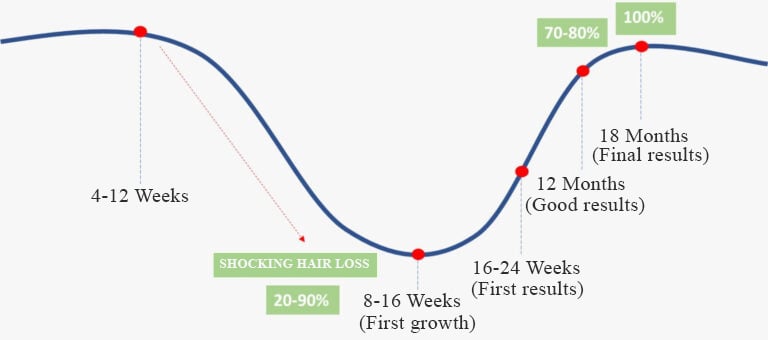
By week two, donor areas look far better. Shedding begins around weeks three to five. This is normal. The graft enters a resting phase before it starts growing again.
Growth Timeline for Body Hair Grafts
Body hair has a different growth rhythm than scalp hair. That means the timeline varies:
- Early signs: 3 to 4 months
- Noticeable improvement: 6 to 9 months
- Full body hair transplant results 12–18 months
Because body grafts may be curlier or shorter, Smile surgeons place them where those differences support coverage instead of distracting from your natural pattern.
Blending for Natural Outcomes
BHT grafts do not need to mimic scalp hair perfectly to be effective. They strengthen areas where visual density matters. When combined with scalp grafts, they create a fuller, more consistent look. This is how a body hair to scalp transplant enhances coverage even in advanced cases.
Dr Firdavs Ahmedov shares:
“Growth takes patience. Body grafts wake up slowly, but when placed correctly, they add the extra layer of density many patients thought they could never achieve.”
Risks, Limits and Success Rate of Body Hair Transplant
Every body hair transplant Turkey procedure has unique strengths and practical limits. Body hair is a valuable donor source, but it behaves differently from scalp hair. Understanding these differences helps you set healthy expectations and recognize when BHT can meaningfully improve your result.
What Makes BHT Different
Body hair varies in curl, diameter, angle, and growth cycle. Beard hair is thick and fast growing. Chest hair is softer and often shorter. Leg or arm hair may grow slowly. These differences mean that body grafts usually support density rather than create fine detail. This is why scalp follicles remain the foundation for hairline design.
Success Rate Reality
Many clinics report a body hair transplant success rate 60 to 80 percent. This is accurate. Body grafts survive well, but typically not at the same rate as scalp grafts. The key is using the right donor for the right zone. Beard grafts often achieve the highest survival, while chest and limb hair may offer moderate yield. When mixed thoughtfully with scalp grafts, these numbers still create a visible improvement in coverage.
Potential Risks and Limitations
- texture mismatch when placed incorrectly
- lower yield compared to scalp donor
- longer surgery due to complex angles
- overharvesting risk in visible areas like beard
- limited ability to create full density in very advanced cases
- short growth cycles in some donor zones
BHT is not meant to replace scalp donor. It extends your donor supply. It improves coverage. It adds layers of density in areas where scalp grafts alone fall short.
Dr Ali Osman Soluk explains:
“We never chase graft numbers. We chase balance. Body hair grafts must blend with your pattern, not compete with it. When the plan is honest, BHT becomes a powerful tool.”
Why Choose Turkey and Smile Hair Clinic for Body Hair Transplant?
Turkey has become a leading destination for advanced hair restoration, and body hair transplant Turkey procedures sit at the center of that expertise. Surgeons here perform thousands of graft extractions each year across beard, chest, back, and limb donor zones. This volume sharpens technique, improves decision making, and builds the kind of intuition that complex BHT cases require.
Why Turkey Stands Out
Pricing plays a role, but expertise matters more. Clinics in Turkey often provide the same or better outcomes as Western countries at a fraction of the price. Many international patients travel for procedures that would cost two to three times more abroad. This includes body hair transplant Turkey packages with hotel and transfers that simplify the entire experience.
Why Smile Hair Clinic is Different
Smile focuses on design first. Body hair is not used randomly. It is assigned to supportive zones where its texture strengthens density rather than disrupts flow. Every body hair transplant Istanbul case begins with a plan built by a surgeon, not by a sales team. Beard grafts reinforce structure. Chest grafts fill background spaces. Scalp grafts define the areas that frame your face.
Patients with body hair transplant for repair cases find comfort knowing that Smile specializes in correction. Whether your donor was overharvested or previous density was not enough, a carefully constructed BHT plan can recover lost coverage and restore confidence.
Support for International Patients
Your trip is organized from start to finish. Airport pickup, hotel accommodation, translation support, and follow up care are arranged so you can focus on healing while enjoying Istanbul comfortably.
Dr Gökay Bilgin summarizes it well:
“BHT is a partnership. When we combine surgical precision with a thoughtful patient plan, even complex cases open new possibilities.”
Aesthetics, Density, and Expected Outcomes
When patients consider a body hair transplant Turkey, they often ask the same question: will the result look natural? The answer depends on design, placement, and donor strategy. Body hair does not behave exactly like scalp hair, so the technique must respect those differences. Done well, BHT improves coverage, fills gaps, and strengthens density where your eye needs it most.
How Body Hair Supports Density
Scalp grafts shape the hairline and set the overall pattern. Body grafts reinforce that structure. Beard hair is thicker, so it adds strength in the midscalp. Chest or back hair is softer and creates a gentle background layer. Combining scalp and body hair for higher graft numbers helps maximize surface coverage and reduce visible thinning in advanced cases.
Realistic Expectations
If you have extensive thinning, BHT cannot recreate adolescent density. But it can lift a see through appearance into something fuller, more uniform, and far easier to style. This is especially useful for:
- crown filling
- repair of patchy transplants
- scar coverage
- major Norwood stages
- general density enhancement
Appearance and Texture
Most patients notice that once body grafts grow, they blend visually even if the strands differ slightly in texture. Strategic placement is key. Softer body grafts sit under or behind scalp grafts. Thicker beard grafts stay away from the frontal hairline. This layered approach results in natural looking results with mixed donor sources.
Before and After Perspective
Seeing body hair to head transplant before and after photos helps set expectations. At Smile, surgeons encourage reviewing cases similar to your donor structure and hair type.
Dr M. Reşat Arpacı reflects:
“When body hair supports the right zones, density improves without calling attention to itself. The best BHT outcomes feel calm, balanced, and quietly satisfying.”
Body Hair Transplant Turkey FAQs
What is a body hair transplant?
A body hair transplant uses FUE to extract follicles from areas like the beard, chest, back, arms, or legs and implant them into thinning areas on the scalp. It increases total graft supply when scalp donor alone is not enough.
Can body hair be transplanted to the head?
Yes. Body hair to head transplant methods are effective when performed carefully. Beard and chest grafts usually offer the strongest results. These grafts are placed in supportive zones, not the hairline, to maintain natural texture balance.
Who is suitable for a body hair transplant?
You may be a good candidate if you have limited scalp donor capacity, advanced hair loss, scarring, or need repair after a failed transplant. Strong beard or chest hair improves suitability.
Which body areas can be used as donors?
Beard, chest, back, arms, and legs can all be used. Beard usually provides the strongest grafts, while chest and back offer softer coverage.
Does body hair transplant look natural?
Yes, when designed correctly. Scalp grafts frame the hairline. Body grafts increase density behind it. This blend creates a fuller, balanced appearance.
What is the success rate of body hair transplant?
Most clinics report a body hair transplant success rate 60 to 80 percent, depending on donor type and technique. Beard grafts typically achieve the highest survival.
Is body hair transplant painful?
Local anesthesia keeps the procedure comfortable. Mild soreness in body donor areas is common for a few days.
How long does recovery take?
Initial healing takes around a week. Visible improvements begin at 3 to 4 months, with full results at 12 to 18 months.
How long should I stay in Istanbul?
Most patients stay 3 to 4 days for consultation, procedure, first wash, and follow up guidance.
Start Your Body Hair Transplant Journey With Smile Hair Clinic
If you feel limited by your scalp donor area or past procedures, a body hair transplant Turkey plan at Smile Hair Clinic can help you regain options you thought were gone. Body hair opens a new donor supply. It strengthens density. It fills areas that looked impossible to fix. And most importantly, it does all of this while still respecting natural design.
Why Patients Choose Smile
Because every BHT case demands careful thinking. Smile surgeons examine your beard, chest, back, and scalp donors with a designer’s eye. They decide which grafts belong in which zone. This avoids mismatched texture and creates results that feel balanced instead of forced.

Your experience stays organized and comfortable: airport transfers, hotel options, translation assistance, and aftercare support are all handled for you. You focus on your transformation. We focus on everything else.
Key Benefits You Can Expect
- expanded donor supply for advanced hair loss
- better density across midscalp and crown
- strategic mixing of scalp and body grafts
- natural looking outcomes using supportive placement
- clear expectations based on your unique donor profile
- transparent pricing with body hair transplant Turkey cost explained upfront
Your Next Step
Send your photos. Share your goals. Let a Smile surgeon create a personalized body hair to head transplant Turkey plan designed for your real potential, not unrealistic promises.
Request Your Free BHT Assessment Today. A fuller, more confident look begins with one decision. Smile is ready when you are.
