

The Norwood scale — formally known as the Hamilton-Norwood scale — is the most widely used classification system for male pattern hair loss. It divides androgenetic alopecia into seven stages, ranging from a full, intact hairline at Stage 1 to extensive baldness across the crown and frontal scalp at Stage 7.
First introduced by James Hamilton in the 1950s and later revised by O’Tar Norwood in 1975, the scale was developed to give clinicians a shared language for describing, comparing, and tracking the progression of male pattern baldness. Today it forms the foundation of most hair transplant consultations — used to estimate graft requirements, plan hairline design, and assess donor capacity.
But the Norwood scale is a tool, not a verdict. Understanding what it measures — and equally, what it does not — is essential before making any treatment decision based on it.
How the Norwood Scale Works — and Where It Falls Short
Before walking through each stage, it is worth addressing something most Norwood scale guides skip entirely: the classification has real limitations, and clinicians who work with it daily are aware of them.
What It Measures Well
The scale accurately captures the two dominant patterns of male androgenetic alopecia — frontal recession and vertex (crown) thinning — and maps how these areas enlarge and eventually merge as hair loss progresses. For the majority of men, this progression follows a broadly predictable path, which makes the scale useful for treatment planning and outcome prediction.
Where It Falls Short
It does not account for hair characteristics. Two men at the same Norwood stage can have very different surgical outcomes depending on hair calibre, density per square centimetre, curl pattern, and scalp laxity. These variables affect how many grafts can be harvested and how dense the result will appear — none of which the Norwood stage alone can tell you.
It underrepresents intermediate patterns. The revised scale includes vertex variants (3V, 4A) but many patients present with patterns that sit between two stages or combine elements of both. Forcing a complex presentation into a single number can oversimplify clinical reality.
It was not designed for women. Female pattern hair loss follows a different distribution — typically diffuse thinning along the central part rather than frontal recession — and is better classified using the Ludwig scale or Sinclair scale. Women who look up the Norwood scale in relation to their own hair loss are working with a framework that was not built for them.
It does not predict progression speed. A man at Norwood Stage 3 at age 25 is in a fundamentally different situation than a man who reaches Stage 3 at age 50. The scale describes the current state, not the trajectory.
Dr. Gökay Bilgin notes that in consultations, the Norwood stage is always a starting point, not a conclusion. Two patients at Stage 4 can require completely different surgical plans once donor density, hair calibre, and age are factored in. The number orients the conversation — it does not replace the evaluation.
The Role of Age in Norwood Stage Assessment
Age is one of the most important variables in interpreting a Norwood stage, and it is consistently underweighted in generic guides.
Early Onset Hair Loss — Why It Changes Everything
A man who reaches Norwood Stage 3 at age 22 is not simply “three stages into hair loss.” He is at Stage 3 with potentially decades of progression ahead of him. Without knowing where his hair loss will ultimately stabilize, surgical planning becomes significantly more complex.
This is why most experienced surgeons are cautious about performing large transplant procedures on men under 25–28 — not because surgery cannot produce good results now, but because the final extent of loss is still unknown. A hairline designed for a Norwood 3 at age 22 may look disconnected and unnatural if the patient progresses to a Norwood 5 or 6 by age 35, with transplanted hair surrounded by new areas of loss.
Later Onset — A Different Risk Profile
A man who first notices recession at age 45 and reaches Norwood Stage 4 by age 55 is working with a much more predictable trajectory. The rate of progression has already revealed itself, the final pattern is more estimable, and surgical planning can be done with greater confidence about long-term stability.
What This Means Practically
Early-stage patients — particularly those in their early to mid twenties — benefit most from starting medical therapy promptly, documenting progression carefully over time, and deferring large surgical decisions until the pattern has stabilized. This approach preserves donor hair for when it is most needed and avoids the difficult position of correcting a hairline that no longer matches the surrounding scalp.
Dr. Mehmet Erdoğan observes that age at onset is one of the first things evaluated in consultation, before any discussion of graft numbers or technique. A 24-year-old at Norwood 3 and a 48-year-old at Norwood 3 leave the consultation with very different plans — and understanding why is key to setting appropriate expectations.
About Androgenetic Alopecia and the Norwood Scale
The Norwood scale provides a structured way to classify male pattern baldness stages caused primarily by androgenetic alopecia. This genetic condition, influenced by hormones like DHT and hair loss, leads to gradual miniaturization of hair follicles and a predictable hair loss progression timeline.
How Androgenetic Alopecia Develops
Men with genetic hair loss inherit follicles that are sensitive to dihydrotestosterone (DHT). Over time, DHT shortens the growth cycle, causing strands to thin and eventually stop growing. The pattern typically starts with a receding hairline, crown thinning, or both. These changes progress through the Norwood scale stages, from minimal recession in Norwood stage 1 to extensive baldness in Norwood stage 7.
Why the Norwood Scale Is Important
The Hamilton Norwood scale provides a universal language for doctors and patients to measure and track hair loss. It helps determine appropriate treatment, such as finasteride for Norwood stage 1–3 or hair transplant grafts by Norwood stage, and assists in setting realistic expectations for future coverage. Clinics also rely on it to plan hairline design for Norwood stage and assess donor density Norwood scale for surgical options.
Benefits of Early Identification
Recognizing where you are on the Norwood scale 1 to 7 allows timely action. Early medications for male pattern baldness, including minoxidil for early Norwood stages, can slow or even stop further loss. This proactive approach preserves donor hair, which is critical for procedures such as FUE hair transplant Norwood stage or DHI hair transplant Norwood stage later on.
Dr. Firdavs Ahmedov explains,
“The Norwood scale gives us a roadmap for long-term hair health. Identifying a patient’s stage early can mean the difference between simple maintenance and a complex restoration.”
Norwood Scale Stage-by-Stage Breakdown (Stages 1 to 7)
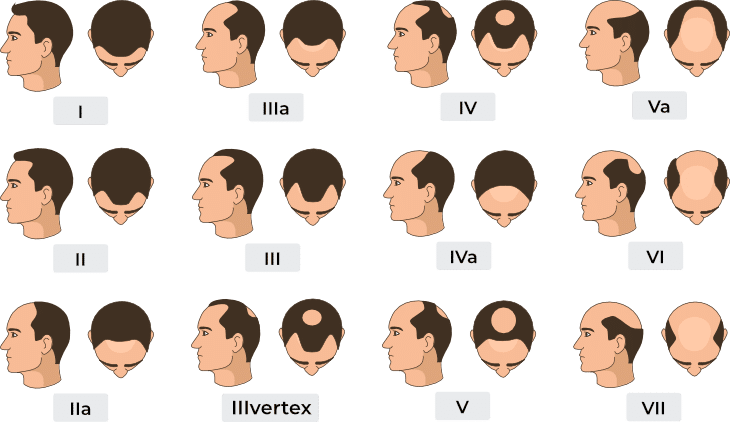
The Norwood scale stages describe the typical journey of male pattern baldness, from a barely noticeable Norwood stage 1 to advanced Norwood stage 7. Understanding each stage helps you plan the best treatment and know what results are achievable.
Norwood Stage 1
Pattern: No significant recession. The hairline sits at or near its original juvenile position with full frontal density.
Clinical significance: Stage 1 is essentially a baseline. Hair loss has either not begun or is too early to classify visually. There is no clinical indication for surgery at this stage.
What is achievable: The goal at Stage 1 is preservation. If there is a family history of significant hair loss or early miniaturization is detected on trichoscopy, preventive medical therapy — finasteride, minoxidil, or both — can be started to slow the onset of visible progression.
Surgical considerations: Surgery is not indicated. Donor hair should be conserved.
Norwood Stage 2
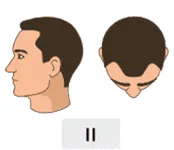
Pattern: Mild recession at the temples, often forming a slight triangular indentation on one or both sides. The hairline remains largely intact and the recession is subtle enough to go unnoticed without close inspection.
Clinical significance: Stage 2 is where most men first notice a change. It is also the stage most likely to be undertreated — either because the change seems minor or because patients are not yet aware of the treatment options available to them.
What is achievable: Medical therapy at this stage has the strongest evidence base. Finasteride, used consistently, can stabilize or even partially reverse early miniaturization. Minoxidil supports density and prolongs the anagen phase. PRP therapy can complement medical treatment by stimulating follicle health.
For patients who want to restore the subtle recession rather than simply prevent further loss, small FUE or DHI sessions can refine the hairline with minimal graft use — typically under 1,000 grafts.
Surgical considerations: Surgery is feasible but rarely urgent. Any procedure at this stage should be considered conservative and should be accompanied by ongoing medical therapy.
Norwood Stage 3
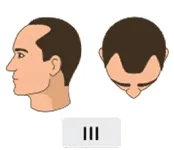
Pattern: Clearly visible recession at the temples, forming a defined M or V shape. The frontal hairline has retreated noticeably. Stage 3 Vertex (3V) includes early crown thinning alongside frontal recession.
Clinical significance: Stage 3 is the earliest point at which most men actively seek treatment. It is also the stage at which the distinction between stabilized and progressive loss becomes most clinically important — particularly in younger patients.
What is achievable: This is the most surgically rewarding range of the scale in many respects. Follicles are still present across most of the scalp, donor supply is typically strong, and the gap between the current hairline and the desired hairline is manageable. FUE or DHI hair transplant can rebuild the frontal hairline with natural density. Graft requirements at this stage typically range from 1,500 to 2,500, depending on the extent of recession and the desired density.
Continued medical therapy after surgery is essential to protect native hair surrounding the transplanted area.
Surgical considerations: Highly feasible. Age and progression rate should be evaluated carefully before proceeding, particularly in patients under 28.
Norwood Stage 4
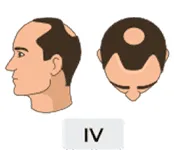
Pattern: Advanced frontal recession combined with a distinct bald or thinning area at the crown. A band of hair still connects the sides of the scalp, separating the two bald regions.
Clinical significance: Stage 4 represents a turning point where both the frontal zone and the crown require attention simultaneously. Treatment planning becomes more complex, and donor management becomes a meaningful consideration for the first time.
What is achievable: Comprehensive restoration of the frontal hairline and significant improvement to crown density are both achievable at Stage 4 with appropriate graft numbers. FUE or DHI can address both areas, though priorities need to be established — the frontal zone typically takes precedence because it frames the face and has the greatest visual impact.
Graft requirements at Stage 4 range from approximately 2,500 to 4,000, depending on scalp characteristics and the area to be covered.
Surgical considerations: Requires careful planning. The surgeon must balance current coverage goals against the likelihood of future progression and the need to preserve donor reserves for potential additional sessions.
Dr. Gökay Bilgin notes that Stage 4 is often where patients arrive having already noticed their hair loss for several years. In these consultations, one of the most important discussions is not just what surgery can achieve today, but what the plan looks like over the next decade. A transplant that looks excellent at 40 must also make sense at 55.
Norwood Stage 5
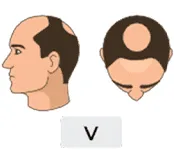
Pattern: The bald areas at the front and crown continue to enlarge and begin to merge, leaving only a narrowing strip of hair between them. The overall bald surface area is significantly larger than at Stage 4.
Clinical significance: Stage 5 is a demanding stage for surgical planning. The area requiring coverage is large, donor demand is high, and the risk of overharvesting — which can leave the donor area visibly thin — becomes a genuine concern.
What is achievable: A strong frontal frame and partial crown coverage are realistic goals. Full crown restoration to natural density is rarely achievable in a single session and may not be achievable at all depending on donor capacity. Multi-session planning is common at this stage.
Graft requirements typically range from 3,500 to 5,000, sometimes more. Hair characteristics — calibre, density, and curl — have a significant influence on how far the available grafts can be distributed effectively.
Surgical considerations: Multiple sessions may be required. Donor zone assessment is critical. Body hair transplantation can supplement scalp donor supply in selected cases where scalp donor capacity is limited.
Norwood Stage 6
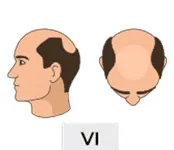
Pattern: The frontal and crown bald areas have merged into a single large region. A horseshoe-shaped rim of hair remains at the sides and back of the scalp. The remaining hair forms the entirety of the donor supply.
Clinical significance: At Stage 6, the scale of loss means that full cosmetic restoration is not achievable through transplantation alone. Planning shifts toward maximizing the aesthetic return from limited donor resources.
What is achievable: The priority at Stage 6 is creating a natural-looking frontal frame that restores the visual balance of the face. Mid-scalp coverage can be partially addressed, but full crown restoration is typically outside what can be achieved without compromising the donor area.
Scalp micropigmentation (SMP) is a valuable complementary option at this stage — used either independently or alongside transplantation to increase the illusion of density across larger areas.
Surgical considerations: Donor supply is the primary limiting factor. Conservative harvesting is essential to avoid visible thinning of the sides and back. Body hair transplantation may extend available supply in appropriate candidates.
Norwood Stage 7
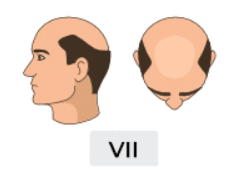
Pattern: Only a narrow rim of hair remains around the perimeter of the scalp. This represents the most extensive form of androgenetic alopecia on the scale.
Clinical significance: Stage 7 is the endpoint of the classification. Donor supply at this stage is at its most limited, and the gap between available grafts and the area requiring coverage is too large for standard transplantation to bridge effectively.
What is achievable: Small FUE sessions to soften the front edge and create a subtle frame can be appropriate in selected patients with good donor quality. For most Stage 7 patients, however, the most realistic outcomes come from non-surgical options: scalp micropigmentation to create the appearance of a shaved scalp with even density, or hair systems (prosthetic hair) for those who prefer a fuller cosmetic result.
Surgical considerations: Surgery is rarely the primary recommendation. Any surgical planning must be extremely conservative, with clear pre-operative discussion of what can realistically be achieved.
Dr. Mehmet Erdoğan emphasizes that Stage 6 and Stage 7 consultations require the most candid conversations. Patients at these stages often arrive with high hopes shaped by before/after images from earlier-stage patients. Redirecting that conversation toward what is genuinely achievable — and helping the patient find confidence in realistic options — is as much a part of the clinical work as the surgery itself.
Dr. Ali Osman Soluk explains,
“A precise Norwood stage diagnosis allows us to match the treatment—medical, surgical, or combined—to what is realistically achievable for each patient.”
After evaluating where you are on the Norwood scale 1 to 7, you can take informed steps to slow genetic hair loss and select the best treatment path.
Early Stages (Norwood 1–3): Maximizing Prevention and Early Intervention
In the first three Norwood scale stages, men experience little to moderate change in hair density. Acting early at Norwood stage 1, Norwood stage 2, or Norwood stage 3 offers the best chance to maintain a natural look and slow progressive hair loss caused by androgenetic alopecia.
Norwood Stage 1: Observation and Prevention
- Pattern: Full hairline with no significant thinning.
- Goals: Maintain current density through healthy habits and periodic scalp checks.
- Treatment: Preventive options include finasteride for Norwood stage 1–3, minoxidil for early Norwood stages, and PRP therapy Norwood stage to strengthen follicles and protect against DHT and hair loss.
Norwood Stage 2: Addressing Early Recession
- Pattern: Mild temple recession forming a slight M shape.
- Goals: Halt further loss and reinforce the hairline.
- Treatment: Daily minoxidil, oral finasteride, and occasional PRP therapy Norwood stage can help. Small FUE hair transplant Norwood stage sessions may refine frontal hairline restoration Norwood scale if desired.
- Donor Area: High donor density Norwood scale allows easy planning for any small graft session.
Norwood Stage 3: Planning Hairline Refinement
- Pattern: Deeper temple recession or initial crown thinning.
- Goals: Rebuild the hairline and prevent further spread.
- Treatment: A combination of medical therapy and hair transplant grafts by Norwood stage works well. FUE hair transplant Norwood stage or DHI hair transplant Norwood stage provides durable coverage, while continued use of medications for male pattern baldness preserves surrounding hair.
- Donor Area: Usually strong enough for graft requirements per Norwood stage without difficulty.
Dr. M. Reşat Arpacı advises,
“Early-stage patients who commit to consistent medical therapy often keep their native hair for years and require fewer grafts if they choose surgery later.”
If you act promptly during Norwood scale 1 to 3, patients can maintain a full, youthful hairline and delay or minimize the need for large hair transplant procedures.
Mid Stages (Norwood 4–5): Strategic Hair Restoration
At Norwood stage 4 and Norwood stage 5, hair loss is more visible. Frontal recession deepens and crown and vertex coverage Norwood scale areas thin or merge. This is when a combination of medical therapy and surgery becomes the primary path to maintain a natural hairline and restore density.
Norwood Stage 4
- Pattern: The frontal hairline shows advanced recession while the crown forms a distinct bald spot, usually separated by a strip of hair.
- Treatment Goals: Preserve existing hair, restore frontal coverage, and thicken the mid-scalp.
- Recommended Options:
- Continued finasteride for male pattern baldness and minoxidil for early Norwood stages to slow loss.
- FUE hair transplant Norwood stage or DHI hair transplant Norwood stage to rebuild the frontal hairline restoration Norwood scale and reinforce the mid-scalp.
- PRP therapy Norwood stage as supportive care to improve graft survival.
- Donor Considerations: Strong donor density Norwood scale is vital to supply the grafts required, typically 3,000–4,000 follicles.
Norwood Stage 5
- Pattern: The bald crown expands and merges with the frontal baldness, forming a larger area with only a thin bridge of hair in between.
- Treatment Goals: Frame the face with a solid hairline and provide as much mid-scalp and partial crown coverage as the donor area allows.
- Recommended Options:
- Hair transplant grafts by Norwood stage using FUE or a combined FUE and DHI approach to maximize graft numbers.
- Continued medications for male pattern baldness to preserve remaining native hair and protect transplanted areas.
- Donor Considerations: Adequate donor area Norwood scale is essential. Graft requirements may reach 4,000–5,000 follicles, requiring careful planning and possibly multiple sessions.
Dr. Gökay Bilgin explains,
“Stages 4 and 5 call for strategic planning. We design the hairline and density to create strong framing while keeping enough donor hair in reserve for the patient’s future needs.”
When medical maintenance is combined with precise surgical planning during Norwood scale stages 4 and 5, patients can regain natural coverage and slow further progressive hair loss effectively.
Advanced Stages (Norwood 6–7): Managing Extensive Hair Loss
When hair loss reaches Norwood stage 6 and Norwood stage 7, the bald areas across the crown and front have merged into one large region. Achieving full coverage becomes challenging, and treatment plans focus on realistic restoration and careful use of the donor area Norwood scale.
Norwood Stage 6
- Pattern: Frontal and crown baldness connect, leaving only a horseshoe-shaped band of hair at the sides and back.
- Treatment Goals: Rebuild a natural frontal frame and cover as much of the mid-scalp as possible.
- Recommended Options:
- Hair transplant for advanced baldness using high-volume FUE hair transplant Norwood stage or combined FUE and DHI hair transplant Norwood stage.
- Continued finasteride and PRP therapy Norwood stage to preserve remaining donor hair and slow any further progressive hair loss.
- Donor Considerations: Donor density is more limited, and graft requirements per Norwood stage are high (often 5,000 or more). Surgeons prioritize frontal hairline restoration Norwood scale for a natural appearance.
Norwood Stage 7
- Pattern: Only a narrow rim of hair remains around the sides and back of the head.
- Treatment Goals: Create a clean and natural-looking frame or explore alternative solutions when donor supply is insufficient.
- Recommended Options:
- In most cases, full restoration is not possible. Surgeons may suggest hair systems for Norwood stage 6–7, scalp micropigmentation, or very small FUE hair transplant Norwood stage sessions to soften the front edge.
- Medications can slow the loss of remaining hair but cannot reverse baldness at this point.
- Donor Considerations: Donor hair is often too sparse for extensive transplantation. Careful planning is essential if any surgery is attempted.
Dr. Firdavs Ahmedov explains,
“For patients in Norwood stages 6 and 7, the focus is on creating a natural, age-appropriate hairline and choosing techniques that provide the best aesthetic return for the available donor area.”
With accurate staging and expert planning, even advanced male pattern baldness stages can be managed to achieve a stronger facial frame and a more confident look, whether through strategic transplantation, medical therapy, or advanced non-surgical options.
Understanding Graft Requirements — Why One Number Is Never Enough
Generic guides assign a single graft number to each Norwood stage. In practice, graft requirements are determined by several variables that the stage alone cannot capture.
Hair Calibre
Thicker hair covers more surface area per graft. A patient with coarse, dense hair may achieve excellent cosmetic density with fewer grafts than a patient with fine hair at the same Norwood stage. This is why two patients with identical classification can leave consultation with very different graft estimates.
Donor Density
The number of follicular units per square centimetre in the donor zone determines how many grafts can be safely harvested without creating visible thinning in the back and sides. Donor density varies significantly between individuals and is one of the most important variables in surgical planning.
Scalp Laxity
A scalp with good laxity — meaning the skin moves relatively freely over the underlying tissue — allows for more efficient harvesting in FUE procedures and affects the overall manageability of large sessions.
Recipient Area Size
The actual surface area requiring coverage varies even within the same Norwood stage. A patient with a large skull and wide-set temples at Stage 4 requires more grafts to achieve the same visual density as a patient with a smaller recipient zone at the same stage.
Hair Curl and Texture
Curly or wavy hair provides better visual coverage per graft because each strand occupies more apparent space. Straight fine hair provides less apparent coverage per graft. This significantly affects the relationship between graft count and cosmetic outcome.
Dr. Gökay Bilgin notes that patients who arrive with a specific graft number in mind — usually sourced from a generic online guide — often need their expectations recalibrated. The number that matters is not the stage average; it is the number calculated from their individual assessment.
Norwood Stage and Technique Selection — FUE vs DHI
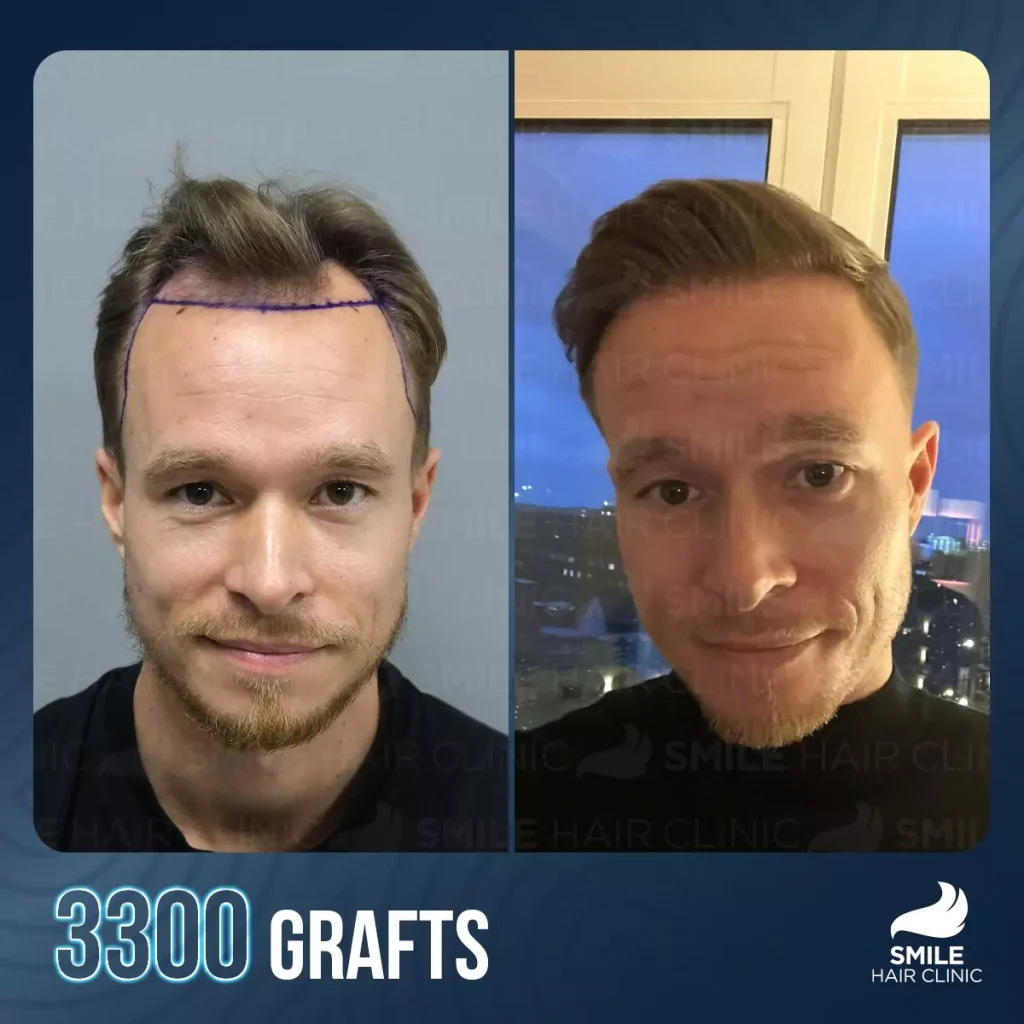
The choice between FUE and DHI is not arbitrary, and the Norwood stage influences — though does not solely determine — which approach is most appropriate.
DHI in Earlier Stages
DHI (Direct Hair Implantation) is particularly well suited to earlier-stage patients for two reasons. First, DHI allows implantation without pre-made incisions, which means existing native hair in the recipient area is less disturbed. This is important at Stages 2–3 where some natural hair is still present in the hairline zone and should be preserved where possible.
Second, DHI allows very precise angle and direction control, which contributes to the natural appearance of a refined hairline — the primary goal at these stages.
FUE in Later Stages
FUE (Follicular Unit Extraction) is generally preferred for larger sessions — Stages 4 through 6 — because it allows higher volume harvesting and efficient coverage of larger recipient areas. The Sapphire FUE technique, which uses sapphire blades for channel opening, improves healing and allows denser packing in the recipient area.
Combined Approaches
At Stages 4 and 5, a combined approach is sometimes used — FUE for the bulk of the recipient area and DHI for the hairline zone where precision is most critical. This allows both volume and refinement to be addressed in the same session.
Female Hair Loss and the Norwood Scale — Why It Does Not Apply
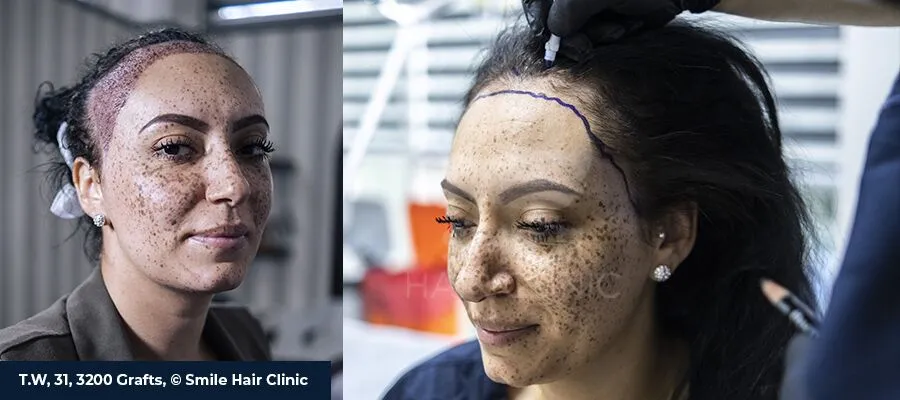
The Norwood scale was developed specifically for male androgenetic alopecia and is not an appropriate classification tool for women.
Female pattern hair loss follows a different distribution. Rather than receding from the temples and crown, women typically experience diffuse thinning across the central scalp — often beginning at the part line and gradually widening — while the frontal hairline is usually preserved. This pattern is classified using the Ludwig scale or the Sinclair scale, both of which were developed specifically for female presentations.
Women who use the Norwood scale to assess their own hair loss are applying a framework that does not match their biology. A woman at what visually resembles “Norwood Stage 3” based on frontal appearance may actually have a completely different underlying pattern and require a completely different treatment approach.
If you are a woman experiencing hair thinning, a specialist assessment at Smile Hair Clinic can determine the correct classification, identify the underlying cause, and build a treatment plan suited to your specific pattern. Book a free consultation to get a precise diagnosis and understand your options.
Treatment Options by Norwood Stage — A Practical Overview
| Stage | Medical Therapy | Surgical Options | Priority |
|---|---|---|---|
| 1 | Finasteride, Minoxidil (preventive) | Not indicated | Prevention |
| 2 | Finasteride, Minoxidil, PRP | Small FUE/DHI if desired | Stabilization |
| 3 | Finasteride + Minoxidil | FUE or DHI, 1,500–2,500 grafts | Hairline restoration |
| 4 | Finasteride + Minoxidil | FUE or DHI, 2,500–4,000 grafts | Frontal + crown planning |
| 5 | Finasteride + Minoxidil | FUE or combined, 3,500–5,000 grafts | Multi-session planning |
| 6 | Medical support | High-volume FUE + SMP | Framing + complementary options |
| 7 | Medical support | Limited FUE or SMP/hair systems | Realistic framing |
Realistic Outcomes and Before/After Insights by Norwood Scale
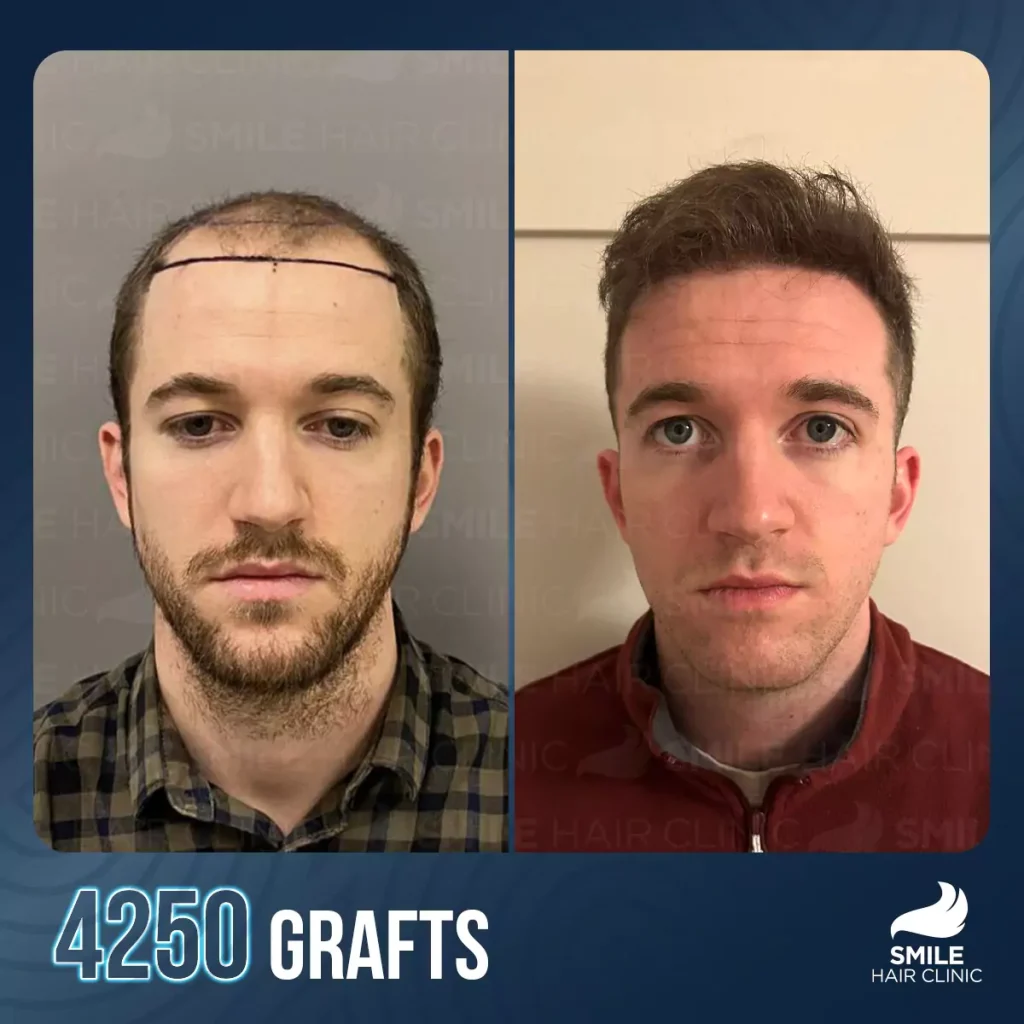
Knowing what is achievable at each Norwood scale stage helps patients set accurate expectations for both medical and surgical solutions. A realistic plan considers donor area Norwood scale capacity, graft requirements per Norwood stage, and long-term hair behavior.
Early Stages (1–3)
Patients in Norwood stage 1, Norwood stage 2, or Norwood stage 3 often achieve near-complete retention with medical therapy alone. Finasteride for Norwood stage 1–3, minoxidil for early Norwood stages, and PRP therapy Norwood stage can slow or even stop progressive hair loss. Small FUE hair transplant Norwood stage procedures can perfect the frontal hairline restoration Norwood scale, leading to natural, dense results with minimal downtime.
Mid Stages (4–5)
Men at Norwood stage 4 or Norwood stage 5 can typically regain a strong front and mid-scalp density. Well-planned FUE hair transplant Norwood stage or DHI hair transplant Norwood stage using 3,000–5,000 grafts restores the hairline design for Norwood stage and thickens the crown. Continued medication protects transplanted and native hair, supporting a healthy hair loss progression timeline.
Advanced Stages (6–7)
With Norwood stage 6 or Norwood stage 7, full scalp coverage is rarely possible. A carefully designed hair transplant for advanced baldness can rebuild the frontal region and enhance crown and vertex coverage Norwood scale, but donor hair limits the total area restored. Many patients choose complementary options like hair systems for Norwood stage 6–7 or scalp micropigmentation to complete the look.
Dr. Firdavs Ahmedov explains,
“We match each plan to the patient’s donor supply and stage. Setting clear goals early ensures that both surgical and non-surgical methods deliver natural and lasting improvements.”
Decision Points and When to Seek Professional Consultation
Recognizing when to move from observation to active treatment is vital for men at any Norwood scale stage. Early action can slow progressive hair loss and increase the success of both medical and surgical interventions.
Signs It Is Time to Act
- Noticeable thinning along the temples or crown
- Acceleration of shedding beyond normal daily loss
- Family history of advanced male pattern baldness stages
- Reduced hair density that shows scalp through the frontal hairline design for Norwood stage
Identifying these changes helps determine whether you are at Norwood stage 2, Norwood stage 3, or beyond. Using the Hamilton Norwood scale as a reference, doctors can guide hair restoration options by stage and help prevent irreversible loss.
Benefits of a Professional Assessment
A clinic evaluation provides a precise Norwood scale explained diagnosis, including:
- Microscopic scalp analysis and donor density Norwood scale measurement
- Detailed hair loss progression timeline estimation
- Personalized recommendations like finasteride for Norwood stage 1–3, PRP therapy Norwood stage, or FUE hair transplant Norwood stage
An experienced surgeon also plans future treatments to protect grafts and prevent overharvesting for hair transplant grafts by Norwood stage.
Preparing for the Consultation
Bring information about your family history, lifestyle, and previous treatments. Accurate photos help track changes and support hairline design for Norwood stage discussions. Ask about cost of hair restoration per stage, including possible combined procedures like DHI hair transplant Norwood stage for higher graft requirements.
Dr. Ali Osman Soluk advises,
“The best results come from early, tailored planning. A precise diagnosis ensures that each treatment—medical or surgical—fits the patient’s long-term needs and donor capacity.”
Long-Term Maintenance and Follow-Up Care
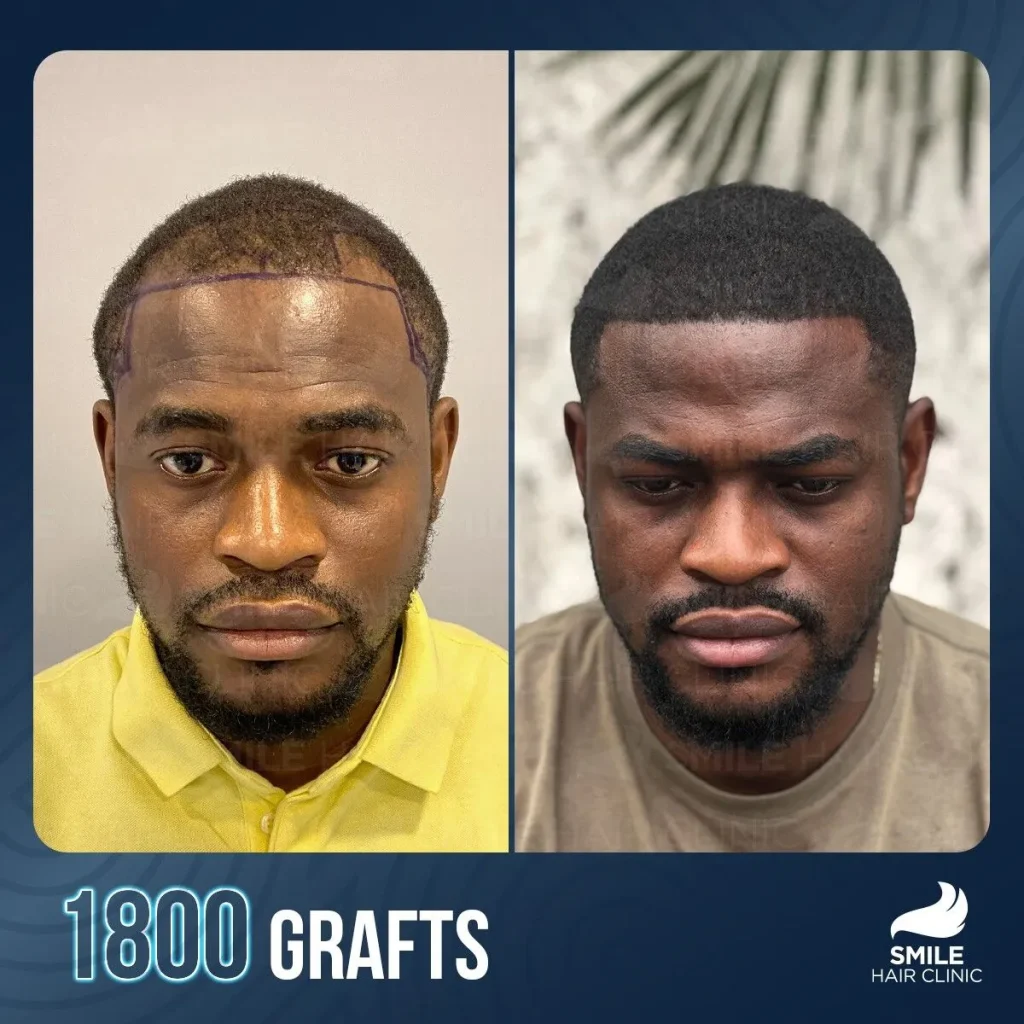
Completing a hair restoration procedure is only part of the process. Whether you are at Norwood stage 2 or Norwood stage 6, ongoing care protects transplanted grafts and slows progressive hair loss in untreated areas, ensuring the Norwood scale stages remain stable.
Sustaining Hair Growth
After a successful FUE hair transplant Norwood stage or DHI hair transplant Norwood stage, patients continue medical therapy to protect native hair. Finasteride for Norwood stage 1–3 and minoxidil for early Norwood stages remain essential to maintain surrounding density and delay further genetic hair loss. Regular PRP therapy Norwood stage can strengthen both transplanted and existing follicles.
Monitoring and Adjusting Over Time
Hair loss may still advance over years. Clinics recommend annual checkups to monitor the hair loss progression timeline, donor area health, and any need for hairline design for Norwood stage refinements. This foresight allows small, well-planned hairline design touch-up procedures rather than large corrective surgeries.
Supporting Lifestyle Habits
Balanced nutrition, stress management, and gentle scalp care help preserve results. Reducing factors that can speed DHT and hair loss—like smoking or extreme dieting—adds to long-term success. Patients in advanced stages, including Norwood stage 6 and Norwood stage 7, benefit from these habits even if their treatment plan relies more on hair systems for Norwood stage 6–7 or micropigmentation.
Dr. M. Reşat Arpacı explains,
“Long-term maintenance is an active partnership. Continued medical support and periodic evaluations protect every graft and sustain the natural look over time.”
FAQs on Norwood Scale and Hair Restoration
What is the difference between the Norwood scale and the Ludwig scale?
The Norwood scale classifies male pattern hair loss. The Ludwig scale classifies female pattern hair loss, which follows a different distribution and requires different treatment planning.
At what Norwood stage should I consider a hair transplant?
Surgery becomes a realistic option from Stage 3 onward for most patients. Stages 3 through 5 generally offer the best balance between achievable coverage and available donor supply. Age and progression rate are equally important considerations alongside the stage itself.
Can the Norwood scale predict how much hair I will lose?
No. It describes current loss, not future progression. Progression rate depends on genetics, age at onset, and hormonal factors — none of which the stage alone can quantify.
I am in my early twenties and at Norwood Stage 3. Should I have a transplant now?
Early onset hair loss in young men requires particularly careful evaluation before surgery. Medical therapy is typically the priority at this age. A transplant may be appropriate in selected cases, but the plan must account for the likelihood of continued progression and the need to preserve donor hair for the future.
Can medication reverse a Norwood stage?
In some cases, particularly in the early stages, finasteride and minoxidil can produce visible regrowth in miniaturized areas, effectively improving the apparent stage. This is more likely in Stages 1–3 than in later stages where loss is more established.
How is donor density assessed?
Donor density is measured using trichoscopy — a clinical tool that magnifies the scalp and allows the surgeon to count follicular units per square centimetre in the permanent donor zone. This assessment is a standard part of any surgical consultation and cannot be accurately estimated from photos alone.
Is Norwood Stage 7 treatable?
Full restoration is not achievable at Stage 7. Realistic options include scalp micropigmentation, hair systems, or very limited FUE to create a subtle frontal frame in patients with adequate donor quality.
Sources
- Norwood OT. Male pattern baldness: classification and incidence. Southern Medical Journal. 1975;68(11):1359–1365. PubMed: https://pubmed.ncbi.nlm.nih.gov/1188424/
- Hamilton JB. Patterned loss of hair in man; types and incidence. Annals of the New York Academy of Sciences. 1951;53(3):708–728. https://pubmed.ncbi.nlm.nih.gov/14819896/
- Olsen EA. Female pattern hair loss and its relationship to permanent/cicatricial alopecia: a new perspective. Journal of Investigative Dermatology Symposium Proceedings. 2005;10(3):217–221. https://pubmed.ncbi.nlm.nih.gov/16382672/
This guide was prepared and reviewed by Dr. Mehmet Erdoğan M.D. and Dr. Gökay Bilgin M.D., hair transplant doctors with a combined clinical experience of over 20 years at Smile Hair Clinic, Istanbul.
