

A well-planned hairline design is the foundation of a natural-looking hair transplant. The shape and position of the frontal hairline define facial symmetry and influence overall aesthetics. This hairline design guide explains how a hairline is crafted differently for men and women, covering hairline angles, hairline density, and hairline face proportions to achieve harmony with each person’s facial structure.
Why Hairline Design Matters
The frontal hairline is more than a border between the forehead and scalp. It frames the face, enhances expression, and affects how youthful or balanced someone appears. A natural hairline design must consider existing hair direction and growth patterns while accommodating future changes such as progressive hair loss hairline. Accurate hairline symmetry planning and thoughtful use of single follicular units hairline help ensure a soft, feathered front that mimics natural growth.
Gender-Specific Considerations
Male hairline design usually follows an M-shaped pattern with slightly receded temples, while female hairline design often forms a lower, rounded contour with more uniform density. The difference between these styles is highlighted in hairline design male vs female, where elements like widow’s peak hairline design or temple point angle and direction can change the overall look significantly.
Main Principles
Creating a balanced frontal hairline design involves:
- Correct hairline position and height using tools like hairline design mapping tools
- Proportional measurements guided by the golden ratio hairline and rule of thirds hairline
- Calculating graft numbers hairline design and performing precise hairline density calculation
Dr. Gökay Bilgin remarks,
“A natural hairline is not just a straight line. It requires artistic planning, careful measurement, and respect for future hair growth to maintain its look over a lifetime.”
The following sections explain facial anatomy, gender differences, planning techniques, and long-term care so readers can understand every factor that leads to a lasting, natural hairline design.
Basics of Hairline Anatomy and Natural Aesthetics
A well-crafted hairline design combines anatomical knowledge with artistic precision. The frontal hairline, temples, and side transitions form the framework of a person’s face. Correct planning of hairline angles and hairline density ensures the outcome appears natural and complements overall hairline face proportions.
About the Frontal Hairline
The frontal hairline design begins where the forehead meets the scalp and sets the visual boundary of the upper face. Natural hairlines are rarely perfectly straight. They have small irregularities and a soft, feathered outline created with single follicular units hairline to mimic natural growth patterns. Proper hairline direction and flow allows hair to fall naturally when styled and creates subtle shadows that add depth.
Role of Temple Points and Lateral Edges
The temples are crucial for facial framing. Correct temple point angle and direction blend the hairline into the sideburns, keeping the overall look balanced. Misjudging these angles can disrupt hairline symmetry planning, leading to an artificial appearance. Integrating these details during hairline design mapping tools sessions ensures both sides of the head match the individual’s natural structure.
Density and Natural Appearance
Achieving appropriate hairline density is essential. Too much density at the front can create a harsh edge, while too little may leave gaps. Surgeons perform a detailed hairline density calculation to determine how many grafts are needed for gradual thickness from the front to the mid-scalp. This approach avoids hairline density imbalance and secures long-term aesthetic appeal.
Dr. Firdavs Ahmedov explains,
“We focus on natural irregularities and gentle density transitions so that the hairline ages gracefully and remains indistinguishable from native hair.”
Face Shape and Gender Differences in Hairline Design
Creating a natural hairline design requires adapting the plan to the patient’s face shape and gender. Each structure—male hairline design or female hairline design—has unique features that influence hairline angles, hairline density, and the overall frontal hairline design.
Male Hairline Design
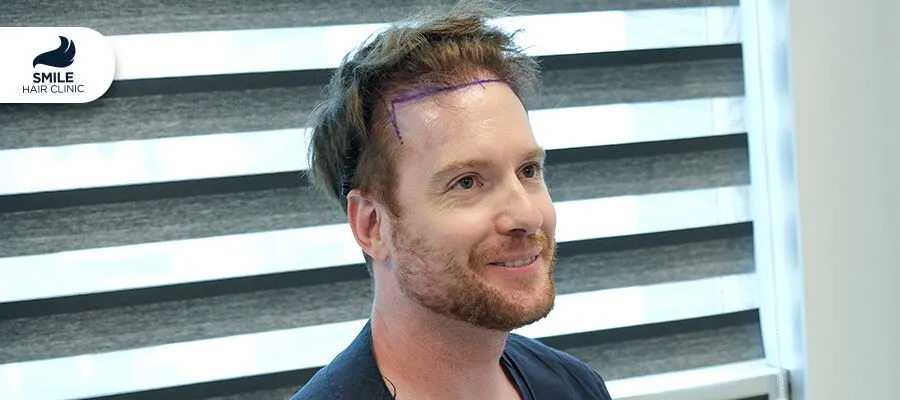
A typical male hairline shape is slightly M-shaped, with gentle temple recession and defined temple point angle and direction. This shape supports a strong and masculine outline while following the principles of hairline symmetry planning. Men often present with hairline for receding temples male, so careful attention is given to future progressive hair loss hairline and Norwood classification hairline to maintain balance over time.
Female Hairline Design
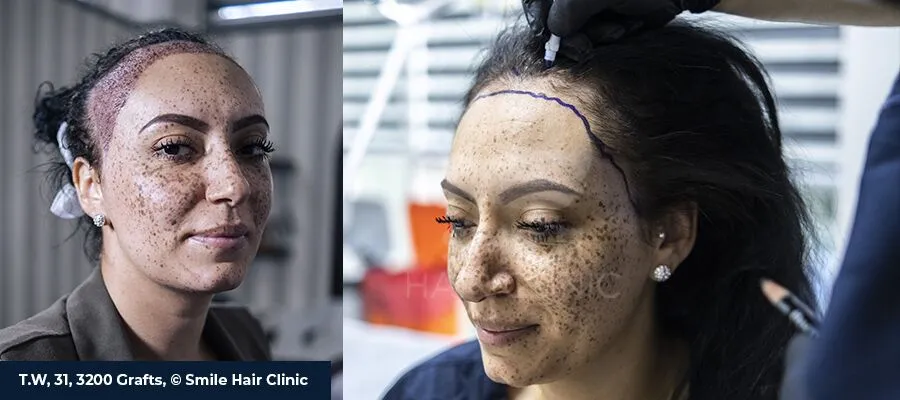
The female hairline shape is generally lower, rounder, and softer. It often includes a subtle widow’s peak hairline design or gentle lateral mounds near the temples. Density is distributed more evenly, and the hairline position and height is planned to complement softer facial contours. For many women, preserving a youthful natural hairline design means ensuring minimal future thinning and consistent density.
Face Shape Adaptation
Surgeons use hairline design mapping tools along with measurements like the rule of thirds hairline and golden ratio hairline to tailor each plan:
- Hairline design for oval face aims for balanced proportions with a natural curve.
- Hairline design for round face can add gentle peaks to create a longer visual effect.
- Hairline design for square face emphasizes soft curves to reduce sharpness.
- Hairline design for heart-shaped face focuses on a smooth contour that blends with a narrow chin.
- Hairline design for long face uses a slightly lower placement to balance vertical proportions.
Dr. Ali Osman Soluk explains,
“Matching hairline geometry to facial proportions is the key to long-lasting, natural results. Every angle and curve must reflect the patient’s unique bone structure.”
With the consideration of gender, face shape, and future hair loss patterns, surgeons create a hairline design male vs female that stays harmonious and authentic for years.
Angles, Height, and Position in Hairline Design
The placement and flow of a hairline design depend heavily on accurate hairline angles, ideal hairline position and height, and the way hairs are directed across the forehead and temples.
Correct measurements ensure that the frontal hairline design blends seamlessly with natural features and supports balanced hairline face proportions.
Determining Hairline Position and Height
Surgeons begin by measuring the distance between the eyebrows and the intended hairline using the rule of thirds hairline or golden ratio hairline.
For men, a slightly higher hairline creates a mature yet natural hairline design, while women often benefit from a lower, rounded placement. The goal is to establish a height that complements the patient’s facial shape without risking a hairline design too low, which can look unnatural over time.
Setting Correct Angles and Flow
The direction of growth is as important as the location. Careful hairline direction and flow ensures that transplanted hairs lie flat, framing the forehead naturally. Precision in temple point angle and direction maintains symmetry with sideburns and prevents hairline design too straight or blocky edges. Each graft is aligned to mimic natural emergence, giving the final hairline a soft and feathered appearance.
Density and Graft Numbers
A balanced density is achieved by placing single follicular units hairline at the very front and gradually increasing thickness behind.
This technique, guided by hairline density calculation, avoids hairline density imbalance and preserves donor resources. Understanding graft numbers hairline design helps determine how many follicles are required for long-term coverage and a realistic hairline growth timeline.
Dr. M. Reşat Arpacı explains,
“Every millimeter of the hairline must be calculated with accuracy. Proper angles and a natural flow allow the hairline to age gracefully and remain in harmony with future changes.”
With the integration of precise measurements with careful graft placement, surgeons create a hairline design male vs female that looks natural on day one and continues to complement facial proportions for many years.
Density and Graft Planning for Natural Hairline Design
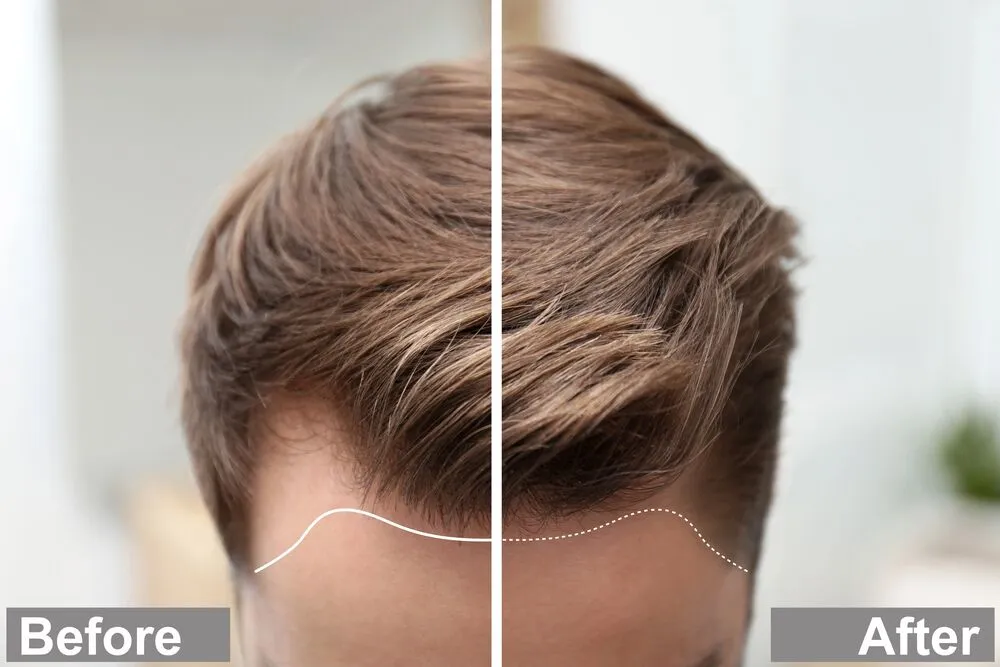
A balanced hairline density is essential for a lasting and natural hairline design. Correct planning of graft numbers hairline design ensures a soft, realistic front while maintaining enough donor hair for future needs.
Calculating Density
Surgeons use hairline density calculation to determine how many grafts are required in different zones of the frontal hairline design. The very first rows are built with single follicular units hairline to create a soft, feathered transition. Density is then gradually increased toward the mid-scalp for a natural blend that matches existing growth and prevents hairline density imbalance.
Graft Numbers and Placement
Typical graft numbers hairline design range from 2,000 to 3,500 for a full frontal restoration, though individual needs vary based on hair caliber and the desired hairline position and height. Careful distribution ensures that every graft follows correct hairline direction and flow, with special attention to temple point angle and direction where precision is critical.
Dr. Gökay Bilgin explains,
“Proper density is a balance of art and science. We design each area to mimic natural patterns while protecting the donor supply for future hairline design touch-up if needed.”
Long-Term Planning
Accounting for progressive hair loss hairline and future hair loss planning is vital. Over-packing the front can leave little reserve for later corrections, while under-packing risks thin or patchy results. This is especially important for patients with male vs female hairline differences, as men may continue to recede in temples while women often require more even density across the entire hairline.
With the integration of careful calculations with natural placement, a surgeon can create a hairline design that maintains healthy density over time, supports a smooth hairline growth timeline, and preserves options for future refinements as needed.
Hair Type, Ethnicity, and Texture Considerations in Hairline Design
Designing a natural hairline requires more than measuring angles and density. Hair characteristics such as curl, thickness, and color contrast with the scalp influence how the frontal hairline design will look and age. Understanding these factors ensures that the final hairline design male vs female matches individual needs and remains natural over time.
Influence of Hair Texture
Hair that is coarse or wavy provides more visual coverage than fine, straight hair, allowing slightly lower hairline density for the same appearance. Surgeons factor in hairline direction and flow to ensure that curls or waves lie correctly, avoiding gaps and preventing hairline density imbalance. For those with tightly curled or afro-textured hair, graft orientation is adjusted to match natural growth patterns, using precise temple point angle and direction when framing the sides.
Ethnicity and Skin-Hair Contrast
The relationship between hair color and skin tone affects how full a hairline appears. Dark hair on light skin may require a softer outline and meticulous hairline symmetry planning to avoid a harsh look, while lower contrast combinations can handle sharper edges without losing a natural effect. Ethnic differences, including typical female hairline shape or male hairline shape, also guide hairline position and height to reflect cultural preferences and natural genetic patterns.
Graft Selection and Technique
Matching follicle size and texture is crucial for creating a smooth transition at the front. Surgeons rely on single follicular units hairline for the leading edge and use tailored extraction tools to preserve graft integrity. Accurate graft numbers hairline design ensure enough donor reserves for future hairline design touch-up or to accommodate hairline design aging changes.
Dr. Firdavs Ahmedov explains,
“Each patient’s hair texture and ethnic background shape the way we design and implant grafts. Respecting these details guarantees a hairline that looks authentic and grows naturally for years.”
By combining texture-specific techniques with careful measurement, surgeons can achieve a hairline design that harmonizes with each patient’s unique characteristics and stays consistent as time passes.
Gender-Specific Hairline Design Rules
Designing a natural hairline requires a tailored approach for men and women. Understanding male vs female hairline differences ensures that every frontal hairline design complements facial features, respects hairline face proportions, and anticipates future changes.
Male Hairline Design
A male hairline shape typically follows an M-pattern, with defined temple point angle and direction and a slightly higher hairline position and height. Gentle recession at the temples combined with subtle irregularities helps create a mature, masculine frame.
Surgeons often incorporate a widow’s peak hairline design to add character while using single follicular units hairline for the front rows to keep edges soft. Planning must consider Norwood classification hairline stages and allow for progressive hair loss hairline, ensuring the design remains balanced for decades.
Female Hairline Design
A female hairline shape is usually lower and more rounded, with smoother side transitions and higher hairline density across the front.
Symmetry is very important, supported by precise hairline symmetry planning and careful graft numbers hairline design to maintain an even look. The golden ratio hairline and rule of thirds hairline help determine ideal height and curvature for each face type, from oval to heart-shaped.
Planning for Future Changes
Because hair loss patterns differ between men and women, long-term planning is essential. Men may need more conservative placement to account for future recession, while women often aim to maintain consistent density as they age. Proper hairline direction and flow ensures that new growth follows natural patterns and supports the expected hairline growth timeline.
Dr. Ali Osman Soluk explains,
“A male or female hairline must reflect more than current trends. We design each plan to remain harmonious with the patient’s facial proportions and natural hair evolution over time.”
By applying these gender-specific guidelines, surgeons create hairline design male vs female solutions that look authentic from every angle and remain stable as years pass.
Age, Hair Loss Progression, and Conservative Planning
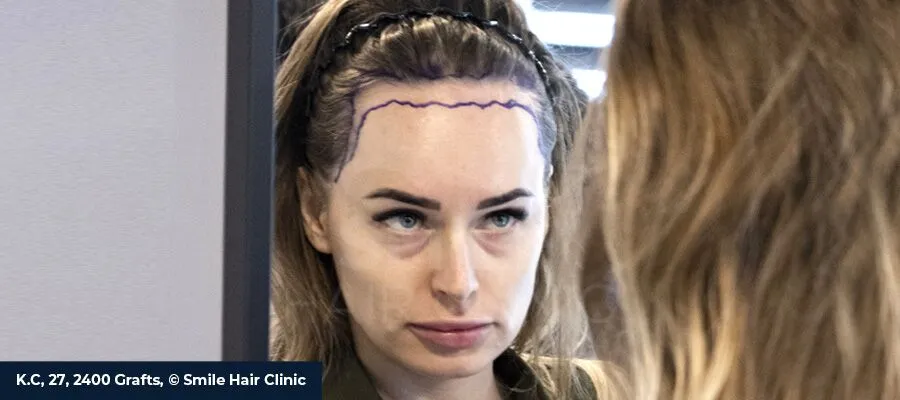
Successful hairline design requires anticipating how the scalp and hair will change over time. Proper planning for future hair loss planning and understanding Norwood classification hairline patterns help create a natural hairline design that remains balanced for decades.
Considering Age and Long-Term Stability
Younger patients often want a low, dense frontal hairline design, but aggressive placement can lead to problems if progressive hair loss hairline continues. A higher hairline position and height or slightly more mature shape can ensure that the hairline still looks natural as surrounding hair changes. Surgeons use the rule of thirds hairline and golden ratio hairline to design a style that will stay proportionate to the forehead and face over time.
Evaluating Hair Loss Patterns
Men are commonly classified using the Norwood classification hairline, which predicts how hair may recede around the temples and crown. For women, patterns are more diffuse but still require careful assessment to avoid gaps and maintain hairline density. Accurate hairline symmetry planning and conservative graft numbers hairline design help reserve donor follicles for potential touch-ups or future procedures.
Planning for Lifelong Density
A key goal is to maintain consistent thickness and prevent hairline density imbalance. Surgeons consider donor area capacity and use single follicular units hairline at the leading edge to create a soft transition that continues to look natural even if minor thinning occurs. This method supports a smooth hairline growth timeline and reduces the need for early hairline design touch-up.
Dr. M. Reşat Arpacı explains,
“A youthful appearance is not only about lowering the hairline. Long-term stability comes from a design that respects future changes and protects the donor supply.”
By combining accurate diagnosis with conservative planning, surgeons ensure that a male hairline design or female hairline design remains harmonious, even as hair and facial proportions evolve with age.
Common Mistakes in Hairline Design and How to Avoid Them
A successful hairline design balances artistry with long-term planning. Errors in design or execution can create unnatural results, uneven density, or premature need for revision. Identifying frequent problems helps patients and surgeons achieve a lasting natural hairline design.
Designing Too Low or Too Straight
Placing the frontal hairline design too low may look appealing initially but can become problematic as progressive hair loss hairline continues. A hairline that sits too far down the forehead requires more grafts and risks an unnatural look later.
Similarly, a hairline design too straight ignores natural irregularities and can appear artificial. Careful use of the rule of thirds hairline, golden ratio hairline, and hairline symmetry planning helps determine the correct hairline position and height.
Overdensity and Imbalanced Graft Use
Applying excessive grafts at the hairline may create immediate fullness but can deplete donor reserves needed for future procedures. Poor hairline density calculation or uneven graft numbers hairline design may lead to hairline density imbalance, making certain areas look heavy or sparse. Using single follicular units hairline at the front and gradually increasing density behind creates a natural gradient.
Ignoring Direction and Flow
Hair must follow natural growth angles to achieve a seamless hairline direction and flow. Neglecting proper temple point angle and direction or failing to adapt to unique hair textures can lead to awkward styling and visible grafts. This is especially important for patients with curly or coarse hair, where incorrect angles quickly become obvious.
Dr. Gökay Bilgin points out,
“Every millimeter of the hairline matters. Even a slight error in direction or density can compromise the natural look and shorten the hairline’s lifespan.”
If these common mistakes in hairline design are avoided, surgeons can create balanced results that require fewer hairline design touch-up sessions and stand the test of time, ensuring the male vs female hairline differences remain elegant and proportional.
Visual Tools, Imaging, and Planning Techniques for Hairline Design
Accurate planning is at the heart of every natural hairline design. Modern clinics use specialized measurements and digital aids to achieve precise hairline symmetry planning, perfect hairline angles, and balanced hairline density that complement each patient’s unique facial features.
Measurement and Mapping
Surgeons start with detailed measurements to establish the ideal hairline position and height. Techniques like the rule of thirds hairline and golden ratio hairline help map facial proportions, ensuring the frontal hairline design stays harmonious with the brow line, nose, and chin. Hairline design mapping tools such as laser levels, facial calipers, or digital imaging software create accurate guidelines before any grafts are placed.
Digital Simulations and Previews
High-resolution photography and 3D imaging allow patients to see a preview of the planned design. These tools simulate different male hairline shape or female hairline shape options, helping decide between features like a subtle widow’s peak hairline design or a more mature contour. Adjustments can be made in real time to align with desired hairline face proportions and anticipate hairline design aging changes.
Graft Planning Integration
Once the outline is confirmed, surgeons calculate graft numbers hairline design and perform a hairline density calculation.
This ensures each zone receives the correct number of single follicular units hairline and that natural gradients form from the front edge to the mid-scalp. Correct temple point angle and direction settings help secure symmetry and seamless blending with the temples.
Dr. Firdavs Ahmedov explains,
“Digital planning and precise mapping give us the blueprint for a lifelong result. By visualizing density and angles in advance, we can achieve a hairline that grows naturally and looks perfect from every angle.”
With the combination of traditional proportions with modern imaging guarantees a hairline design male vs female that meets both artistic and scientific standards, setting the foundation for long-term success and easy maintenance.
Recovery and Long-Term Maintenance of Hairline Design
A carefully executed hairline design achieves more than immediate cosmetic improvement. Long-term success depends on proper aftercare, steady growth, and strategies for maintaining density as natural aging continues.
Healing and Early Growth
The first stage of hairline design recovery includes mild redness and small scabs that typically resolve within 7 to 10 days. Gentle washing begins after a few days to protect the single follicular units hairline and maintain the correct hairline direction and flow. By three to four months, new hair emerges, and the full hairline growth timeline completes around 12 months.
Long-Term Stability
A well-planned frontal hairline design accounts for progressive hair loss hairline, ensuring that the hairline design male vs female remains natural as surrounding hair changes. Surgeons design with future density in mind to avoid hairline density imbalance or the need for early hairline design touch-up.
Maintaining Density and Shape
Good scalp health supports lasting results. Regular checkups help monitor for new thinning and address potential hairline design aging changes early. Balanced nutrition, stress management, and gentle hair care are key to maintaining hairline density. If small adjustments are ever needed, minor refinements can preserve the natural hairline design for decades.
Dr. Ali Osman Soluk advises,
“Patients should view a hairline transplant as a long-term partnership. Healthy habits and periodic evaluations protect the design and ensure it stays in harmony with the face over time.”
Choosing a Surgeon and Understanding Cost for Hairline Design
A successful hairline design relies on both precise planning and the skill of the medical team. Knowing the expected hairline design cost and selecting the best clinic for hairline design ensures the investment leads to lasting, natural results.
Typical Costs and Influencing Factors
The hairline transplant price can vary depending on location, surgeon experience, and the complexity of the procedure. Estimated ranges include:
- Cost of natural hairline design in Turkey: about €2,000 to €4,000
- In the USA: typically €5,000 to €9,000
- In the UK or Western Europe: around €4,000 to €7,000
Key factors that shape pricing include the total graft numbers hairline design, use of advanced methods like Sapphire or DHI, and whether the clinic provides a full hairline design package with accommodation and aftercare. Patients seeking hairline design abroad may benefit from comprehensive packages that combine surgery and recovery support.
What to Look For in a Clinic
When evaluating clinics for natural hairline design, prioritize:
- Proven expertise in male hairline design and female hairline design
- A portfolio showing successful frontal hairline design cases with long-term follow-ups
- Transparent consultation covering hairline density calculation, hairline symmetry planning, and a realistic hairline growth timeline
Dr. M. Reşat Arpacı emphasizes,
“Cost alone should never drive the decision. The surgeon’s experience and ability to plan for future hair loss are what guarantee a natural result.”
Building Long-Term Value
Choosing an experienced team protects against common mistakes in hairline design such as a hairline design too low or poor hairline direction and flow, which could require costly revisions later. Investing in the right surgeon and clinic provides confidence that the hairline design male vs female will remain natural and balanced for many years.
Long-Term Results and Maintenance of Hairline Design

A thoughtfully planned hairline design offers more than immediate improvement—it ensures that the natural hairline design remains balanced and attractive for decades. Proper planning for future hair loss planning and steady follow-up care protect both density and facial harmony.
Lifelong Growth and Stability
Once the transplanted grafts establish blood supply, they enter the normal growth cycle and are unlikely to thin again. The carefully calculated hairline density and accurate hairline direction and flow help the hairline stay consistent, supporting a predictable hairline growth timeline. Patients rarely need significant revisions if initial graft numbers hairline design were well planned.
Maintenance Practices
Good daily habits support the long-term look of the frontal hairline design. Balanced nutrition, scalp hygiene, and gentle styling help in maintaining hairline density. Occasional evaluations allow surgeons to monitor for any progressive hair loss hairline, and minor hairline design touch-up sessions can be scheduled if small areas of thinning appear.
Adapting with Age
As facial proportions naturally change, a conservative hairline position and height chosen with the golden ratio hairline and rule of thirds hairline in mind will continue to fit the face. This planning minimizes the chance of hairline design aging changes and ensures that the hairline design male vs female remains natural and in harmony with the patient’s overall appearance.
Dr. Gökay Bilgin explains,
“We design every hairline with decades in mind. When the initial plan respects future growth and facial proportions, the result remains authentic for life.”
FAQs on Hairline Design
How to design a natural hairline?
A natural hairline design starts with detailed facial measurements, including the rule of thirds hairline and golden ratio hairline. Surgeons create soft, irregular edges using single follicular units hairline and match the natural hairline direction and flow for long-term harmony.
How to measure hairline height?
Surgeons measure the distance from the midpoint between the eyebrows to the desired frontal hairline design. This helps define the ideal hairline position and height for balanced hairline face proportions in both men and women.
What is the best hairline for my face shape?
The ideal hairline depends on whether the face is oval, square, round, heart-shaped, or long. Hairline design mapping tools guide the choice, ensuring that male vs female hairline differences and natural angles fit the individual’s features.
How many grafts are needed for hairline design?
The required graft numbers hairline design typically range from 2,000 to 3,500 for a full front. Actual numbers depend on existing density, desired hairline density, and the patient’s long-term hair loss pattern.
Is a straight hairline natural?
A perfectly straight line is uncommon in nature. A natural hairline design incorporates small peaks and irregularities. Surgeons avoid a hairline design too straight to keep the final result soft and authentic.
Can hairline design be corrected?
Yes. A poorly executed hairline design can often be improved with strategic graft placement, density adjustments, and revised hairline symmetry planning to achieve a more natural appearance.
Will my hairline change with age?
Yes. Natural aging and progressive hair loss hairline can affect density and position. A well-planned male hairline design or female hairline design anticipates these changes to minimize future touch-ups.
What is the ideal female hairline height?
Most women benefit from a hairline placed 5 to 6 centimeters above the eyebrows. Surgeons consider hairline face proportions and use golden ratio hairline guidelines to determine the best placement.
What is the best angle for hairline transplant?
The best angle depends on location. Frontal hairs typically grow at 30–45 degrees, while temple point angle and direction require even sharper placement to mimic natural growth.
Does hair type affect hairline design?
Yes. Hair texture and skin–hair contrast influence both hairline density calculation and hairline direction and flow. Curly or coarse hair can create the look of greater fullness and requires precise angulation for natural results.
Conclusion
A well-executed hairline design creates more than a new hairline—it frames the face, restores youthful balance, and supports long-term confidence. By considering male vs female hairline differences, precise hairline angles, and ideal hairline density, skilled surgeons design a frontal hairline design that harmonizes with natural bone structure and withstands the test of time.
Dr. Firdavs Ahmedov highlights the importance of detailed planning:
“Every millimeter matters. Accurate symmetry, graft placement, and anticipation of future changes are the keys to a natural hairline that lasts.”
At Smile Hair Clinic in Istanbul, doctor-led teams specialize in creating natural hairline design using the clinic’s True™ Philosophy.

From hairline symmetry planning and hairline density calculation to advanced methods like Sapphire FUE and precise temple point angle and direction, every step is performed with artistic and medical precision.
Patients benefit from the Smile Gentle Care™ approach, which provides full support from consultation through 18 months of follow-up to ensure stable hairline design long-term results.
Start your transformation with a personalized hairline design that fits your face and future. Book a free consultation with Smile Hair Clinic to discuss hairline design cost, review advanced planning methods, and create a treatment plan guided by world-class surgeons. With expert care and proven results, you can achieve a balanced, natural hairline that lasts a lifetime.
