


Table of Contents
Many people searching can women get hair transplants are surprised to learn the answer is yes. Hair restoration is often associated with men, yet millions of women experience hair thinning or hair loss during their lives. For many patients, a female hair transplant can be an effective way to restore density and improve hairline balance.
Female hair loss is more common than many realize. According to dermatology research, nearly half of women experience noticeable thinning at some point. This condition often appears as female pattern hair loss, where the hair becomes thinner across the crown or top of the scalp.
The pattern usually looks different from male hair loss. Instead of developing a receding hairline or bald spot, women often experience gradual thinning while the frontal hairline remains intact.
That difference is important.
Hair restoration planning for women requires a careful medical evaluation and a different surgical approach.
Modern techniques such as FUE hair transplant for women, Sapphire FUE, and DHI hair transplant allow surgeons to restore density in thinning areas without dramatically changing the natural hairline. These procedures use individual follicular units taken from the donor area, usually the back of the scalp, and implant them in areas where density has decreased.
Many women choose hair transplantation to address concerns such as:
- Thinning hair along the part line
- Traction alopecia caused by tight hairstyles
- Hairline recession from genetics or hormonal changes
- Scar coverage from injury or previous surgery
Results can look very natural when the procedure is carefully planned.
Hair restoration for women focuses on improving density rather than lowering the hairline aggressively.
Dr. Gökay Bilgin explains: “Female hair restoration usually focuses on density enhancement rather than hairline reconstruction.”
In the next section, we’ll answer the main question directly: can women get hair transplants, and how does female hair restoration differ from male hair transplant procedures?
Quick answer — Can women get hair transplants?
The short answer to can women get hair transplants is yes. Many women are excellent candidates for female hair transplant procedures when hair loss follows a stable pattern and the donor area remains strong.

Hair restoration surgery for women has become more common over the past decade. Modern techniques allow doctors to increase hair density without drastically changing the natural hairline. The goal is subtle improvement that blends with existing hair growth.
Why female hair loss looks different from male hair loss
One reason this topic creates confusion is that female pattern hair loss usually looks different from male baldness.
Men typically develop:
- Receding hairlines
- Temple recession
- Bald spots at the crown
Women usually experience a different pattern.
Common female hair loss patterns include:
- Diffuse thinning across the top of the scalp
- Widening of the hair part
- Gradual density loss without a receding hairline
This difference affects how hair transplant for women procedures are planned.
Why many women are good candidates
When hair loss occurs in specific areas while the donor zone remains strong, a female hair transplant can improve density significantly.
Doctors often evaluate several factors before recommending surgery.
These include:
- Stable hair loss pattern
- Healthy donor hair at the back of the scalp
- No medical conditions causing temporary hair shedding
Patients with traction alopecia, localized thinning, or hairline recession often respond especially well to transplantation.
Modern techniques used for female hair restoration
Most procedures today use minimally invasive methods such as:
- FUE hair transplant for women
- Sapphire FUE
- DHI hair transplant
These techniques allow surgeons to implant grafts carefully between existing hairs without shaving large areas of the scalp.
Dr. Mehmet Erdoğan explains: “Female hair transplant procedures require a precise approach that preserves existing hair while increasing density.”
In the next section, we’ll explore why women lose hair, including common causes such as female pattern baldness, hormonal changes, and traction alopecia.
Why women lose hair
Understanding the causes of hair loss helps answer an important question behind can women get hair transplants. Hair restoration only works when the underlying hair loss pattern is stable. That is why doctors first identify the reason behind thinning hair before recommending a female hair transplant.
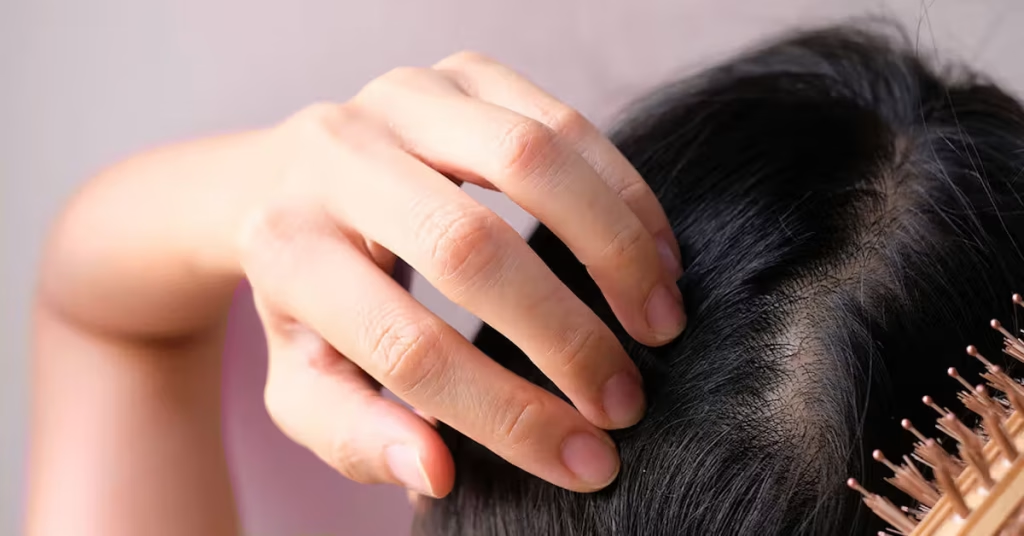
Hair loss in women can occur for several different reasons. Some causes are temporary, while others are progressive conditions that may benefit from surgical restoration.
Female pattern hair loss
The most common cause of thinning hair in women is female pattern hair loss. This condition is influenced by genetics and hormones.
Unlike male baldness, female pattern hair loss usually appears as diffuse thinning across the top of the scalp rather than a receding hairline.
Typical signs include:
- Gradual thinning along the central part
- Reduced density across the crown
- A wider part line over time
When donor hair remains healthy, a hair transplant for women can improve density in these areas.
Hormonal hair loss
Hormonal changes can also affect hair growth cycles.
Women may experience temporary hair shedding during:
- Pregnancy
- Menopause
- Thyroid imbalance
- Hormonal disorders such as PCOS
These conditions can disrupt the hair growth cycle, leading to visible thinning.
Doctors usually treat hormonal causes medically before considering female hair transplant procedures.
Traction alopecia
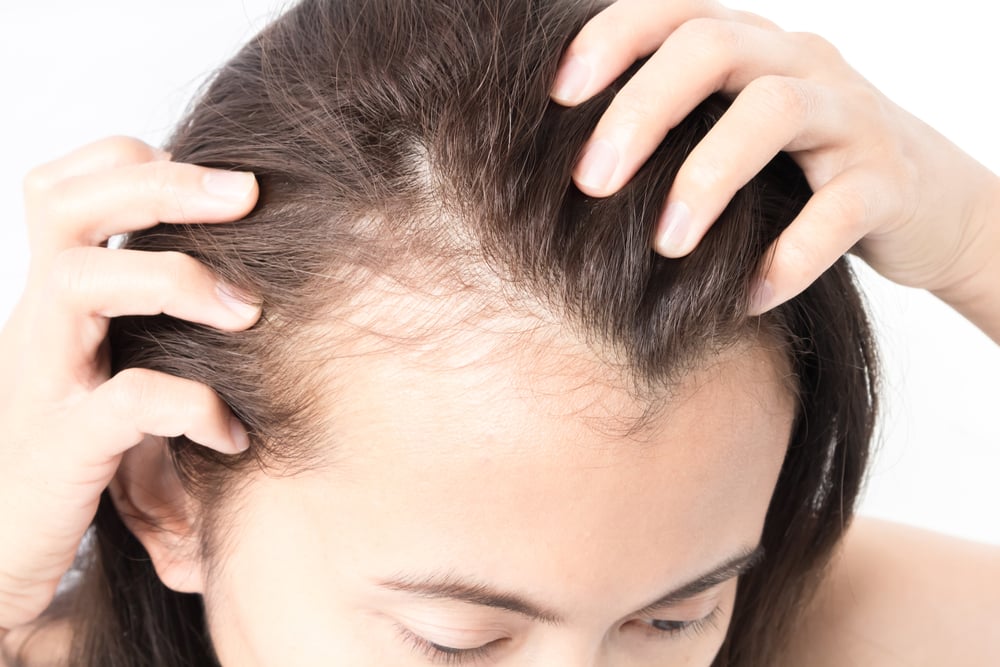
Another common cause of hair loss is traction alopecia. This condition occurs when hair is repeatedly pulled tightly over long periods.
Hairstyles that may contribute include:
- Tight braids
- High ponytails
- Hair extensions
Traction alopecia often affects the frontal hairline and temples. In many cases, hair transplant for women can restore density in these areas.
Medical evaluation before treatment
Before recommending surgery, doctors perform a careful scalp evaluation.
This assessment may include:
- Hair density measurement
- Scalp examination
- Medical history review
Dr. Firdavs Ahmedov explains: “Correct diagnosis is the first step in successful female hair restoration.”
In the next section, we’ll explain how hair transplant for women works, including modern techniques like FUE hair transplant, Sapphire FUE, and DHI hair transplant.
How hair transplants for women work
Once doctors confirm a patient is a good candidate, the next step is understanding how hair transplant for women actually works. The goal of a female hair transplant is different from many male procedures. Instead of rebuilding a receding hairline, surgeons usually focus on increasing density in thinning areas.
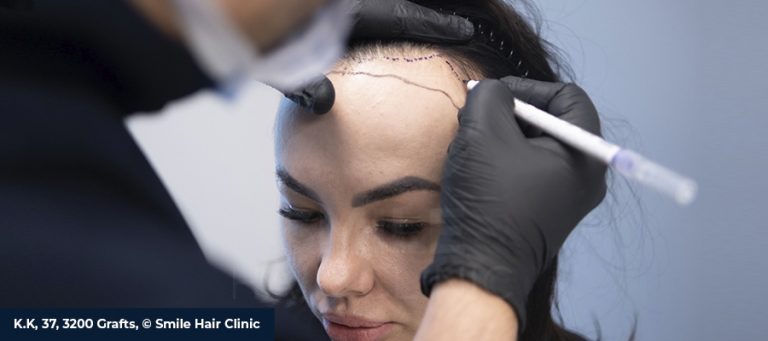
Modern procedures use minimally invasive techniques that preserve existing hair while adding new follicles.
FUE hair transplant for women
The most common approach today is FUE hair transplant for women.
During this procedure, surgeons extract individual follicular units from the donor area at the back of the scalp. Each graft contains one to four hair follicles.
This method allows doctors to:
- Extract grafts without creating a linear scar
- Place follicles precisely between existing hairs
- Maintain a natural look after healing
Because of these advantages, FUE has become the standard method for most female hair transplant procedures.
Sapphire FUE for precise implantation

Many clinics combine FUE extraction with Sapphire FUE implantation.
Instead of traditional steel blades, surgeons use sapphire blades to create channels in the scalp before placing grafts.
This technique helps:
- Control the angle of hair growth
- Reduce tissue trauma during implantation
- Create more natural density patterns
Sapphire blades are particularly useful when treating areas with existing hair.
DHI hair transplant for density enhancement
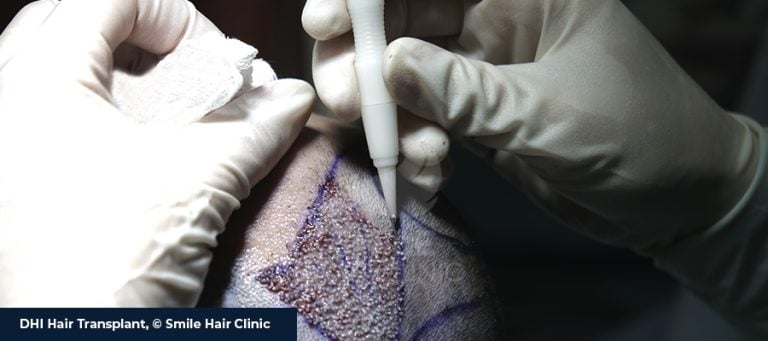
Another technique often used for women is DHI hair transplant.
DHI involves implanting grafts using a specialized implanter pen. This device allows doctors to control the direction and depth of each follicle during placement.
DHI is often chosen for:
- Increasing density along the part line
- Restoring thinning areas without shaving large sections
- Creating natural growth patterns
Why female hair transplant planning is different
Hair restoration in women requires careful planning. Surgeons must protect existing hair while placing grafts between native follicles.
Hairline lowering is rarely necessary.
Instead, the focus remains on restoring density and creating balanced coverage.
Dr. Ali Osman Soluk explains: “Female hair transplant procedures focus on improving density while preserving natural hair patterns.”
Who is a good candidate for female hair transplant?
Many patients searching can women get hair transplants want to know whether they personally qualify for the procedure. The answer depends on several medical and anatomical factors. A female hair transplant works best when hair loss follows a predictable pattern and the donor area remains strong.
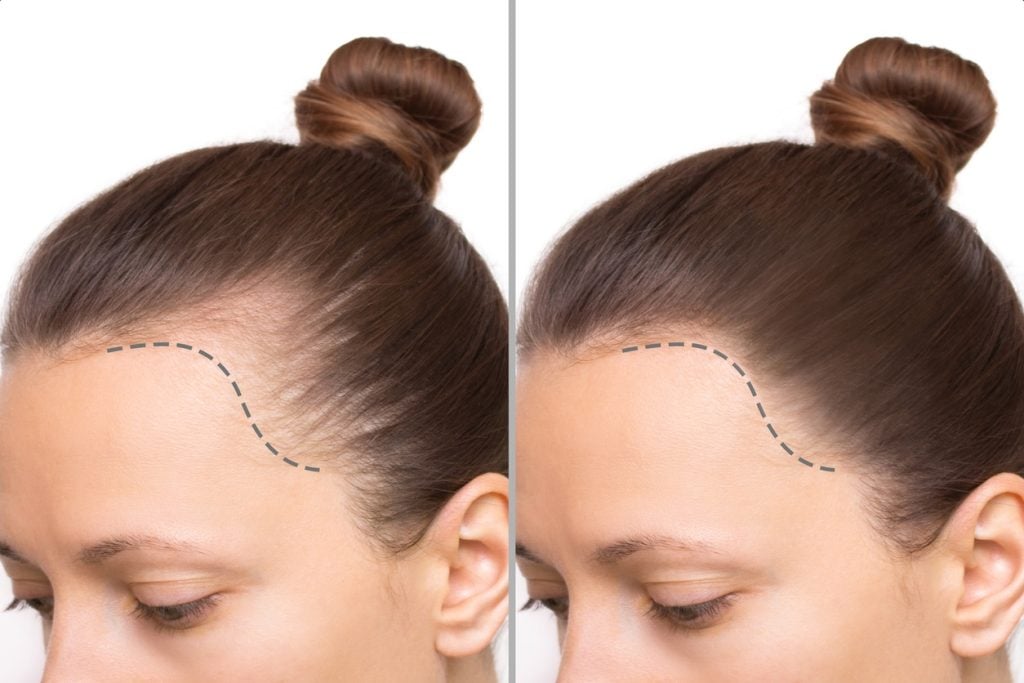
Unlike male baldness, female hair loss often appears as diffuse thinning. Because of this, doctors carefully evaluate each patient before recommending hair transplant for women.
Stable hair loss pattern
The most important factor is stability. Hair restoration works best when the thinning pattern has stopped progressing rapidly.
Women with stable conditions such as female pattern hair loss may benefit from transplantation when thinning is concentrated in specific areas.
Signs of stable hair loss often include:
- Gradual thinning along the part line
- Reduced density near the crown
- Consistent hair loss pattern over several years
When hair loss continues aggressively, doctors usually recommend medical treatment first.
Strong donor hair density
A successful female hair transplant relies on healthy donor follicles. These hairs are typically taken from the back of the scalp, where hair tends to remain resistant to hormonal hair loss.
Doctors evaluate donor hair by examining:
- Hair thickness and follicle strength
- Density of donor follicles
- Long-term hair loss progression
Healthy donor hair allows surgeons to safely harvest grafts using FUE hair transplant for women, Sapphire FUE, or DHI hair transplant.
Medical evaluation before surgery
Hair loss can sometimes be caused by underlying medical conditions.
Before recommending surgery, doctors may check for:
- Hormonal imbalances
- Thyroid disorders
- Nutritional deficiencies
- Autoimmune scalp conditions
Treating these issues first helps ensure better female hair transplant results.
Best candidates for female hair transplant
Women often see strong results when hair loss is localized.
Common examples include:
- Traction alopecia near the hairline
- Thinning along the central part
- Scar-related hair loss
Dr. M. Reşat Arpacı explains: “The best candidates are patients with stable hair loss and strong donor density.”
How many grafts do women usually need?
After learning can women get hair transplants, the next question patients ask is how many grafts the procedure requires. The number of grafts used during a female hair transplant depends on the size of the thinning area, the density of existing hair, and the patient’s desired result.
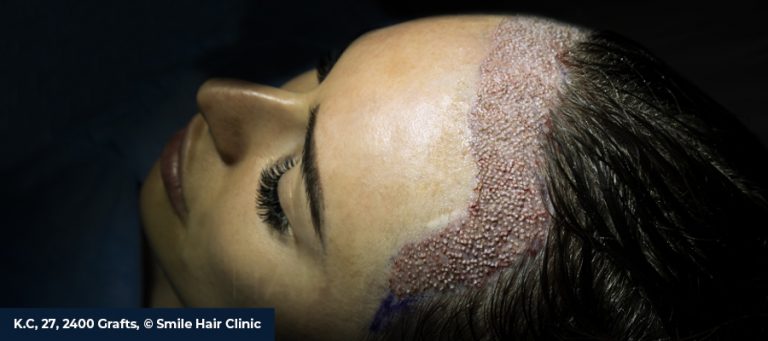
Hair transplant planning focuses on improving density rather than covering large bald areas. Most hair transplant for women procedures involve moderate graft numbers placed carefully between existing follicles.
Graft estimates for thinning hair
When treating diffuse thinning across the scalp, surgeons usually focus on increasing density in the most visible areas.
Typical graft estimates include:
- 1,000–1,500 grafts for mild thinning along the part line
- 1,500–2,000 grafts for moderate density improvement
- Up to 2,500 grafts for larger thinning areas
These grafts are placed strategically to strengthen existing hair coverage.
Hairline restoration graft numbers
Some women experience hairline recession caused by genetics or traction alopecia. In these cases, grafts are used to rebuild the frontal hairline.
Hairline restoration usually requires fewer grafts because the area is smaller.
Typical estimates include:
- 800–1,200 grafts for hairline refinement
- Up to 1,500 grafts when temple restoration is needed
Procedures such as FUE hair transplant for women, Sapphire FUE, and DHI hair transplant allow surgeons to implant follicles with high precision.
Why graft placement matters more than graft count
Hair restoration success depends on placement strategy rather than simply increasing graft numbers.
Doctors focus on:
- Creating natural density gradients
- Matching the direction of existing hair growth
- Preserving space between grafts and native hair
This careful placement helps produce natural female hair transplant results.
Donor hair considerations
Every transplant relies on healthy donor follicles.
Doctors evaluate:
- Donor hair density
- Hair thickness and texture
- Long-term hair loss progression
These factors determine how many grafts can be safely harvested.
Dr. Gökay Bilgin explains: “Natural density is achieved through careful graft placement rather than excessive graft numbers.”
Female hair transplant results
Understanding the expected outcome helps answer an important part of the question can women get hair transplants. Many patients worry about whether the results will look natural or whether the transplanted hair will blend with existing hair.
Modern female hair transplant procedures aim to improve density while maintaining the natural hairline and growth direction.
When performed carefully, the results can look very natural.
Growth timeline after female hair transplant
Hair restoration follows a predictable growth cycle. Patients usually notice gradual improvements over several months.
Typical timeline after hair transplant for women:
- First 1–2 weeks: scalp healing and small scabs disappear
- Weeks 3–6: temporary shedding of transplanted hairs
- Month 3: new hair growth begins
- Months 6–9: visible density increases
- Month 12: final results become clear
This process occurs because transplanted follicles enter a temporary resting phase before growing new hair.
Before and after expectations
The goal of a female hair transplant is not dramatic transformation but natural density improvement.
Patients often notice:
- Fuller coverage along the part line
- Reduced scalp visibility under bright lighting
- More balanced hair density across thinning areas
These improvements help restore confidence while maintaining a natural appearance.
Long-term results
One advantage of procedures such as FUE hair transplant for women, Sapphire FUE, and DHI hair transplant is long-term stability.
Hair taken from the donor area usually retains its genetic resistance to hair loss. Once transplanted, these follicles continue growing hair for many years.
Factors affecting results
Several factors influence female hair transplant results:
- Donor hair density
- Hair thickness and texture
- Stability of hair loss pattern
- Surgeon experience and planning
Careful surgical design ensures that transplanted hair blends with existing follicles.
Dr. Mehmet Erdoğan explains: “The goal is seamless density that looks natural even under close inspection.”
Risks and limitations of female hair transplant
Patients researching can women get hair transplants should also understand the limitations of the procedure. A female hair transplant can produce excellent results for the right candidate, yet it is not suitable for every type of hair loss.
Hair restoration surgery works best when thinning occurs in specific areas and the donor region remains healthy.
Diffuse hair loss challenges
One of the main limitations in hair transplant for women involves diffuse hair loss. In this condition, thinning occurs across the entire scalp, including the donor area.
When donor hair is also weak, transplantation may not provide enough grafts for meaningful improvement.
Diffuse thinning may be caused by:
- Advanced female pattern hair loss
- Hormonal imbalances
- Chronic stress-related shedding
- Nutritional deficiencies
Doctors often recommend medical treatment before considering surgery in these cases.
Donor area limitations
Every female hair transplant depends on the donor area at the back of the scalp. If donor density is too low, harvesting grafts could reduce the appearance of thickness in that region.
Doctors evaluate donor hair carefully before recommending procedures such as FUE hair transplant for women, Sapphire FUE, or DHI hair transplant.
Strong donor hair is necessary for natural-looking results.
Medical conditions affecting hair growth
Some medical conditions can interfere with hair restoration.
These may include:
- Autoimmune scalp disorders
- Active alopecia areata
- Severe hormonal imbalance
- Certain dermatological conditions
In these situations, doctors usually treat the underlying condition before recommending surgery.
Realistic expectations
Hair transplantation improves density but does not stop future hair loss. Patients with progressive hair loss may require medical therapy to maintain long-term results.
Proper consultation helps determine whether surgery is the best option.
Dr. Ali Osman Soluk explains: “A thorough medical evaluation ensures that hair transplantation is both safe and effective.”
Alternative treatments for female hair loss
Not every patient who asks can women get hair transplants needs surgery immediately. In many cases, doctors first recommend non-surgical treatments that can stabilize hair loss or improve hair density. These options are often used before considering a female hair transplant.
Medical therapies can slow or even reverse certain types of hair thinning when the underlying cause is identified early.
PRP therapy for hair growth

One of the most common non-surgical options is platelet-rich plasma therapy, often called PRP.
During PRP treatment, a small sample of the patient’s blood is processed to isolate growth factors. These growth factors are then injected into the scalp to stimulate hair follicles.
PRP therapy may help:
- Improve hair thickness
- Increase follicle activity
- Slow the progression of female pattern hair loss
PRP is frequently combined with hair transplant for women procedures to support long-term hair growth.
Medications for female hair loss

Certain medications may help treat hormonal or genetic hair loss.
Doctors sometimes recommend treatments such as:
- topical minoxidil for hair regrowth
- anti-androgen medications in specific cases
- supplements addressing nutritional deficiencies
These therapies can stabilize hair loss before considering FUE hair transplant for women or other surgical treatments.
Lifestyle and scalp health
Hair growth can also be affected by lifestyle and scalp conditions.
Doctors often review:
- nutritional balance
- stress levels
- scalp inflammation
- hair styling habits
Addressing these factors may improve hair density and overall scalp health.
When surgery becomes the best option
Non-surgical treatments may not restore density once follicles have stopped producing hair.
In these cases, procedures such as Sapphire FUE or DHI hair transplant can restore density by relocating healthy follicles to thinning areas.
Dr. M. Reşat Arpacı explains: “Medical therapy can stabilize hair loss, but transplantation restores density where follicles are no longer active.”
Frequently asked questions about hair transplants for women
Can women get hair transplants successfully?
Yes, women can achieve excellent results with a female hair transplant when hair loss occurs in specific areas and the donor region remains healthy. Modern procedures such as FUE hair transplant for women, Sapphire FUE, and DHI hair transplant allow surgeons to increase hair density while preserving the natural hairline.
Do hair transplants work for women with thinning hair?
Hair transplants can work very well for women who have localized thinning or hairline recession. In cases of female pattern hair loss, doctors evaluate whether the donor area at the back of the scalp is strong enough to provide healthy follicles for transplantation.
How many grafts are usually needed for a female hair transplant?
Most hair transplant for women procedures involve between 1,000 and 2,500 grafts, depending on the size of the thinning area and the patient’s hair density goals. Hairline restoration often requires fewer grafts than large density improvements across the crown.
Does a female hair transplant require shaving the head?
In many cases, surgeons can perform a female hair transplant without shaving large areas of the scalp. Techniques such as DHI hair transplant allow doctors to implant follicles between existing hairs while maintaining the patient’s hairstyle.
Is hair transplant for women permanent?
Yes. Hair follicles transplanted from the donor area typically retain their genetic resistance to hair loss. Once implanted, they continue growing hair in the recipient area for many years.
How long does it take to see results after a female hair transplant?
Hair restoration results develop gradually. Transplanted hair often sheds during the first few weeks, new growth usually begins around month three, visible density improves between months six and nine, and final results appear after about twelve months.
What causes hair loss in women?
Common causes include female pattern hair loss, hormonal changes, traction alopecia from tight hairstyles, medical conditions, and nutritional deficiencies. A medical evaluation helps determine the most appropriate treatment.
When should women consider a hair transplant?
Doctors usually recommend hair transplant for women when hair thinning has stabilized, the donor area remains strong, and non-surgical treatments have not produced sufficient improvement. A consultation helps determine whether transplantation is the best option.
Restore your hair density with a personalized female hair transplant plan
If you’ve been searching can women get hair transplants, the most reliable way to find out is through a professional evaluation. Every case of hair thinning is different. The pattern of hair loss, donor density, and long-term hair goals all influence whether a female hair transplant is the right solution.

At Smile Hair Clinic, specialists analyze each patient’s scalp condition and hair loss pattern before recommending treatment. The goal is to design a natural, balanced result that blends with existing hair.
Modern techniques such as FUE hair transplant for women, Sapphire FUE, and DHI hair transplant allow surgeons to increase density in thinning areas while preserving natural hair growth patterns. These methods are minimally invasive and carefully planned to protect the donor area.
Your consultation includes:
- Detailed scalp and donor area evaluation
- Personalized graft estimate based on density goals
- Natural density planning for thinning areas
- A clear recovery timeline and aftercare guidance
Many women choose hair restoration to address thinning along the part line, traction alopecia near the hairline, or localized hair loss caused by genetics or hormonal changes.
A well-planned hair transplant for women focuses on subtle density improvement rather than dramatic changes. When the procedure is performed by experienced surgeons, the results can blend seamlessly with natural hair.
Dr. Gökay Bilgin explains: “Successful female hair restoration focuses on restoring density while maintaining the patient’s natural hairline and hair growth pattern.”
If you are considering treatment for thinning hair, the next step is a professional consultation.
Contact Smile Hair Clinic today and discover whether a female hair transplant can help restore your hair density and confidence.
