


Table of Contents
Hair shedding reported on GLP-1 medications is most often linked to rapid weight loss and nutrition-related physiologic stress (telogen effluvium), which can temporarily reveal or accelerate the appearance of underlying androgenetic alopecia. For anyone considering a hair transplant in Turkey, the safest outcomes typically come from clarifying the diagnosis and stabilizing shedding and nutrition before final surgical planning.
GLP-1 receptor agonists (often prescribed for diabetes and, increasingly, weight management) are now widely used in the U.S. As more men take medications such as semaglutide, tirzepatide, or liraglutide, hair restoration clinics are seeing a new pattern: patients who feel better overall from weight loss but suddenly notice diffuse hair shedding or faster “exposure” of underlying thinning.
In many cases, this looks less like a new form of permanent baldness and more like a temporary hair-cycle shift triggered by rapid body changes.
Is Hair Loss a Direct Side Effect of GLP-1 Drugs or a Weight-Loss Effect?

Current clinical thinking often points to a multifactorial physiologic response, rather than a direct toxic effect on hair follicles. Because hair is sensitive to internal stressors, significant weight change can push more follicles into a resting phase.
Common contributors include:
- Rapid weight loss (a known trigger for shedding)
- Acute caloric restriction and reduced overall intake
- Low protein intake during appetite suppression
- Micronutrient depletion (iron, zinc, vitamin D, B12, folate, essential fatty acids)
- Hormonal and metabolic shifts
- Physiologic stress–related telogen effluvium (TE)
- Unmasking of pre-existing androgenetic alopecia (AGA) (male pattern hair loss)
The key point for patients considering a hair transplant in Turkey is that timing and diagnosis matter. Treating every case as “just medication hair loss” (or assuming a transplant is the immediate fix) can lead to avoidable disappointment.
Telogen Effluvium vs. Androgenetic Alopecia: Why the Distinction Matters
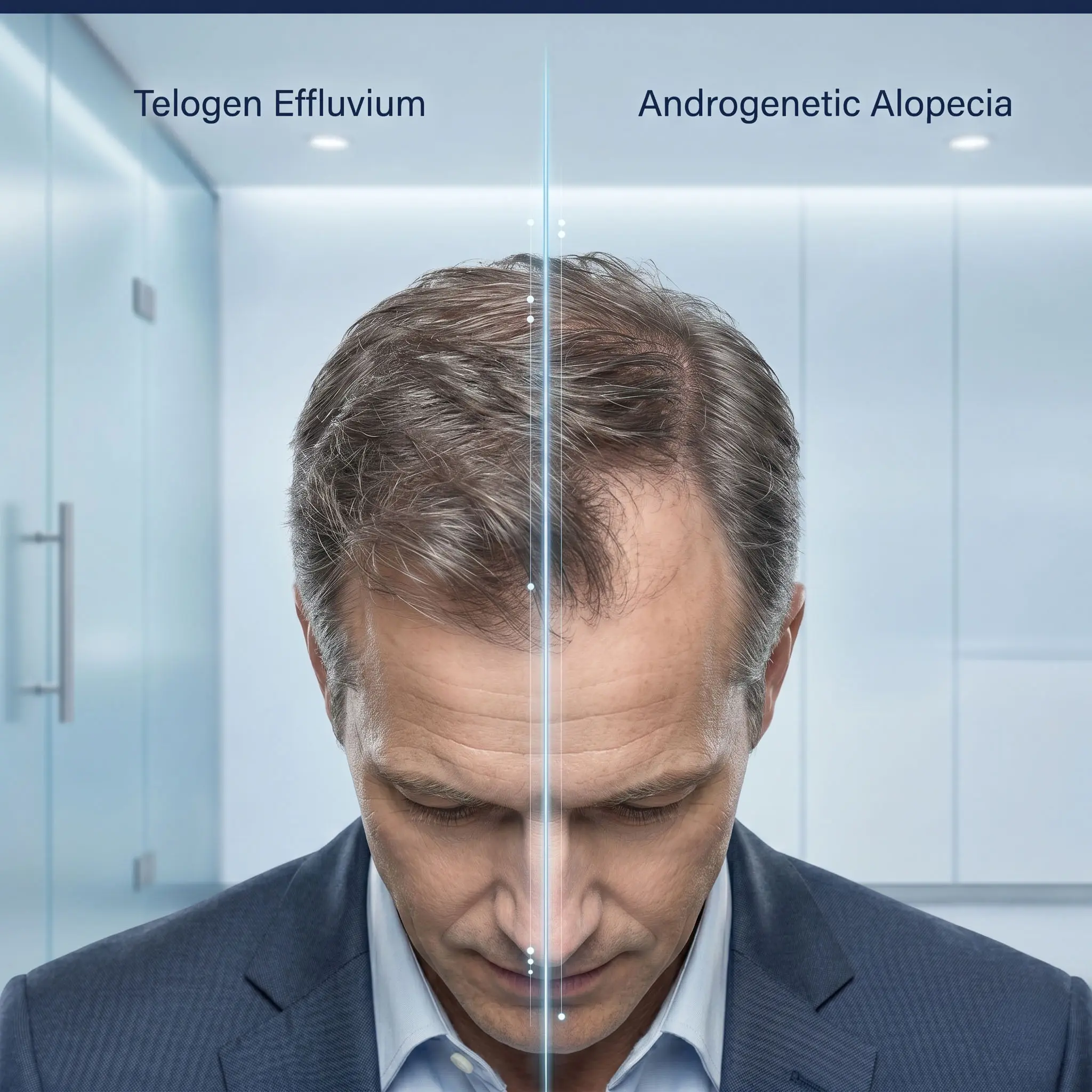
Two processes can happen at the same time:
- Telogen effluvium (TE): diffuse shedding that often begins weeks to a few months after a stressor (including rapid weight loss) and may improve once the trigger is resolved and nutrition stabilizes.
- Androgenetic alopecia (AGA): genetically driven miniaturization (male pattern hair loss) that tends to progress without targeted management and can become more noticeable after a shedding episode.
Why this matters before surgery:
- A transplant can restore areas of established loss, but it doesn’t stop ongoing miniaturization in native hair.
- Operating during a period of active diffuse shedding may complicate density planning and increase the chance of temporary postoperative shedding (“shock loss”) of vulnerable native hairs.
Key History Questions Hair Specialists Will Ask (Timeline, Diet, Labs, Family History)
If you’re on GLP-1 medications and noticing shedding, a good consultation will usually focus on details—not just photos.
Clinicians commonly ask:
- When did you start GLP-1 therapy?
- How fast has your weight changed?
- What does your daily intake look like now (including approximate protein)?
- Any recent illness, surgery, major stress, sleep disruption, or medication changes?
- Prior history of thinning or recession—and family history of AGA
- Whether shedding is diffuse (all over) or mostly in an AGA pattern (temples/crown)
Because multiple conditions can mimic each other, doctors may also consider (as appropriate):
- Anemia and iron deficiency
- Thyroid dysfunction
- Nutritional alopecia
- Chronic telogen effluvium
Nutritional Factors During GLP-1–Mediated Weight Loss (Protein and Micronutrients)
During aggressive weight loss, appetite suppression can unintentionally create a catabolic state. Hair follicles are metabolically active, and consistent intake matters.
Areas commonly reviewed before planning surgery include:
- Protein adequacy (one of the most frequent gaps)
- Iron status (including ferritin)
- Vitamin D
- Zinc
- B12 and folate
Testing and supplementation should be individualized and coordinated with your prescribing clinician or primary care provider—especially if you have medical conditions or take other medications.
When to Consider a Hair Transplant in Turkey if You’re Currently Shedding
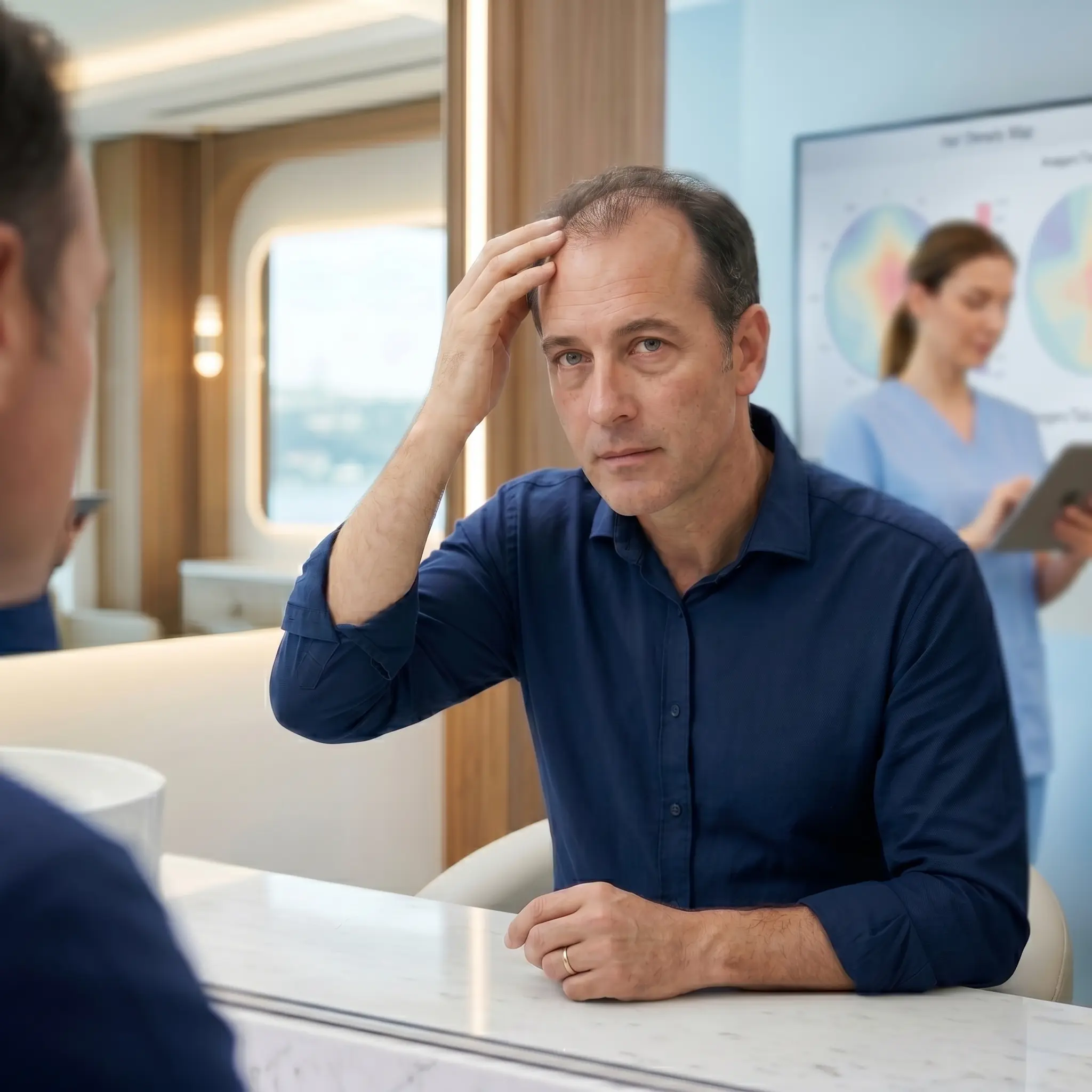
For many patients, the most practical question is: *Should I proceed now, or wait?*
In general, a hair transplant may be better planned when:
- Weight loss has stabilized (or the rate of loss has slowed)
- A shedding episode has clearly plateaued
- Nutrition is consistent, and any significant deficiencies are being addressed
- Your hair team can distinguish temporary shedding from pattern hair loss
That doesn’t mean everyone must “pause for a year.” It means your surgical plan should be based on a stable picture of:
- Recipient area needs (what truly requires grafts)
- Donor area capacity (what can be safely harvested long-term)
How Active Shedding Can Affect Donor/Recipient Planning and “Shock Loss” Risk
Active TE can create an illusion of sudden density collapse across the scalp. If surgery is performed at the peak of shedding:
- The apparent size of the problem may be overestimated
- Donor hair may look temporarily thinner than baseline
- The risk of temporary shock loss of susceptible native hairs may be higher (especially where miniaturization is already present)
A careful clinic will typically prioritize donor safety, conservative density goals, and appropriate staging if needed.
Practical Steps Before Booking: Stabilization, Lab Work, and a Realistic Timeline

If you’re considering a hair transplant in Turkey while using GLP-1 medications, these steps often help your planning:
- Document the timeline: start date of GLP-1 therapy, weight-loss curve, and when shedding began.
- Review nutrition honestly: especially protein intake and overall calories.
- Discuss labs with your clinician (examples often include CBC, ferritin/iron studies, vitamin D, B12/folate, and thyroid testing—based on your history).
- Pause and reassess if shedding is accelerating rapidly or if you feel unwell.
- Plan for realism: telogen effluvium improvement can take months, and androgenetic alopecia management is long-term.
This approach doesn’t guarantee outcomes, but it can reduce the risk of operating on a moving target.
What a Consultation in Istanbul Typically Focuses On
In Istanbul clinics—including Smile Hair Clinic—a pre-surgical assessment for patients reporting recent diffuse shedding (including those using GLP-1 medications) typically centers on:
- Pattern recognition (TE vs. AGA features)
- Donor evaluation and long-term donor preservation
- A surgical plan aligned to current and likely future loss
- Pre- and post-operative guidance, including when to coordinate lab and nutrition review with your medical team
If your case suggests active shedding that could compromise planning, you may be advised to **optimize and re-evaluate** before scheduling surgery.
Frequently Asked Questions
Are GLP-1 medications (like semaglutide or tirzepatide) directly damaging my hair follicles?
Most reports and clinical experience suggest shedding is more often related to the **physiologic stress of rapid weight loss** and potential **nutrition gaps**, rather than direct follicle toxicity. A personalized evaluation is still important.
Is GLP-1–related shedding usually temporary?
Many shedding episodes resembling telogen effluvium (TE) improve after the trigger stabilizes (weight-loss rate slows, intake improves, deficiencies are addressed). Timelines vary, and underlying androgenetic alopecia (AGA) can continue to progress.
How do I know if I have telogen effluvium or male pattern hair loss?
TE is often diffuse shedding; AGA typically shows temple recession and crown thinning** with miniaturization. Many men have both. A hair specialist may use trichoscopy, history, and pattern assessment to differentiate.
Should I delay a hair transplant in Turkey if I’m actively shedding?
Often, yes—at least until the shedding pattern and nutrition status are clearer and more stable. Operating during active diffuse shedding can complicate density planning and may increase the risk of temporary postoperative shedding.
What labs are commonly considered before planning surgery in someone with recent weight loss and shedding?
Depending on your history, clinicians may review **CBC**, **ferritin/iron studies**, **thyroid tests**, and nutrients such as **vitamin D**, **B12/folate**, and **zinc**. Your prescribing clinician should guide what’s appropriate for you.
Can a hair transplant fix diffuse shedding?
A transplant restores density by relocating follicles, but it doesn’t treat the underlying trigger of diffuse shedding. If TE is present, the priority is usually to address the trigger and stabilize before surgical decisions.
If I stop GLP-1 therapy, will my hair come back?
Some people see improvement as weight and nutrition stabilize, but responses vary. Stopping any prescription medication should be discussed with your prescribing clinician.
Does traveling to Istanbul change the medical planning?
Travel doesn’t change the biology. It can, however, compress timelines so it’s especially important to complete photo review, history, and any recommended labs before booking flights.
