


Table of Contents
Many people considering surgery ask the same question: where do hair transplants come from?
Some assume the hair might come from another person or from a donor bank. In reality, modern hair transplant procedures work very differently. The hair used in transplantation almost always comes from the patient’s own scalp.
During a hair transplant, surgeons move healthy follicles from one part of the head to another. This process is known as hair graft transplantation. The follicles are taken from a region called the hair transplant donor area, usually located at the back and sides of the scalp.
Hair in this region is naturally resistant to the hormone responsible for androgenetic alopecia, the most common cause of hair loss. Because of this genetic resistance, these follicles tend to keep growing even when moved to a new location.
This biological principle allows surgeons to restore hair density in areas affected by thinning or baldness.
Modern techniques such as FUE hair transplant, Sapphire FUE, and DHI hair transplant rely on carefully extracting and implanting individual hair grafts. Each graft contains one or more follicles that can produce new hair over time.
Patients often expect instant results, yet hair restoration follows a gradual timeline. After transplantation, the follicles enter a natural growth cycle before producing visible hair.
According to the International Society of Hair Restoration Surgery, millions of follicular unit procedures are performed worldwide each year, reflecting the growing demand for surgical hair restoration.
Dr. Gökay Bilgin explains:
“Hair transplantation works because the donor follicles keep their genetic resistance to hair loss after relocation.”
Please Select Your Gender
Quick answer — Where do hair transplants come from?
The short answer is simple. Hair transplants come from the patient’s own scalp, specifically from a region known as the hair transplant donor area. Surgeons relocate healthy follicles from this area to parts of the scalp experiencing thinning or baldness.
This method allows transplanted hair to grow naturally in its new location. The follicles maintain their original genetic properties even after being moved.
Modern procedures such as FUE hair transplant, Sapphire FUE, and DHI hair transplant rely on this principle.
Donor area explanation
The donor area hair transplant refers to the section of the scalp where follicles are harvested. It is usually located at the back and sides of the head.
Hair in this region tends to remain stable even in people experiencing male pattern hair loss. The follicles here are genetically resistant to the hormone linked to baldness.
Surgeons carefully evaluate this area before surgery.
Doctors typically assess:
- follicular density in the donor region
- thickness of individual hair shafts
- scalp flexibility
- long-term hair stability
These factors determine how many grafts can be safely extracted.
A healthy donor area provides the foundation for a successful hair transplant procedure.
Donor dominance principle
The reason transplanted hair continues growing lies in a concept known as donor dominance.
This theory explains that hair follicles retain their original genetic characteristics even after being relocated. Follicles taken from the donor region continue behaving like donor hair.
This means:
- transplanted follicles remain resistant to hair loss
- hair continues growing in the new location
- results can last for decades
The donor dominance theory is one of the most important scientific foundations of modern hair transplantation.
Graft extraction process
During the hair transplant procedure, surgeons remove small follicular units called hair grafts from the donor area.
Each graft usually contains one to four hairs.
In FUE hair transplant, surgeons extract these grafts individually using tiny circular punches. In Sapphire FUE, sapphire blades create implantation channels. In DHI hair transplant, grafts are implanted directly using an implanter pen.
Dr. Mehmet Erdoğan explains:
“The donor area provides the strongest follicles. When these follicles are transplanted correctly, they continue growing naturally.”
What is the donor area in hair transplant?
To understand where do hair transplants come from, patients need to understand the hair transplant donor area. This region provides the follicles used during the hair transplant procedure. The strength and stability of this area largely determine whether the surgery will succeed.
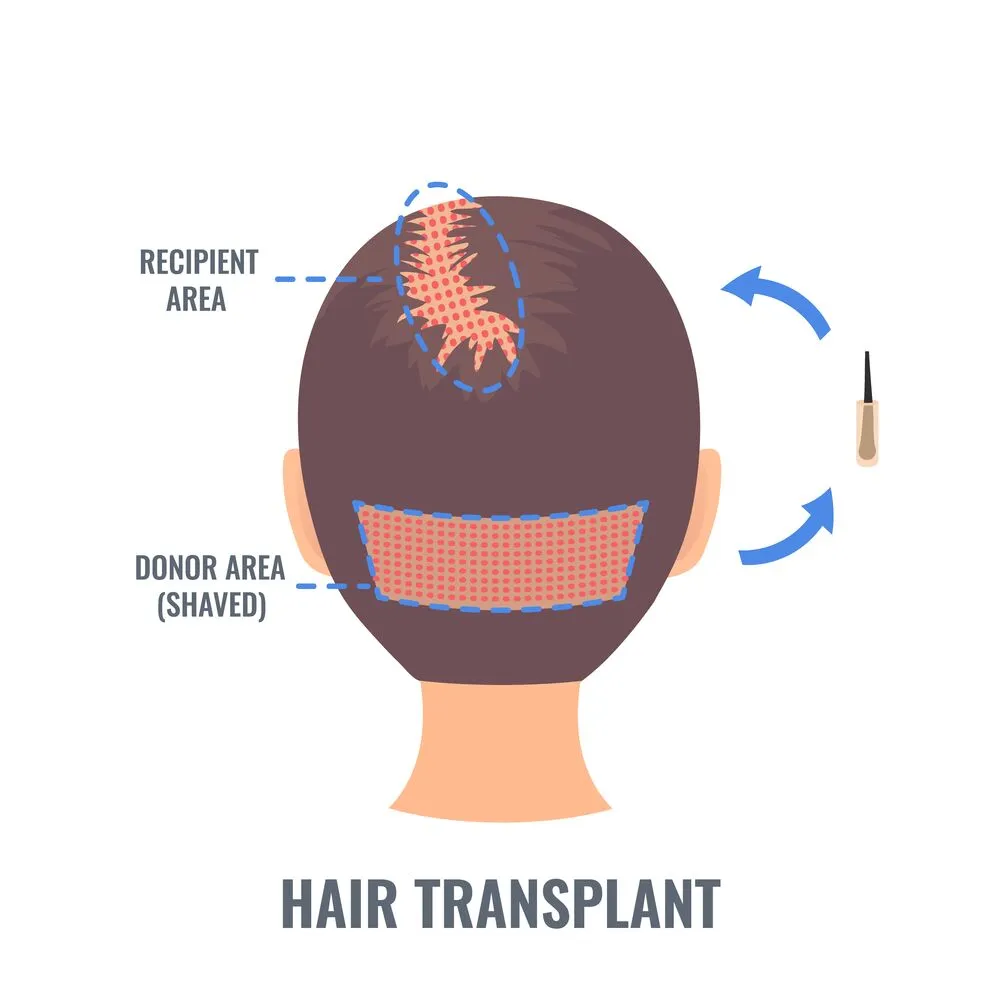
The donor area usually sits on the back and sides of the scalp. Hair follicles in these regions are genetically resistant to the hormone responsible for androgenetic alopecia.
Because of this resistance, donor hair tends to remain stable even as hair loss progresses elsewhere on the scalp.
Where donor hair is located
In most FUE hair transplant, Sapphire FUE, and DHI hair transplant procedures, surgeons harvest follicles from the occipital and temporal regions of the scalp.
These areas typically maintain strong hair density throughout life.
Doctors carefully evaluate this region before recommending surgery.
Key factors include:
- follicular density per square centimeter
- hair shaft thickness
- scalp elasticity and flexibility
- stability of hair growth patterns
A strong donor area allows surgeons to extract grafts without creating visible thinning.
Why donor hair resists hair loss
Hair in the donor region behaves differently because of its genetic characteristics. Follicles in this area are less sensitive to dihydrotestosterone (DHT), the hormone linked to male pattern baldness.
When these follicles are transplanted to the hairline or crown, they retain this resistance.
This phenomenon explains why transplanted hair can grow permanently.
Many surgeons refer to this concept as donor dominance, which we will explore in detail later in the article.
Why donor density matters
Donor hair is a limited resource. Every graft extracted reduces the density of the donor area slightly.
For this reason, surgeons carefully plan extraction patterns to protect long-term donor health.
Dr. Gökay Bilgin explains:
“A healthy donor area is the foundation of every successful hair transplant.”
What are hair grafts?
To fully understand where do hair transplants come from, it helps to understand what surgeons actually transplant. During a hair transplant procedure, doctors do not move individual hairs one by one. Instead, they transplant small groups of follicles called hair grafts.
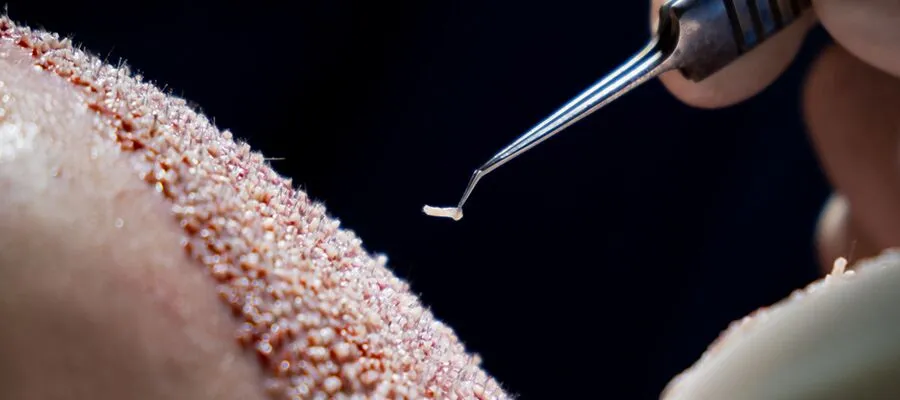
These grafts are known medically as follicular units.
Each follicular unit contains a natural bundle of hair follicles growing together beneath the scalp. Modern hair restoration techniques such as FUE hair transplant, Sapphire FUE, and DHI hair transplant rely on transplanting these follicular units to recreate natural hair growth patterns.
Structure of a follicular unit
A hair graft is a microscopic structure that contains more than just hair strands. It includes several biological components that support hair growth.
A typical follicular unit may contain:
- one to four hair follicles
- sebaceous glands that produce natural scalp oils
- connective tissue surrounding the follicles
- small blood vessel structures that nourish the hair
These elements work together to support healthy hair growth after transplantation.
Because follicular units naturally contain multiple hairs, surgeons can create density without transplanting thousands of individual strands.
How many hairs are in a graft?
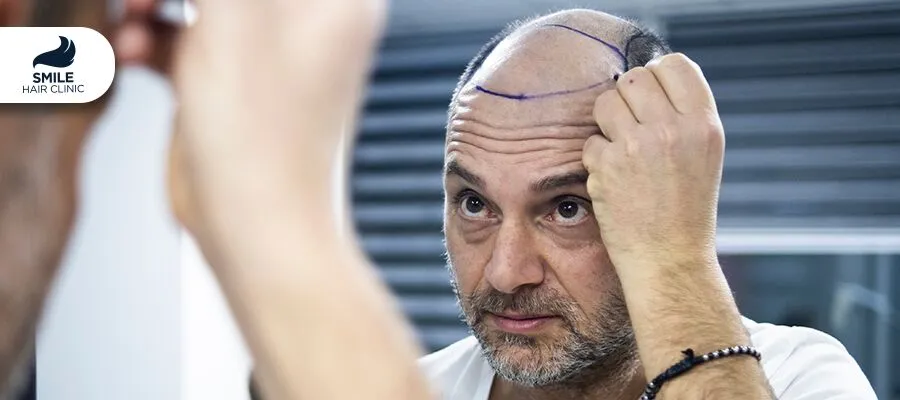
Patients often ask how many hairs are transplanted during surgery. The answer depends on how many hairs exist within each graft.
On average:
- single-hair grafts are used for the hairline
- two-hair grafts help create natural transitions
- three or four hair grafts add density behind the hairline
This strategic placement allows surgeons to recreate natural hair patterns.
Why graft quality matters
Healthy grafts increase the chances of strong hair growth after surgery. During extraction, doctors carefully handle each follicular unit to protect its delicate structure.
Preserving graft integrity is a key part of successful hair graft transplantation.
Dr. Firdavs Ahmedov explains:
“A hair transplant is essentially a graft management procedure. The quality of each graft determines the final density.”
How grafts are extracted during hair transplant
Once the hair transplant donor area is identified and the treatment plan is finalized, surgeons begin the graft harvesting process. This stage explains in practical terms where do hair transplants come from during surgery. Healthy follicles are carefully removed from the donor region and prepared for implantation.
Modern procedures focus on extracting grafts with minimal trauma to the scalp. Techniques such as FUE hair transplant, Sapphire FUE, and DHI hair transplant allow surgeons to harvest individual follicular units while protecting surrounding tissue.
FUE hair transplant extraction
The most widely used technique today is FUE hair transplant extraction. During this stage, surgeons use a micro-punch tool to remove individual follicular units from the donor area.

The punch diameter is usually less than one millimeter.
Each follicular unit is removed carefully to avoid damaging the surrounding follicles.
This technique offers several advantages:
- minimal visible scarring in the donor region
- faster healing compared with older strip procedures
- natural preservation of surrounding hair
Once extracted, the grafts are stored in a specialized solution that protects the follicles until implantation.
Channel creation with Sapphire FUE

After extraction, surgeons prepare the recipient area. In Sapphire FUE, tiny channels are created using blades made from sapphire crystal.
These blades allow surgeons to control:
- hair growth direction
- implantation angle
- graft density distribution
This stage plays an important role in creating natural hairlines.
DHI hair transplant implantation
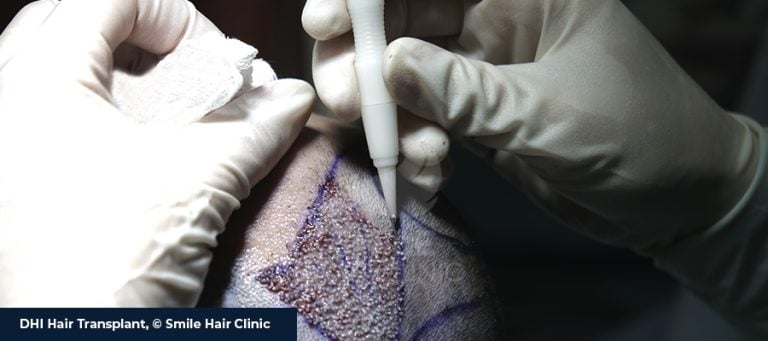
Another technique used in modern surgery is DHI hair transplant implantation. In this method, grafts are placed using a specialized implanter pen.
The pen allows surgeons to implant follicles directly into the scalp without opening channels beforehand.
This approach gives doctors precise control over graft depth and angle.
Dr. Ali Osman Soluk explains:
“Successful transplantation depends on careful graft extraction and precise implantation.”
Please Select Your Gender
Donor dominance theory explained
The reason transplanted hair continues growing after surgery can be explained by an important scientific concept called the donor dominance theory. This principle answers the biological question behind where do hair transplants come from and why they can produce long-lasting results.
Hair follicles taken from the hair transplant donor area carry their genetic characteristics with them. When these follicles are transplanted into thinning or bald areas, they keep behaving like donor hair.
This means they maintain their natural resistance to the hormone responsible for androgenetic alopecia.
Origin of the donor dominance theory
The concept of donor dominance was first described by dermatologist Dr. Norman Orentreich in the 1950s. His research showed that transplanted hair follicles continue growing according to their original genetic programming.
This discovery became the scientific foundation of modern hair transplant procedures.
The idea is simple.
Hair follicles from the donor region keep their biological identity even after relocation.
Why transplanted hair keeps growing
Hair in the donor area usually comes from the back and sides of the scalp. These follicles are less sensitive to dihydrotestosterone (DHT), the hormone linked to male pattern hair loss.
Because of this resistance:
- donor hair rarely miniaturizes
- follicles remain active for decades
- transplanted hair continues growing normally
Once these follicles are transplanted during FUE hair transplant, Sapphire FUE, or DHI hair transplant, they maintain their original behavior.
This is why transplanted hair often provides permanent coverage in thinning areas.
Long-term behavior of transplanted follicles
After transplantation, follicles follow the same natural growth cycle as normal hair. They enter resting and growth phases while gradually producing thicker hair strands.
Patients may experience temporary shedding during recovery, but the follicles remain alive beneath the scalp.
Dr. Mehmet Erdoğan explains:
“The success of hair transplantation relies on donor dominance. Healthy donor follicles keep their resistance to hair loss even after relocation.”
Alternative donor sources for hair transplant
Most people assume that all transplanted hair comes from the back of the scalp. In most cases, that is true. The hair transplant donor area on the scalp provides the strongest follicles for surgery. Yet in some situations, surgeons may consider alternative sources.
Understanding these options helps answer the broader question: where do hair transplants come from when the scalp donor supply is limited.
This topic is often overlooked in many hair transplant procedure guides.
Beard hair as a donor source

Beard follicles can sometimes be used as additional donor hair. The beard region, particularly under the jawline, contains thick follicles that may be suitable for transplantation.
Beard grafts may help increase coverage when scalp donor density is limited.
Doctors may use beard hair for:
- crown restoration
- mid-scalp density improvement
- filling areas requiring additional coverage
Beard hair is generally thicker than scalp hair. Because of this, surgeons often blend beard grafts carefully with scalp follicles to maintain a natural appearance.
Body hair transplantation
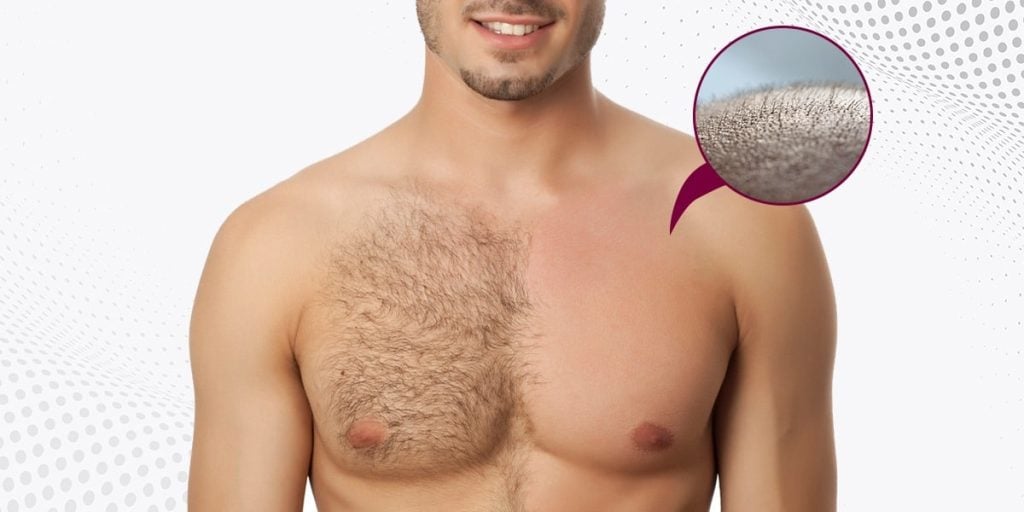
Another possibility is body hair transplant, where follicles are harvested from areas such as the chest, back, or arms.
This approach is less common but may help patients with limited scalp donor supply.
Body hair grafts behave differently from scalp follicles.
Important limitations include:
- different hair growth cycles
- shorter hair length
- lower graft survival rates
For these reasons, body hair transplantation is usually considered only when scalp donor resources are insufficient.
Why scalp donor hair remains the best option
Despite these alternatives, the scalp donor region remains the preferred source for most FUE hair transplant, Sapphire FUE, and DHI hair transplant procedures.
Scalp follicles typically provide:
- the most predictable growth patterns
- the best density results
- long-term stability
Dr. Firdavs Ahmedov explains:
“Alternative donor sources can be useful in selected cases, but scalp donor hair still produces the most reliable results.”
Donor area preservation
The hair transplant donor area is the foundation of every successful procedure. Since transplanted follicles come from this region, protecting donor density is one of the most important responsibilities during surgery. When patients ask where do hair transplants come from, the follow-up question should always be how surgeons preserve this limited resource.
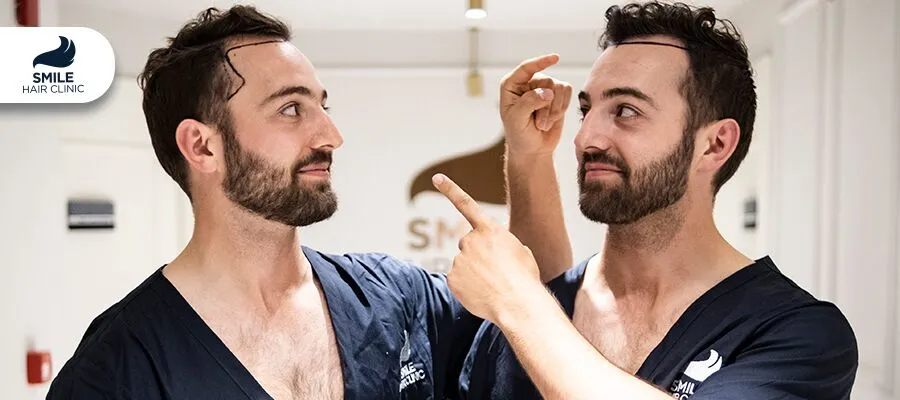
Donor hair is not unlimited. Once a follicle is removed during a hair transplant procedure, it cannot grow again in the donor area. For this reason, careful planning is essential before performing FUE hair transplant, Sapphire FUE, or DHI hair transplant.
Why overharvesting is a risk
Overharvesting occurs when too many grafts are extracted from a small donor area. If extraction patterns are not planned carefully, the donor region may appear thinner after surgery.
Signs of excessive harvesting may include:
- visible thinning in the donor region
- uneven donor hair density
- patchy appearance when hair is cut short
Responsible surgeons avoid these problems by distributing graft extraction evenly across the donor zone.
Donor density planning
Before surgery, doctors measure follicular density in the donor region. This analysis helps determine how many grafts can be safely removed.
Several factors influence donor capacity:
- number of follicular units per square centimeter
- thickness of individual hair shafts
- scalp elasticity and flexibility
- long-term hair loss progression
Proper donor planning ensures the donor region maintains a natural appearance even after thousands of grafts are extracted.
Long-term donor management
Hair transplantation should be viewed as a long-term strategy rather than a single procedure. Surgeons often preserve part of the donor area for potential future treatments if hair loss continues.
This approach protects the patient’s ability to maintain balanced hair coverage over time.
Dr. Ali Osman Soluk explains:
“The donor area is a finite resource. Preserving it carefully is one of the most important responsibilities in hair transplantation.”
Please Select Your Gender
Frequently asked questions about where hair transplants come from
Where do hair transplants come from during surgery?
In most cases, hair used during a hair transplant procedure comes from the patient’s own scalp. Surgeons typically extract follicles from the hair transplant donor area located at the back and sides of the head. These follicles are genetically resistant to hair loss and continue growing after transplantation.
What is the donor area in a hair transplant?
The hair transplant donor area refers to the region where healthy follicles are harvested for transplantation. This area usually includes the occipital region at the back of the scalp. Hair here tends to remain stable even in people experiencing androgenetic alopecia.
How are hair grafts obtained during a hair transplant?
During procedures such as FUE hair transplant, Sapphire FUE, and DHI hair transplant, surgeons remove small follicular units called hair grafts. Each graft typically contains one to four hair follicles. These grafts are then implanted into thinning or balding areas.
Why does transplanted hair keep growing?
Transplanted hair continues growing because of a principle called donor dominance. Follicles taken from the donor region retain their genetic resistance to hair loss. Even after relocation, these follicles behave like donor hair and continue producing hair.
Can hair come from another person for a hair transplant?
Hair transplants almost always use the patient’s own hair. Transplanting hair from another person would require lifelong immune suppression and is not performed in standard hair transplant procedures.
Can beard or body hair be used for transplantation?
In certain cases, surgeons may use beard or body hair as additional donor sources. This approach is sometimes called body hair transplant. However, scalp donor hair usually produces the most predictable and natural results.
How many grafts are usually taken from the donor area?
The number of grafts depends on donor density and the extent of hair loss. Many procedures involve between 2,000 and 4,000 grafts, although the exact number varies depending on the patient’s needs.
Restore your hair with a carefully planned hair transplant
If you are researching where do hair transplants come from, you are already taking the right step by learning how the procedure works. Hair restoration succeeds when the donor area, graft planning, and surgical technique all work together.
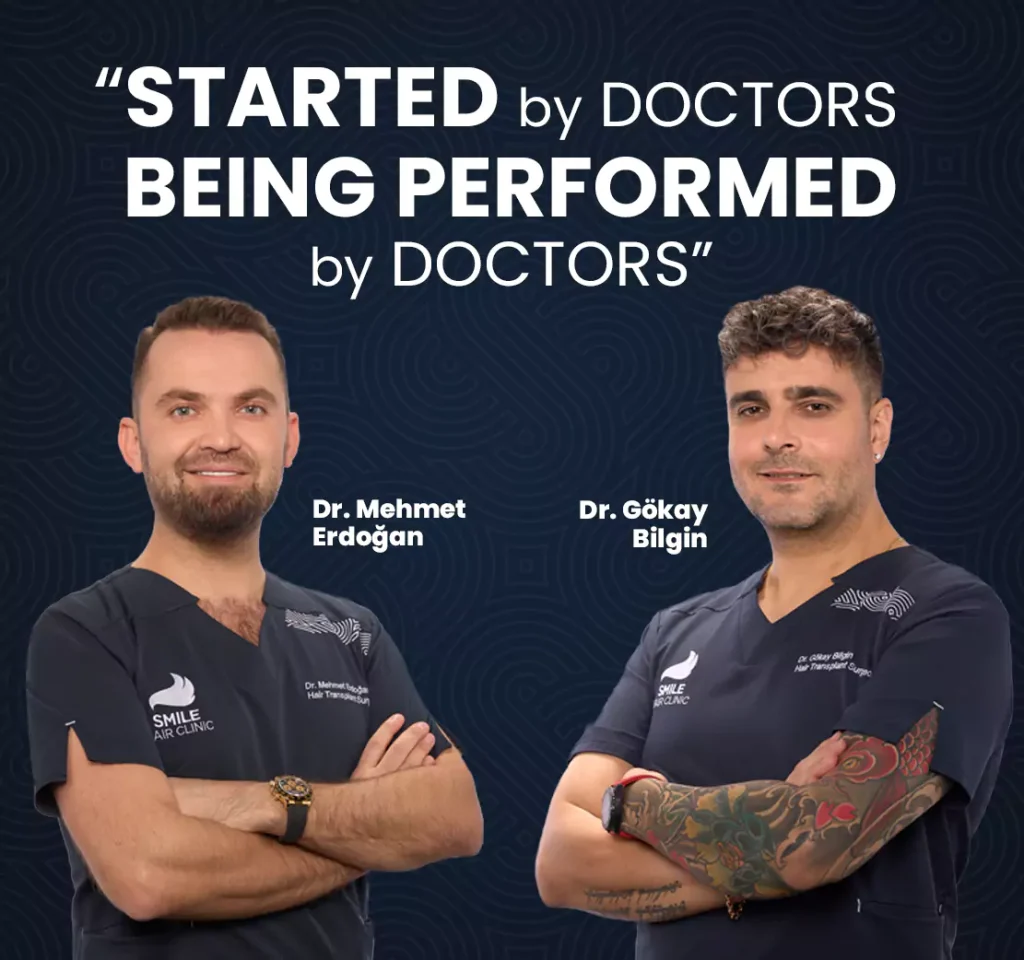
At Smile Hair Clinic, specialists evaluate each patient individually before recommending treatment. Doctors analyze donor density, hair loss patterns, and long-term goals to design a personalized treatment strategy.
During your consultation, specialists may discuss:
- suitability for FUE hair transplant, Sapphire FUE, or DHI hair transplant
- expected graft numbers and density planning
- long-term donor area preservation
Hair restoration works best when the treatment plan matches the patient’s biology and hair loss pattern.
Contact Smile Hair Clinic today to schedule a consultation and learn how a carefully designed hair transplant can restore natural hair growth.
