
Searching for types of hair transplant can feel messy fast. You see FUE hair transplant, FUT hair transplant, DHI hair transplant, and now Sapphire FUE everywhere. Each clinic claims their method is the best. You just want to know which one fits you, your hair, and your future.
Let’s simplify this.
Every hair transplant uses the same three building blocks. Harvest the grafts from the donor area. Create tiny sites in the recipient area. Place each graft at the correct angle and direction. That’s it. Every named method is just a variation of one or more of these steps.
Once you see it this way, the noise drops away.
Here’s a quick orientation.
- FUT hair transplant uses a strip method to collect many grafts at once.
- FUE hair transplant extracts grafts one by one with micro punches.
- DHI hair transplant focuses on how grafts are implanted with implanter tools.
- Sapphire FUE is a variation of FUE that uses sapphire blades to create finer channels.
Different names. Same biological goal. Healthy grafts placed carefully, with long-term planning in mind.
Most patients come in with a few core worries.
Will it look natural. Will there be a scar. How many grafts do I need. How long until I see results. And most of all, which technique is right for me.
At Smile Hair Clinic, the conversation does not start with the method. It starts with your donor capacity, your pattern of hair loss, and your future risk. Only after that do the doctors decide which technique, or combination of techniques, serves your plan best.
Dr. Mehmet Erdoğan explains it clearly: “The method is just a tool. The design and long-term plan create the result.”
In the next sections, we’ll break down each method, compare them honestly, and show you how to choose with confidence.
What are the main types of hair transplant?
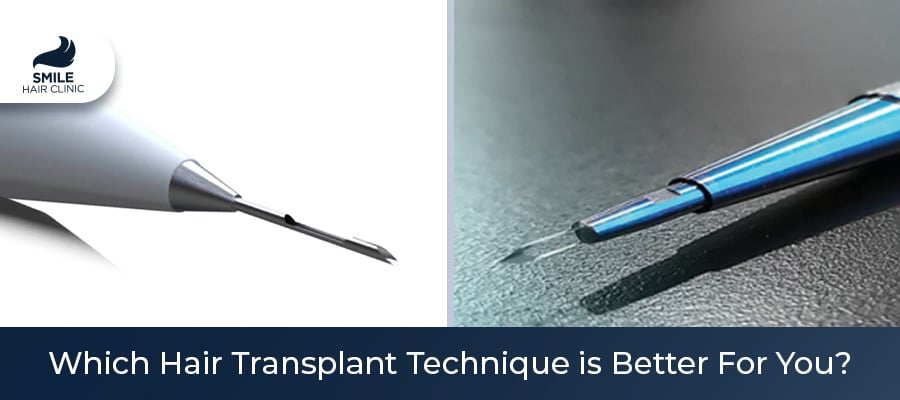
If you want a fast, clear answer to types of hair transplant, here it is. There are two core surgical harvesting methods, one implantation approach, and a few technical variations used to refine results.
The 2 core surgical methods: FUT and FUE
FUT hair transplant (strip method) removes a thin strip from the donor area, then divides it into grafts under microscopes. It allows a high number of grafts in one session. It leaves a linear scar.
FUE hair transplant extracts grafts one by one using a micro punch. There is no long linear scar. Instead, you get many tiny dot scars that are usually hard to notice with short hair.
Both FUT and FUE answer the same question. How do we harvest grafts safely from your donor zone.
Where DHI fits into the picture
DHI hair transplant is not a third harvesting method. It is an implantation technique. Grafts are usually harvested with FUE first, then placed using implanter pens. This allows precise angle control and can help with dense packing, especially in the frontal area.
Sapphire FUE: what it actually means
Sapphire FUE is a variation of FUE. The harvesting step stays the same. The difference is in the channel creation stage. Clinics use sapphire blades instead of steel to open recipient sites.
The goal is finer incisions and tighter spacing between grafts. In practice, outcomes still depend heavily on planning, angle control, and surgeon experience. The tool helps. The technique and design still decide the result.
30 second decision logic
Most patients fall into simple paths:
- Prefer short hairstyles and minimal visible scarring → FUE hair transplant
- Need a very high graft number and accept a linear scar → FUT hair transplant
- Want detailed hairline design or dense packing → FUE with DHI implantation
- Focus on refined incisions and tight channel spacing → Sapphire FUE
The key point many guides miss. These are not competing brands. They are tools that can be combined within the same plan.
Dr. Firdavs Ahmedov often says: “Technique is a detail. Design is the outcome. We plan the design first.”
Next, we’ll break down the three-step anatomy of a transplant so every method finally makes practical sense.
The 3 steps that define every hair transplant
Before comparing FUE hair transplant, FUT hair transplant, DHI hair transplant, and Sapphire FUE, it helps to understand what actually happens during surgery. Every technique follows the same three steps. Once you see them clearly, the differences between methods become much easier to evaluate.
Step 1: Harvesting grafts from the donor area
This is where FUT and FUE differ most.
- In FUT hair transplant, a strip of scalp is removed from the donor area, then divided into follicular units under microscopes.
- In FUE hair transplant, grafts are extracted one by one using micro punches.
Both methods aim to collect healthy grafts with minimal damage. The real question is how your donor area is managed over the long term. Overharvesting or poor planning can limit future options.
Step 2: Creating recipient sites (channels or slits)
Once grafts are ready, the surgeon creates tiny sites where hair will grow. This stage controls the future direction, angle, and distribution of your hair.
- In classic FUE or FUT, sites are created first using blades or needles.
- In Sapphire FUE, sapphire blades are used for finer, sharper incisions.
- In DHI hair transplant, implanter tools can create the site and place the graft in one motion.
This is where naturalness is designed. The angle of each site determines how the hair falls and frames your face.
Step 3: Placing the grafts with precision
Finally, each graft is placed into the prepared sites.
- In standard FUE or FUT, technicians place grafts with forceps.
- In DHI, implanter pens allow controlled placement and can help with dense packing in the hairline.
This stage decides density and visual coverage. Small differences in placement can change how full the result appears.
Dr. Ali Osman Soluk often says: “People think the method creates the result. In reality, angle, direction, and distribution create the result.”
When you understand these three steps, the “types” of hair transplant stop being confusing labels. They become tools your surgical team can combine to build a natural, long-lasting outcome.
FUT hair transplant explained (strip method)
FUT hair transplant, often called the strip method, is one of the original hair transplant techniques. It is still used today in selected cases where a high number of grafts is needed in a single session.
The idea is simple. A thin strip of scalp is removed from the donor area at the back of the head. This strip is then dissected under microscopes into individual follicular units. Those grafts are later implanted into the thinning or bald areas.
Who is FUT best suited for?
FUT is usually considered for patients who:
- Need a large number of grafts in one session
- Have strong donor density and good scalp elasticity
- Do not plan to wear very short hairstyles
It can be a practical option for advanced hair loss where coverage is the priority.
What are the main advantages of FUT?
There are a few clear benefits.
- A high graft count can be achieved in one session
- Grafts are harvested in a controlled, efficient way
- The donor area can sometimes be preserved better for future sessions
For patients with extensive hair loss, this efficiency can be useful.
What are the trade-offs to consider?
The most important trade-off is the linear scar. Even though it is usually hidden under longer hair, it may be visible with very short cuts.
Recovery can also feel tighter in the donor area during the first days. Stitches or staples are typically removed after about 10–14 days.
What does recovery and timeline look like?
The overall growth timeline is similar to other methods.
- First 2 weeks: healing of donor and recipient areas
- Weeks 2–6: temporary shedding of transplanted hairs
- Months 3–4: early regrowth starts
- Months 9–12: visible density and maturation
Smile Hair Clinic perspective on FUT
At Smile Hair Clinic, FUE hair transplant is the primary method used. FUT is considered less often, mainly due to the linear scar and modern patient expectations around shorter hairstyles.
Dr. M. Reşat Arpacı explains: “Today, most patients prefer FUE because it gives flexibility in styling. FUT still has a place, but only for very specific cases.”
FUE hair transplant explained (standard, no-shave, and modern variations)
FUE hair transplant is the most widely used technique today. It answers a simple patient concern. You want natural results without a visible linear scar, and you want the freedom to wear short hairstyles later.
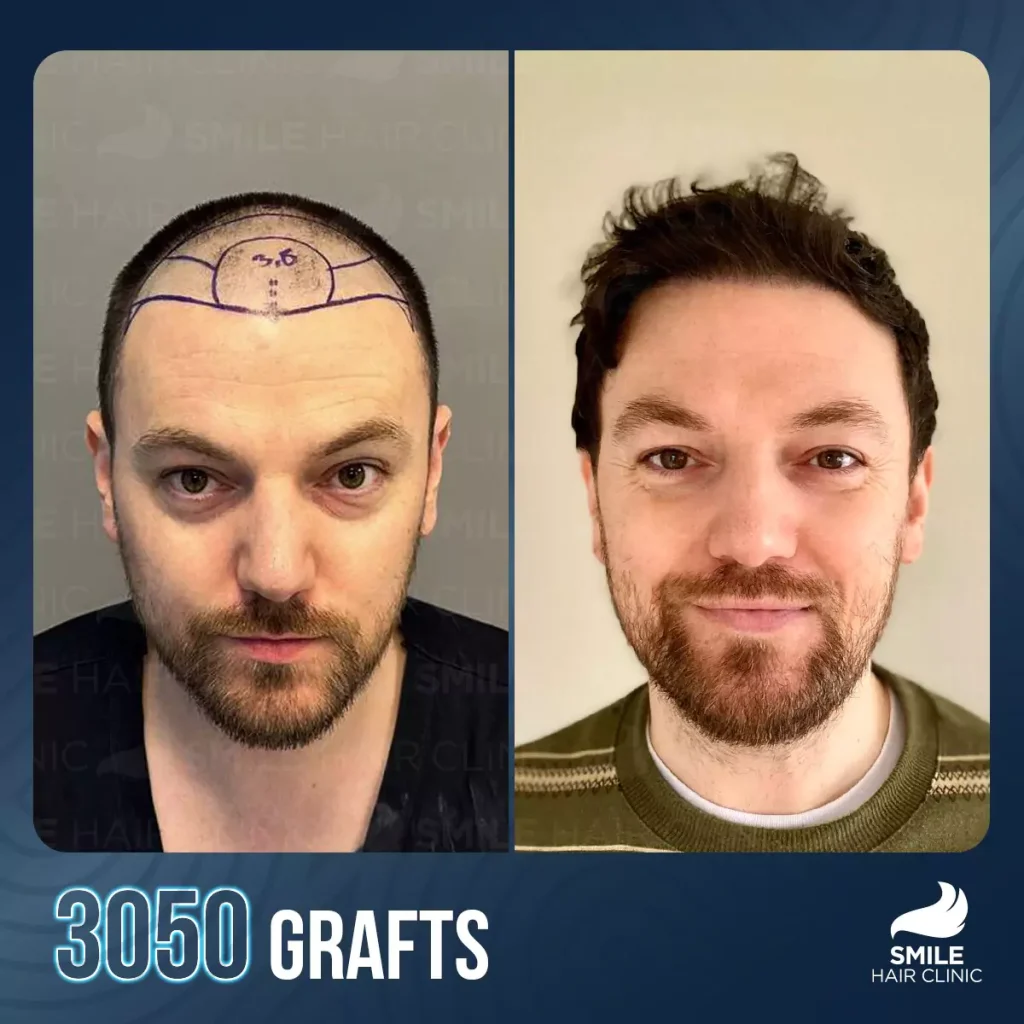
In FUE, grafts are extracted one by one from the donor area using micro punches. These grafts are then prepared and implanted into the recipient area following a planned hairline and density pattern.
Who is FUE best suited for?
FUE works well for most patients, especially those who:
- Prefer short or faded hairstyles
- Want minimal visible scarring
- Need flexible planning over multiple sessions
- Have moderate to good donor density
This is why FUE hair transplant has become the default option in modern clinics.
What are the main advantages of FUE?
There are clear reasons patients lean toward FUE.
- No linear scar in the donor area
- Faster physical recovery in most cases
- Natural looking hairline when angles are well designed
- Ability to harvest grafts across a wider donor zone
When planned correctly, FUE supports both coverage and naturalness.
What about no-shave FUE and partial shaving?
Some patients want to keep their existing hairstyle during recovery. That’s where no-shave or partial shave FUE comes in.
- No-shave FUE keeps the recipient area unshaven
- Partial shave FUE shaves only a small donor zone
These options take more time and planning. They are suitable for selected patients, especially those with smaller sessions or public-facing jobs.
Where does Sapphire FUE fit?
Sapphire FUE is a variation of FUE that uses sapphire blades to create finer recipient channels. The goal is tighter spacing and clean incisions. The outcome still depends on planning, angle control, and surgical experience.
Smile Hair Clinic approach to FUE
At Smile Hair Clinic, FUE is performed under the clinic’s True™ Philosophy. That means every case starts with long-term planning, balanced density, and natural hairline design.
Dr. Firdavs Ahmedov explains: “FUE gives us flexibility. But the real work is in planning distribution so the result still looks natural ten years later.”
DHI hair transplant explained (direct implantation technique)
DHI hair transplant is often presented as a completely different method. In reality, it is an implantation technique used after grafts are usually harvested with FUE hair transplant. The difference lies in how the grafts are placed into the recipient area.
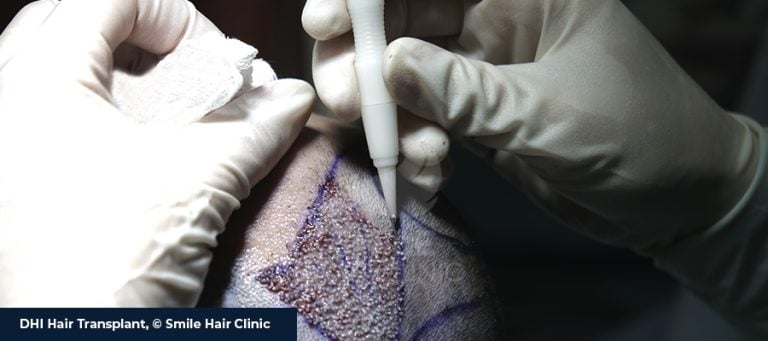
Instead of opening channels first and placing grafts later, DHI uses implanter pens. These tools allow the surgeon to create the site and insert the graft in one controlled motion.
What does DHI change in practice?
The DHI approach focuses on placement precision.
- Simultaneous channel creation and implantation
- Fine control over angle, direction, and depth
- Potential for dense packing in smaller zones
This is why DHI hair transplant is often chosen for hairline work or for increasing density between existing hairs.
Who is DHI best suited for?
DHI is usually recommended for patients who:
- Want detailed hairline refinement
- Have early stage hair loss and need density between native hairs
- Prefer minimal shaving in the recipient area
- Need focused work in smaller, visible zones
It is less commonly used for very large sessions where thousands of grafts are needed quickly.
What are the trade-offs?
DHI can take longer to perform. It requires a well-trained team and careful coordination. Costs are often higher compared to standard FUE sessions.
Another important point. DHI does not replace the need for good planning. Poor hairline design or overpacking can still lead to unnatural results, regardless of the tool used.
Smile Hair Clinic perspective on DHI
At Smile Hair Clinic, DHI is used selectively, especially in the frontal third where natural angles and soft transitions are critical.
Dr. Ali Osman Soluk explains: “DHI is powerful for detail work. We use it where precision matters most, not everywhere by default.”
The clinic often combines FUE harvesting with DHI implantation in the same procedure when it improves the final result.
Sapphire FUE, robotic systems, and other labels: what actually changes your result?
When you research types of hair transplant, you’ll see many labels beyond FUE hair transplant, FUT hair transplant, and DHI hair transplant. Terms like Sapphire FUE, robotic hair transplant, micro FUE, or even “newest technique” appear everywhere.
Some of these are useful refinements. Some are simply marketing language.
Let’s separate them clearly.
Sapphire FUE: what it really changes
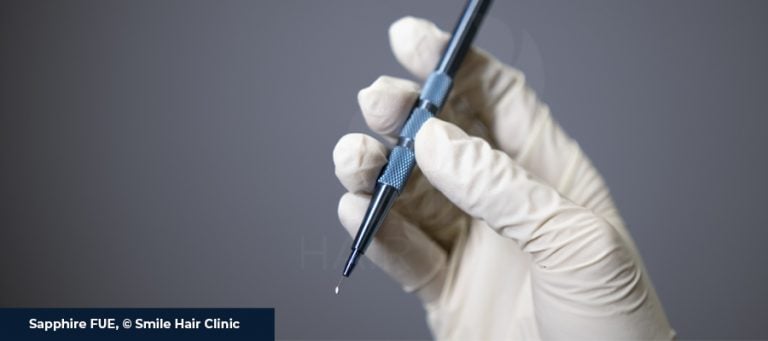
Sapphire FUE is a variation of FUE. The harvesting step stays the same. The difference is in how recipient channels are created.
- Sapphire blades are used instead of traditional steel blades
- Incisions can be finer and more precise
- Tighter spacing between grafts may be possible
This can support denser looking results in skilled hands. But the blade alone does not create naturalness. Hairline design, angle control, and graft distribution still determine the final look.
Robotic hair transplant: where it helps, where it doesn’t
Robotic systems assist with the extraction phase of FUE hair transplant. They can help standardize punch depth and speed.
What they don’t do:
- They don’t design your hairline
- They don’t decide graft distribution
- They don’t replace surgical planning
So while robotics can support consistency, the artistic and medical decisions still rely on the surgical team.
“Newest method” claims and common myths
You will often see phrases like:
- scarless hair transplant
- maximum graft session for everyone
- highest survival rate guaranteed
These claims need careful interpretation.
- No method is completely scarless. Even FUE leaves tiny micro scars.
- The “maximum graft” number depends on your donor capacity, not marketing.
- Graft survival depends on handling, planning, and aftercare, not just the named technique.
What actually changes your result
Across all these labels, the factors that consistently matter are:
- Proper donor management and long term planning
- Natural hairline design and density balance
- Angle, direction, and distribution of each graft
- Surgical team experience and consistency
Dr. Gökay Bilgin often says: “Patients come asking for a method. We focus on the plan that will still look natural years later.”
Hair transplant comparison
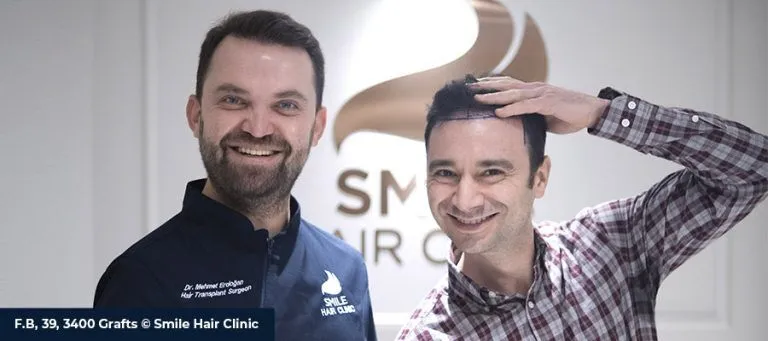
At this point, you’ve seen the main types of hair transplant explained individually. Now let’s put them next to each other so you can compare quickly and make a confident decision.
FUE vs FUT: core differences that affect your daily life
This first comparison focuses on the two main harvesting methods, FUE hair transplant and FUT hair transplant.
Scarring and hairstyle freedom
- FUE hair transplant leaves tiny dot scars that are hard to notice with short hair
- FUT hair transplant leaves a linear scar that may be visible with very short cuts
Graft numbers and session size
- FUT can allow higher graft numbers in a single session
- FUE can be spread across multiple sessions for flexible planning
Recovery and comfort
- FUE usually feels lighter in the donor area after surgery
- FUT may involve tighter feeling in the strip area for the first days
Best suited for
- FUE fits most modern patients who want flexibility
- FUT fits selected cases with advanced hair loss and strong donor areas
DHI vs FUE vs FUT: what really changes between techniques
This comparison adds DHI hair transplant into the picture and focuses on implantation.
Harvesting stage
- FUT uses strip removal
- FUE uses individual extraction
- DHI usually uses FUE for harvesting
Implantation method
- FUT and FUE typically use pre-made channels and forceps placement
- DHI uses implanter pens for simultaneous channel creation and placement
Density and hairline work
- DHI can support dense packing in the frontal zone
- FUE with careful channel design can achieve similar natural results
Shaving requirements
- Standard FUE and FUT often require shaving
- DHI can be adapted for minimal shaving in selected patients
Session time and cost
- DHI sessions often take longer and can cost more
- FUE offers a balance of speed, coverage, and cost
Simple decision guide based on patient profile
If you want a quick direction:
- Want short hairstyles and minimal visible scarring → FUE hair transplant
- Need high graft numbers in one session and accept a strip scar → FUT hair transplant
- Want precise hairline work or density between existing hairs → FUE + DHI implantation
- Prefer refined channel creation tools → Sapphire FUE
Dr. Mehmet Erdoğan explains: “Most of our patients benefit from a combination approach. The right mix of techniques creates the most natural result.”
Hair transplant comparison table
Here’s a clear, side-by-side view of the main types of hair transplant so you can compare the real differences quickly.
| Feature | FUE Hair Transplant | FUT Hair Transplant | DHI Hair Transplant | Sapphire FUE |
|---|---|---|---|---|
| Harvesting method | Individual graft extraction (micro punch) | Strip removal from donor area | Usually FUE extraction first | Same as FUE extraction |
| Implantation method | Channels opened first, grafts placed with forceps | Channels opened first, grafts placed with forceps | Implanter pens (simultaneous channel + placement) | Channels opened with sapphire blades |
| Scarring | Tiny dot scars, hard to notice | Linear scar at donor area | Same as FUE (tiny dots) | Same as FUE (tiny dots) |
| Shaving requirement | Usually yes, can be partial/no-shave | Donor area shaved | Often minimal shaving possible | Same as FUE |
| Session size | Flexible, medium to large sessions | Often large sessions in one go | Usually smaller or medium sessions | Same as FUE |
| Hairline & density work | Natural when angles are well designed | Good coverage, less used for detailed hairline | Excellent for precise hairline and dense packing | Supports fine, tight channel spacing |
| Recovery feel | Generally lighter donor recovery | Tighter feeling at donor area initially | Similar to FUE | Similar to FUE |
| Best suited for | Most patients, short hairstyles, minimal scarring | High graft needs, less concern about linear scar | Hairline refinement, density between existing hair | Patients seeking refined incisions and dense look |
| Procedure time | Moderate | Moderate | Longer (more detailed placement) | Moderate |
| Cost level | Medium | Medium | Higher due to time and precision | Slightly higher than standard FUE |
Results timeline and what “success” really means after a hair transplant
After choosing between FUE hair transplant, FUT hair transplant, DHI hair transplant, or Sapphire FUE, the next big question is simple. When will I see results, and what does a successful outcome actually look like?
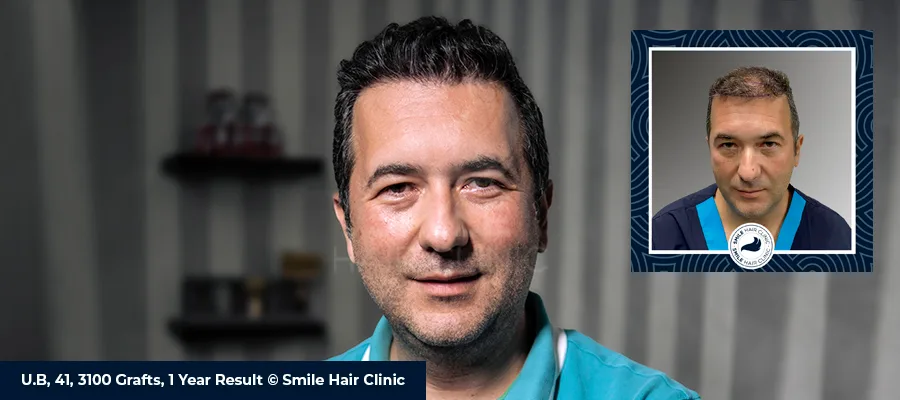
Hair growth follows a biological cycle. Transplanted follicles need time to settle, rest, and regrow. Knowing the timeline helps you stay calm and avoid unnecessary stress.
What happens in the first weeks after surgery?
The first stage is healing and stabilization.
- Days 1–10
Scabs form and fall off gradually. Redness fades. The donor area heals. - Weeks 2–6
Transplanted hairs often shed. This is normal. The follicles remain alive under the skin.
This shedding phase can worry patients. It is expected and temporary.
When does new hair start growing?
Growth begins slowly, then becomes visible.
- Months 3–4
Early regrowth starts. Fine, soft hairs appear. - Months 5–7
Hair thickens. Coverage becomes more noticeable. - Months 9–12
Density improves. Texture becomes more natural. - 12–18 months
Final maturation. The hair blends fully with existing hair.
What defines a successful hair transplant?
Success is not just about how many grafts were placed. It’s about how natural the result looks and how it ages over time.
A strong outcome usually includes:
- A natural, age-appropriate hairline
- Balanced density across the scalp
- Correct angle and direction of hair growth
- Donor area that still looks healthy for future needs
Long-term planning: the part most clinics skip
Hair loss often continues after a transplant. If the design does not consider future thinning, the result can look unnatural later.
At Smile Hair Clinic, long-term planning is part of the True™ Philosophy. The team designs hairlines that will still look natural years later, even if native hair changes.
Dr. Firdavs Ahmedov explains: “A good result looks good in one year. A great result still looks good in ten.”
Hair transplant cost: what you pay for and what actually changes the price
After comparing types of hair transplant, most patients reach the next big question. How much does a hair transplant cost, and why do prices vary so much between clinics?
The short answer. You’re paying for planning, surgical time, graft handling, and the experience of the team performing your procedure. The named method alone does not define the cost.
How are hair transplant prices usually calculated?
Clinics typically use one of three pricing models.
- Per graft pricing
Common in the US and parts of Europe. Each graft has a set price. - Package pricing
Popular in medical tourism hubs. Includes consultation, surgery, medications, transfers, and hotel. - Session-based pricing
Fixed price for a procedure regardless of exact graft count within a range.
Each model can be fair when clearly explained. The key is understanding what is included.
What factors increase or decrease the price?
Several elements directly affect the cost of FUE hair transplant, FUT hair transplant, or DHI hair transplant.
- Total number of grafts needed
- Time required for the procedure
- Use of advanced implantation methods like DHI hair transplant
- Surgeon involvement during extraction and placement
- Clinic reputation, safety standards, and team experience
- Aftercare, medications, and follow-up support
A larger session with detailed hairline design will naturally cost more than a small touch-up.
Realistic cost ranges you can expect
Prices vary by country and clinic standards.
- In the US and Western Europe, procedures often range from $6,000 to $15,000+
- In Turkey, all-inclusive packages for high-quality clinics often range from $2,500 to $5,500 depending on graft count and technique
Lower prices exist. They usually reflect reduced surgeon involvement or higher patient volume per day.
Questions to ask before you commit
Before choosing a clinic, ask clear, direct questions:
- Who performs the extraction and implantation stages?
- How many patients are treated per day?
- What happens if I need a second session later?
- What is included in aftercare and follow-up?
Smile Hair Clinic perspective on cost and value
At Smile Hair Clinic, pricing is built around transparent planning and long-term results, not just session size.
Dr. Mehmet Erdoğan explains: “The cheapest transplant is often the one you pay for twice. We plan once, correctly, for the long term.”
Safety, risks, and how to choose the right clinic
Once you understand types of hair transplant, the next step is choosing a clinic that protects your health and your result. This is where many patients feel unsure. You see different prices, different promises, and it’s not always clear what is safe.
Let’s break it down in a practical way.
What are the common risks after a hair transplant?
With FUE hair transplant, FUT hair transplant, DHI hair transplant, and Sapphire FUE, the basic risks are similar when procedures are done correctly.
Most patients experience mild, temporary effects:
- Redness and swelling for a few days
- Itching during healing
- Temporary shedding of transplanted hairs
Less common, but important to know:
- Infection in the donor or recipient area
- Folliculitis or small pimples during regrowth
- Shock loss of existing hair in the early months
These risks stay low when hygiene, technique, and aftercare are handled properly.
The biggest risks patients don’t notice early
There are also long-term risks that are often overlooked.
- Overharvesting the donor area, leaving it thin
- Unnatural hairline design that looks obvious later
- Wrong angle or direction causing hair to grow in the wrong pattern
- Planning that ignores future hair loss progression
These issues are harder to fix later. That’s why planning and experience matter more than the method name.
How to evaluate a hair transplant clinic properly
When you compare clinics, focus on these points.
- The doctor is involved in planning and key surgical steps
- The clinic treats a controlled number of patients per day
- Before and after results show consistent, natural hairlines
- The clinic explains donor capacity and long-term planning
- Clear aftercare plan with follow-up checks is provided
If a clinic avoids clear answers or promises “maximum grafts for everyone”, take a step back.
Smile Hair Clinic safety approach
At Smile Hair Clinic, patient safety and long-term natural results are central to the True™ Philosophy.
Dr. Gökay Bilgin explains: “A safe transplant is one that still looks natural years later and keeps your donor area healthy for the future.”
The team plans each case individually, limits daily patient numbers, and follows structured aftercare protocols with long-term follow-up.
FAQs about types of hair transplant
Which hair transplant method is best?
There is no single best method. FUE hair transplant, FUT hair transplant, and DHI hair transplant each suit different situations. The right choice depends on your donor capacity, hair loss pattern, hairstyle preference, and long term plan. Most modern patients choose FUE or a combination of FUE and DHI.
Is DHI better than FUE?
DHI is not a replacement for FUE. It is an implantation technique often used with FUE harvesting. DHI can help with precise placement and dense packing in the hairline. FUE remains the main harvesting method for most patients.
What is Sapphire FUE and is it different?
Sapphire FUE is a variation of FUE where sapphire blades are used to create finer recipient channels. It can support tighter spacing. The overall result still depends on planning, angle control, and surgical experience.
How many grafts do I need?
This depends on the size of the thinning area, your hair characteristics, and your long term loss pattern. A typical range can be 2,000 to 4,500 grafts, but some patients need more or less. A proper consultation and donor analysis is required.
How long does recovery take?
Most patients return to daily routines within a few days. Visible healing in the recipient area takes about 10 to 14 days. Full growth develops gradually over 9 to 12 months, with continued improvement up to 18 months.
Can women have a hair transplant?
Yes. Women can be good candidates, especially when hair loss is stable and the donor area is strong. Techniques like FUE with minimal shaving or DHI implantation can be adapted for female patients.
Is hair transplant permanent?
Transplanted hair is typically permanent because it comes from donor areas resistant to hair loss. However, native hair can continue to thin over time, so long term planning and medical support are important.
Will I need more than one session?
Some patients do. It depends on the extent of hair loss and future progression. Good planning aims to use donor resources carefully so additional sessions remain possible if needed.
Take the next step with Smile Hair Clinic
You’ve seen the types of hair transplant, the differences between FUE hair transplant, FUT hair transplant, DHI hair transplant, and Sapphire FUE, and how each one fits different goals.
Now the only question left is this. What is the right plan for you?
At Smile Hair Clinic, your journey starts with a detailed medical assessment. The team evaluates your donor strength, hair loss pattern, density goals, and long term risk. Then they design a personalized plan using the most suitable technique or combination of techniques.
No guesswork. No generic packages. A plan built for your hair and your future.
What you get when you contact Smile Hair Clinic
- A personalized graft estimate and treatment plan
- Clear recommendation between FUE, DHI, or Sapphire FUE techniques
- Transparent pricing and package details
- Direct communication with experienced medical consultants
- A step by step timeline for travel, procedure, and recovery
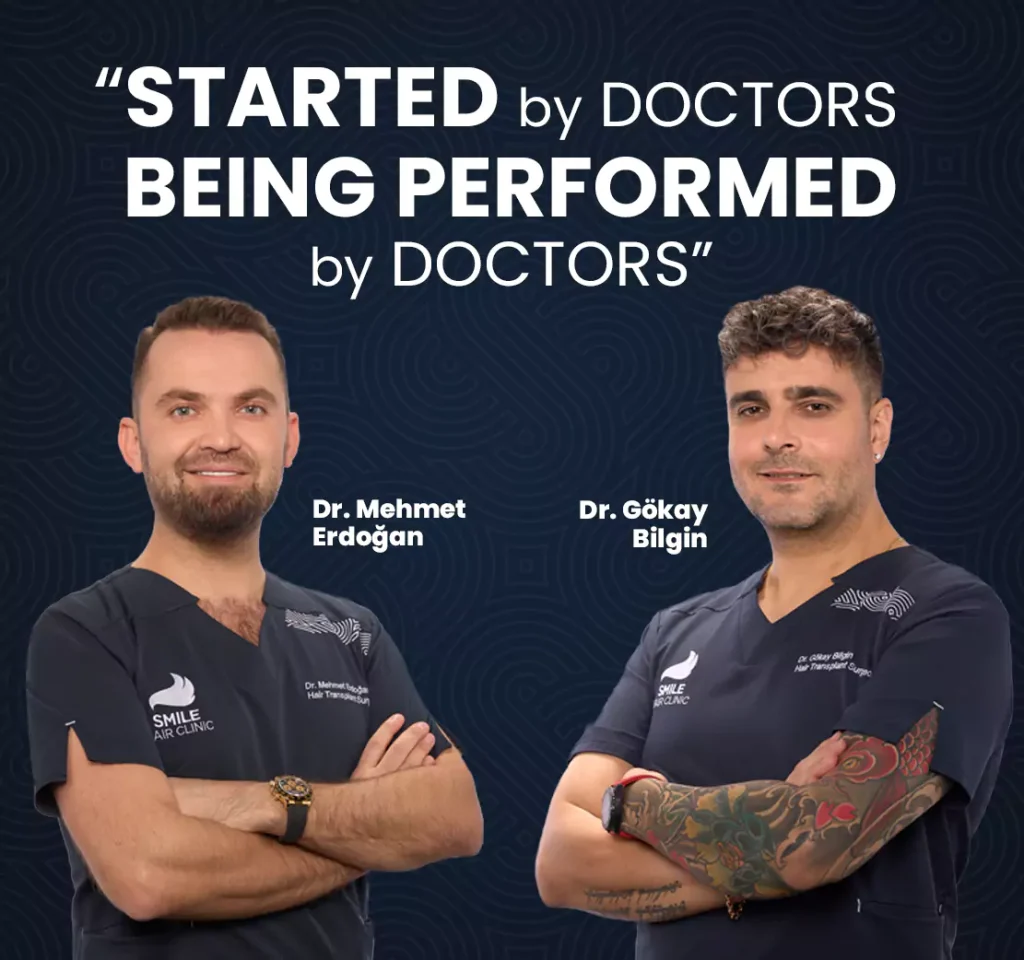
The Smile team, led by Dr. Gökay Bilgin and Dr. Mehmet Erdoğan, has performed thousands of successful procedures with a strong focus on natural hairline design and long term results.
“Our goal is simple,” says Dr. Bilgin. “We design results that still look natural years later.”
Start your consultation
Send your photos for a free medical evaluation and receive your personalized plan within 24–48 hours.
Talk to the Smile Hair Clinic team today and move forward with a treatment plan you can trust.
