


Table of Contents
Interest in Joe Rogan hair transplant remains strong because his story is unusual among celebrities. Unlike many public figures, Joe Rogan openly talked about his experience with hair restoration and why it did not work the way he expected.
His journey offers an important lesson for anyone researching hair transplant before and after results.
If you look at Joe Rogan hair before and after, you will see a clear timeline. Early in his career, he had a natural hairline with moderate density. As hair loss progressed, he chose surgical restoration. Later, he decided to shave his head completely.
Why did that happen?
The answer involves the type of procedure used, the stage of hair loss, and how hair loss continues even after surgery.
Joe Rogan had hair transplant procedures when he was younger, during a time when the FUT strip hair transplant method was the most common option. This technique removed a strip of scalp from the donor area and transplanted grafts into thinning areas.
The problem was not the surgery itself. The issue was long-term hair loss progression.
Many men with male pattern baldness continue losing native hair after surgery. When this happens, the transplanted area may remain, but surrounding hair can thin or disappear.
Rogan later joked that the scar from the strip procedure looked like a “smile” across the back of his head. That scar became one of the reasons he chose the shaved look.
His experience highlights a key point for modern patients. Hair restoration requires long-term planning, not just immediate density.
Dr. Mehmet Erdoğan explains: “Hair loss is progressive. A transplant must be designed for the future, not just the current hairline.”
In the next section, we will answer the main question directly. Did Joe Rogan have a hair transplant, and what procedures did he undergo?
Quick answer — Did Joe Rogan have a hair transplant?
Yes. Joe Rogan hair transplant is not speculation. He openly confirmed having hair transplant procedures earlier in his life and has spoken about the experience many times.
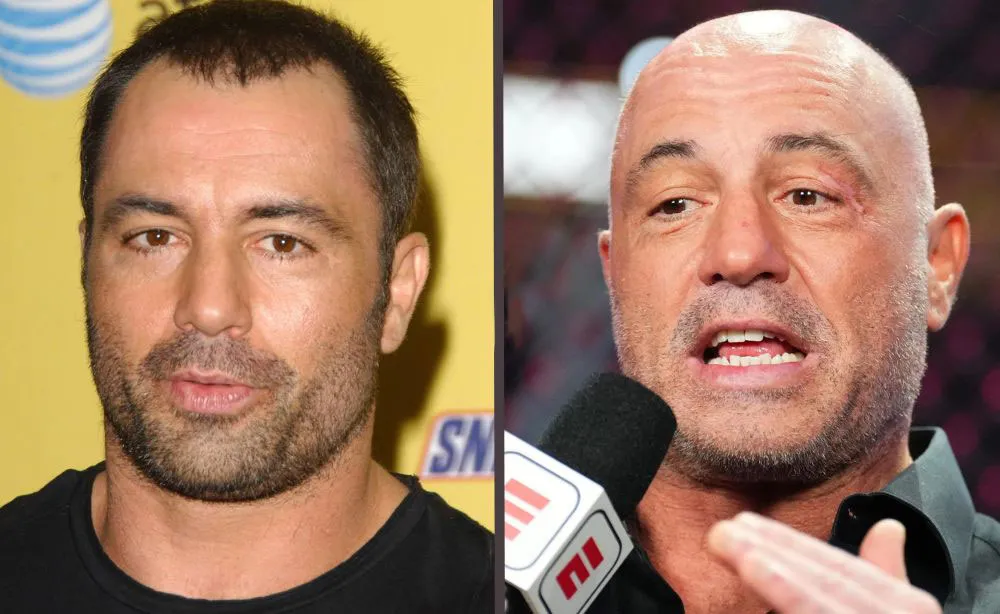
His case is often discussed because it highlights how older techniques and long-term hair loss progression can affect results.
When did Joe Rogan have his hair transplant?
Joe Rogan said he had hair transplant surgery in his late twenties. At that time, his hairline had already started receding and he wanted to restore density in the frontal area.
Back then, the most common method was the FUT hair transplant, also called the strip procedure.
What method was used?
The procedure Rogan had was most likely FUT strip surgery.
- A strip of scalp is removed from the donor area
- Individual follicular grafts are extracted from that strip
- These grafts are placed in thinning areas of the scalp
This method was widely used before FUE hair transplant techniques became popular.
Why did he later shave his head?
Joe Rogan eventually chose to shave his head completely. He explained that the transplant did not age well as his hair loss continued.
Two factors influenced his decision.
- Progressive male pattern baldness reduced surrounding hair density
- The linear scar from the strip surgery became visible with shorter hairstyles
This combination made the shaved look simpler and more natural for him.
What his story teaches about hair restoration
His journey illustrates an important point for anyone considering hair transplant for bald men.
- Hair loss continues after surgery
- Techniques and planning have improved significantly today
- Long-term strategy matters as much as graft placement
Dr. Gökay Bilgin explains: “A successful hair transplant must anticipate future hair loss and preserve donor resources.”
In the next section, we will analyze Joe Rogan hair before and after timeline, showing how his hair changed across different stages of his career.
Joe Rogan hair before and after
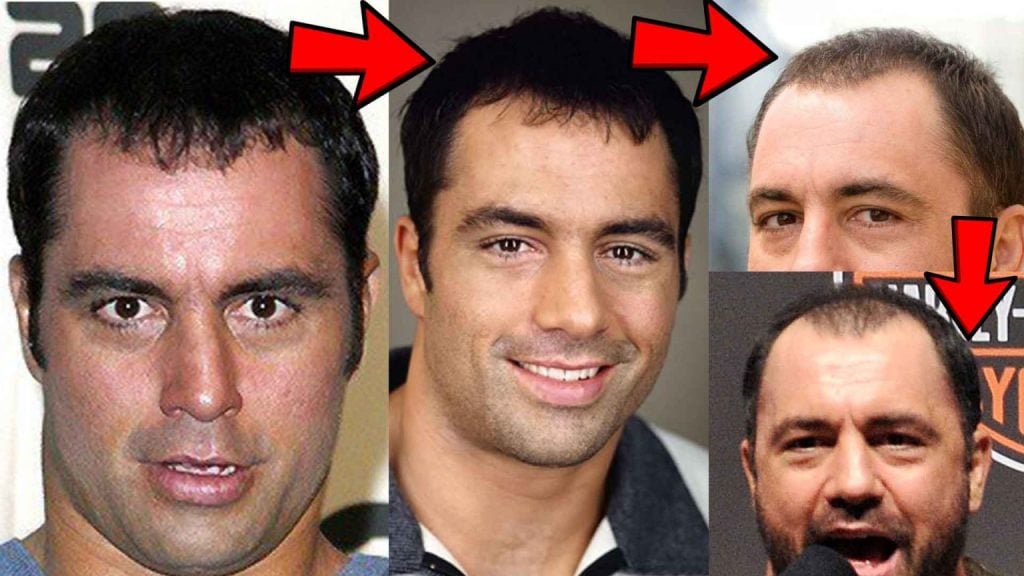
The Joe Rogan hair transplant story becomes clearer when you look at his hair across different stages of his career. His timeline shows how hair loss progressed, how early procedures attempted to restore it, and why he eventually chose the shaved look.
Early career: natural hairline with early recession
In the early 1990s, during his stand-up comedy and television appearances, Rogan had a relatively natural hairline.
- Moderate density across the frontal area
- Slight temple recession beginning to appear
- A hairline that still framed his face naturally
This pattern is common for men entering the early stages of male pattern baldness.
Mid-career: hair loss progression and transplant decision
As his career progressed into the late 1990s and early 2000s, the recession became more noticeable.
- Temple corners opened further
- Frontal density began to thin
- The hairline appeared higher and less defined
At this stage, Rogan chose surgical restoration. He underwent FUT hair transplant procedures to rebuild the frontal hairline and improve density.
Post-transplant phase: temporary improvement
Following the procedure, his hairline appeared fuller.
- The frontal area showed improved density
- The hairline looked more structured than before
- Coverage in the front improved temporarily
This is typical for many hair transplant before and after cases using early strip surgery.
Later years: progressive hair loss and shaved look
Over time, natural hair loss continued.
- Native hair behind the transplant thinned further
- Density differences became more visible
- The FUT strip scar remained on the donor area
Eventually, Rogan chose to shave his head entirely, creating the look most people recognize today.
What visually changed the most
Three factors define the Joe Rogan hair before and after journey.
- Early transplant improved the frontal hairline
- Continued hair loss reduced surrounding density
- The linear donor scar limited short hairstyles
Dr. Ali Osman Soluk explains: “Older transplant techniques worked, but long-term planning was often limited compared with modern approaches.”
In the next section, we will explain what type of hair transplant Joe Rogan had, and how the FUT strip method differs from modern techniques like FUE.
What type of hair transplant did Joe Rogan have?
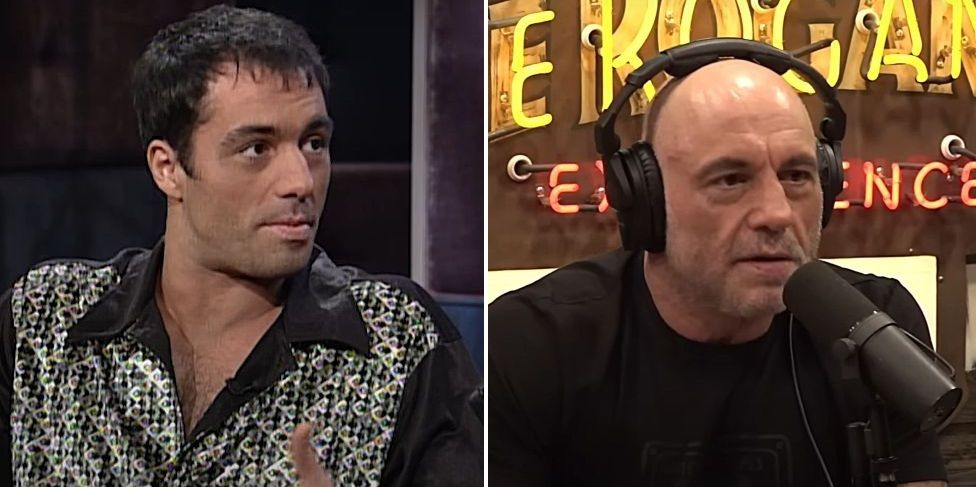
The Joe Rogan hair transplant story centers on a method that was widely used at the time. He underwent FUT hair transplant, also known as the strip procedure. This technique was the standard approach in the 1990s and early 2000s before modern FUE hair transplant methods became common.
FUT strip method explained
In a FUT hair transplant, surgeons remove a strip of scalp from the donor area at the back of the head.
- The strip is taken from hair resistant to hair loss
- Technicians separate the strip into follicular grafts
- These grafts are implanted into thinning areas
The donor area is then closed with sutures, leaving a linear scar.
Why FUT was popular at the time
During the period when Rogan had his surgery, FUT offered several advantages.
- Surgeons could harvest a large number of grafts in one session
- It allowed relatively dense coverage of frontal areas
- The technique was well established and widely practiced
For many patients, it produced visible improvements in hairline density.
The limitation of strip surgery
The main drawback of FUT hair transplant is the donor scar.
- A linear scar remains where the strip was removed
- Short hairstyles may reveal the scar
- Additional procedures can widen the scar over time
Joe Rogan later joked that the scar resembled a “smile” across the back of his head. This became one of the reasons he ultimately preferred shaving his head.
How this differs from modern techniques
Today, many clinics use FUE hair transplant, which removes individual grafts rather than a strip.
- No linear scar in the donor area
- Greater flexibility with short hairstyles
- More precise graft distribution
Dr. Firdavs Ahmedov explains: “Modern FUE allows us to extract grafts individually while preserving the donor area without leaving a strip scar.”
Why Joe Rogan’s hair transplant didn’t work long-term
The Joe Rogan hair transplant story often raises one important question. Why did the result not last the way many people expect from modern hair restoration? The answer lies in progressive hair loss and the limitations of early planning approaches.
Progressive male pattern baldness
Hair transplantation moves permanent donor hairs. It does not stop male pattern baldness in untreated areas.
- Transplanted grafts usually remain stable
- Native hair around them may continue thinning
- Density can become uneven over time
This pattern can create a situation where transplanted hair remains while surrounding hair disappears.
Limited long-term planning in early procedures
When Rogan had his surgery, transplant planning was different from modern approaches.
- Surgeons focused mainly on the current hairline
- Future hair loss patterns were harder to predict
- Medical therapies for stabilization were less common
As hair loss progressed, the original design no longer matched the surrounding density.
Donor supply and graft limitations
Hair transplantation always depends on the donor area.
- Only a limited number of grafts can be safely harvested
- Aggressive hairline lowering can create long-term imbalance
- Donor scars from FUT hair transplant restrict hairstyle options
These factors can influence the final look years after surgery.
Visible strip scar with short hairstyles
One of the main issues Rogan mentioned was the donor scar.
- The FUT strip scar remained across the back of the scalp
- Short haircuts made the scar more noticeable
- Shaving the head became a simpler solution
This is why many patients today prefer FUE hair transplant, which avoids a linear scar.
What modern hair restoration does differently
Today’s planning focuses on long-term stability.
- Hairlines are designed with future loss in mind
- Donor grafts are preserved carefully
- Medical therapy may stabilize native hair
Dr. Gökay Bilgin explains: “Hair restoration must be planned for decades, not just the first result.”
FUT vs FUE vs Sapphire FUE vs DHI
The Joe Rogan hair transplant case often comes up when patients ask how older procedures compare with modern techniques. Rogan’s surgeries used FUT hair transplant, the strip method common at the time. Today, hair restoration has evolved significantly with FUE hair transplant, Sapphire FUE, and DHI hair transplant approaches.
Understanding these differences helps explain why modern results often look more natural and flexible.
FUT hair transplant (strip method)
The FUT hair transplant technique removes a strip of scalp from the donor area.
- A strip of hair-bearing scalp is excised
- Follicular grafts are dissected from the strip
- The donor area is closed with sutures
Advantages at the time included harvesting many grafts in one session. The main drawback is the linear scar, which can be visible with short hairstyles. This is the scar Joe Rogan later referenced.
FUE hair transplant
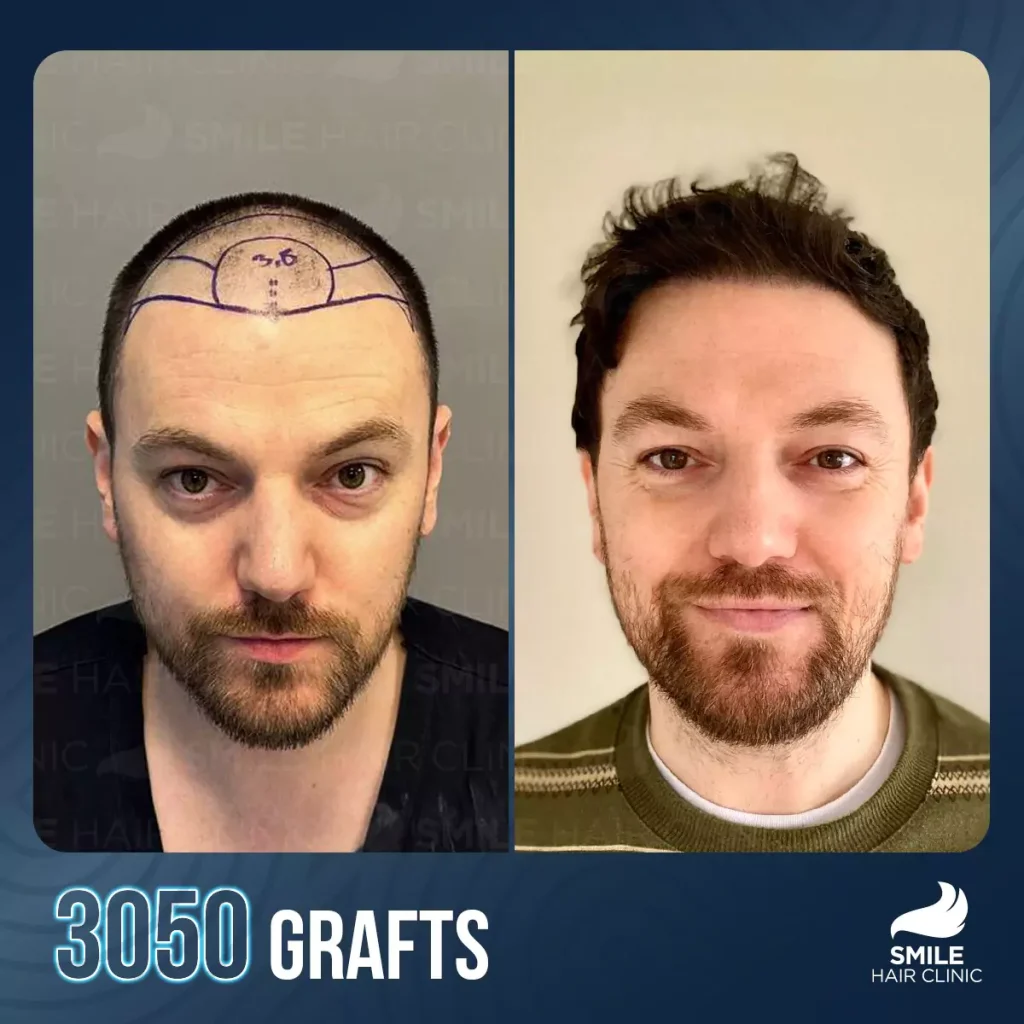
Modern clinics commonly use FUE hair transplant.
- Individual grafts are extracted directly from the donor area
- No strip of scalp is removed
- Tiny extraction points heal without a linear scar
This technique allows patients to wear shorter hairstyles and offers more flexibility for graft distribution.
Sapphire FUE technique
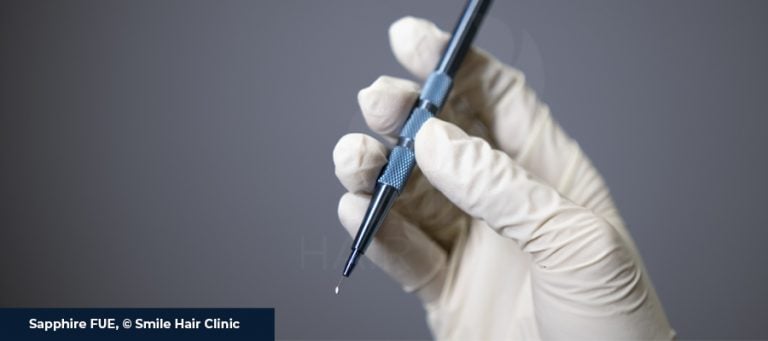
Sapphire FUE is an advanced variation of the FUE method.
- Channels are created using sapphire blades
- Smaller, sharper incisions allow precise graft placement
- Density distribution can be more controlled
This method can help create a refined hair transplant hairline with faster healing.
DHI hair transplant method
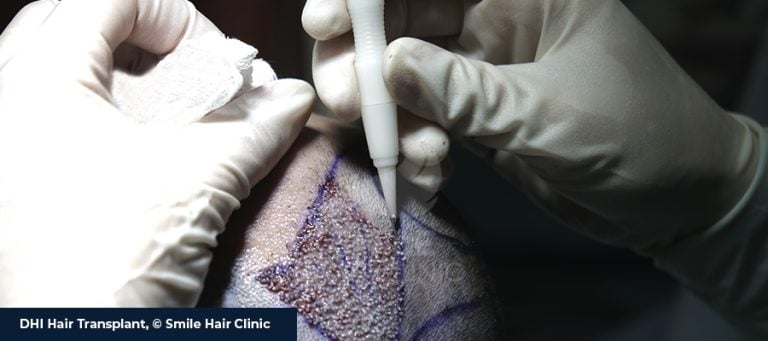
DHI hair transplant focuses on the implantation phase.
- Grafts are placed using a specialized implanter pen
- Angle, direction, and depth are controlled during placement
- No pre-made channels are required
This approach allows very precise work in the frontal hairline area.
How modern planning differs from earlier procedures
Modern techniques combine surgical precision with long-term planning.
- Hairline design considers future hair loss patterns
- Donor grafts are preserved carefully
- Density is distributed for natural aging
Dr. Mehmet Erdoğan explains: “Modern methods like FUE, Sapphire FUE, and DHI give surgeons more control over density, direction, and long-term results.”
How many grafts did Joe Rogan likely have?
When people research Joe Rogan hair transplant, they often ask how many grafts were involved. Exact numbers were never publicly confirmed. Still, his Joe Rogan hair before and after timeline allows reasonable estimates.
Estimating his Norwood level
Looking at earlier photos, Rogan’s hair loss appeared to progress quickly.
- Early recession at the temples
- Gradual thinning in the frontal region
- Expansion toward the mid-scalp
This pattern usually corresponds to Norwood 3–4 hair loss at the time he sought surgery.
Estimated graft range for his procedures
Based on typical planning during that era, the likely range was:
- 1500–2000 grafts for frontal hairline reconstruction
- Possibly additional grafts in a second procedure
Strip surgery often allowed larger harvests in one session. However, the focus was usually the frontal zone rather than full coverage.
Why graft placement matters more than numbers
In any hair transplant before and after result, the frontal hairline carries the greatest visual impact.
- Hairline reconstruction frames the face
- Density gradually decreases behind the hairline
- Crown coverage is often secondary in early procedures
This approach explains why Rogan’s initial results appeared improved in the front.
Donor supply limitations
Every transplant depends on the donor area.
- Only a finite number of grafts can be safely harvested
- Overharvesting can weaken the donor zone
- Strip surgery creates a permanent donor scar
These factors limit how aggressively surgeons can rebuild the hairline.
Modern planning strategy
Today, surgeons approach graft planning differently.
- Hairline height is designed conservatively
- Density is distributed gradually from front to crown
- Future hair loss patterns are considered from the start
Dr. Firdavs Ahmedov explains: “Modern planning focuses on balance. Grafts must create natural coverage today while preserving options for the future.”
Lessons from Joe Rogan’s hair transplant journey
The Joe Rogan hair transplant story offers valuable lessons for anyone considering hair restoration. His experience shows how hair loss progression, surgical methods, and long-term planning can affect results over time.
Timing matters in hair restoration
Hair transplantation works best when the timing is right.
- Hair loss patterns should be reasonably stable
- The donor area must have strong density
- Future thinning must be considered before surgery
If surgery is performed too early without planning for progression, the surrounding hair may continue to thin.
Hair loss does not stop after surgery
One of the biggest misconceptions about hair transplant before and after results is that surgery stops hair loss.
- Transplanted grafts are permanent
- Native hair can continue to thin over time
- Density imbalance can appear years later
This is why modern treatment plans often combine surgery with medical therapies.
Donor management is important
Every transplant relies on a limited donor supply.
- Overharvesting can weaken the donor area
- Linear scars from FUT hair transplant restrict hairstyle options
- Donor grafts must be preserved for possible future sessions
Modern surgeons approach donor management much more conservatively.
Technique evolution changed outcomes
The techniques available during Rogan’s procedures were different.
- FUT strip surgery was the standard method
- Modern FUE hair transplant avoids a linear scar
- Sapphire FUE and DHI hair transplant allow more precise placement
These advances improve both cosmetic results and long-term flexibility.
Realistic expectations are important
Hair transplantation can restore a natural frame to the face. It does not recreate teenage density.
Patients should understand:
- Coverage is more important than maximum density
- Hairline design must match age and facial proportions
- Long-term planning determines natural results
Dr. Ali Osman Soluk explains: “The best results come from realistic planning. Hair restoration should look natural not only today but also years later.”
Could modern techniques produce better results today?
If someone with hair loss similar to Joe Rogan hairline were treated today, modern techniques could produce different outcomes.
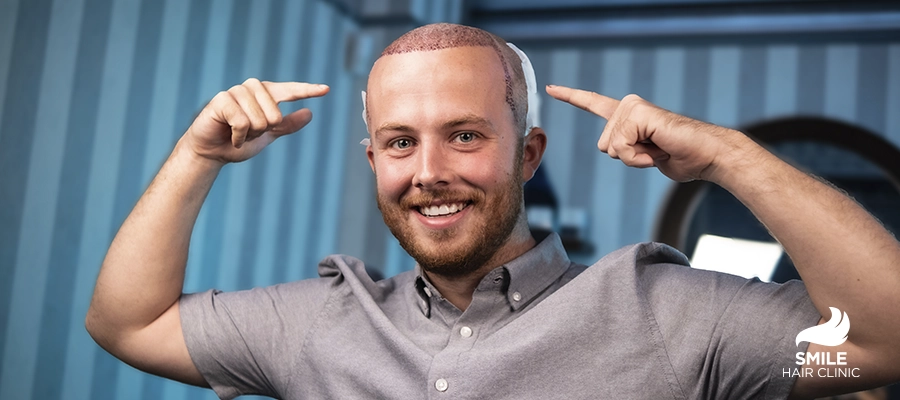
Patients with moderate recession may achieve good results with:
- FUE hair transplant for graft extraction
- Sapphire FUE for refined channel creation
- DHI hair transplant for precise hairline placement
Typical graft ranges for similar cases:
- 2000–3000 grafts for frontal restoration
- Additional grafts if crown coverage is needed
Smile Hair Clinic personalized planning
At Smile Hair Clinic, every treatment plan considers donor capacity, hair loss progression, and facial proportions. The goal is a balanced result that ages naturally.
Dr. M. Reşat Arpacı explains: “Modern techniques give us more control, but careful planning is still the most important factor.”
Frequently asked questions about Joe Rogan hair transplant
Did Joe Rogan really have a hair transplant?
Yes. Joe Rogan hair transplant is confirmed. Rogan openly talked about having hair transplant surgery when he was younger. He later discussed the experience publicly and explained why he eventually chose to shave his head.
What type of hair transplant did Joe Rogan have?
Joe Rogan underwent FUT hair transplant, also called the strip method. In this procedure, surgeons remove a strip of scalp from the donor area and separate it into grafts that are transplanted into thinning areas.
Why did Joe Rogan shave his head after the transplant?
Two main reasons influenced his decision.
- Progressive male pattern baldness continued after the procedure
- The linear donor scar from FUT surgery was visible with shorter hairstyles
Shaving his head became the simplest and most natural solution.
How many grafts did Joe Rogan likely have?
Exact numbers were never confirmed. Based on visible Joe Rogan hair before and after changes, experts estimate around 1500–2500 grafts were used during his procedures.
Why do some hair transplants fail over time?
Hair transplants usually do not fail technically. The most common issue is continued hair loss in untreated areas.
- Native hair continues to thin
- Transplanted grafts remain but surrounding hair disappears
- Density imbalance becomes visible over time
Proper long-term planning helps reduce this risk.
Would modern techniques produce a different result today?
Yes. Modern procedures like FUE hair transplant, Sapphire FUE, and DHI hair transplant offer several advantages.
- No linear donor scar
- More precise graft placement
- Better long-term planning for progressive hair loss
These improvements allow more natural and flexible outcomes.
Can someone with hair loss like Joe Rogan still get a transplant?
Yes, depending on donor density and scalp characteristics. A consultation helps determine whether hair restoration is suitable and how many grafts would be needed.
How long do hair transplant results last?
Transplanted hairs usually remain permanent because they come from donor areas resistant to hair loss. However, native hair may continue to thin, which is why long-term treatment planning is important.
Start your personalized hair restoration plan
If you are exploring options similar to the Joe Rogan hair transplant journey, a professional evaluation is the best first step.
Send your photos to Smile Hair Clinic and receive:
- A personalized graft estimate
- A natural, age-appropriate hairline design
- A treatment plan using FUE, Sapphire FUE, or DHI hair transplant
- Transparent pricing and recovery timeline
Contact Smile Hair Clinic today and take the first step toward a natural, confident hairline designed for you.
