

Reaching 10 days after hair transplant is a key milestone. Most of the early healing is done. The grafts are now secure. You can finally relax a little. Still, this stage brings new questions.
Patients often search:
- hair transplant day 10 appearance
- hair transplant scabs day 10
- washing hair 10 days after hair transplant
- can grafts fall out after 10 days
These are all normal concerns. At day 10, your scalp is in a transition phase. The sensitive healing period is ending. The shedding phase is about to begin. What you see now is not your final result. It is the bridge between surgery and growth.
Most people notice:
- scabs mostly gone or ready to come off
- mild redness in the recipient area
- little to no swelling
- a short stubble-like look in transplanted areas
This stage can feel confusing. You might wonder if everything looks right. You might worry about redness or small bumps. You might question if you are washing your hair correctly.
That is why understanding what happens 10 days after hair transplant is so important.
This guide explains:
- what your scalp should look like on day 10
- how to wash and remove scabs safely
- what is normal and what is not
- what activities are safe again
- what happens next in the shedding phase
Dr. Gökay Bilgin explains that day 10 is the point where patients shift from “protecting grafts” to “supporting healing and growth.”
10 days after hair transplant
At 10 days after a hair transplant, most scabs are gone, redness is mild, and grafts are secure. Normal washing can begin, light activity is usually safe, and the shedding phase may start soon.
What your scalp should look like on day 10
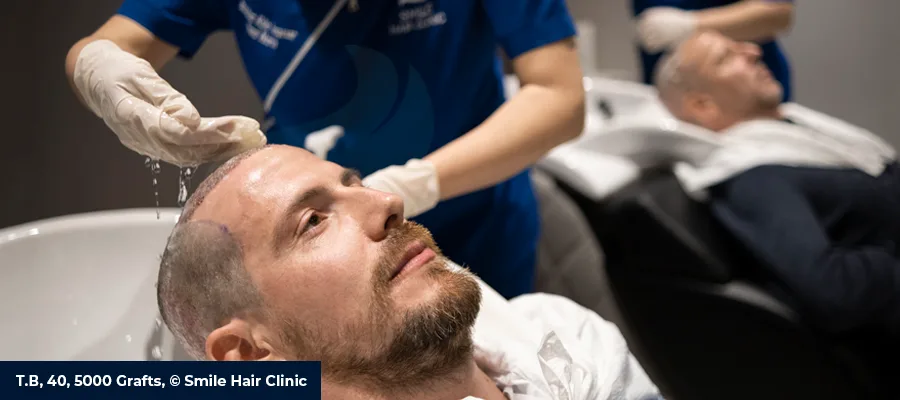
At 10 days after hair transplant, most patients are relieved to see real progress. The sensitive phase is ending. Your scalp should look cleaner, calmer, and more stable.
Still, small changes are normal. Knowing what to expect helps you stay confident.
Redness at day 10
Mild redness is common at this stage.
You may notice:
- Light pink tone in the recipient area
- Slight color difference between donor and recipient zones
- Redness more visible on fair skin types
This redness usually fades over the next few weeks. It does not mean something is wrong.
Dr. Firdavs Ahmedov explains that redness is part of normal skin healing and blood flow to the area.
Scabs and crusts at day 10
By now, hair transplant scabs day 10 should be:
- Mostly gone
- Loosening naturally
- Ready to be removed gently during washing
If a few small scabs remain, that is still normal. They should come off easily with proper washing.
You should not pick or scratch them manually.
Swelling and discomfort
Swelling should be almost completely gone by now.
At this point, most patients feel:
- No pain
- Minimal tightness in donor area
- Slight sensitivity when touching the scalp
These are all expected at hair transplant day 10.
How the hair itself looks
The transplanted hairs usually appear like short stubble.
You may see:
- Small hairs still in place
- Uneven lengths across the transplanted zone
- A slightly dry or flaky look
This is normal. The shedding phase is coming soon.
Your scalp does not need to look perfect at day 10. It needs to look like it is healing. Mild redness, a few scabs, and uneven stubble are all part of the process.
Washing your hair at day 10
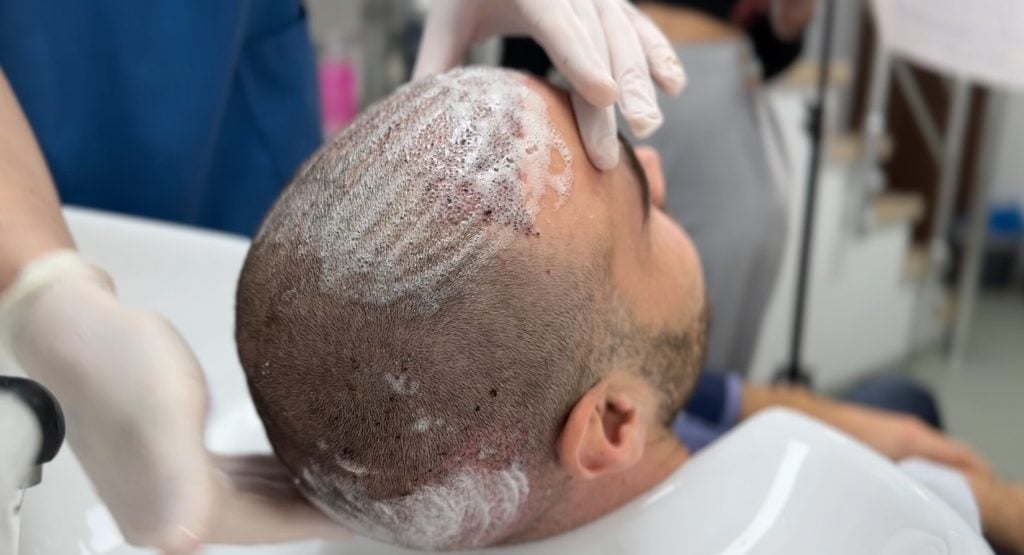
By 10 days after hair transplant, washing becomes easier and more normal. Grafts are secure. The focus now is on cleaning the scalp and removing any remaining crusts safely.
How to wash your hair at day 10
At this stage, you can wash more directly than in the first days.
A simple routine:
- Use lukewarm water, never hot
- Apply a gentle, clinic-recommended shampoo
- Lather softly in your hands first
- Massage lightly with fingertips, not nails
- Rinse with low to medium water pressure
Many patients ask washing hair 10 days after hair transplant if they can return to normal washing. The answer is yes, with a gentle touch.
Dr. Mehmet Erdoğan notes that soft circular fingertip movements help loosen crusts without stressing the scalp.
How to remove scabs safely
By day 10, most hair transplant scabs day 10 should come off with washing.
Safe method:
- Let shampoo sit for 5–10 minutes to soften crusts
- Use gentle circular motions with fingertips
- Allow scabs to fall away naturally
- Rinse thoroughly
Do not pick scabs with nails or force them off. If they do not come off easily, give them another day or two.
When you can wash normally again
Most patients can return to their normal washing routine between day 10 and day 14.
That means:
- Regular frequency (daily or every other day)
- Normal shower pressure
- Regular shampoo products, if approved by your clinic
Signs you are washing correctly
Your scalp should look:
- Clean and free of visible crusts
- Calm without irritation
- Comfortable without pain or bleeding
Proper washing at day 10 helps your scalp heal faster and prepares you for the next stage, the shedding phase.
What you can do at day 10
Reaching 10 days after hair transplant is the moment many patients start feeling normal again. The grafts are secure. The visible healing phase is almost complete. You can slowly return to daily life, with a few simple precautions.
Returning to work and social life
Most people feel comfortable going back to work by hair transplant day 10. The scalp looks much cleaner and the redness is usually mild enough to go unnoticed in normal lighting.
If your job is office-based, you can return without concern. If your work involves physical effort or heat exposure, it is better to ease back gradually over the next few days.
Socially, you can meet friends, go out, and travel. You no longer need to hide your scalp. The appearance is usually subtle and natural at this stage.
Dr. Gökay Bilgin notes that confidence tends to return quickly after the first 10 days once the visible signs of surgery fade.
Exercise and physical activity
Light activity is usually safe now. Walking and gentle movement are fine. More intense exercise such as gym workouts, running, or heavy lifting should be reintroduced gradually after day 10–14.
The key idea is simple. Avoid anything that creates excessive sweating or pressure on the scalp in the early days of returning to exercise.
Hats, sun, and outdoor exposure
Many patients ask can I wear a hat 10 days after hair transplant. In most cases, yes. A loose, clean hat that does not rub or compress the graft area is acceptable.
Direct sun exposure should still be limited. If you are outdoors, wear a loose hat and avoid strong midday sun for a few more weeks.
Daily routines and normal life
At this stage you can:
- Sleep normally
- Shower normally
- Travel without restriction
You are moving back to routine life. Calm, steady progress.
What is normal vs not normal at day 10
At 10 days after hair transplant, most patients feel better. The visible healing is nearly done. Small symptoms can still appear, and that can create worry. The goal here is simple. Help you separate normal healing signs from true warning signs.
Itching at day 10
Mild itching is very common at this stage. The skin is healing and renewing itself.
Normal itching usually:
- Feels light and intermittent
- Improves after washing or moisturizing
- Does not come with pain or discharge
Dr. Firdavs Ahmedov explains that gentle washing and keeping the scalp clean helps reduce itching naturally.
Small pimples or bumps
Some patients notice tiny white or red bumps.
These can be:
- New hairs trying to break through the skin
- Minor follicle irritation
- A reaction to natural oil buildup
Small, painless pimples are usually harmless and settle on their own.
Mild redness or pink tone
Light redness at hair transplant day 10 is expected.
It may be:
- Slightly visible in the recipient area
- More noticeable on fair skin
- Fading slowly week by week
This is normal skin recovery.
What is not normal
Certain signs are not typical and should be checked.
Watch for:
- Strong pain or increasing tenderness
- Pus, yellow discharge, or bad smell
- Severe swelling that returns after going down
- Continuous bleeding from any area
These can suggest infection or irritation and need medical advice.
Emotional expectations
This stage can feel strange. The scalp looks better, but final results are not visible yet. Some patients worry they did something wrong. That feeling is normal.
Dr. Mehmet Erdoğan reminds patients that day 10 is a transition point. You have passed the delicate phase. Now the body prepares for growth.
Mild itching, light redness, and small bumps are part of healing. Pain, discharge, and swelling are not.
Can grafts fall out after 10 days
By 10 days after hair transplant, one of the biggest fears is graft loss. Patients often ask can grafts fall out after 10 days or worry that washing or touching the scalp might damage the result.
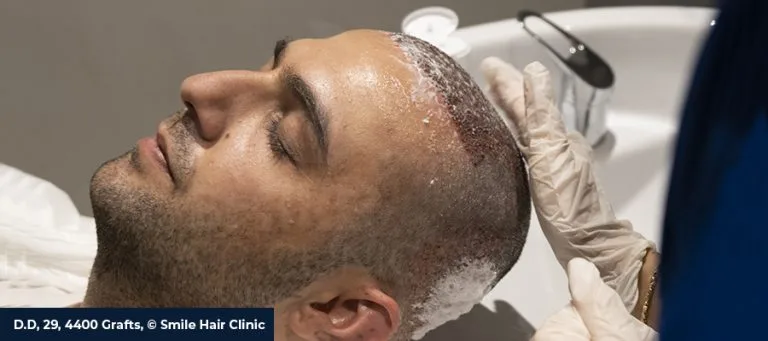
The reassuring answer is simple. At this stage, your grafts are already secure.
Graft security timeline
Hair grafts follow a predictable healing process.
During the first days:
- Days 1–3: grafts are very delicate
- Days 4–7: grafts begin anchoring into the scalp
- By day 10: grafts are fully embedded and stable
This means normal washing, light touching, and daily movement will not dislodge them.
Dr. Ali Osman Soluk explains that once grafts integrate with the skin, they behave like natural follicles.
What can still fall out
There is one detail that can confuse patients.
At day 10, you may see:
- Short hair shafts falling out
- Tiny stubble shedding during washing
This is not graft loss. It is the beginning of the normal shedding phase hair transplant process.
The follicle remains under the skin. Only the visible hair shaft falls out.
What would real graft loss look like
True graft loss at this stage is very rare.
If it were to happen, you would see:
- Active bleeding with a graft attached
- A visible open hole in the scalp
- Pain or trauma to the area
These signs are extremely uncommon at day 10 with proper aftercare.
What you should do now
At this stage:
- Wash your hair normally but gently
- Avoid scratching with nails
- Follow your clinic’s aftercare advice
You can feel confident. Your grafts are secure.
Shedding phase after day 10
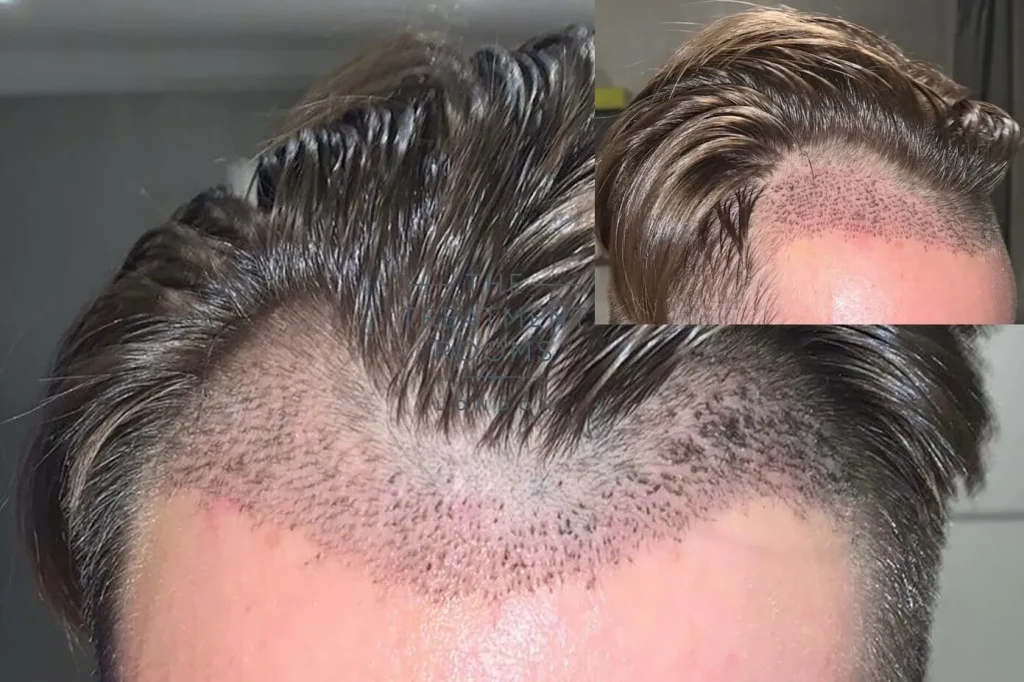
After 10 days after hair transplant, many patients notice something unexpected. The hair they just gained may start to fall out. This is normal. It is called the shedding phase hair transplant.
What is shock loss and shedding
Around day 10–20, the transplanted hair shafts begin to shed.
You may notice:
- Short hairs falling during washing
- Light shedding on your pillow
- The transplanted area looking thinner again
This is called shock loss after hair transplant timeline and it is part of the natural growth cycle.
The important detail is this. The follicles stay alive under the skin. Only the visible hair falls.
Dr. Firdavs Ahmedov explains that shedding is a reset phase that allows new, stronger hair to grow.
When new growth begins
After the shedding phase, growth starts slowly.
Typical timeline:
- Months 1–3: shedding and resting phase
- Months 3–4: first new hairs appear
- Months 6–9: visible density increases
- Months 10–12: final maturation phase
This is the standard hair transplant growth timeline.
What your scalp may look like during shedding
During this stage, your scalp can look:
- Similar to before the transplant
- Slightly patchy
- Less dense than week 2
This is temporary. Growth returns gradually.
What you should do during shedding
Your focus now is patience and consistency.
Keep doing:
- Gentle washing
- Healthy lifestyle habits
- Any recommended medication or topical care
Avoid worrying when you see hairs falling. This phase is expected in almost every successful transplant.
Seeing hairs fall out after day 10 does not mean failure. It means your follicles are entering their growth cycle.
Signs of infection or complications
By 10 days after hair transplant, most of the sensitive healing phase is complete. Complications at this stage are uncommon, but it is still important to know what is normal and what is not.
Signs that are usually normal
Many patients worry about small changes that are actually part of healing.
Normal signs at hair transplant day 10 include:
- Mild redness in the recipient area
- Light itching as the skin heals
- Small pimples where new hairs will grow
- Slight tightness or sensitivity in the donor area
These symptoms are temporary and tend to settle over the following weeks.
Dr. Mehmet Erdoğan explains that light redness and minor bumps are expected as follicles begin their growth cycle.
Warning signs to watch for
Some symptoms are not typical and should be checked.
You should contact your clinic if you notice:
- Increasing pain instead of improvement
- Yellow or green discharge from the scalp
- A strong or unusual smell
- Persistent swelling that returns or worsens
- Fever or general illness feeling
These signs may indicate infection or irritation that needs medical care.
Bleeding and trauma concerns
By day 10, bleeding should not occur during normal activities.
If you see:
- Fresh bleeding after washing or touching
- Open or injured areas on the scalp
it is best to contact your clinic for advice.
Why early communication matters
Most issues can be managed quickly when addressed early. Sending a photo or short video to your clinic can often resolve concerns without stress.
Dr. Ali Osman Soluk notes that regular follow-up and communication help patients feel confident throughout recovery.
Complications at this stage are rare. Most patients experience smooth healing with only minor temporary symptoms.
Tips to support healing and growth after day 10
By 10 days after hair transplant, your grafts are secure and your focus shifts from protection to support. Small daily habits can help your scalp settle faster and prepare for healthy growth.
Keep your scalp clean and calm
Continue regular, gentle washing. Clean skin heals better.
Helpful habits:
- Wash with a mild shampoo and lukewarm water
- Massage softly with fingertips, never nails
- Rinse thoroughly so no residue remains
Dr. Firdavs Ahmedov notes that a clean scalp reduces irritation and helps follicles breathe during the early growth phase.
Support circulation and recovery
Good circulation helps follicles receive oxygen and nutrients.
Simple steps:
- Stay hydrated
- Sleep well and consistently
- Keep stress levels under control
Avoid smoking if possible. It can affect blood flow to the scalp.
Protect from sun and friction
Your scalp is still sensitive to sunlight and pressure.
For the next few weeks:
- Avoid strong direct sun exposure
- Use a loose hat outdoors if needed
- Avoid tight helmets or headwear
This protects the healing skin and the new follicles.
Follow medical and clinic advice
Some patients are advised to use supportive treatments.
These may include:
- Topical solutions to reduce dryness or redness
- Medical therapy such as finasteride or minoxidil
- PRP sessions in selected cases
Dr. Mehmet Erdoğan explains that protecting native hair helps maintain overall density as transplanted hair grows.
Stay patient during the transition phase
The coming weeks can feel slow. Shedding may begin. Growth will take time.
This is normal.
What matters now is consistency with your care routine and realistic expectations.
Your transplant is now stable. Your role is to support healing and allow the follicles to follow their natural growth cycle.
10 days after hair transplant FAQs
Is it normal to still have redness at day 10?
Yes. Mild redness at hair transplant day 10 is common. It can last a few more weeks, especially on fair skin. It should gradually fade over time.
Are scabs supposed to be gone by day 10?
Most hair transplant scabs day 10 should be gone or ready to fall off during washing. A few small crusts can remain, but they should come off gently without picking.
Can I wash my hair normally after 10 days?
Yes. By washing hair 10 days after hair transplant, you can return to a normal routine with gentle shampoo and soft fingertip movements. Avoid harsh rubbing with nails.
Can grafts fall out after 10 days?
No. At 10 days after hair transplant, grafts are already secure under the skin. You may see hairs shed, but this is normal shedding, not graft loss.
Can I wear a hat 10 days after hair transplant?
Yes, you can wear a loose, clean hat that does not press or rub the scalp. Tight hats should still be avoided for a little longer.
Can I exercise at day 10?
Light activity is fine. Intense workouts, heavy sweating, or weight training should be reintroduced gradually after about 10–14 days.
Is itching normal at this stage?
Yes. Mild itching is common as the scalp heals. Gentle washing and keeping the scalp clean usually helps reduce it.
When will hair start growing after the transplant?
After day 10, the shedding phase begins. New hair growth usually starts around month 3–4, with visible density by months 6–9 and final results around 10–12 months.
What are signs of infection after hair transplant?
Warning signs include strong pain, yellow discharge, bad smell, fever, or increasing swelling. These are not normal and should be checked by your clinic.
Can I go back to work 10 days after a hair transplant?
Yes. Most patients can return to work and social life by day 10, especially for non-physical jobs.
Continue your recovery with expert guidance at Smile Hair Clinic
Reaching 10 days after hair transplant is a big step. The sensitive phase is behind you. Now the focus shifts to healing well and preparing for healthy growth.
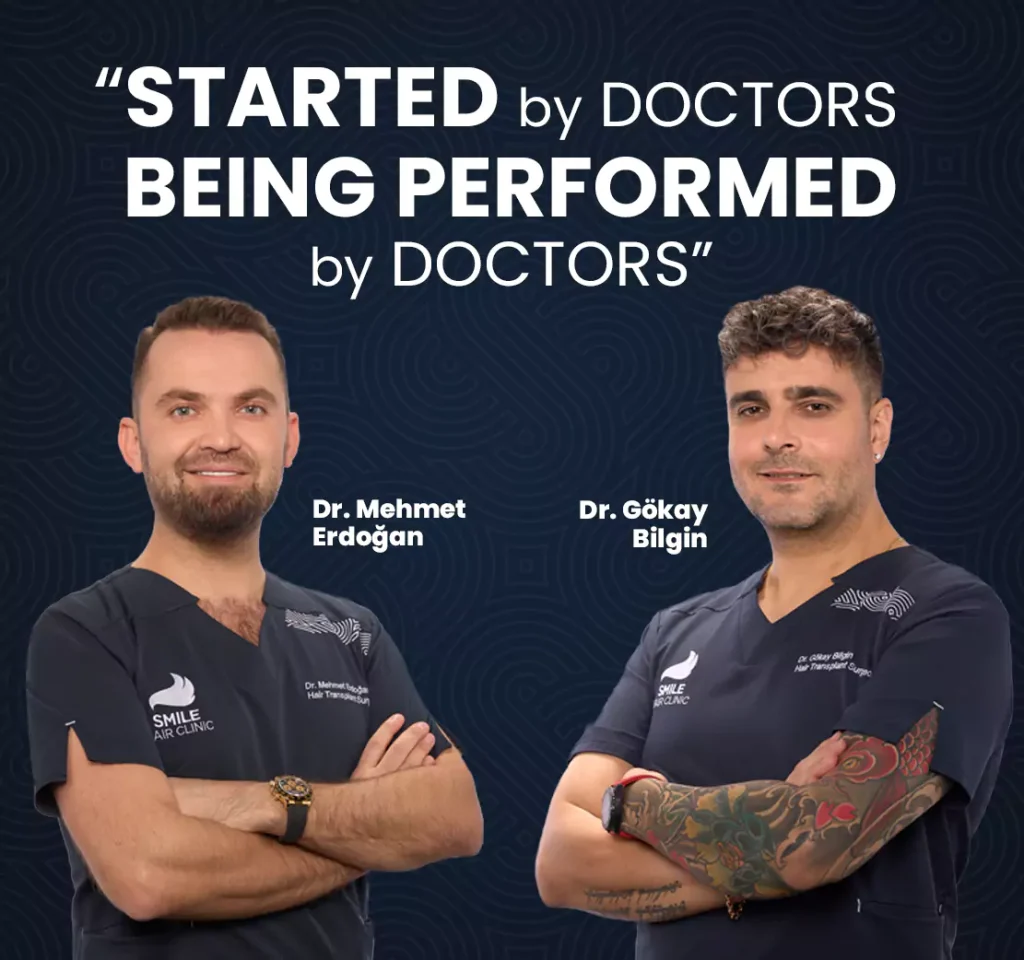
At Smile Hair Clinic, your journey does not end after surgery. It continues with structured follow-up, clear guidance, and a calm, supportive approach built on the True™ Philosophy.
What you get after your procedure
- Ongoing doctor-led follow-up and progress checks
- Clear instructions for washing, shedding phase, and growth timeline
- Personalized guidance for medications or supportive treatments
- Direct access to your medical team whenever you have a concern
Dr. Gökay Bilgin and Dr. Mehmet Erdoğan ensure your design and placement were planned for long-term success. Dr. Firdavs Ahmedov, Dr. Ali Osman Soluk, and Dr. M. Reşat Arpacı support your recovery so your results develop as expected.
A calm and structured recovery experience
Your recovery should feel clear, not confusing.
You receive:
- Step-by-step aftercare guidance
- Regular check-ins at key stages
- Honest answers about what is normal and what is not
- Long-term planning so your result stays natural over time
Your next steps
If you are at hair transplant day 10 or preparing for a procedure:
- Share your current photos for a progress check
- Get personalized advice for the next phase of recovery
- Plan your growth and maintenance strategy
- Move forward with confidence
A well-guided recovery leads to better results.
If you want your healing and final outcome supported by an experienced doctor-led team, request your follow-up consultation with Smile Hair Clinic today.
