

Searches for “Will Arnett hair transplant” usually come from one simple observation. His hair looks consistent over the years. Not dramatically fuller. Not obviously thinner either. That raises the question. Did Will Arnett actually have a hair transplant, or is this just natural aging with good styling?
There is no confirmed evidence that Will Arnett has undergone a hair transplant. No public statement. No verified medical report. No direct confirmation from the actor himself. But that doesn’t stop speculation.
People compare photos. Early roles, mid-career appearances, recent interviews. They look at the hairline. The temples. The density. Then they try to connect the dots. This is where most celebrity hair discussions go wrong. Hair changes are rarely interpreted correctly without context.
Lighting changes perception. Styling changes shape. Even camera angles can make a hairline appear fuller or thinner. Add aging into the mix, and it becomes harder to separate reality from illusion.
So instead of guessing, the better approach is analysis.
In this article, we’ll break down:
- Will Arnett hair loss patterns across different periods
- whether there is any real before and after hair difference
- what typically indicates a celebrity hair transplant
- and whether his hair fits that pattern
The goal is not to confirm something that isn’t publicly confirmed.
It’s to understand what we can actually observe.
“When evaluating hair changes, we look at consistency over time. Real transplants usually show a clear density shift. Gradual, stable patterns often point to natural aging.”
— Dr. Mehmet Erdoğan, Smile Hair Clinic
By the end, you’ll have a clear, evidence-based view.
Will Arnett Hair Loss: What Do We Actually See?
When people search “Will Arnett hair loss”, they’re usually trying to answer one thing. Has his hair changed enough to suggest a transplant?
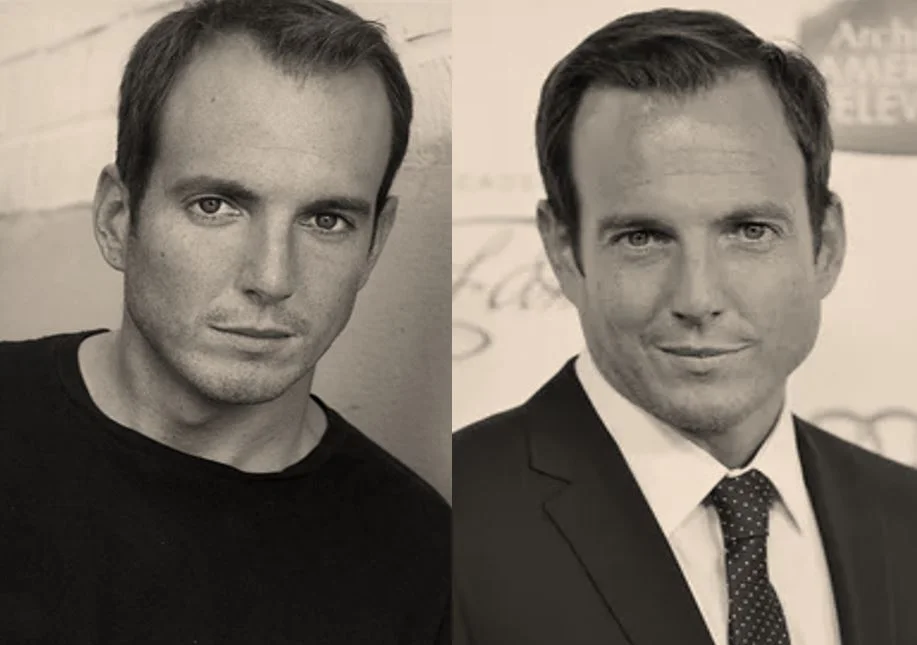
To answer that, you need to look at the pattern over time. Not a single photo. Not one red carpet moment. Consistency tells the story.
Early Career Hairline
In his earlier roles, Will Arnett’s hairline already showed a mature structure.
You could see:
- slight temple recession
- a natural, non-straight frontal line
- good overall density
This is often mistaken for early loss.
In reality, many men move from a juvenile hairline to a mature one without progressing further. That appears to be the case here.
Mid-Career Changes
During the middle phase of his career, the hairline remains quite stable.
You don’t see:
- rapid temple recession
- sudden thinning at the crown
- uneven density across the front
Instead, you see gradual, very mild changes.
This matters when evaluating Will Arnett before and after hair comparisons. There is no sharp transition point. No moment where density suddenly improves or declines.
Recent Appearances
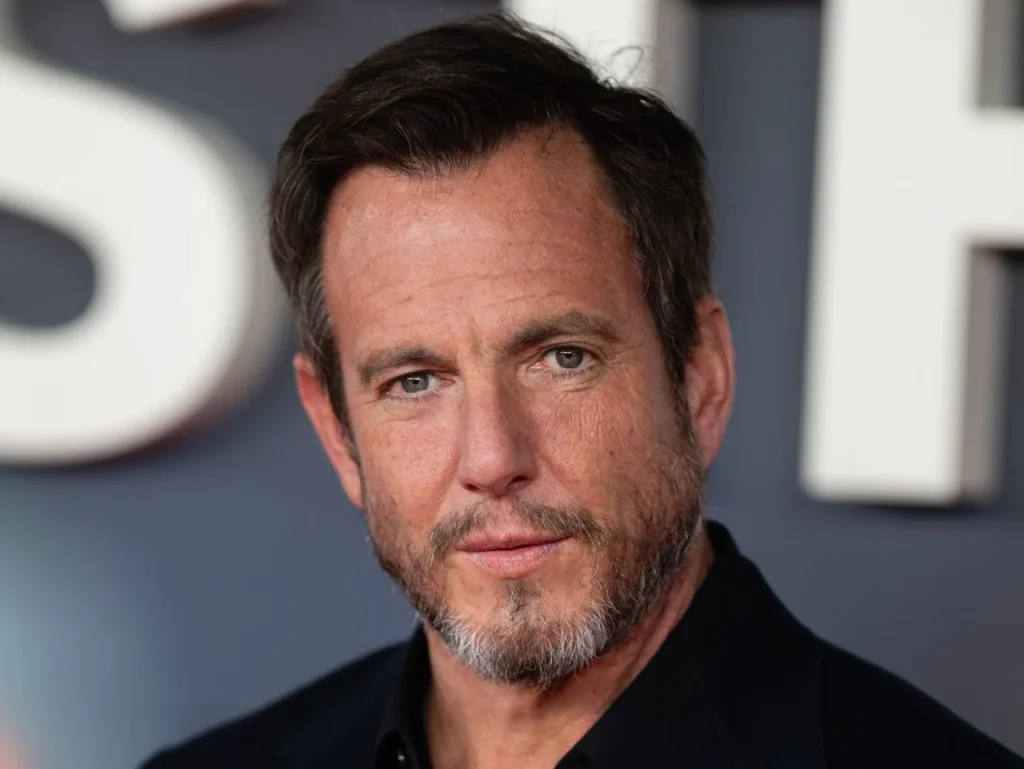
In more recent years, his hairline still follows the same pattern.
- slightly more defined temples
- consistent frontal density
- no aggressive recession
The key detail is stability.
Hair loss that progresses typically shows clear movement over time. In this case, the progression is slow and controlled.
What This Pattern Suggests
From a clinical perspective, this looks like:
- mild, slow receding hairline
- stable density over years
- no signs of sudden restoration
This is not what we usually see in obvious celebrity hair transplant cases.
“When a transplant is done, especially in the frontal area, we often see a clear improvement in density or shape. Stability without a noticeable jump usually points to natural progression.”
— Dr. Gökay Bilgin, Smile Hair Clinic
So based on observable patterns, the hair behaves like natural aging rather than intervention.
Before and After: Has His Hairline Changed?
When people search “Will Arnett before and after hair”, they expect a clear transformation. Something obvious. A moment where the hairline suddenly looks fuller or more defined.
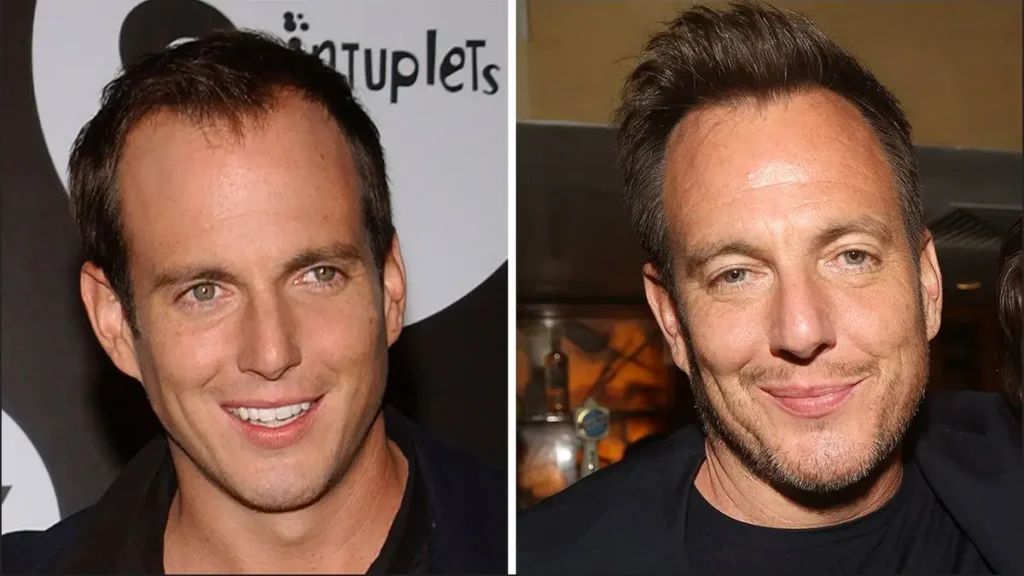
That kind of shift is what usually suggests a celebrity hair transplant.
In this case, the change is much more subtle.
Temple Recession Analysis
Looking at different periods of Will Arnett’s career, the temples show mild recession over time. This is gradual. Not sudden.
The angle of the hairline becomes slightly more pronounced, but it follows a natural aging pattern. There is no visible “filling in” of the temples, which is one of the most common signs of a transplant.
Density Consistency Over Time
Density is one of the clearest indicators.
In transplant cases, you often see:
- a noticeable increase in frontal density
- thicker appearance in previously thinner areas
With Will Arnett hairline observations, density appears consistent across years.
There is no sharp improvement phase. No period where the hair suddenly looks fuller than before.
That consistency is important.
Hairline Shape and Structure
Hair transplants usually create a more defined, sometimes lower hairline.
In contrast, Will Arnett’s hairline remains:
- slightly uneven
- naturally receded at the temples
- age-appropriate in shape
There is no overly sharp or artificially straight line.
What the “Before vs After” Really Shows
Instead of transformation, what we see is continuity.
- early years → mature hairline already present
- mid years → minimal change
- recent years → slightly more defined temples, same density
This answers the core question behind “did Will Arnett get a hair transplant”.
There is no clear “after” moment.
“When we compare before and after images in real transplant cases, the change is usually easy to spot. Subtle, gradual changes like this are more consistent with natural hairline evolution.”
— Dr. Mehmet Erdoğan, Smile Hair Clinic
So visually, the evidence leans toward natural aging.
Did Will Arnett Get a Hair Transplant?
This is the question behind all the searches.
“Did Will Arnett get a hair transplant?”
The most accurate answer is straightforward.
There is no confirmed evidence that he has had a hair transplant.
No interviews. No clinic disclosures. No credible sources linking him to a procedure.
So the discussion shifts from confirmation to observation.
What Would Normally Indicate a Hair Transplant?
In typical celebrity hair transplant cases, a few signs appear clearly.
You often see:
- a noticeable drop in the hairline position
- increased density in the frontal zone
- sharper, more defined hairline edges
- visible change within a relatively short timeframe
These changes are usually easy to spot when comparing before and after hair images.
Especially in the frontal third.
What We See in Will Arnett’s Case
Looking at Will Arnett hair transplant speculation through this lens, the expected signs are not clearly present.
Instead:
- the hairline remains slightly receded at the temples
- density appears stable, not enhanced
- no clear “transition period” is visible
The overall look is consistent across years.
That consistency is key.
What We Don’t See
Equally important is what’s missing.
There is no:
- sudden density jump
- lowered or reshaped frontal hairline
- evidence of graft placement patterns
These are common markers when a transplant has taken place.
A Balanced Conclusion
Based on observable patterns:
- confirmed transplant → no
- strong visual evidence → no
- possibility → low to moderate, but unproven
“Without a clear change in density or hairline design, it’s difficult to attribute the result to a transplant. Natural progression often explains this type of stability.”
— Dr. Firdavs Ahmedov, Smile Hair Clinic
So while the question “Will Arnett hair transplant” is widely searched, the available evidence does not strongly support it.
Could It Be Something Else?
When people look at Will Arnett hair transplant discussions, they often assume there are only two possibilities.
Either he had a transplant. Or he didn’t.
In reality, there are several factors that can make hair look fuller, more stable, or slightly different over time without surgery.
Styling and Grooming Choices
Hair styling plays a bigger role than most people expect.
A slight change in:
- hair length
- direction of styling
- use of volume products
can create the impression of higher density.
For example, keeping the front slightly longer and styled upward can visually reduce the appearance of receding hairline at the temples.
This alone can influence how people interpret Will Arnett hairline changes.
Lighting and Camera Angles
Lighting is often overlooked.
But it changes everything.
- strong overhead lighting → reveals scalp more easily
- softer lighting → increases perceived density
- camera angle → alters hairline shape visually
This is why Will Arnett before and after hair comparisons can be misleading when images come from different settings.
Hair Products and Maintenance
Professional grooming teams use:
- thickening sprays
- matte styling products
- texture-enhancing techniques
These don’t change the number of hairs.
But they do change how dense the hair appears.
This can lead to assumptions about celebrity hair transplant results when no procedure has actually taken place.
Natural Aging and Stability
Not all men experience aggressive hair loss.
Some maintain a relatively stable hairline for years with only mild temple recession.
This appears to be the case when analyzing Will Arnett hair loss patterns.
Why These Factors Matter
Without considering these elements, it’s easy to misinterpret what you’re seeing.
A stable hairline with good styling can look like a “fixed” hairline.
“We always evaluate hair under consistent conditions. Lighting, styling, and grooming can significantly change perceived density without any medical intervention.”
— Dr. Ali Osman Soluk, Smile Hair Clinic
So before assuming surgery, it’s worth looking at the simpler explanations.
If He Had a Transplant, What Technique Would It Be?
Even though there’s no confirmed Will Arnett hair transplant, it helps to understand what a realistic procedure would look like today.
Modern hair restoration has evolved. Especially in celebrity cases, the focus is always on natural, undetectable results.
FUE, Sapphire FUE, and DHI: What Would Be Expected
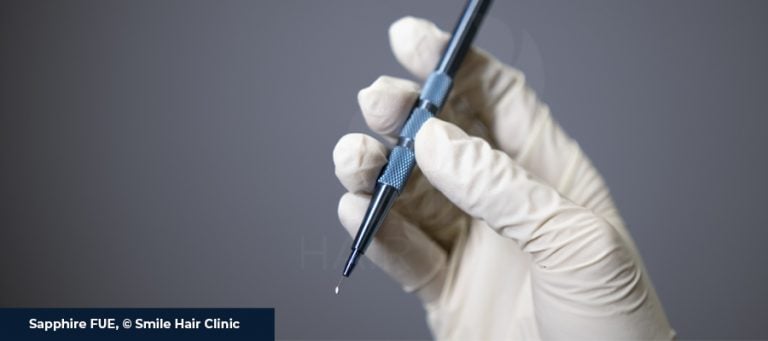
If a public figure like Will Arnett had a procedure, it would most likely involve advanced FUE-based techniques.
These include:
- FUE (Follicular Unit Extraction)
Individual grafts are extracted and implanted into thinning areas. This method leaves no visible linear scar and allows for natural placement. - Sapphire FUE
A refined version of FUE where sapphire blades are used for channel creation. This allows for more precise incisions, better density planning, and improved healing. - DHI (Direct Hair Implantation)
Grafts are implanted directly using a specialized pen. This technique offers strong control over angle, direction, and density, especially in the frontal hairline.
These are the techniques most commonly associated with modern celebrity hair transplant results.
What Natural Results from These Techniques Look Like
With FUE-based methods, the goal is not dramatic change.
It’s subtle refinement.
You would typically see:
- improved density in specific areas
- a more structured but natural hairline
- gradual, consistent growth over months
Even the best procedures still show a pattern when analyzed closely.
What We Would Expect to See
If Will Arnett hair restoration had taken place using these techniques, we would likely notice:
- stronger density at the temples or frontal zone
- slightly refined hairline shape
- a visible transition period in appearance
These changes usually stand out when comparing before and after hair over time.
What We Actually See Instead
Looking at Will Arnett hairline, those indicators are not clearly present.
- temple recession remains mild and visible
- density appears consistent across years
- no clear post-procedure phase can be identified
So if a transplant had been performed, we would expect clearer signals.
Which, in this case, are not strongly visible.
How His Hair Compares to Typical Male Pattern Baldness
To understand Will Arnett hair transplant discussions properly, it helps to compare his hair with a known pattern.
That pattern is male pattern baldness.
Where Does He Sit on the Norwood Scale?
The Norwood scale is commonly used to classify hair loss progression.
Based on visible patterns, Will Arnett hairline appears to fall around:
- Norwood 2
- possibly early Norwood 3 at most
This means:
- mild temple recession
- preserved frontal density
- no significant crown thinning
This stage is very common. And often stable for years.
What Typical Progression Looks Like
In classic male pattern baldness, progression usually follows a predictable path:
- temples recede further
- frontal hairline thins
- crown begins to lose density
- overall coverage decreases
Over time, these changes become noticeable.
Especially when comparing before and after hair over a decade.
What We See Instead
With Will Arnett hair loss, the pattern behaves differently.
- temple recession is mild and controlled
- density remains consistent
- no aggressive progression is visible
The key factor is stability.
Hair loss that progresses usually leaves a clear trail. In this case, the changes are gradual and limited.
Why This Matters for Transplant Speculation
Many assume that stable hair equals intervention.
But in reality, some men maintain a similar Norwood stage for a long time.
That stability does not require a celebrity hair transplant.
It can be natural.
A More Accurate Interpretation
- mild recession → expected with age
- stable density → positive sign
- no rapid progression → likely non-aggressive pattern
“Not every receding hairline progresses to advanced hair loss. Some patients remain in early stages for decades without needing intervention.”
— Dr. Gökay Bilgin, Smile Hair Clinic
So when evaluating Will Arnett hair transplant claims, his Norwood position supports a simpler explanation.
Natural, slow progression.
Celebrity Hair Transplants: What Looks Real vs What Doesn’t
When people search “Will Arnett hair transplant”, they usually compare him to other celebrities who clearly improved their hairlines.
That comparison only works if you know what real transplant results look like.
What Real Celebrity Hair Transplants Look Like
In confirmed or highly visible cases, you typically see:
- a noticeable increase in frontal density
- a more defined, sometimes lower hairline
- improved temple filling
- a clear “before and after” phase within 6–12 months
Even when done well, there is a transition period.
Hair looks thinner at first, then gradually thickens. The improvement becomes visible over time.
That timeline is hard to miss when reviewing celebrity hair transplant cases.
What Artificial or Overdone Results Look Like
Not all transplants are subtle.
In some cases, you may notice:
- overly straight or sharp hairlines
- unnatural density compared to age
- poor blending with existing hair
These results stand out quickly, especially under bright lighting.
Where Will Arnett Fits
When analyzing Will Arnett hairline, neither pattern clearly applies.
You don’t see:
- a strong density increase
- a reshaped or lowered hairline
- a visible transition period
And you also don’t see:
- artificial sharpness
- unnatural thickness
Instead, you see something in between.
A consistent, age-appropriate hairline with mild recession.
Why This Comparison Matters
Without understanding real transplant patterns, it’s easy to assume any stable or well-maintained hair is the result of surgery.
But stability alone is not a reliable indicator.
Clinical Perspective
“In celebrity cases, the key indicator is change, not stability. We look for a shift in density or design. Without that, natural progression is the more likely explanation.”
— Dr. Mehmet Erdoğan, Smile Hair Clinic
So when comparing Will Arnett before and after hair, the absence of clear transformation is actually the most important detail.
Final Verdict: Natural Hair or Transplant?
After looking at the full picture, the answer to “Will Arnett hair transplant” becomes much clearer.
There is no confirmed evidence that he has undergone a hair transplant. And more importantly, the visual pattern does not strongly suggest one.
What the Hair Actually Shows
Across different periods of his career, a few things remain consistent:
- mild temple recession
- stable frontal density
- no sudden improvement phase
- no reshaped or lowered hairline
When people search “Will Arnett before and after hair”, they expect a visible transformation. That transformation is not clearly present.
Instead, the changes are gradual. Subtle. Age-appropriate.
What This Means in Practical Terms
From a clinical perspective:
- confirmed transplant → no
- strong visual evidence → no
- possibility → low, but not completely impossible
That last part matters.
Without confirmation, it’s always possible that minor, conservative work was done. But based on observable signs alone, there is no clear indication.
Why the Confusion Happens
Stable hair over time often gets interpreted as “fixed” hair.
In reality, some individuals simply experience:
- slow progression
- mild recession
- long-term stability
This aligns more closely with Will Arnett hair loss patterns.
A Clear Way to Frame It
- natural aging → consistent with what we see
- celebrity hair transplant → no strong indicators
- visual evidence → leans toward non-surgical explanation
“When we don’t see a clear shift in density or hairline structure, we lean toward natural progression rather than intervention.”
— Dr. Firdavs Ahmedov, Smile Hair Clinic
Frequently Asked Questions
Did Will Arnett get a hair transplant?
There is no confirmed evidence that Will Arnett hair transplant is real. He has not publicly stated undergoing a procedure, and there are no reliable sources confirming it. Based on visual analysis, his hair shows stability rather than the clear transformation typically seen after a transplant.
Why does Will Arnett’s hair look so consistent over the years?
Consistency often comes from a combination of factors. In the case of Will Arnett hairline, the pattern suggests mild, slow recession with stable density. Good styling, professional grooming, and favorable lighting can also make hair appear fuller without surgical intervention.
Is Will Arnett experiencing hair loss?
Yes, but at a mild and natural level. Will Arnett hair loss appears to follow a typical aging pattern, with slight temple recession and no aggressive thinning. This aligns with early-stage male pattern hair loss rather than advanced progression.
What Norwood stage is Will Arnett?
Based on visible patterns, he appears to be around Norwood 2, possibly early Norwood 3. This means a mature hairline with some recession at the temples but overall good coverage and density.
Could Will Arnett have had a subtle or minor procedure?
It’s possible, but not strongly supported by visible evidence. A very conservative procedure can sometimes be difficult to detect, but most transplants still leave some trace in density or hairline design. In this case, those indicators are minimal.
Why do people think Will Arnett had a hair transplant?
The assumption usually comes from his stable appearance over time. Many people associate long-term hair consistency with intervention. In reality, some individuals maintain a similar hairline for years without needing a transplant.
Curious About Your Own Hairline? Get a Clear, Professional Assessment
If you’re looking at Will Arnett hairline and wondering how your own compares, the best step is not guesswork. Hair loss follows patterns. Once you understand your pattern, your options become much clearer.
At Smile Hair Clinic, specialists evaluate:
- your hairline position and density
- early signs of recession or thinning
- long-term progression risk
You get a realistic assessment. And a plan that fits your stage.
Reach out to the Smile Hair Clinic team for a personalized consultation and take control of your hair journey with clarity.
