

Search interest around where did Chris Brown get his hair transplant has grown steadily in recent years. Fans comparing older photos with newer appearances often notice a fuller Chris Brown hairline, which naturally raises questions about possible hair restoration.
Chris Brown has never publicly confirmed having a Chris Brown hair transplant. No clinic or surgeon has claimed performing the procedure either. Still, discussions about Chris Brown hair before after photos continue across celebrity forums and hair restoration blogs.
The reason is simple. Hairlines frame the face strongly. Even small changes in the frontal area can dramatically alter how a person looks on camera.
In earlier photos from the late 2000s and early 2010s, observers sometimes point to mild temple recession. Later images, especially from recent performances and interviews, appear to show stronger density and more defined framing around the forehead.
These visual differences triggered speculation about hair transplant before and after results.
However, several factors can influence how hair appears in photographs:
Hairstyling techniques that add volume
Professional grooming for performances and events
Lighting conditions during concerts or interviews
Camera angles that reduce scalp visibility
These factors often create the illusion of thicker hair without surgical treatment.
Modern hair transplant procedures such as FUE hair transplant, Sapphire FUE, and DHI hair transplant are commonly used by public figures who want natural-looking improvements. These techniques allow surgeons to restore density or refine hairlines without dramatic changes.
Celebrities typically prefer subtle adjustments that maintain a natural appearance under strong lighting and high-definition cameras.
Dr. Mehmet Erdoğan explains: “Even small improvements in the frontal hairline can significantly change how dense hair appears.”
In the next section, we’ll answer the main question directly: did Chris Brown actually get a hair transplant, and is there any evidence showing where he might have had the procedure?
Quick answer — Where did Chris Brown get his hair transplant?
People searching where did Chris Brown get his hair transplant usually expect a clear answer. The honest answer is simple. There is no confirmed information about where Chris Brown had a hair transplant, or whether he had one at all.
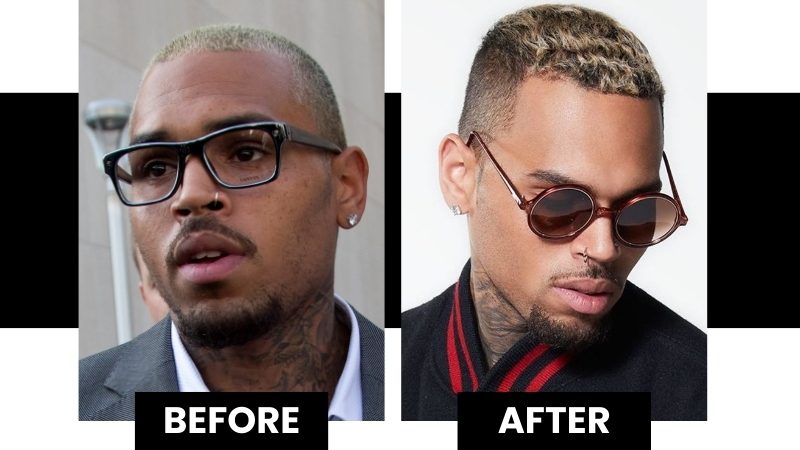
Chris Brown has never publicly confirmed a Chris Brown hair transplant procedure. No clinic has officially claimed performing surgery for him. Most information online comes from speculation based on Chris Brown hair before after photo comparisons.
That speculation started when fans noticed subtle changes in the singer’s hairline over time.
Why rumors about a Chris Brown hair transplant started
Observers comparing older photos with more recent appearances often notice a fuller Chris Brown hairline.
Fans frequently point out:
Stronger density across the frontal scalp
Less visible temple recession in some appearances
A more defined hairline frame in later photos
These changes sometimes resemble hair transplant before and after results.
However, visual differences alone cannot confirm surgery.
Why celebrity transplant locations remain private
Even when celebrities undergo hair restoration, the clinic location is rarely disclosed publicly.
There are several reasons for this.
Public figures often choose privacy to avoid media attention. Clinics also follow strict patient confidentiality rules.
Because of that, many celebrity hair transplant cases remain unconfirmed.
Countries celebrities often choose for hair restoration
Although Chris Brown has never revealed a clinic, many celebrities travel internationally for hair restoration.
Popular destinations include:
United States
United Kingdom
Turkey
Countries like Turkey became known for advanced techniques such as FUE hair transplant, Sapphire FUE, and DHI hair transplant performed by experienced surgeons.
What we can realistically conclude
Based on current evidence:
Chris Brown has not confirmed a transplant
No verified clinic location exists
Changes in hairstyle and grooming may explain the differences
Dr. Gökay Bilgin explains: “Without direct confirmation or medical documentation, photos alone cannot prove a hair transplant.”
In the next section, we’ll examine Chris Brown hair before and after timeline, analyzing how his hairline appeared throughout different phases of his career.
Chris Brown hair before and after (timeline analysis)
Interest in Chris Brown hair transplant rumors largely comes from visible differences in his hairline across different stages of his career. When fans compare older photos with more recent appearances, they often notice small changes in density and temple shape.
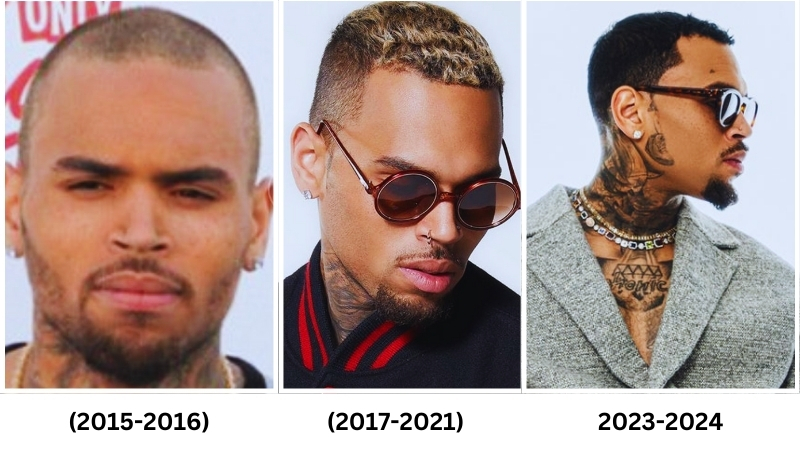
A timeline analysis helps explain why Chris Brown hair before after comparisons generate so much discussion.
Early career: strong youthful hairline
During the early years of Chris Brown’s music career, his hairline appeared dense and well defined.
Photos from that period typically show:
A naturally straight Chris Brown hairline
Strong frontal density
Minimal temple recession
At this stage, his hair pattern appears consistent with Norwood 1 hairline, which represents little to no visible hair loss.
Mid-career: mild temple recession
As Chris Brown moved through his twenties, some photos suggested subtle changes in the temple area.
Observers sometimes noticed:
Slight widening of the temple corners
Mild thinning near the frontal hairline
Slight variations depending on hairstyle
These changes are common in men experiencing early male pattern baldness.
At this stage, the hair pattern could resemble Norwood 2 hair loss, which is considered a very early stage of recession.
Recent appearances: stronger frontal density
In more recent public appearances, Chris Brown’s hair often appears fuller depending on styling and lighting.
Fans occasionally point out:
A sharper Chris Brown hairline frame
Better density across the frontal scalp
Less visible temple recession in certain photos
These differences are what triggered speculation about a possible hair transplant before and after transformation.
Why hairlines look different on camera
Hairline perception can change significantly due to external factors.
Several elements influence how hair appears:
Stage lighting during concerts or interviews
Hairstyling techniques that add volume
Hair products that increase texture
Camera angles reducing scalp visibility
These factors can easily make hair appear thicker or fuller.
Dr. Firdavs Ahmedov explains: “Small variations in hair density can look dramatic under strong lighting and high-definition cameras.”
In the next section, we’ll analyze whether Chris Brown’s hairline shows typical signs of a hair transplant, and what specialists look for when evaluating celebrity hair restoration cases.
Does Chris Brown show signs of a hair transplant?
Many readers researching where did Chris Brown get his hair transplant are actually trying to answer a different question first. Do Chris Brown’s photos show real signs of surgical hair restoration?
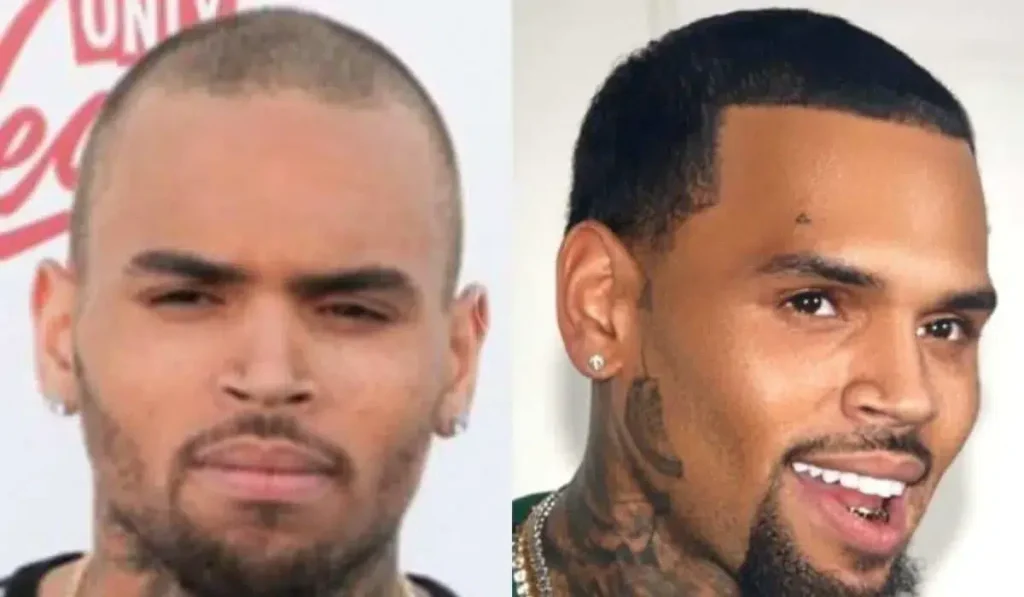
Hair transplant specialists usually evaluate several visual patterns before suggesting that a Chris Brown hair transplant may have occurred. These patterns often appear in well-documented hair transplant before and after transformations.
When we look at Chris Brown’s public photos over the years, the signals appear mixed.
Hairline height and structure
The first element doctors analyze is hairline height. Surgical restoration often lowers the hairline slightly or strengthens the temple corners.
In Chris Brown’s case, the Chris Brown hairline appears fairly stable across most photos. The height of the frontal hairline looks consistent with earlier images, which suggests there has not been a dramatic surgical lowering.
Natural hairlines usually remain in a similar position even as density changes.
Density distribution in the frontal zone
Doctors also look at density patterns along the hairline edge.
After procedures like FUE hair transplant, Sapphire FUE, or DHI hair transplant, certain patterns can appear:
Increased density directly along the frontal edge
Uniform graft placement across the hairline
Gradual density transitions behind the hairline
In Chris Brown’s case, density appears to vary depending on hairstyle and lighting rather than showing consistent surgical patterns.
Temple reconstruction patterns
Temple corners are another indicator. In many celebrity hair transplant cases, temples are partially rebuilt to frame the face more clearly.
Chris Brown’s temples generally show:
Natural curvature rather than sharp reconstruction
Slight variations depending on hairstyle
Consistency across different periods
These characteristics often suggest natural hair rather than surgical rebuilding.
External factors affecting appearance
Several factors can create the illusion of thicker hair.
These include:
Volume-focused haircuts
Hair fibers or styling powders
Studio lighting reducing scalp shadows
Camera angles during performances
These effects are especially common for musicians and performers.
Dr. Ali Osman Soluk explains: “Photos alone rarely provide enough evidence to confirm a transplant.”
What hair transplant technique would celebrities like Chris Brown use?
Even though there is no confirmed answer to where did Chris Brown get his hair transplant, it is still useful to understand which procedures celebrities typically choose. Modern hair restoration focuses on techniques that create natural hairlines with minimal visible signs of surgery.
Public figures often prefer subtle improvements that look natural under strong lighting and high-definition cameras. Procedures such as FUE hair transplant, Sapphire FUE, and DHI hair transplant are commonly used for that purpose.
FUE hair transplant for graft extraction
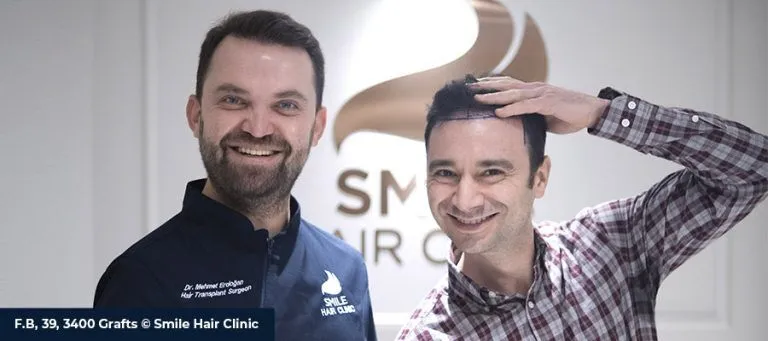
Most modern procedures begin with FUE hair transplant.
In this method, surgeons extract individual follicular units from the donor area at the back of the scalp. Each graft contains one to four hair follicles and is removed separately rather than using a strip of scalp.
This technique allows doctors to:
Avoid visible linear scars
Extract grafts precisely from dense donor zones
Maintain a natural appearance even with short hairstyles
Because of these advantages, FUE became one of the most common approaches for celebrity hair transplant procedures.
Sapphire FUE for precise channel creation
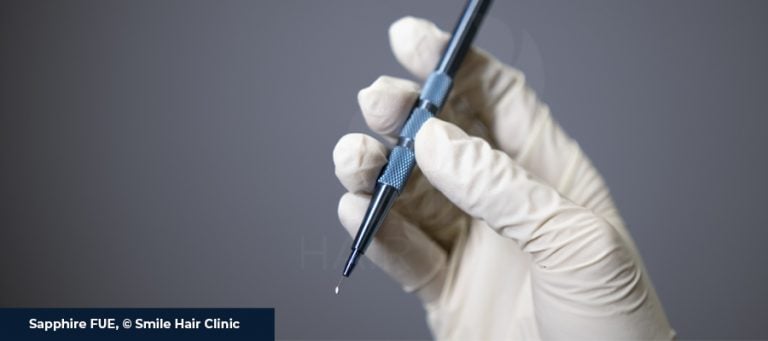
Many clinics combine FUE extraction with Sapphire FUE implantation.
Instead of traditional steel blades, surgeons use sapphire blades to create implantation channels in the scalp.
This technique can help:
Improve control of graft direction
Create more natural hair transplant hairline patterns
Reduce tissue trauma during implantation
Sapphire blades are often used when restoring temple corners or refining the frontal hairline.
DHI hair transplant for hairline detailing
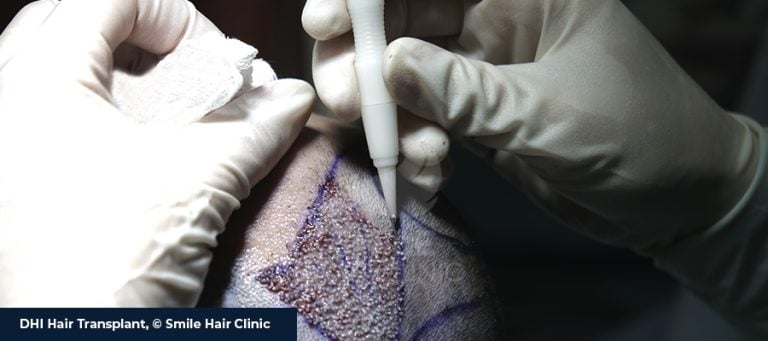
Another technique used in modern hair restoration is DHI hair transplant.
DHI involves implanting grafts directly into the scalp using a specialized implanter pen. This allows doctors to control the angle, depth, and direction of each graft.
DHI is often preferred for:
Detailed hairline design
Increasing density in the frontal zone
Creating natural growth patterns
Why celebrities prefer conservative hairlines
Celebrities rarely choose aggressive hairline lowering. Subtle refinement usually produces the most believable result.
Small changes in the frontal area can:
Improve facial framing
Increase perceived density
Maintain a natural appearance over time
Dr. M. Reşat Arpacı explains: “The most successful celebrity hair restorations are often the least noticeable.”
How many grafts would Chris Brown likely need?
Many people searching where did Chris Brown get his hair transplant also wonder how many grafts would be required to create a hairline similar to his. Hair transplant planning depends on several variables, including the level of recession, donor density, and the desired hairline design.
Based on public Chris Brown hair before after comparisons, his hairline appears to show mild temple recession rather than advanced hair loss. In medical terms, this pattern usually falls within the early stages of male pattern hair loss.
Estimating the Norwood stage
Hair loss specialists commonly classify recession using the Norwood scale.
Chris Brown’s visible hair pattern often resembles:
Mild temple recession near the frontal corners
Strong density across the mid-scalp
No clear crown thinning in most photos
This pattern is generally associated with Norwood 2 hair loss, sometimes progressing toward Norwood 3 depending on the image and hairstyle.
Typical graft numbers for hairline refinement
Patients with similar hairline patterns usually require moderate graft numbers rather than large sessions.
Typical ranges include:
1,500–2,000 grafts for temple softening
Up to 2,500 grafts when strengthening the frontal hairline
These grafts are concentrated mainly along the frontal third of the scalp.
Why graft placement matters more than graft count
In hair transplant before and after results, the frontal zone plays the largest role in visual change.
Strategic graft placement helps surgeons:
Strengthen the facial frame created by the hairline
Improve density near temple corners
Create gradual density transitions behind the hairline
Even a few thousand grafts can create a noticeable improvement.
Donor area considerations
Every transplant relies on healthy donor hair from the back of the scalp.
Doctors evaluate:
Donor density and follicle quality
Hair thickness and curl pattern
Long-term hair loss progression
These factors determine how many grafts can be safely harvested.
Long-term planning
Modern hair transplant procedures prioritize natural aging.
Hairlines are designed to:
Follow natural facial proportions
Maintain realistic density patterns
Preserve donor grafts for future needs
Dr. Gökay Bilgin explains: “Successful hair restoration focuses on long-term planning rather than aggressive graft use.”
Why celebrities often choose hair transplants
When people search where did Chris Brown get his hair transplant, the curiosity often comes from something larger. Celebrity image plays a major role in public perception. Hairlines affect how faces appear on stage, on camera, and in high-resolution media.
For musicians and performers like Chris Brown, appearance becomes part of the brand. Even small changes in the Chris Brown hairline can become noticeable when fans compare photos across different years.
This is why many public figures explore hair transplant procedures.
Camera exposure amplifies hair loss
High-definition cameras reveal details that are difficult to notice in everyday life. Small areas of thinning hair can appear more pronounced under bright lighting.
Factors that exaggerate hair loss on camera include:
Strong stage lighting during concerts
High-resolution photography
Close-up camera angles during interviews
Sweat or moisture flattening the hair
Under these conditions, mild recession can look more dramatic than it actually is.
Hairlines strongly affect facial balance
The frontal hairline frames the face. A small shift in density or temple shape can change how a person’s facial proportions appear.
This explains why celebrity hair transplant before and after transformations often focus on the frontal third of the scalp.
Hairline refinement can:
Improve facial symmetry
Create a stronger visual frame
Increase perceived hair density
Even moderate changes can significantly improve appearance.
Discretion matters for public figures
Celebrities rarely discuss cosmetic procedures publicly. Privacy is common in the entertainment industry.
For that reason, many celebrity hair transplant cases remain unconfirmed. Clinics are also required to protect patient confidentiality.
As a result, rumors about Chris Brown hair transplant location or surgeon often remain speculation.
Subtle results are the goal
Public figures typically prefer natural-looking hairlines. Dramatic hairline lowering often looks unnatural under strong lighting.
Modern techniques such as FUE hair transplant, Sapphire FUE, and DHI hair transplant allow surgeons to make small improvements that appear natural.
Dr. Mehmet Erdoğan explains: “The best celebrity hair restorations are subtle enough that most people never notice them.”
Why Chris Brown’s hairline looks natural
Much of the discussion around where did Chris Brown get his hair transplant comes from how balanced his hairline appears in recent photos. Whether or not a Chris Brown hair transplant actually happened, his hairline shows several characteristics that doctors associate with natural hair growth.
These same principles guide modern hair transplant design.
Natural irregularity along the hairline edge
Natural hairlines rarely form perfectly straight lines. Instead, they show small irregularities that soften the frontal edge.
In many photos, the Chris Brown hairline displays:
Slight variations in the hairline contour
Small changes in follicle direction
Gradual density transitions near the temples
These irregular details are typical in natural hairlines and are often intentionally recreated during FUE hair transplant or DHI hair transplant procedures.
Density gradient in the frontal zone
Healthy hairlines follow a density gradient rather than a uniform wall of hair.
Typical patterns include:
Slightly lighter density directly at the hairline
Gradually increasing density behind the frontal edge
Strong density across the mid-scalp
Modern techniques such as Sapphire FUE and DHI hair transplant aim to reproduce this gradual density transition.
Balanced temple structure
Temple design plays an important role in facial framing.
Chris Brown’s temples generally appear:
Naturally curved rather than sharply rebuilt
Balanced with the width of the forehead
Consistent across many public appearances
These characteristics often indicate natural hair growth rather than aggressive surgical reconstruction.
Hairstyling effects on perceived density
Professional styling can dramatically influence how hair appears.
Hair may look thicker due to:
Volume-enhancing haircuts
Blow-drying techniques that lift the roots
Styling products that increase texture
For performers like Chris Brown, stylists frequently use these techniques during concerts, music videos, and interviews.
Long-term hairline stability
Natural hairlines tend to remain stable in height even if density fluctuates. In Chris Brown’s case, the frontal hairline position appears relatively consistent across multiple years.
Dr. Ali Osman Soluk explains: “Natural hairlines contain irregular patterns that make them appear authentic under close inspection.”
Could you achieve a similar result?
Many readers interested in Chris Brown hair transplant discussions wonder if similar hairline improvements are possible.
Patients with mild temple recession or early male pattern baldness often achieve excellent results with modern hair restoration.
Candidate criteria
Typical candidates often have:
Mild or moderate temple recession
Strong donor hair density
Stable hair loss progression
These conditions allow surgeons to design natural hairline improvements.
Techniques used for natural hairline restoration
Modern clinics commonly combine:
FUE hair transplant for graft extraction
Sapphire FUE for precise channel creation
DHI hair transplant for detailed hairline placement
These techniques allow doctors to replicate natural hair growth patterns.
Hair growth timeline
Hair restoration results develop gradually.
Typical stages include:
Procedure day lasting several hours
Return to normal daily activity within days
New hair growth starting around month three
Visible density developing between months six and nine
Final results appearing around twelve months
Personalized planning
Every treatment plan is customized.
Doctors evaluate:
Donor density
Hairline design
Future hair loss progression
Dr. Firdavs Ahmedov explains: “The goal is a hairline that looks natural today and ages naturally over time.”
Frequently asked questions about Chris Brown hair transplant
Did Chris Brown get a hair transplant?
Chris Brown has never publicly confirmed undergoing a Chris Brown hair transplant. Most discussions online come from comparisons of Chris Brown hair before after photos and speculation about changes in his hairline over time.
Where did Chris Brown get his hair transplant?
There is no confirmed information about where did Chris Brown get his hair transplant. No clinic or surgeon has publicly claimed performing a procedure for him. Celebrity medical procedures are usually private, and clinics are required to protect patient confidentiality.
Why do people think Chris Brown had a hair transplant?
Fans sometimes notice differences in the Chris Brown hairline across different years. In some recent photos, his hair appears fuller and more defined along the frontal hairline. These visual differences can resemble hair transplant before and after results, although they may also come from hairstyling, lighting, or camera angles.
Does Chris Brown show signs of hair loss?
Earlier photos suggest mild temple recession, which is common among men in their twenties and thirties. This pattern often corresponds to Norwood 2 hair loss, an early stage of male pattern baldness that does not always require surgical treatment.
If Chris Brown had a hair transplant, which technique would likely be used?
Modern celebrity hair restoration procedures typically involve FUE hair transplant, Sapphire FUE, or DHI hair transplant techniques. These methods allow surgeons to restore hairlines with natural density while avoiding visible scars.
How many grafts would be required for a hairline like Chris Brown’s?
For patients with mild temple recession similar to Chris Brown’s hairline pattern, surgeons often use between 1500 and 2500 grafts. The exact number depends on donor hair density, hair thickness, and the desired hairline design.
How long does it take to see hair transplant results?
Hair transplant results develop gradually. Transplanted hair usually sheds within the first few weeks, new growth begins around month three, visible density appears between months six and nine, and final results are typically seen after about twelve months.
Can someone achieve a hairline similar to Chris Brown’s?
Yes. Patients with mild temple recession and strong donor hair density can often achieve similar natural-looking hairline improvements with modern hair restoration techniques. A professional consultation helps determine the most appropriate treatment plan.
Start your personalized hair restoration plan
If you are researching where did Chris Brown get his hair transplant because you are considering hair restoration yourself, a professional consultation is the best first step.
At Smile Hair Clinic, specialists design personalized treatment plans using advanced techniques such as FUE, Sapphire FUE, and DHI hair transplant.
Your consultation includes:
Personalized graft estimation
Natural hairline design tailored to your face
Recovery planning and timeline guidance
Transparent treatment planning
Contact Smile Hair Clinic today and take the first step toward achieving a natural, balanced hairline designed specifically for you.
