

Table of Contents
Finasteride and minoxidil are the two most widely used treatments for androgenetic alopecia, and both carry real, well-documented side effects that deserve a straight answer rather than a reassuring gloss-over or a scare piece. The two drugs work in completely different ways, which is exactly why their risk profiles look so different from one another. This page walks through what’s actually documented for each, based on regulatory sources and clinical data rather than anecdote, so you can have an informed conversation with a doctor before starting either one.
How the Two Drugs Work, and Why Their Risks Differ?
Finasteride is an oral medication that blocks the enzyme 5-alpha-reductase, which normally converts testosterone into dihydrotestosterone (DHT), the hormone responsible for the follicle miniaturisation behind male pattern baldness. Because finasteride works by altering a hormone pathway that affects the entire body, not just the scalp, its side effects tend to be systemic and hormonal.
Minoxidil, by contrast, is a topical vasodilator applied directly to the scalp, originally developed as a blood pressure medication before its hair growth effect was discovered. Applied topically, its effects are mostly local to the scalp, which is why its side effect profile leans toward skin irritation rather than the hormonal effects seen with finasteride. Oral minoxidil, sometimes prescribed off-label at low doses for hair loss, behaves differently again, since it works throughout the body rather than staying confined to the scalp.
Finasteride Side Effects
Common Side Effects
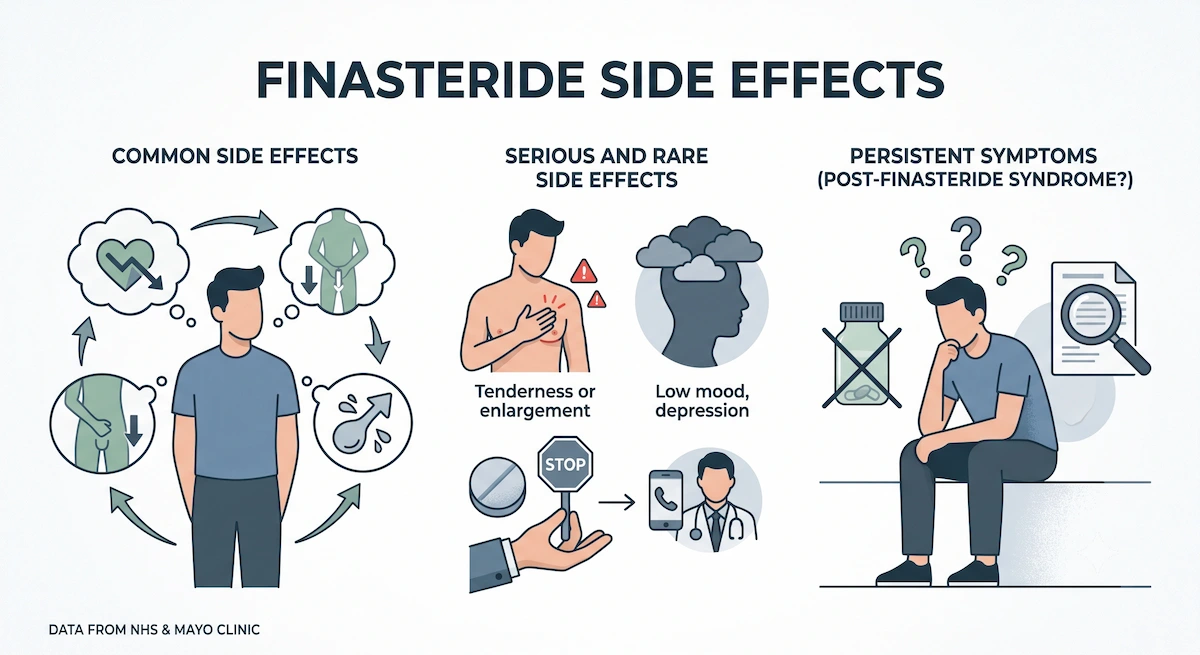
According to the NHS, the most frequently reported side effects of finasteride, affecting more than 1 in 100 people, are sexual: reduced interest in sex, difficulty getting or keeping an erection, and reduced semen volume during ejaculation. These effects usually improve over time, though the NHS notes they can sometimes persist even after stopping the medication.
Serious and Rare Side Effects
Serious side effects are less common, affecting fewer than 1 in 1,000 people according to NHS data, but they’re worth knowing in detail rather than glossing over. These include breast changes such as tenderness, enlargement, lumps, or nipple discharge, which the NHS flags as warranting immediate medical attention since they can occasionally signal a more serious underlying condition. Low mood and depression have also been reported, and the NHS is specific on this point: if you’re taking finasteride for hair loss and develop depression, you should stop the medication straight away and contact your doctor.
Mayo Clinic’s prescribing information adds several other considerations. Finasteride does not prevent prostate cancer and may increase the risk of a high-grade form of it, which is why anyone with concerns about prostate cancer risk should raise it directly with their doctor before starting. The drug can also interfere with PSA test results used to screen for prostate cancer, so any doctor ordering that test needs to know you’re taking finasteride. Some men using the medication have become infertile, and testicular pain has been reported as well, though its frequency isn’t well established. On a more reassuring note, Mayo Clinic’s data confirms that finasteride’s effect on hair is not permanent in either direction: any hair regrowth gained will be lost again within about a year of stopping the medication, and there’s at least three months of consistent use required before an effect on hair becomes noticeable in the first place.
Persistent Symptoms After Stopping
A subset of men report that certain side effects, particularly sexual and mood-related ones, continue even after they stop taking finasteride. This pattern is sometimes referred to as post-finasteride syndrome. It remains a genuinely debated and actively studied area in the medical literature, without full consensus yet on how common it is or exactly what causes it, and any man considering finasteride deserves to know this uncertainty exists rather than being told the risk ends the moment the pill bottle is empty.
Please Select Your Gender
The FDA Warning on Compounded Topical Finasteride
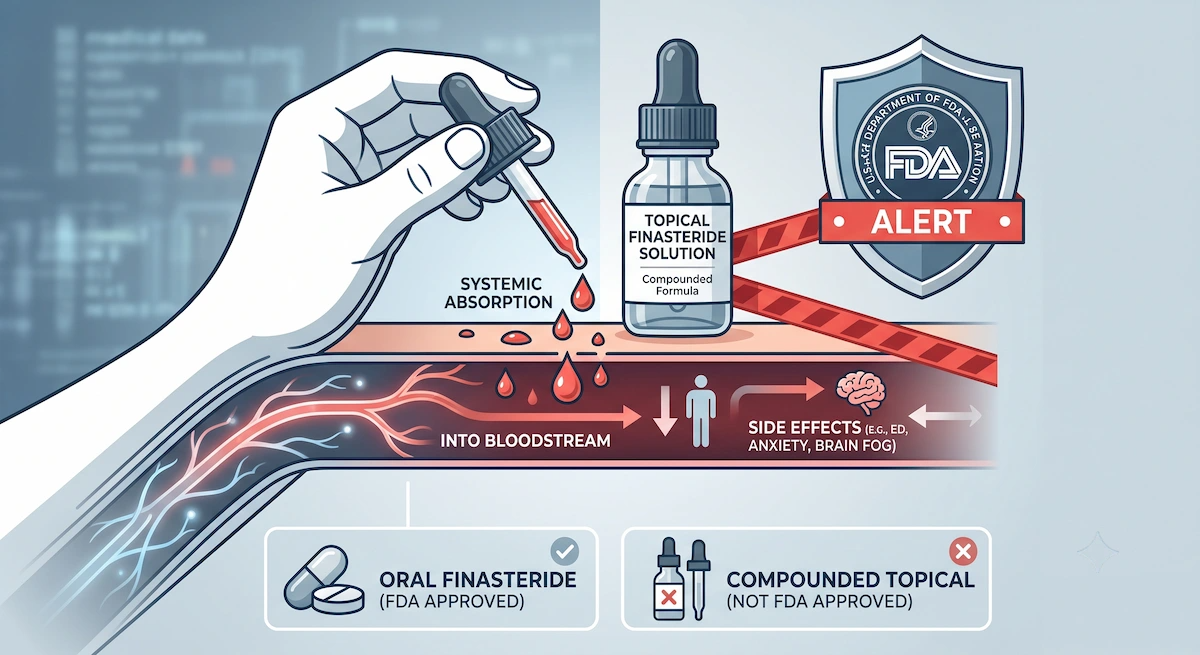
This is worth its own section because it’s recent, specific, and frequently misunderstood. In April 2025, the FDA issued a public alert after reviewing 32 adverse event reports submitted between 2019 and 2024 involving compounded topical finasteride products, the kind sold by telehealth platforms, sometimes combined with topical minoxidil in a single product. The reported effects, including erectile dysfunction, anxiety, suicidal ideation, brain fog, depression, fatigue, insomnia, decreased libido, and testicular pain, closely mirrored those already documented for oral finasteride, and in most of these reports, symptoms continued even after the person stopped using the product.
The core issue the FDA identified isn’t the existence of side effects, which were already known for the oral form. It’s that finasteride absorbs through the skin into the bloodstream just as it does when swallowed, and some consumers reported being told by prescribers that a topical product carried no systemic risk because it wasn’t taken orally. That reassurance isn’t supported by the evidence. There is currently no FDA-approved topical finasteride product on the market; only the oral tablets, Propecia and Proscar, have gone through that approval process. Compounded topical versions haven’t been evaluated by the FDA for safety, effectiveness, or quality before being sold.
Minoxidil Side Effects
Topical Minoxidil
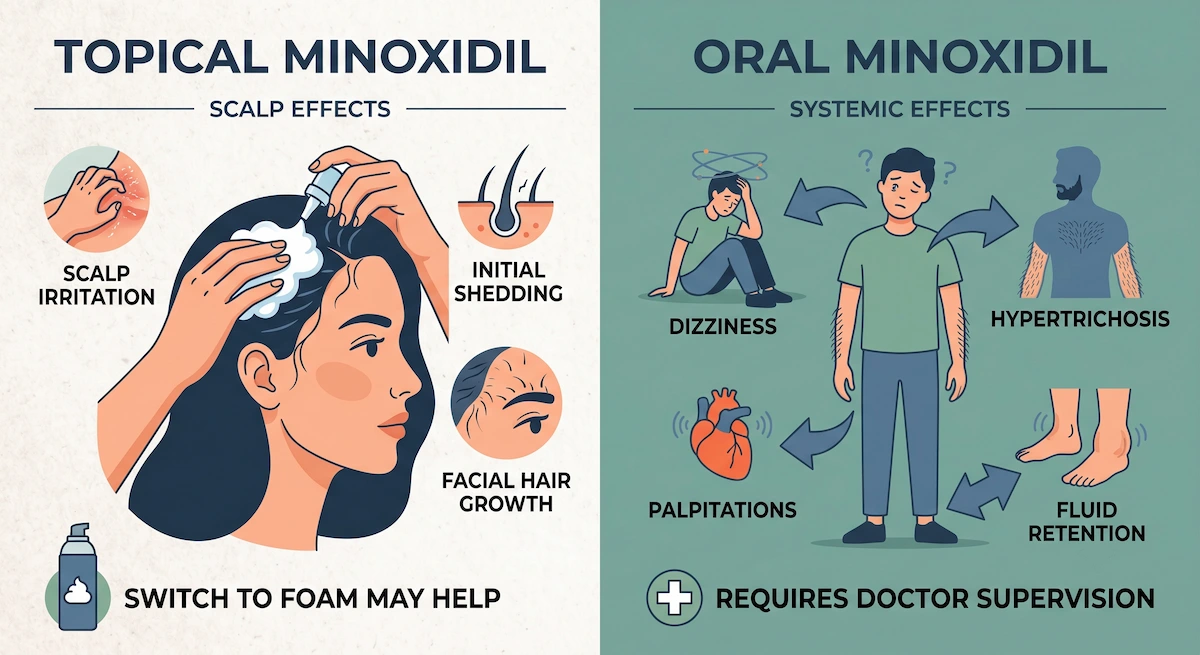
The most common issue with topical minoxidil is local scalp irritation, including dryness, itching, redness, or contact dermatitis, particularly with alcohol-based liquid formulations. Switching to a foam-based product at the same strength often reduces this without needing to change the dose. A temporary increase in shedding is common during the first few weeks of use as the hair cycle resets, and this typically resolves within a month or two rather than signalling that the treatment has failed. If minoxidil solution spreads beyond the intended area, unwanted hair growth can appear on the forehead or face, particularly in women, which is why careful, contained application matters. For a closer look at how these risks stack up over months and years of use, our detailed breakdown of minoxidil’s long-term safety profile covers this in more depth.
Oral Minoxidil
Oral minoxidil, prescribed off-label in low doses for hair loss, carries a different risk profile since it acts throughout the body rather than staying local to the scalp. Reported effects include lightheadedness or dizziness from its blood-pressure-lowering action, unwanted hair growth on other parts of the body (hypertrichosis), and, less commonly, fluid retention or heart palpitations that warrant prompt medical attention if they occur.
When to Stop and Seek Medical Attention
Most side effects from either medication resolve after stopping treatment, but certain symptoms should prompt immediate contact with a healthcare provider rather than a wait-and-see approach: persistent low mood or depression, any lumps, pain, swelling, or discharge around the chest area, chest pain or irregular heartbeat, or any signs of a serious allergic reaction such as facial swelling or difficulty breathing. If you experience thoughts of self-harm while taking finasteride, this needs urgent medical attention right away.
“What I want patients to understand before starting either medication isn’t a worst-case scenario, it’s an honest one, most men tolerate finasteride and minoxidil well, and for a lot of patients the benefit clearly outweighs the risk. But going in informed, knowing what to watch for and when to actually stop and call someone, is what separates a good outcome from a frustrating one. That conversation should happen before the first dose, not after a side effect shows up.”
Reducing Risk Before You Start
A few practical steps make a real difference. Share your full medical history, including any personal or family history of depression, breast conditions, or prostate issues, before starting finasteride. Ask your prescriber directly whether you’re being offered an FDA-approved oral tablet or a compounded topical formulation, and if it’s the latter, ask specifically what safety data exists for it. Start minoxidil at the lower concentration if you’re prone to skin sensitivity, and apply it carefully to avoid contact with surrounding skin or transfer to others. For patients who’d rather avoid systemic medication entirely, PRP therapy is a non-hormonal option worth discussing during a consultation. If you’ve already had a transplant, our guide on using minoxidil and finasteride after surgery covers timing and precautions specific to that situation.
Please Select Your Gender
Frequently Asked Questions
What is the most common side effect of finasteride?
Sexual side effects, reduced libido, erectile difficulty, and decreased semen volume, are the most commonly reported, affecting more than 1 in 100 users according to NHS data. They often improve over time but can occasionally persist.
Is topical finasteride safer than oral finasteride?
Not necessarily. Finasteride absorbs through the skin into the bloodstream, and the FDA’s 2025 alert found that reported side effects from compounded topical products closely matched those seen with the oral form. No topical finasteride product currently holds FDA approval.
Can minoxidil cause serious side effects?
Topical minoxidil’s most common issue is scalp irritation, which is generally mild. Oral minoxidil, used off-label at low doses, carries a higher chance of systemic effects like dizziness, fluid retention, or heart palpitations, and requires closer monitoring.
Do finasteride’s side effects go away after stopping the medication?
For most men, yes, side effects resolve after discontinuation. However, a subset of users report persistent sexual or mood-related symptoms after stopping, a pattern sometimes called post-finasteride syndrome, which remains an active area of medical research.
Does finasteride increase prostate cancer risk?
According to Mayo Clinic’s prescribing data, finasteride does not prevent prostate cancer and may increase the risk of a high-grade form of the disease. It also affects PSA test results, so anyone being screened for prostate cancer should inform their doctor they’re taking it.
This information is provided for general educational purposes and is not a substitute for professional medical advice. Always consult a physician before starting or stopping finasteride, minoxidil, or any prescription treatment, and seek immediate medical attention for any serious or concerning symptoms.
Sources
- U.S. Food and Drug Administration. FDA alerts health care providers, compounders and consumers of potential risks associated with compounded topical finasteride products. April 2025. FDA.gov
- Mayo Clinic. Finasteride (Oral Route) – Side Effects & Dosage. Mayo Clinic
- NHS. Side Effects of Finasteride. NHS.uk
This guide was prepared and reviewed by Dr. Gökay Bilgin, M.D., hair transplant surgeon at Smile Hair Clinic, Istanbul.
Understanding these side effects matters most when a doctor is actually monitoring the response, not just prescribing and moving on. At Smile Hair Clinic, medication is built into hair transplant turkey cost at every tier, and the year of follow-up care that comes with it means any reaction can be reviewed and adjusted by the same clinical team rather than left to a pharmacy leaflet.