

If you are searching what is a hair transplant, you likely want a clear, honest explanation. You want to know how it works, whether it is permanent, and if it is right for you. Many guides online give short answers. Few explain the full process in a way that helps you make a confident decision.
A hair transplant is a medical procedure that moves healthy hair follicles from one part of your scalp to areas with thinning or loss. It is commonly used for receding hairline, crown thinning, and pattern hair loss. Modern techniques such as FUE hair transplant, DHI hair transplant, and Sapphire FUE allow surgeons to create natural-looking results with careful planning and placement.
Most people researching hair transplant procedure share similar concerns:
- Will the result look natural
- How long does it take to grow
- Is the result permanent
- Does it hurt
- How much does it cost
These are valid questions. The answers depend on your donor hair, your pattern of loss, and your long-term plan.
In our guide, you will learn how hair transplant surgery works, what techniques are used, what results to expect month by month, and how to avoid common mistakes.
You will also see where medication, lifestyle, and planning fit into the process.
What is a hair transplant?
A hair transplant is a procedure that moves healthy hair follicles from a donor area to thinning or balding areas. Techniques like FUE, Sapphire FUE, and DHI create natural, long-lasting results when planned correctly. It works best for people with stable hair loss and good donor density. Results grow gradually over 6–12 months and can be permanent with proper planning and care.
About hair transplant and how does it work
A clear overview helps you decide if a hair transplant fits your goals. At its core, the hair transplant procedure relocates healthy follicles from a stable donor zone to areas with thinning. The result grows as your own hair. Done well, it blends naturally.
Definition and the graft concept
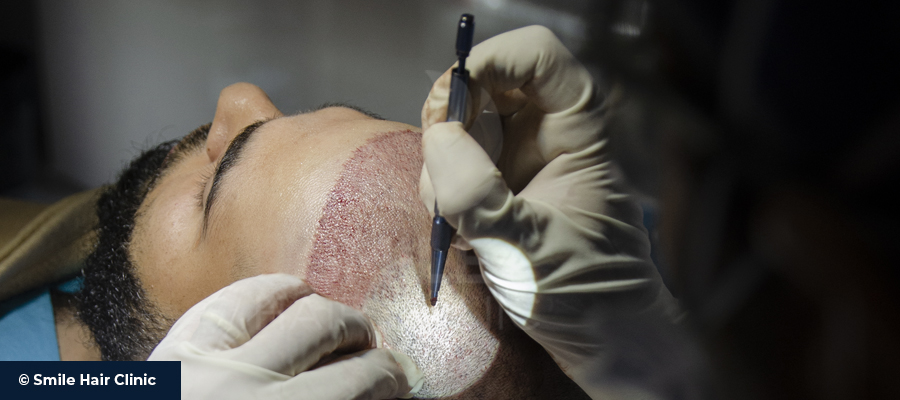
In simple terms, a hair transplant surgery moves hair grafts. A graft is a tiny unit of 1–4 hairs with its follicle and tissue.
Key ideas:
- Donor area: the back and sides of the scalp, usually resistant to loss
- Recipient area: the hairline, temples, or crown that need coverage
- Grafts: carefully extracted and implanted to match natural direction
This is why many ask, how does a hair transplant work. It works by relocating follicles that are genetically more stable.
Why transplanted hair is long-lasting
Donor follicles often keep their resistance to DHT after relocation. That is why results can be long-lasting and appear permanent.
Important nuance:
- Transplanted hairs tend to stay
- Non-transplanted hairs can still thin over time
- A long-term plan protects your overall density
Dr. Gökay Bilgin emphasizes that planning must consider future loss, not only the current hairline.
What a natural result depends on
Natural outcomes depend on design and placement, not only graft count.
Surgeons focus on:
- Hairline shape that suits your face and age
- Angle and direction of each implanted graft
- Density distribution that looks soft at the front and fuller behind
Modern methods like FUE hair transplant, Sapphire FUE, and DHI hair transplant support precise placement and refined angles.
What this means for you
A hair transplant is not a quick cosmetic fix. It is a planned medical procedure with a long-term vision. The right design today should still look balanced years from now.
Types of hair transplant techniques
Understanding the techniques helps you choose the right plan. Most modern procedures use variations of FUE hair transplant, with refined tools and placement methods. The goal is always the same: natural growth, stable donor use, and a design that ages well.
FUE hair transplant
FUE (Follicular Unit Extraction) is the most common method today.
How it works:
- Individual grafts are extracted from the donor area
- Tiny channels are created in the recipient area
- Grafts are placed to match natural angle and direction
Why patients choose FUE:
- Minimal visible scarring
- Shorter healing time
- Flexible hair length after healing
Dr. Mehmet Erdoğan notes that FUE allows careful control over graft distribution, which supports natural density patterns.
Sapphire FUE

Sapphire FUE is a refinement of the standard FUE method.
What makes it different:
- Uses sapphire blades for channel creation
- Allows more precise and smaller incisions
- Helps achieve tighter channel spacing and natural angles
This method is often preferred for detailed hairline work and refined frontal designs.
DHI hair transplant
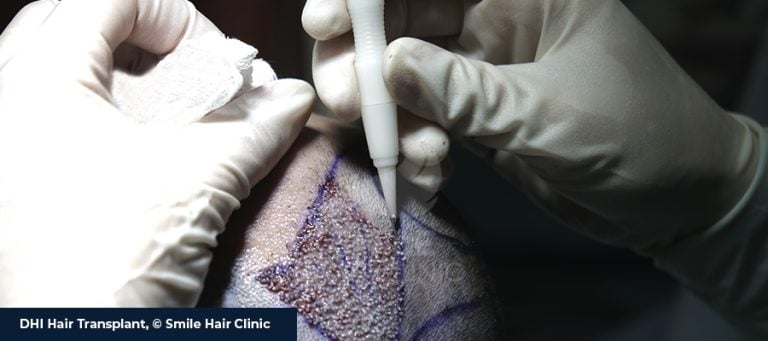
DHI (Direct Hair Implantation) focuses on the implantation phase.
Key features:
- Uses a pen-like implanter device
- Grafts are placed directly without pre-made channels
- Provides high control over angle and direction
DHI is useful for smaller areas and dense packing in the hairline zone.
Dr. Firdavs Ahmedov explains that DHI can be helpful when designing fine, detailed frontal lines.
FUT hair transplant
FUT (strip method) removes a thin strip of scalp from the donor area.
- Can provide a high number of grafts
- Leaves a linear scar
- Less common for patients who prefer shorter hairstyles
Which method is best
There is no single best technique. The right method depends on:
- Your donor density and hair caliber
- The size of the area being treated
- Your hairline design goals
- Long-term planning for future hair loss
Dr. Ali Osman Soluk emphasizes that the technique is a tool. The final result depends on planning, design, and surgical precision.
Step-by-step hair transplant procedure
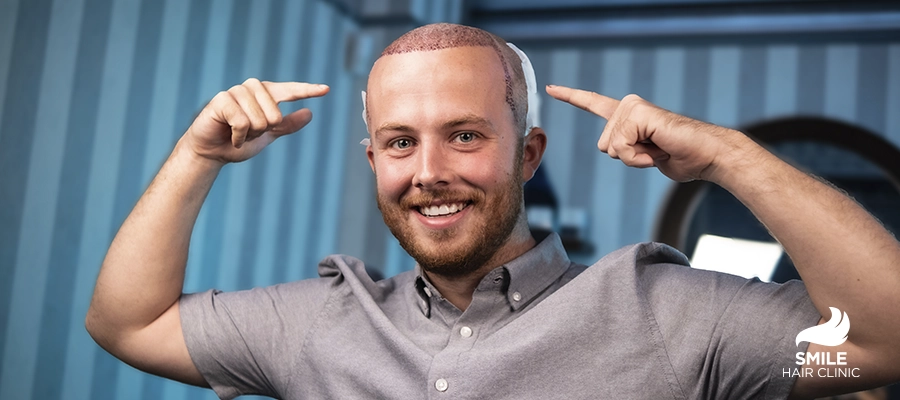
Understanding each step of the hair transplant procedure helps you feel prepared. A well-run day is calm, structured, and focused on precision. Modern clinics plan every detail before you arrive.
Consultation and planning
Everything starts with a detailed assessment.
What happens:
- Medical history and scalp examination
- Donor density and hair caliber evaluation
- Hairline design that suits your face and age
- Estimated graft range and technique selection (FUE, Sapphire FUE, or DHI)
You will see a drawn hairline and a clear plan before anything begins. Dr. Gökay Bilgin notes that a conservative, age-appropriate design protects your future look.
Donor extraction
The donor area is prepared and numbed. Grafts are then extracted.
Key points:
- FUE hair transplant uses micro-punch tools to remove individual grafts
- Extraction follows natural angles to protect surrounding follicles
- Grafts are sorted and preserved carefully
This step determines how many grafts are safely available.
Channel creation or direct implantation
Depending on the technique, the next step differs:
- Sapphire FUE: micro-channels are created with sapphire blades
- DHI hair transplant: grafts are placed directly with an implanter pen
The surgeon controls angle, direction, and spacing. This is where natural appearance is built.
Graft implantation
Grafts are placed one by one.
- Single-hair grafts are used at the front for a soft edge
- Multi-hair grafts are placed behind for density
- Density is distributed to match natural growth patterns
Dr. Mehmet Erdoğan explains that front-to-back density gradients make the result look real in daylight, not only in photos.
Immediate aftercare
After placement, the team reviews care instructions.
- First wash schedule
- Sleeping position and activity limits
- Medications and follow-up checks
You leave the clinic with a clear plan for the next days.
A structured process reduces stress and supports consistent results.
Who is a good candidate for hair transplant
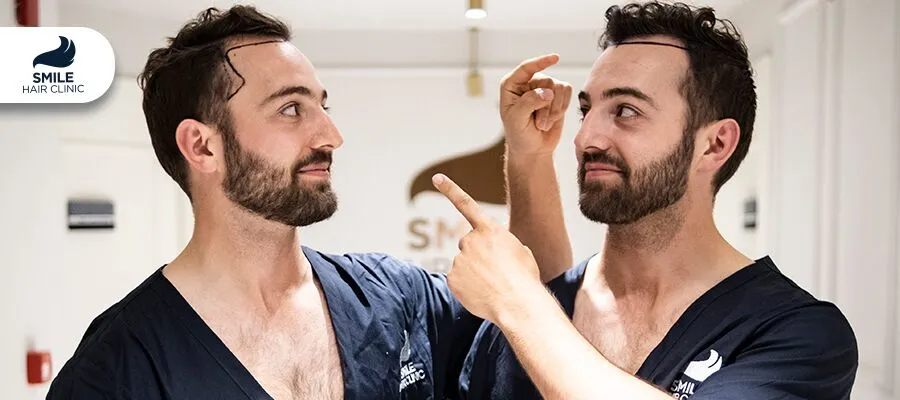
Not everyone who searches what is a hair transplant is ready for one. The best results come from the right candidate, at the right time, with the right plan. This section helps you decide if the hair transplant procedure fits your situation.
Male pattern hair loss
The most common indication is androgenetic alopecia.
You may be a good candidate if you have:
- Receding hairline or thinning crown
- Stable pattern over time
- Healthy donor area at the back and sides
Patients with predictable patterns respond best to FUE hair transplant and DHI hair transplant planning.
Female hair loss
Women can benefit too, in selected cases.
Suitable situations include:
- Localized thinning with a strong donor zone
- Traction-related hairline loss
- Stable patterns without diffuse thinning across the entire scalp
Diffuse hair loss across the whole scalp often requires medical treatment before considering surgery.
Dr. Firdavs Ahmedov explains that female candidates need careful density mapping before any decision.
Age and stability
Age matters less than stability.
Good timing usually means:
- Hair loss pattern is stable or slow-moving
- No rapid shedding phase
- Realistic expectations about density and design
Very young patients may need to stabilize loss with medication first.
Donor density and hair characteristics
Your donor area sets the limit.
Surgeons evaluate:
- Donor density and safe extraction capacity
- Hair thickness and curl, which affect coverage
- Color contrast between hair and scalp
Dr. Mehmet Erdoğan often reminds patients that donor capacity is a lifetime resource. Planning must protect it.
When a transplant may not be the right choice
You may need to wait or choose alternatives if:
- Hair loss is still rapidly progressing
- Donor density is weak
- Medical conditions affect healing
- Expectations are not realistic for your donor supply
A proper evaluation gives clarity. It shows whether you need treatment, timing, or a different approach.
Hair transplant results timeline
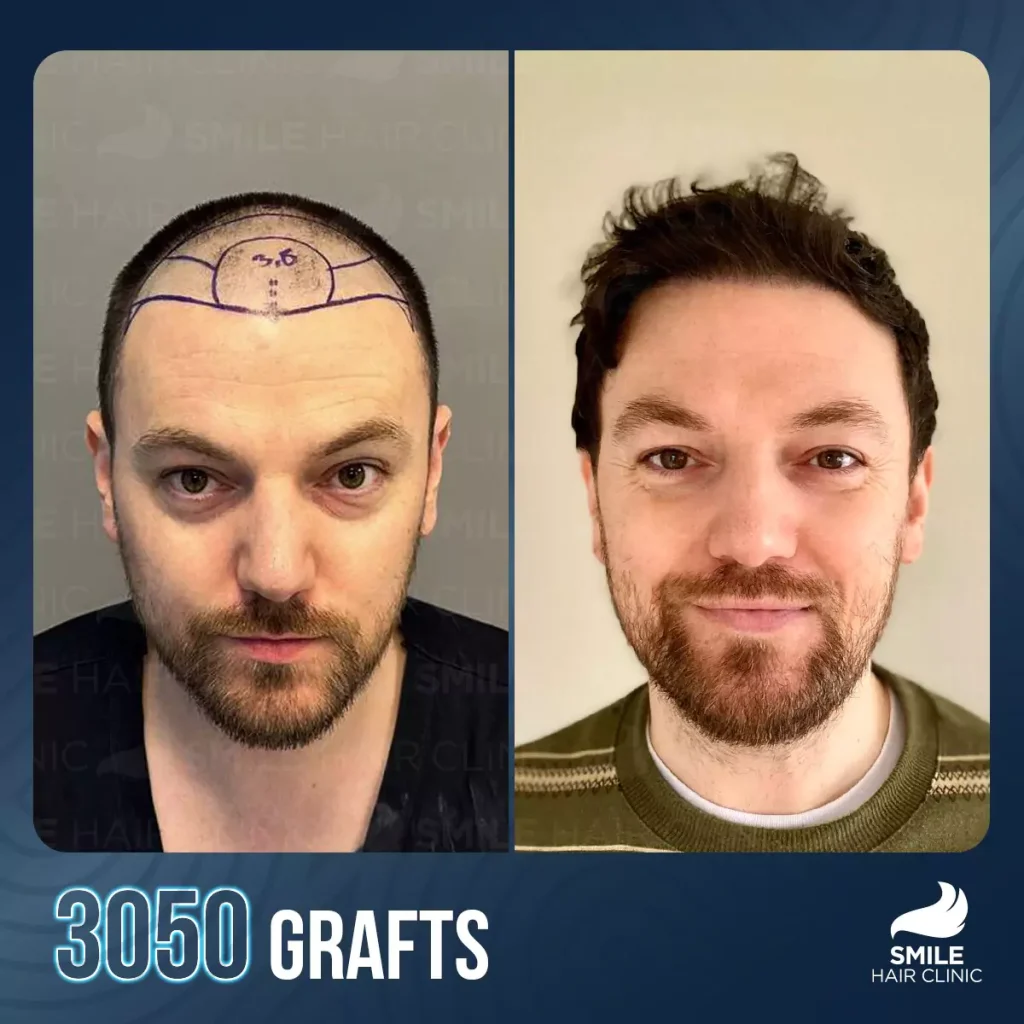
If you’re researching hair transplant recovery time or when hair transplant grows, this section gives you a clear, realistic timeline. Results appear gradually. Patience matters.
First week after hair transplant
The focus is healing.
- Tiny scabs form around each graft
- Mild redness and swelling fade within days
- Gentle washing starts as instructed
- Sleeping position protects the grafts
The hairline is visible, but fragile.
Shedding phase (month 1–3)
This stage can be confusing.
- Transplanted hairs shed from the shaft
- The scalp can look similar to before surgery
- This is a normal biological phase
Many people search can transplanted hair fall out at this stage. The follicles remain under the skin. Growth returns.
Dr. Firdavs Ahmedov tells patients that this phase is expected and temporary.
Growth phase (month 4–6)
New hair starts to appear.
- Fine, soft hairs emerge in the frontal area
- Coverage improves slowly each month
- Hair texture may feel thin at first
You begin to see the shape of your new hairline.
Density phase (month 7–9)
The change becomes more visible.
- Hair thickens and darkens
- Density increases across the transplanted zone
- Styling becomes easier without concealment
This is when most people feel confident about the decision.
Final results (month 10–12+)
The result matures.
- Hair blends naturally with existing follicles
- Density reaches planned levels
- Hair behaves like your natural hair
Dr. Mehmet Erdoğan explains that true evaluation should be done around month twelve, not earlier.
This timeline helps you interpret hair transplant results month by month realistically. Quick changes in photos rarely match this biological process.
Risks, side effects and safety
When people search hair transplant surgery, they often focus on results. A clear view of risks helps you make a balanced decision. Modern hair transplant procedures such as FUE hair transplant, Sapphire FUE, and DHI hair transplant are generally safe when performed by experienced doctors. Still, every medical procedure carries some risks.
Common side effects
These are expected and usually temporary:
- Mild swelling around the forehead or eyes
- Redness in the recipient area
- Small scabs around implanted grafts
- Itching during the healing phase
These effects fade within days to a couple of weeks.
Shock loss and temporary shedding
Many patients search shock loss hair transplant after surgery.
What it means:
- Existing hairs near the transplant area may shed temporarily
- This can make the hairline look thinner at first
- Most of these hairs grow back within a few months
Dr. Firdavs Ahmedov explains that this is part of the healing response and not a sign of failure.
Less common complications
With proper technique and hygiene, serious issues are rare. Possible complications include:
- Infection if aftercare is ignored
- Folliculitis (small inflamed bumps)
- Uneven density if planning is poor
- Overharvesting from the donor area
These risks are significantly reduced with careful planning and doctor-led procedures.
How to minimize risk
You can lower risks by choosing the right clinic and following aftercare instructions:
- Work with a doctor-led clinic with transparent planning
- Follow washing and medication instructions carefully
- Avoid physical strain and sun exposure early on
- Keep follow-up communication with your clinic
Dr. Ali Osman Soluk emphasizes that patient safety starts with planning and continues through aftercare. A careful approach leads to better healing and more natural results.
Cost of hair transplant
When people search hair transplant cost or how much does a hair transplant cost, they want a clear range and what drives the price. Costs vary by country, clinic model, technique, and the number of grafts planned.
Price by country
Typical ranges for a full procedure:
- United States: $7,000 – $15,000+
- United Kingdom / Europe: €5,000 – €10,000
- Turkey: $2,500 – $5,500 for all-inclusive packages
Lower prices often reflect lower overhead and package-based care. What matters most is doctor involvement, planning, and aftercare.
Cost per graft
Some clinics price by graft:
- US/UK: $3 – $7 per graft
- Turkey: $1 – $2 per graft within package pricing
Your graft range depends on hairline design, density goals, and donor capacity. Common frontal cases fall between 1,500 – 3,000 grafts, but your plan should be personalized.
What affects the final price
Several factors shape the total:
- Technique used: FUE hair transplant, Sapphire FUE, or DHI hair transplant
- Doctor-led procedure vs high-volume technician model
- Number of grafts and session length
- Clinic standards: hygiene, equipment, operating room setup
- Aftercare and follow-up support
Dr. Gökay Bilgin advises patients to focus on the treatment plan and long-term design rather than a low headline price. A well-planned case protects your donor and avoids the need for corrective work later.
What is usually included
All-inclusive packages often cover:
- Consultation and planning
- Procedure day with local anesthesia
- Medications and first wash
- Hotel and transfers
- Follow-up and remote check-ins
A transparent quote should list what is included and who performs each step.
Is a hair transplant permanent
One of the most common questions is simple: is hair transplant permanent? The honest answer needs a little context. Transplanted hair can be long-lasting, yet your overall hair can still change over time.
Longevity of transplanted hair
Hair taken from the donor area usually keeps its resistance to hair loss after it is moved. This is why hair transplant surgery can provide long-term coverage in the hairline or crown.
What this means in practice:
- Transplanted follicles continue to grow like normal hair
- They can be cut, styled, and shaved
- They tend to stay for many years when placed correctly
Dr. Mehmet Erdoğan explains that a well-planned FUE hair transplant or DHI hair transplant can provide a stable front hairline for the long term.
Future hair loss still continues
A transplant does not stop the natural process of hair loss in other areas.
You may still see:
- Thinning behind the transplanted zone
- Gradual crown loss over time
- Changes in density as you age
This is why long-term planning matters. A natural design should still look balanced even if further thinning occurs.
Role of medication after transplant
Many patients benefit from ongoing treatment to protect native hair:
- Finasteride can slow down ongoing hair loss
- Minoxidil can support thickness and density
- PRP can be used as supportive therapy in some cases
Dr. Firdavs Ahmedov notes that combining surgery with medical therapy often gives the most stable long-term result.
How to maintain your result
To protect your investment:
- Follow aftercare and long-term guidance from your clinic
- Maintain a healthy scalp and routine care
- Monitor changes over time with periodic check-ins
A hair transplant can be a lasting solution when it is planned correctly and supported with a long-term strategy.
Is a hair transplant worth it
People searching is hair transplant worth it usually want a straight answer. The value depends on your goals, donor capacity, and expectations. For the right candidate, a hair transplant procedure can restore a natural hairline and improve confidence. For the wrong candidate, it can lead to disappointment.
Benefits you can expect
A well-planned hair transplant surgery offers clear advantages:
- A natural-looking hairline designed for your face and age
- Long-lasting growth from transplanted follicles
- The ability to cut and style hair normally
- Reduced need for daily camouflage products
Many patients report improved self-image once density returns to the frontal area.
Limitations to understand
A transplant has limits. Knowing them helps you avoid regret.
- Density is finite and depends on your donor supply
- It does not stop future hair loss in untreated areas
- Results take months to mature, not weeks
- Very low, straight hairlines can age poorly over time
Dr. Gökay Bilgin explains that realistic density and an age-appropriate design create the most satisfying outcomes.
Who benefits most
The procedure tends to work best for:
- Men with stable receding hairline or crown thinning
- Patients with good donor density and hair caliber
- Those willing to follow a long-term plan, including medical therapy if needed
Women with localized loss and strong donor zones can benefit as well, after careful evaluation.
When it may not be the right choice
You may want to wait or choose alternatives if:
- Hair loss is rapidly progressing
- Donor density is weak
- Expectations do not match what your donor can provide
Dr. Ali Osman Soluk reminds patients that protecting the donor and planning for future changes leads to results that stay natural in daily life.
If your goals align with what your hair can support, a transplant can be a meaningful, lasting solution.
Hair transplant FAQs
Does a hair transplant hurt?
During the procedure, local anesthesia is used. You may feel brief pressure or mild discomfort at the start. Most patients describe the day as comfortable. After the procedure, mild soreness or tightness can occur for a few days, which is manageable with simple medication.
How long does a hair transplant procedure take?
A typical hair transplant procedure takes between 6 and 8 hours in a single day. The duration depends on the number of grafts and the technique used, such as FUE hair transplant, Sapphire FUE, or DHI hair transplant.
How many grafts do I need?
The number of grafts depends on:
- The size of the thinning area
- Your donor density
- Desired hairline shape and density
Frontal hairline cases often range between 1,500 and 3,000 grafts, but each plan is personalized.
When will I see results?
Growth begins around month 4. Noticeable density appears between months 7 and 9. Final results are typically seen at 10–12 months.
Can a hair transplant fail?
True failure is rare when performed by experienced doctors. Poor planning, overharvesting, or incorrect placement can affect results. Choosing a doctor-led clinic and following aftercare instructions helps minimize risk.
Can women have a hair transplant?
Yes. Women with localized thinning and a strong donor area can benefit. Diffuse thinning across the entire scalp usually requires medical treatment before surgery.
Will I need another transplant in the future?
Some patients may choose a second session if:
- Hair loss continues in untreated areas
- Additional density is desired
- The crown area is addressed later
A long-term plan helps reduce the need for future procedures.
Book your personalized hair assessment at Smile Hair Clinic
You’ve seen what a hair transplant is, how it works, and what to expect. The next step is to see what fits you. Not a generic plan. Your plan.
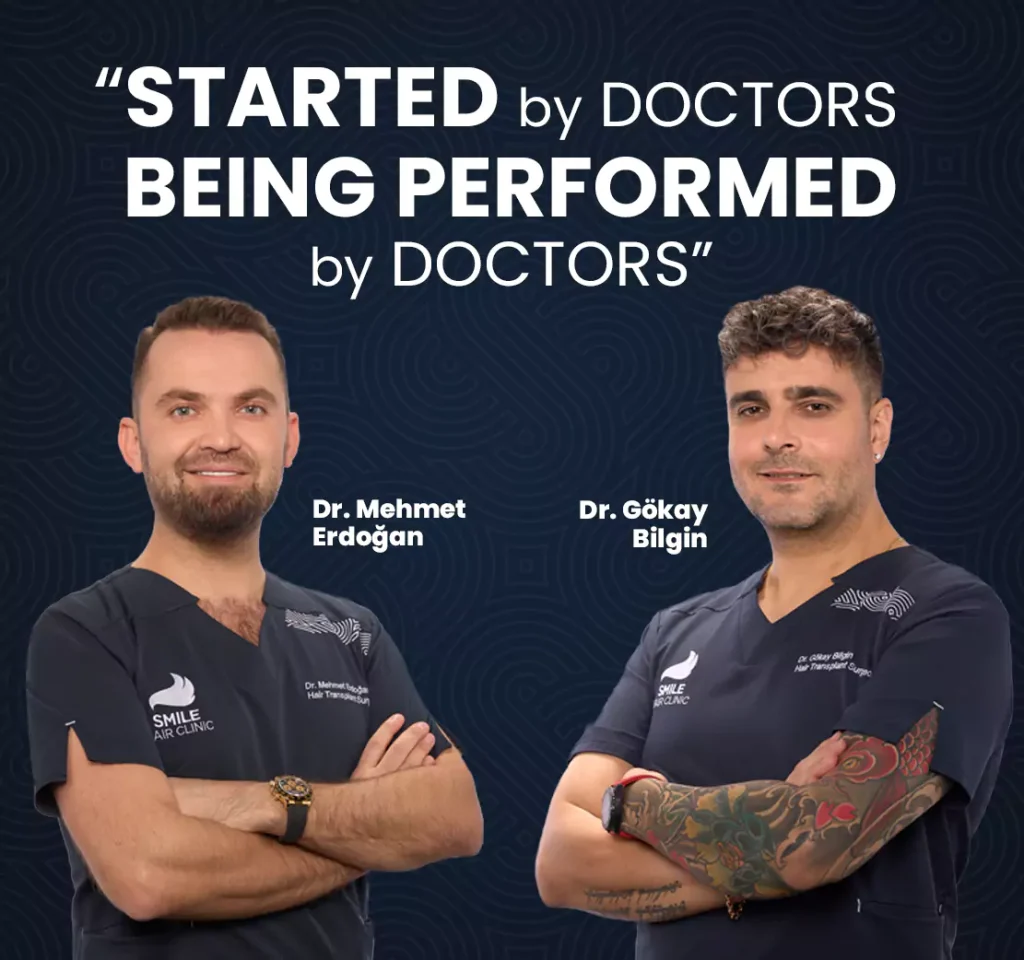
At Smile Hair Clinic, every case follows the True™ Philosophy. Doctor-led procedures. Careful design. Natural results that age well.
What your consultation includes
- A doctor-reviewed diagnosis of your hairline, crown, and donor
- A clear path: medical therapy, transplant, or a combined approach
- A refined hairline design that suits your face and age
- A realistic graft range and density plan based on your donor
- A simple timeline for recovery, growth, and follow-up
Dr. Gökay Bilgin and Dr. Mehmet Erdoğan focus on balanced density and soft, natural fronts. Dr. Firdavs Ahmedov, Dr. Ali Osman Soluk, and Dr. M. Reşat Arpacı plan each case with long-term stability in mind. Your procedure is led by doctors, with precise control of angle, direction, and placement.
A calm, supported journey
From your first message to your final check-in, the team supports you at every step. Comfortable transfers. Organized clinic day. Clear aftercare. Ongoing follow-up once you’re home.
Clarity replaces guesswork.
Start your assessment
- Share clear photos of your front, temples, crown, and donor area
- Receive a doctor-led evaluation with honest recommendations
- Discuss technique (FUE, Sapphire FUE, or DHI) and planning
- Move forward only if it fits your goals
If you’re ready for a plan built on your biology and your future, request your consultation with Smile Hair Clinic today.
