

Table of Contents
In recent years, hair transplants have become an increasingly influential and popular solution for individuals with hair loss or thinning who want to regain a fuller head of hair. But, just like any medical procedure, it undergoes a short and minor recovery. While it may cause troubles after the process, hair transplants also have some discomfort. Pimples occurring on the scalp are a common side effect. While not particularly dangerous, these pimples may be bothersome and raise patient anxiety. In this article, we will discuss the reason for pimples after hair transplant, when these can appear, and how they can be controlled and treated effectively.
What Are Pimples Why Do They Occur After Hair Transplant?
Pimples after hair transplant, sometimes referred to clinically as post-operative folliculitis, are small red or white bumps that form around the transplanted hair follicles. According to a clinical review of hair transplant complications published in the Journal of Cutaneous and Aesthetic Surgery, sterile folliculitis, meaning inflammation around the follicle without an actual infection present, is one of the more frequently reported skin reactions following the procedure, and a separate review in the Indian Journal of Plastic Surgery recorded sterile folliculitis in over 200 out of nearly 2,900 patients studied, roughly 7% of cases, making it a well-documented and generally manageable part of recovery rather than a rare event.
A few distinct mechanisms tend to cause it:
New hair growth
As transplanted follicles enter their growth cycle, the new hair shaft sometimes struggles to break cleanly through the skin’s surface. This can trap the hair just beneath it, causing localised irritation and a small pimple as the strand pushes through.
Blocked follicles
While the scalp heals, dead skin cells, excess sebum, or residue from topical products can accumulate around a healing follicle and block it, producing a whitehead or small pustule much like ordinary acne elsewhere on the body.
True folliculitis
The micro-incisions made during graft placement leave the scalp more vulnerable to bacterial entry for a period after surgery. If bacteria colonise a healing follicle, the result can be a small, pus-filled bump. This form is usually mild and responds well to treatment, but it’s worth addressing promptly rather than ignoring it.
Normal immune response
Surgery triggers an immune response by design, since healing depends on it. Increased local immune activity around new grafts can itself produce small, inflamed bumps as a side effect of the tissue adapting to its new environment.
Please Select Your Gender
When Exactly Does The Pimple Come Out?

The pimples occur at different time frequencies. However, the normal range of surgery is 2-6 weeks after the hair transplant. That coincides with the start of new hair growth when hair is starting to break through the skin. While some may occasionally get one or two random pimples, others may seek clusters of them, appearing over weeks. Pimples are usually short-lived, and as time passes, the scalp behaves as hair grows through a cycle of the healing phase, and it comes into the stage.
Hair Transplant Pimple Treatment
Though post-transplant pimples are quite common and not much of an issue, they certainly require the right management to avoid any resultant infection and associated scarring, which may very well affect the results of a hair transplant. Below, we have mentioned some of the effective methods by which pimples can be treated or prevented after a hair transplant.
Keep the Scalp Clean
However, cleanliness is essential for preventing and healing post-transplant pimples. Lightly cleansing the scalp with a neutral pH (as your surgeon advises) and non-aggressive shampoo will help remove dirt, dead skin cells, and oil that may or else clog hair follicles. Do not scrub too hard, though; the transplanted area is still traumatized, and you can lose grafts if you are aggressive.
Avoid Squeezing or Picking
Squeezing or picking at the pimples can cause scarring, infections, and even damage to the transplanted hair follicles. To avoid jeopardizing the success of your hair transplant, it is best to allow the pimples to heal on their own or treat them with homoeopathy as necessary.
Topical Antibiotic Creams
Your surgeon may also prescribe an antibiotic cream you will put on top of the pimples. This prevents the breeding of bacteria and promotes faster healing. Mild folliculitis around hair grafts is treated with topical clindamycin, but never take any antibiotic without consulting your doctor first.
Warm Compresses
Placing a heat pack on that zone can ease irritation and solve the pimples more naturally, as opposed to choosing or squeezing them. Place a warm, wet washcloth against the pimples for 5-10 minutes, once or twice daily. It can provide relief and also help open up the pores while reducing inflammation.
Salicylic Acid or Benzoyl Peroxide (upon doctor’s recommendation)
A doctor can advise using a low-concentration topical treatment such as salicylic acid or benzoyl peroxide. Salicylic acid removes dead skin and unclogs follicles, while benzoyl peroxide helps kill bacteria. However, both treatments can be drying and should be used with initial caution on sensitive skin post-transplant. Never use dergelijke producten op uw hoofd zonder eerst met uw chirurg te overleggen.
Switch to Oral Antibiotics If It Still Persists
Oral antibiotics may be required for more severe or chronic folliculitis. You can use these to regulate the bacterial growth and also reduce inflammation. Your surgeon or dermatologist can recommend the best course if you need some antibiotics.
Take Time to Heal on Your Own
Most pimples after a transplant solve themselves as the scalp continues to heal and resume. In many cases, you only need to wait and provide some proper aftercare to allow these pimples to naturally go away.
How to Prevent Pimples After Hair Transplant?
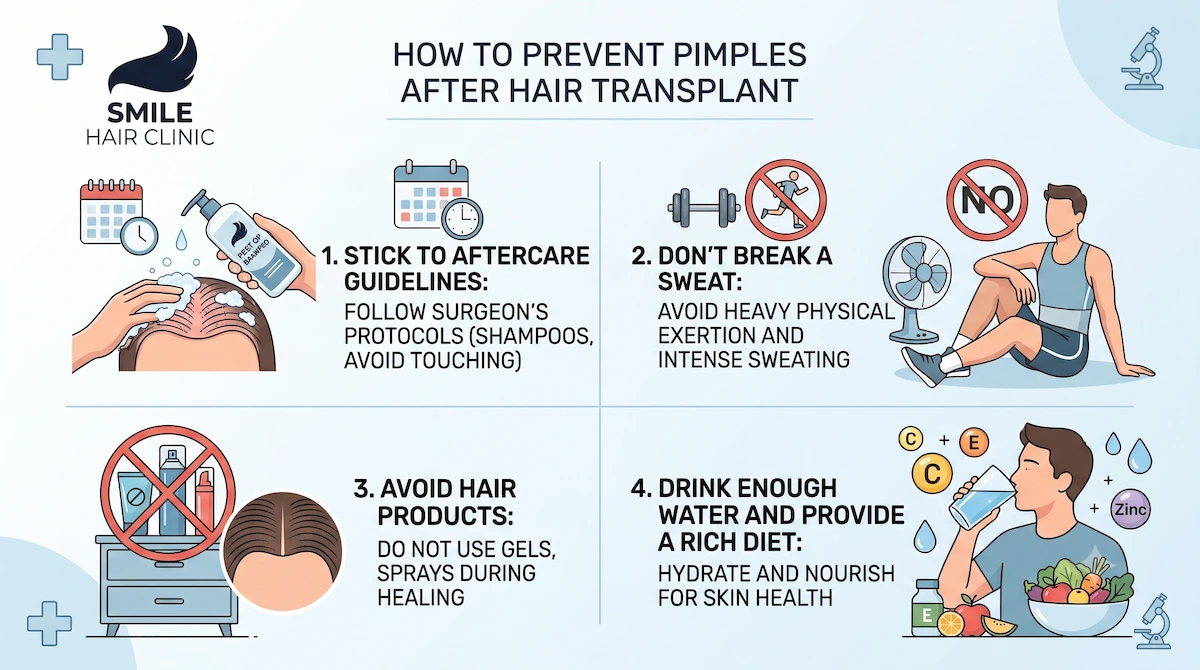
Avoiding pimples after a hair transplant will maximize the benefit of the procedure. Below are some ways you can reduce your chances of getting these pimples and other irritations on your scalp:
Stick to Aftercare Guidelines: Your surgeon will recommend an aftercare routine that you must follow. This includes using recommended shampoos, not touching the scalp too much, and avoiding other hair products until the scalp heals completely.
Don’t Break a Sweat: In the first few weeks post-transplant, avoid heavy physical exertion that can lead to sweating. Sweat can also help bacteria growth and block the hair follicles; therefore, they may have pimples.
Avoid Hair Products: Do not use styling products such as gels or hair sprays in the first few days following your hair restoration procedure. You should not irritate the scalp and block the follicles during that initial healing period. Once healed, you can incorporate these products back in slowly.
Drink Enough Water and Provide a Rich Diet: Sufficient intake of water, vitamins, and essential elements for the skin significantly complicates the treatment process for such defects due to their proper nutrition and working correctly in sequence directly reduces the chance of pimples. It is helpful because vitamins such as C, E, and zinc are suitable for the skin and hair and helpful in recovering people.
Warning Signs That Need a Doctor’s Attention
Most post-transplant pimples are harmless, but a few features suggest something beyond routine folliculitis and warrant contacting your surgeon rather than waiting it out: a lesion larger than roughly 5 millimetres across, pustules producing a significant amount of discharge, spreading redness beyond the immediate area, fever, or pain that feels disproportionate to typical post-operative discomfort. Rare complications like dermoid cysts or, less commonly still, erosive pustular dermatosis of the scalp can resemble ordinary folliculitis at first glance but require a different treatment approach entirely, which is exactly why persistent or unusual-looking lesions deserve a professional look rather than a guess.
Conclusion
Pimples post-hair transplant are often relatively standard, and no cause for concern is needed. They frequently occur as natural growth in the healing process as new hair grows and the follicles adjust to their new environment. After the transplant, these pimples typically resolve in a few weeks with good aftercare, gentle washing, and possibly mild topical treatments.
Contact your surgeon or dermatologist if you are worried about the pimples or experience continuous irritation. After proper care and an optimum scalp environment, you are well on your way to successful hair transplant recovery and the lush, voluminous tresses you crave.
Please Select Your Gender
Frequently Asked Questions
Are pimples after a hair transplant normal?
Yes. They’re one of the most common minor side effects of the procedure and, in the large majority of cases, resolve on their own within one to a few weeks without any lasting effect on your results.
When do pimples usually appear after a hair transplant?
Surgical-site inflammation typically appears within the first week, most commonly days three to seven, while pimples related to new hair growth breaking through the skin tend to show up later, generally within two to six weeks after surgery.
Can pimples damage my transplant results?
Rarely, and almost always because of how they’re handled rather than the pimple itself. Squeezing or picking is the main risk factor for scarring or graft loss; left alone and properly cared for, pimples typically resolve without affecting your final density.
Should I pop a pimple after a hair transplant?
No. Let it resolve naturally or treat it as advised by your surgeon. Popping or squeezing risks introducing infection, scarring, and damage to the healing follicle underneath.
Sources
- Kerure AS, Patwardhan N. Complications in Hair Transplantation. Journal of Cutaneous and Aesthetic Surgery. 2018;11(4):182-189. PMC6371733
- Garg AK, Garg S. Complications of Hair Transplant Procedures, Causes and Management. Indian Journal of Plastic Surgery. 2021;54(4):477-482. PMC8719980
If you notice a lesion that looks larger, more painful, or different from typical post-operative pimples, contact our team rather than waiting to see how it develops. For a full overview of what to expect in the days and weeks after surgery, see our after hair transplant procedure guide.
This guide was prepared and reviewed by Dr. Gökay Bilgin, M.D., hair transplant surgeon at Smile Hair Clinic, Istanbul.
Minor breakouts like these are exactly why aftercare should not be treated as an extra. Every one of the hair transplant turkey packages at Smile Hair Clinic, from Gold through Diamond, includes pre-op blood tests, medication, and a full year of follow-up support, so a question about pimples during recovery is answered by the same team that performed the procedure, at no additional charge.