

No, you are not supposed to wash your hair every day. Dermatologists recommend washing most hair types two to three times per week. Daily shampooing strips your scalp’s natural oils (sebum), triggers overproduction, and can actually make your hair oilier, weaker, and more prone to damage over time.
If you’ve been washing daily and wondering why your hair still feels greasy by the afternoon, the shampoo itself may be the problem. Below, we explain exactly what happens to your scalp when you overwash, how to find the right frequency for your hair type, and what to do after a hair transplant when washing rules change completely.
Why You Shouldn’t Wash Your Hair Every Day: The Science
Your scalp produces sebum a natural oil that moisturises your hair, protects it from environmental damage, and keeps strands flexible. When you shampoo daily, you strip this oil completely. Your scalp responds by producing even more sebum to compensate, creating a vicious cycle:
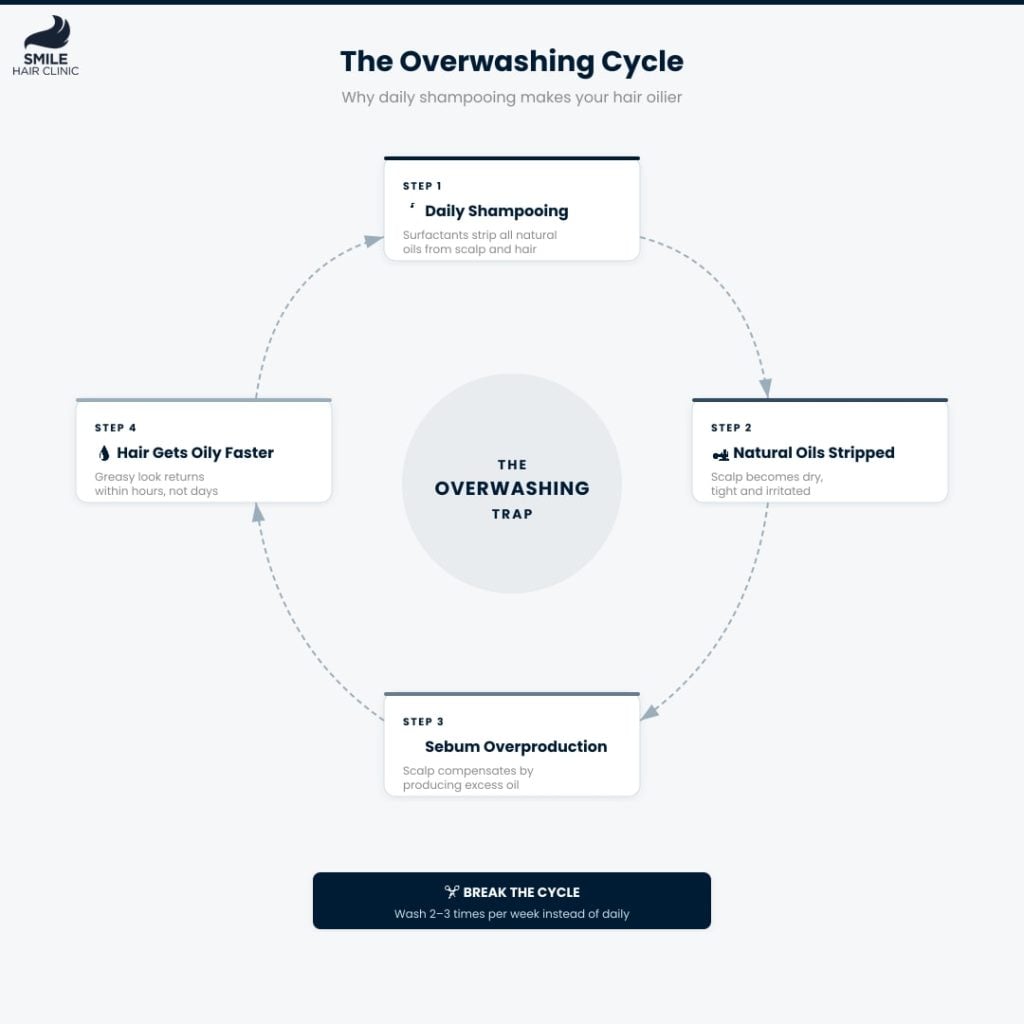
Step 1 – Daily Shampooing: Surfactants in shampoo dissolve and remove all oils from your scalp and hair shaft. Your scalp is left completely dry.
Step 2 – Scalp Goes Into Overdrive: Sebaceous glands detect the dryness and ramp up oil production far beyond normal levels. This is a protective response.
Step 3 – Hair Gets Oily Faster: Within 12–24 hours, your hair already looks and feels greasy. You reach for the shampoo again.
Step 4 – The Cycle Repeats: Each wash resets the overproduction trigger. Your scalp never reaches its natural equilibrium. The more you wash, the oilier your hair becomes.
Breaking this cycle takes about two to three weeks of reduced washing. During that adjustment period, your hair may feel oilier than usual — but once your scalp recalibrates, you’ll notice less grease, more shine, and stronger strands.
Is It Bad to Wash Your Hair Every Day?
Yes, for most people daily washing does more harm than good. Here is what dermatological research consistently shows:
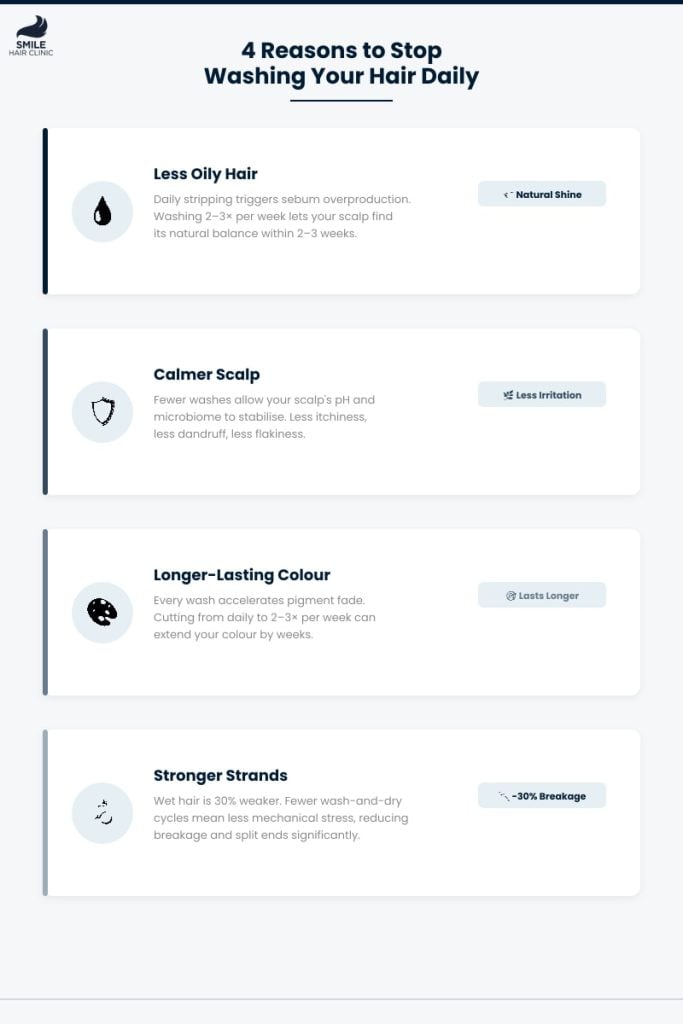
Increased Oiliness: As explained above, daily stripping triggers sebum overproduction. People who wash daily often report their hair feels greasier than those who wash two to three times per week.
Scalp Irritation: Frequent exposure to surfactants disrupts your scalp’s pH balance and microbiome. This can cause itchiness, dandruff, and flakiness problems many people mistakenly try to solve by washing more.
Colour Fading: Every wash accelerates the breakdown of hair dye pigments. Reducing wash frequency from daily to two to three times per week can extend colour life by several weeks.
Breakage and Thinning: Wet hair is up to 30% weaker than dry hair. Each wash-and-dry cycle puts mechanical stress on your strands. Fewer cycles mean fewer opportunities for breakage, split ends, and thinning.
The only exception: if you have a specific medical condition like seborrheic dermatitis, your dermatologist may recommend more frequent washing with a medicated shampoo. For everyone else, less really is more.
How Often Should You Wash Your Hair? A Guide by Hair Type
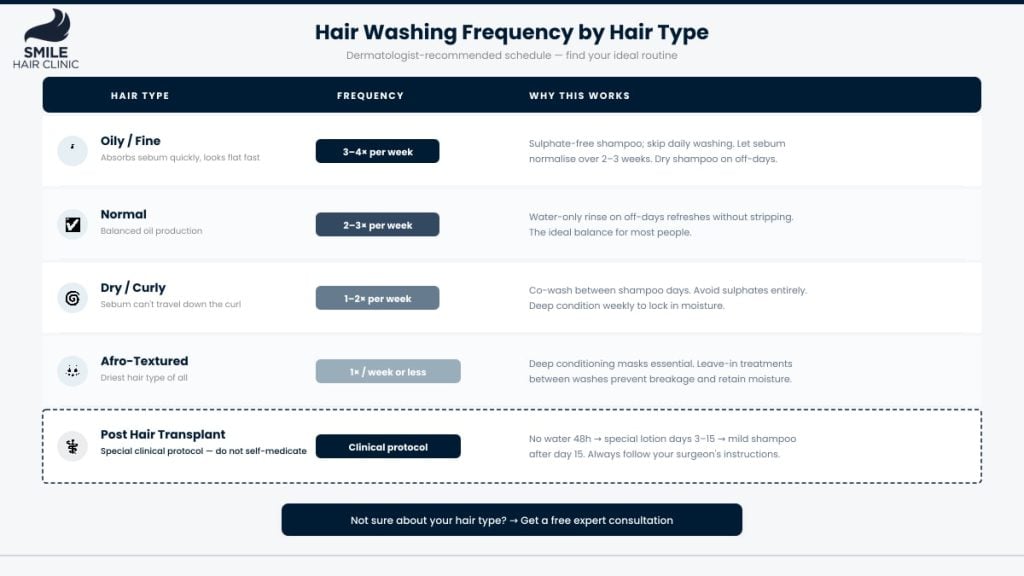
The ideal washing frequency depends on your hair type, lifestyle, and scalp condition. Use this chart as your starting point:
When You Might Need to Wash More (or Less)
Your base frequency should be adjusted for these lifestyle factors:
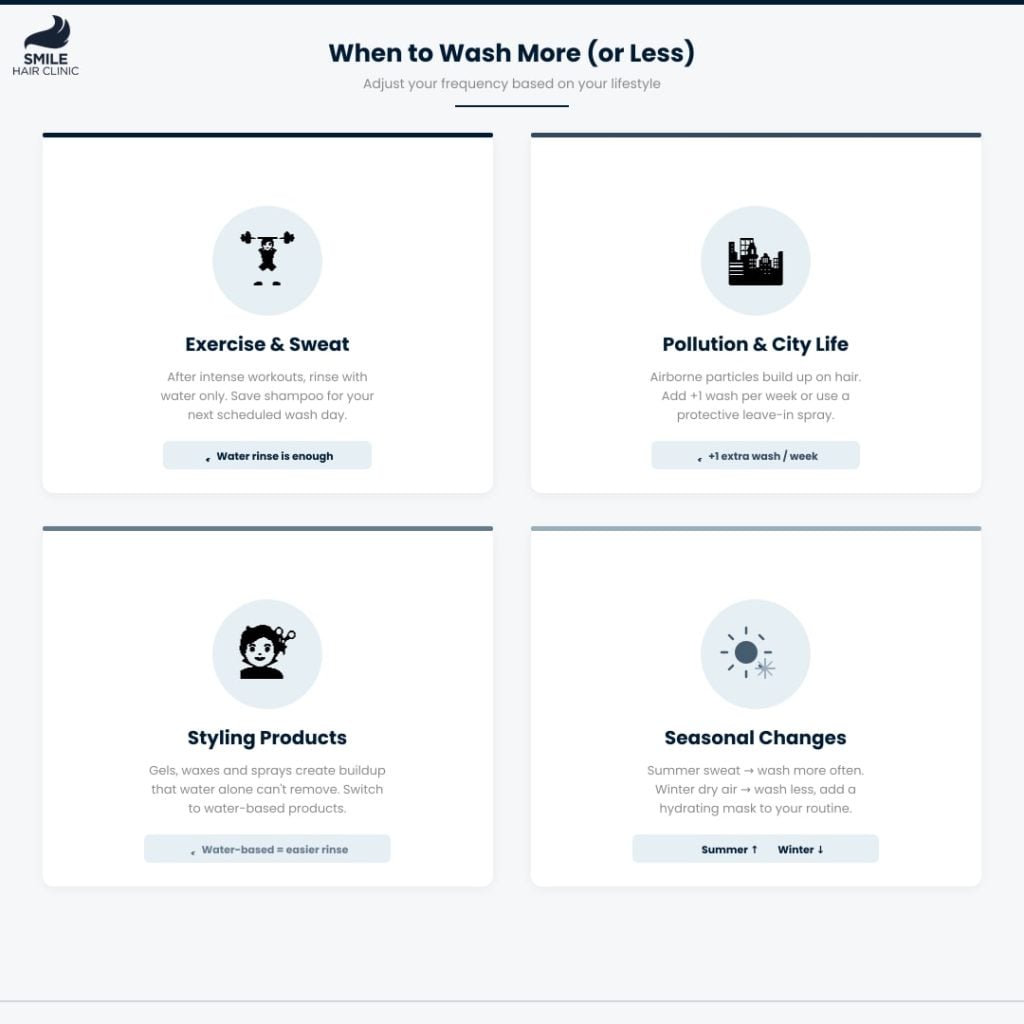
Exercise: After a heavy workout, rinse your hair with water only and massage your scalp with your fingertips. Save the shampoo for your next scheduled wash day. Sweat is water-soluble and rinses out easily without surfactants.
Pollution and City Living: If you live in a high-pollution city, airborne particles accumulate on your hair and scalp. Adding one extra wash per week or using a protective leave-in spray can help without over-stripping.
Styling Products: Gels, waxes, and hairsprays create buildup that water alone cannot remove. If you use these daily, you may need to wash more frequently. Switching to water-based products reduces this need.
Seasonal Changes: Increase frequency slightly in summer (more sweat and humidity) and decrease in winter (dry air strips moisture). Your scalp’s needs change with the seasons.
Entirely
If you have had or are planning a hair transplant, the normal rules do not apply. Newly implanted grafts need a carefully controlled washing protocol to survive and grow:
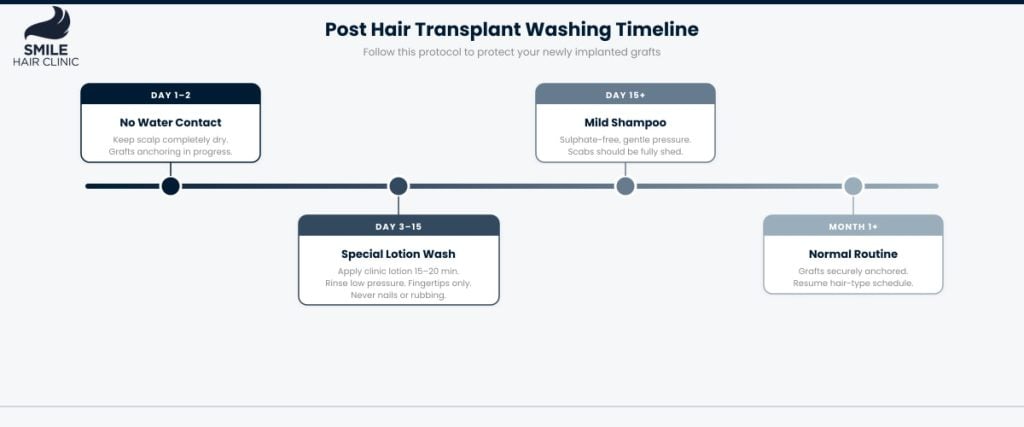
Days 1–2: No Water Contact. Keep your scalp completely dry. The grafts are anchoring into the tissue and any water pressure could dislodge them.
Days 3–15: Special Lotion Wash. Apply the clinic-provided lotion to the transplanted area, let it sit for 15–20 minutes to soften crusts, then rinse with very low water pressure. Use fingertips only — never nails or rubbing.
Day 15 Onward: Mild Shampoo. Switch to a sulphate-free, gentle shampoo. By this point, crusts should be fully shed and grafts are securely anchored. Follow the guidance in our after transplant procedure guide.
Month 1 Onward: Resume Normal Routine. Return to the hair-type-based schedule in the table above. Your transplanted hair will follow the same growth and washing rules as your native hair.
5 Tips to Wash Your Hair Less Without It Looking Greasy
- Use Dry Shampoo Strategically: Apply to roots before bed, not in the morning. Overnight absorption is more effective. Focus on the crown and parting where oil shows first.
- Try Co-Washing: Replace one shampoo session per week with a conditioner-only wash. This cleanses gently without stripping sebum, especially effective for curly and dry hair types.
- Rinse With Water on Off-Days: A thorough water rinse with scalp massage removes most sweat and loose buildup without surfactants. Finish with cool water to close the cuticle for extra shine.
- Switch to Sulphate-Free Shampoo: When you do wash, use a gentle, sulphate-free formula. Sulphates are aggressive surfactants that over-strip, making the rebound oiliness even worse.
- Give It Three Weeks: The adjustment period is the hardest part. Your hair will feel oilier at first as your scalp continues overproducing. By week three, most people report a noticeable improvement in oil balance, texture, and volume.
Frequently Asked Questions
Can washing your hair every day cause hair loss?
Daily washing itself does not directly cause hair loss. However, the mechanical stress of frequent washing, rubbing, blow-drying, and styling weakens hair shafts and increases breakage. Over time, this can create the appearance of thinning. If you are concerned about hair loss, it is worth consulting a specialist to determine the underlying cause.
What if my hair is very oily — can I wash it every day?
If your hair is genuinely oily by the end of each day, start by reducing to every other day and using dry shampoo in between. Within two to three weeks, your scalp’s sebum production should begin to normalise. If excessive oiliness persists despite reduced washing, consult a dermatologist it could indicate a hormonal imbalance or seborrheic dermatitis.
Is co-washing a good alternative to shampooing?
Co-washing (using conditioner instead of shampoo) works well for dry, curly, and afro-textured hair types. It cleanses gently while retaining moisture. However, it is not a complete replacement for shampoo you should still use a clarifying shampoo once every two to four weeks to remove product buildup that conditioner alone cannot dissolve.
Does hard water affect how often I should wash?
Yes. Hard water contains calcium and magnesium minerals that deposit on hair, causing dullness, dryness, and buildup. If you live in a hard water area, consider a shower filter, use a chelating shampoo once per month, and you may benefit from slightly more frequent washing to prevent mineral accumulation.
How soon after a hair transplant can I wash normally?
Most patients can return to their normal washing routine approximately one month after the procedure. The first two weeks require a special lotion-based protocol to protect newly implanted grafts. From day 15, a mild sulphate-free shampoo can be used. For detailed instructions, see our post-operative care guide.
You are not supposed to wash your hair every day. Two to three times per week is the sweet spot for most people. This gives your scalp time to regulate its natural oil production, keeps your hair stronger, and protects colour-treated strands. The transition period takes about three weeks, but the results less grease, more volume, healthier hair are worth the patience.
If you’re dealing with hair loss or thinning alongside your washing concerns, it may be time to consult a specialist. At Smile Hair Clinic, we offer free online hair analyses to help you understand your scalp health and explore your options from PRP therapy and mesotherapy to advanced Sapphire FUE transplants.
